
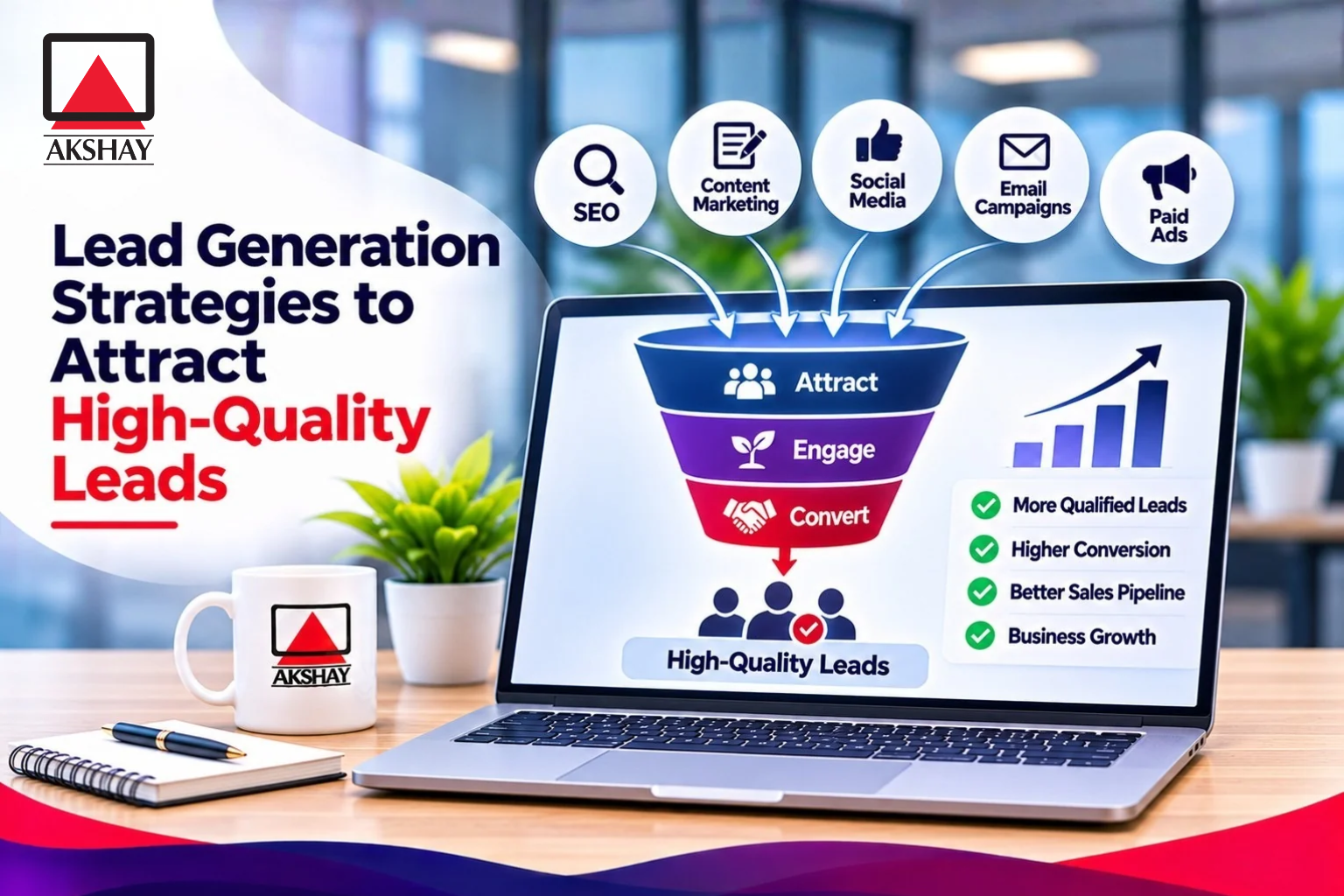
A long list of form fills is little comfort when few of those people need what the business sells. For businesses in India, raw volume can waste sales time and marketing spend. The better goal is to attract prospects who fit, earn their interest, and give them a clear path to become customers. This guide covers practical choices for your audience, offers, channels, conversion steps, and measurement. It also explains how to handle personal data with care. A marketing-qualified lead (MQL) is a prospect marketing has assessed against agreed fit or engagement criteria and considers ready for sales review. Your team can agree on those criteria before launching a campaign. Then it can judge success by useful conversations and sales, not form fills alone. The most useful plan is the one that attracts the right people and gives the team a clear next action for each one.
Key Takeaways
- Define the buyer and the problem your offer solves.
- Match each offer to the prospect’s buying stage.
- Make the next step easy to understand and complete.
- Track qualified leads and revenue, not just volume.
- Explain how you use contact details and protect them.
What Are Lead Generation Strategies and How Do They Work?
A lead generation strategy turns a potential buyer’s interest into a contact the business can qualify and follow up with. The process attracts potential customers, captures their interest or contact details, then nurtures them toward a purchase. Good generation gives marketing and sales a shared way to decide which leads deserve attention.
Inbound attracts prospects through useful content, search, and social channels; outbound reaches them directly through email or calls. A blended approach uses both. Six in 10 marketers prioritize generating business leads. The right mix depends on how your prospects research and buy.
| Approach | Example channels | How the prospect is reached | Main advantage | Main tradeoff |
|---|---|---|---|---|
| Inbound | Content, search, social | Prospect finds useful material | Builds interest over time | Takes time to gain reach |
| Outbound | Email, phone calls | Business contacts a prospect | Direct and focused reach | Needs careful targeting |
| Blended | Content, ads, email | Prospect finds and receives messages | Supports several buying paths | Needs close coordination |
Five common digital marketing strategies are content marketing, SEO, social media, email, and paid campaigns. A practical list of seven digital marketing types includes SEO, search engine marketing, social media marketing, content marketing, email marketing, affiliate marketing, and video marketing. These are useful groupings, not a universal taxonomy.
The BDC guide to inbound marketing explains how content can attract and nurture prospects. A business can combine inbound and outbound methods around its audience, offer, resources, and sales cycle. Choose inbound, outbound, or a blend by matching the approach to the buying behavior and resources of the business.
Start With a Clear Target Audience and Buyer Journey
A campaign aimed at everyone usually gives no specific buyer a compelling reason to respond. Define your target audience by the people who need your offer and can act on it. Specific beats broad: 79% of businesses fail to plan their B2B lead generation properly.
Record at least four buyer details: role, need, decision authority, and buying timing. A business profile describes the kind of organization or customer you want. A buyer persona describes the person inside that market, including their goals and concerns.
- Market or customer type: for example, a mid-sized manufacturer or a household shopper.
- Industry and geography: name the sector and Indian regions you serve.
- Buyer role and authority: note who uses, recommends, approves, and pays.
- Problem or desired outcome: state what the buyer wants to change.
Those details help you read the buyer journey. During research, prospects ask what is wrong and what options exist. In consideration, they compare approaches, providers, price, and proof. At the decision stage, they ask about fit, terms, timing, and next steps.
Gen Z marketing means using language and formats that suit the specific young audience, then checking what works through research. It does not mean assuming every younger customer acts alike. In B2B, a buyer committee may shape a decision. Many B2C purchases involve one person or a household instead.
Before choosing a channel, write down the buyer’s problem, role in the decision, and next likely question.
Build Landing Pages That Make It Easy to Convert
A landing page works best when a visitor can understand its offer and next step without searching the rest of the website. Each page should support one conversion objective, one value proposition, and only the information needed at that stage. Focus reduces friction for visitors ready to act.
Give each page one clear job, then make its main action easy to spot. A specific headline should name a benefit, such as a cost review or product demo. Keep the copy brief, show a prominent call to action (CTA), and make the page work well on mobile. Customer quotes, clear policies, or familiar client names can build trust.
Give each page one clear job and value proposition
Keep the page tied to the promise that brought visitors there. If an ad offers a pricing guide, the page should explain that guide, not introduce several unrelated products. Use concise copy to show who benefits and what happens after the click.
Across industries, the average landing page conversion rate is 9.7%. Email opt-in pages commonly convert 5%-15%, while top-performing businesses may reach about 20%-25%. These figures describe different contexts, not promised results or direct comparisons. Also, 76% of consumers prefer a website that makes information easy to find.
Keep the form focused on necessary information
Ask only for details your team needs to qualify, contact, or serve the person. Use autofill where available, explain how you will use contact details, and show a helpful next step after submission. A longer form can make sense when qualification needs outweigh the added effort.
- Single objective
- Clear value
- Relevant proof
- Short form
- Working follow-up
Remove any form field that the team will not use to qualify, contact, or serve the person who submits it.
Use Content and SEO to Capture High-Intent Prospects
A useful search result answers the prospect’s question before asking for a meeting or a form fill. SEO means search engine optimization, the work of helping useful pages appear for relevant searches. Intent matters: someone comparing providers needs different content from someone learning a basic term.
Connect each piece of content to a real buyer question and a matching next step. Blog posts and videos can answer early questions. Comparison pages and case studies help people weigh options. Downloadable resources can offer more detail when a prospect wants it.
Create useful content for the question being asked
Build content from questions heard in sales calls, service chats, and customer interviews. A guide about choosing an accounting system may suit a small business researching options. A case study can help a buyer compare providers by showing the problem, approach, and outcome.
ChatGPT can help with research, outlines, and first drafts. A person must check its facts, add real expertise, and make the result useful to the reader. Google says that many AI-made pages without added user value may violate its scaled-content-abuse spam policy.
Make search visibility support a real conversion path
Match page wording to keyword intent, organize information with clear headings, and link to relevant offers. Give each page a clear CTA, such as viewing a case study or requesting a demo. For more on search optimization for B2B companies, connect search terms to buyer needs and stages.
First Page Sage’s 2019-2024 dataset used just over 150 agency clients and was published June 18, 2025. It defined conversion rate as hard conversion actions divided by unique visitors. Hard actions included trials, demos, form fills, and phone calls, but excluded gated-content email submissions and blog subscriptions.
| Channel | Conversion rate | Audience | Dataset period |
|---|---|---|---|
| SEO | 2.6% | B2B | 2019-2024 |
| SEM/PPC | 1.5% | B2B | 2019-2024 |
| Paid social | 0.9% | B2B | 2019-2024 |
| Email marketing | 2.4% | B2B | 2019-2024 |
| Webinars | 1.7% | B2B construction | 2019-2024 |
The figures are not guaranteed outcomes or direct comparisons with other benchmarks. B2C email converted at 2.8%, while B2C SEO and paid social each converted at 2.1%. B2B SaaS SEO and B2B financial-services SEO each converted at 1.9%.
Forty-one percent of marketers say updating SEO strategy for search changes is the top trend they are exploring. Treat an AI-assisted draft as unfinished until it has been checked for accuracy, usefulness, and original value.
Turn Social Media Into a Two-Way Lead Channel
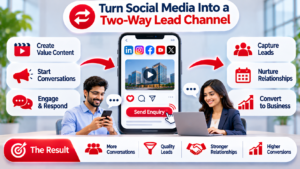
A social account can attract a lead when its posts solve a relevant problem and make the next step easy to find. Pick platforms your audience uses, then share material that invites a useful exchange. Posting alone is not a plan.
Use organic posts to build trust, direct engagement to answer people, and paid social to reach selected audiences. LinkedIn can suit B2B expertise and professional discussion. Instagram, Facebook, or YouTube may fit when their users and formats match your customers.
Short videos are one format to test, not a guaranteed source of leads. YouTube had 2.53 billion monthly active users in January 2025 and was the second most visited global website. That scale does not predict results for an individual business.
Sixty-six percent of marketers report generating leads after spending six hours per week on social media. Use that figure as context, not a promise. Low-effort posts on a platform your audience ignores will not make a sound strategy.
- Select platforms based on the audience you want to reach.
- Publish useful material on a steady schedule.
- Respond to comments and messages with helpful answers.
- Link profiles to relevant pages where visitors can act.
A B2B consultant might share a short answer to a common buyer question, then invite readers to a related case study. A retailer might show a product in use and answer questions about size or delivery. Spend time on the platforms where real customers already ask questions, not every platform with a large audience.
Use Paid Campaigns and Retargeting With a Clear Offer
Paid campaigns can reach prospects quickly, but a click is valuable only when the audience and offer fit. Paid search reaches people who are actively looking for a product or service. Intent guides the choice, while paid social can reach people by traits or interests.
Do not pay for broad traffic just to raise form submissions. Facebook lead ads are one example of an in-platform form that lets people respond without first visiting your website. A Facebook lead-generation campaign can collect interest for a relevant offer, but the form does not settle how personal data is used.
Target paid campaigns around intent and audience fit
Use search ads when a prospect’s query signals a current need. Use social ads when the audience or offer suits a selected group, such as local homeowners or operations leaders. For a closer look at Facebook advertising and conversion tracking, plan the goal, audience, and follow-up together.
The DPDP Act does not create a separate legal category for Meta or Facebook lead forms. Assess what personal data is processed, who processes it, why it is used, and whether the Act applies.
Bring interested visitors back with relevant follow-up
Retargeting shows follow-up ads to people who previously interacted with a site or social content. Match the message to what they did. A visitor who read a service guide may need a related case study, not a generic discount.
For example, promote a useful guide to people who visited a related page. Retarget visitors who did not convert with a reminder that explains the guide’s value. Reports say retargeting can raise ad engagement by up to 400%, and targeted display users can have a 180.6% higher click-through rate. Those figures do not promise results for your campaign.
Pause any campaign that brings cheap submissions but no qualified conversations.
Combine Email Outreach With Relationship-Based Selling
A relevant email gives a prospect a reason to reply, not just another message to ignore. Use a clear reason to contact each person and connect it to a real need. Relevance earns attention better than a bulk pitch.
Keep messages concise, make the next step clear, and offer a simple way to opt out or change preferences. Targeted email can share useful information, while a thoughtful follow-up can answer a question or add a helpful detail. Referrals and partner introductions can also open a conversation.
Choose a sales approach that suits the offer and relationship:
- Consultative selling: ask about the need before suggesting a fit.
- Solution selling: connect a problem to a practical answer.
- Account-based outreach: tailor contact to a selected business account.
- Social selling: build trust through useful public interactions.
- Relationship-based referrals: ask trusted contacts for relevant introductions.
Personalization should go beyond adding a first name. Mention a relevant event, business goal, or question that explains why the contact makes sense. Do not send the same bulk pitch to poorly matched contacts.
Some teams use “3-3-3 rule” for different sales outreach habits. The phrase has no single shared formula, so define your own three actions and timing. For example, agree on the message, follow-up, and close-out step, then set a sensible schedule.
Eighteen percent of businesses report email marketing ROI above $70 for every $1 invested. Treat that as context, not a promise for a campaign; results depend on audience, offer, and execution. Review replies and unsubscribes before increasing outreach volume.
Match Lead Magnets, Webinars, and Demos to Buyer Readiness
The best offer depends on what the prospect is trying to decide today. Early-stage prospects may value a guide, while people comparing providers often need stronger proof. Match the offer to the question, not just the channel.
A useful offer helps a real prospect make progress toward a buying decision. Choose from these common options:
- Guide or checklist for prospects researching a problem or approach.
- Webinar or case study for prospects comparing possible solutions.
- Demo for prospects nearing a decision and checking product fit.
A free trial can suit a product people need to test themselves. A consultation may fit a service that needs expert advice. An interactive assessment can help when the prospect needs to understand their own needs first.
A credible case study names the customer’s problem, describes the approach, and reports an outcome. Avoid claims that cannot be explained or backed by real details. Sixty-eight percent of marketers use case studies in lead generation planning.
A webinar earns registrations when its topic answers a real question. Follow-up should serve attendees with relevant notes or next steps. B2B webinars converted at 2.3% in the 2019-2024 dataset, using hard actions such as demos, trials, form fills, and calls divided by unique visitors. Registrations alone do not equal customers.
A generic prize can draw people who want the giveaway, not the product. Ask whether the offer will help the intended prospect make a real buying decision before putting it behind a form.
Connect Automation, CRM, and Lead Generation Tools
Automation earns its place when it removes a repetitive task without losing the context a salesperson needs. A basic workflow can send a form response to the right team, assign follow-up, and connect the form with email or CRM systems. Keep the handoff useful, not just fast.
Map the full process before buying tools that may overlap. AI can support content work and repetitive tasks, but a person must review its output. In 2026, 94% of marketers plan to use AI in content-creation processes.
Automate repeatable handoffs without losing context
Start with a simple case: a form response arrives, the right team receives it, and someone owns the next action. Keep the prospect’s request attached so sales staff know what prompted the inquiry. This reduces missed leads without hiding the reason for contact.
Zapier offers a free plan and paid plans starting at $19.99 per month when billed annually. The platform says it connects more than 9,000 apps. HubSpot offers a free form builder and free CRM, while paid prices vary by product hub.
Track source, qualification, and revenue in the CRM
Record each lead’s source, campaign, qualification status, follow-up, and eventual revenue outcome. That view helps a team improve for profitable customers rather than low-cost contacts. For more on automation in B2B lead generation, connect capture, follow-up, and CRM records.
Lead generation tools should fit your integrations, handoff needs, reporting, and budget. A lead generation salary in India is a compensation question shaped by role, experience, location, industry, and fixed-versus-variable pay. It does not measure campaign performance.
Test one complete lead handoff before automating the workflow at scale.
Measure Lead Quality and Protect Personal Data
A high lead count can hide a weak pipeline when few submissions qualify or generate revenue. Track cost per qualified lead, lead-to-customer conversion, and revenue to judge performance. Quality changes the picture beyond raw lead count or cost per lead.
Set agreed fit and intent rules before judging whether a lead is qualified. Forty-point-two percent of B2B marketers report pressure to deliver MQLs regardless of lead quality. Conversion-rate optimization, or testing changes to improve action rates, helps teams compare page or offer versions. Fifty percent of marketers use it, making it the second-most-used optimization technique in a cited 2026 report. Lead-to-customer conversion ranks as marketers’ second most important KPI across business sizes.
Optimize for qualified leads and revenue, not raw volume
Raw lead count shows how many people responded, but not whether they fit or bought. Cost per lead can also reward cheap contacts that never become customers. Track cost per qualified lead and revenue alongside lead-to-customer conversion.
Test one change at a time, such as the offer or page headline, and compare results against a baseline. A B2B lead generation and sales process can work better when marketing and sales agree on fit and follow-up.
Make consent and lead-form notices clear
The Digital Personal Data Protection (DPDP) Act applies to personal data in its scope. A lead notice should stand alone, use plain language, list the personal data collected, and state each specific purpose. Where consent is the applicable basis, it must be free, specific, informed, and unambiguous.
Give people a practical way to withdraw consent when consent applies. Meta or Facebook lead forms do not create a separate legal category. Consider the data, who handles it, the purpose, and whether the Act applies.
Apply the DPDP Rules according to their phased schedule
The DPDP Rules were notified November 13, 2025, with phased commencement. Businesses should not assume every substantive obligation is enforceable in 2026. The Rules’ phased commencement schedule sets different dates for separate groups of rules.
| Commencement | Rules | Practical meaning |
|---|---|---|
| November 13, 2025, on publication | Rules 1, 2, and 17-21 | These rules came into force on publication |
| One year later | Rule 4 | Scheduled to come into force one year after publication |
| May 13, 2027, 18 months after publication | Rules 3, 5-16, 22, and 23 | Major provisions for data collection and processing are scheduled |
A Data Fiduciary decides why and how personal data is processed. A Data Processor handles personal data for a Data Fiduciary. The Data Fiduciary must use reasonable safeguards for data in its possession or control, including when a Data Processor handles it.
- Audit the notice text.
- List the personal data collected.
- State each specific purpose.
- Test the withdrawal route.
- Check Data Processor safeguards.
Check the current legal position with an appropriate adviser before relying on a commencement date. Before the next campaign goes live, check its measurement criteria, notice, consent flow, and data handoffs.
Conclusion
Better lead generation starts with a clear buyer and a useful reason to engage. A focused plan pairs a well-defined audience with an offer that fits its stage and a measurable follow-up. That gives marketing and sales a shared way to judge whether the campaign helped customers and the business.
Choose one high-priority improvement, record a baseline, and review qualified leads and revenue after the campaign. Do not change several parts at once if you need to learn what worked. A clear record makes the next decision easier.
For the next campaign, write down who it is for, what they receive, where they convert, and how the team will judge success.