
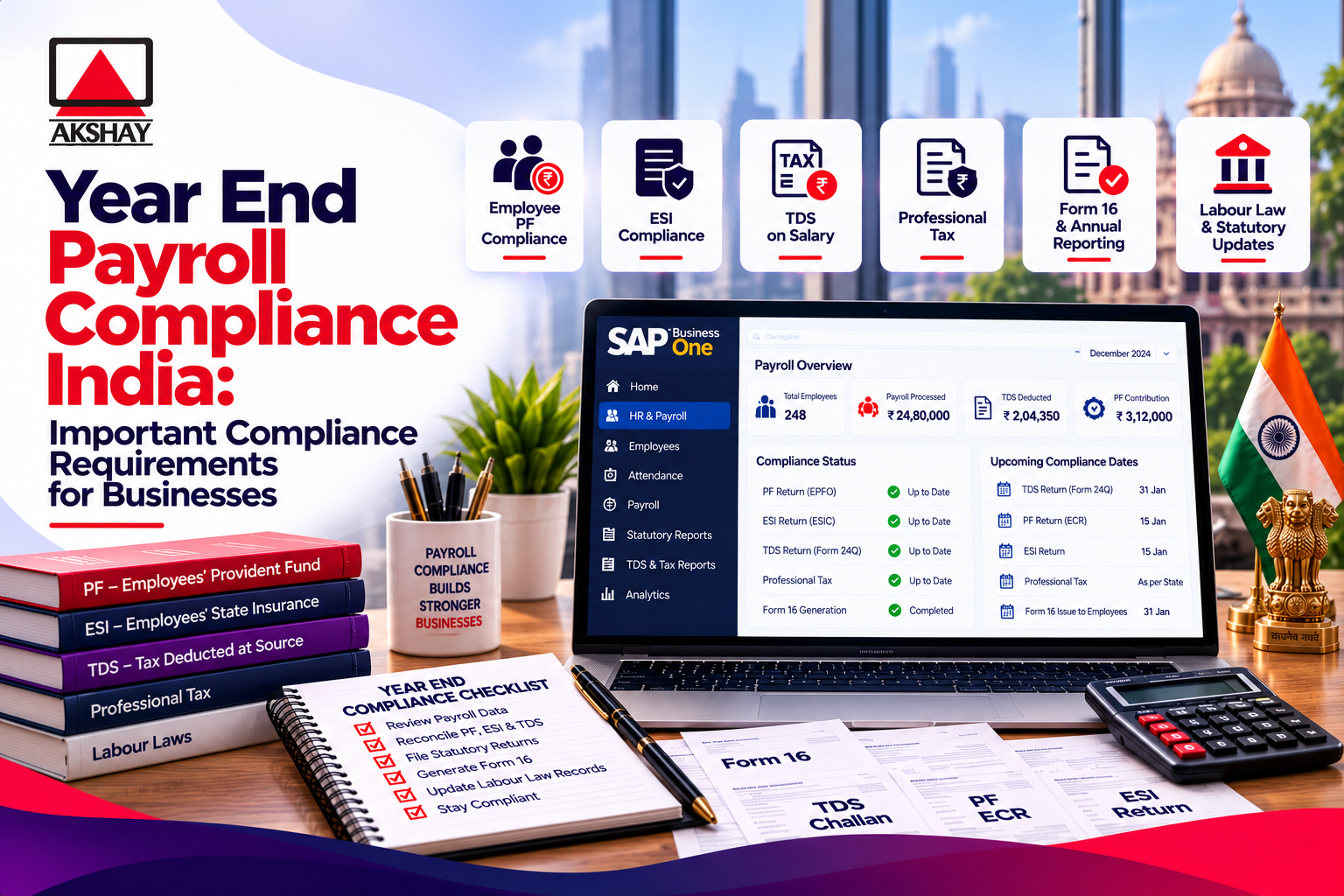
Getting ready for the end of the year needs a structured approach. This guide helps you manage year end payroll compliance india well.
We make it easy with ten steps. These steps cover planning, checks, audits, and maybe outsourcing. This roadmap keeps your operations accurate.
It’s key to check employee records and year end tax filings carefully. Make sure all payment records are correct before starting the new year. Preparation is the key for a smooth start.
Key Takeaways
- Establish a clear calendar to track all statutory deadlines.
- Perform thorough reconciliations of all salary and tax data.
- Verify employee information to prevent reporting discrepancies.
- Conduct internal audits to identify possible gaps early.
- Evaluate the benefits of outsourcing for future efficiency.
Build the Year-End Payroll Compliance Plan
A successful year end payroll process in India starts with early planning. It needs teams to work together. This way, organizations can avoid risks and meet all legal needs before the deadline. Proactive preparation helps keep things accurate during this busy time.
Step 1: Set the Financial-Year Payroll Calendar
The first step is to plan out key dates for the rest of the year. You need to mark dates for reviews, filing with government bodies, and when to stop payroll work. Planning ahead helps teams avoid mistakes from rushing.
Step 2: Assign Responsibilities Across Payroll, HR, Finance, and Legal Teams
For year end payroll compliance India, teams must work together. Each group knows their part in checking data and meeting laws. Good communication stops delays and keeps everyone on track.
| Department | Primary Responsibility | Key Deliverable |
|---|---|---|
| Payroll | Data processing and reconciliation | Final payroll registers |
| Human Resources | Employee records and declarations | Updated tax regime choices |
| Finance | Statutory payment verification | Bank payment files |
| Legal | Regulatory compliance oversight | Statutory audit reports |
Step 3: Gather Payroll Registers, Employee Records, and Statutory Payment Receipts
Gathering all important documents is key for a smooth audit. You need to collect detailed payroll records, employee info, and proof of payments. Keeping these documents in one place makes checking them much easier.
Use a Compliance Checklist to Track Owners, Deadlines, and Evidence
A detailed payroll compliance checklist is vital. It helps managers assign tasks, keep track of deadlines, and find missing info. With a payroll compliance checklist, your team can fix issues early. This makes the year end payroll process clear and follows Indian labor laws.
Confirm Statutory Obligations Under Indian Payroll Regulations
Understanding Indian payroll regulations is complex. Businesses must follow government rules for deductions and contributions. This is not just to avoid fines but to earn trust from employees.
Step 4: Verify Employees Covered by Provident Fund Requirements
The Employees’ Provident Fund (EPF) is a must for eligible staff. Check that all employees earning less than a certain amount are enrolled. Regular audits of payroll data find any errors or missed enrollments.
Step 5: Reconcile Employees and Contributions Under ESI Rules
The Employees’ State Insurance (ESI) scheme offers medical and cash benefits. It’s important to match your employee list with ESI rules. Make sure contribution rates are correct based on each employee’s salary.
Review Professional Tax and Labour Welfare Fund Obligations by State
Handling state-specific taxes is tough. Professional Tax (PT) and Labour Welfare Fund (LWF) rules change by state. Keep track of these differences to stay compliant everywhere.
Check State-Specific Registration, Deduction, Payment, and Filing Rules
Each state has its own tax filing portal and deadlines. It’s crucial to keep a calendar for PT and LWF payments in every state. Not following these rules can harm your year end payroll compliance India.
Assess Gratuity, Bonus, Maternity Benefit, and Other Applicable Labour Laws
You also need to check for long-term benefits like gratuity and bonuses. These legal compliance India checks show your company keeps its promises. Make sure to review maternity benefits and leave policies too.
| Statutory Component | Applicability Basis | Frequency |
|---|---|---|
| Provident Fund | Basic + DA | Monthly |
| ESI | Gross Salary | Monthly |
| Professional Tax | State Slab | Monthly/Annual |
| Labour Welfare Fund | State Rule | Half-Yearly/Annual |
Complete Year End Payroll Compliance India Tax Checks
Starting with Indian payroll regulations means checking your tax records before the year ends. This step makes sure all income and tax deductions match government rules. Doing this early helps avoid fines and makes the new year smoother.
Step 6: Reconcile Salary Income With Taxable Perquisites and Benefits
Checking salary structures is key to find taxable perks. Employers must check if non-money benefits, like housing or car allowances, follow tax laws. Being accurate here is very important to avoid missing taxable income.
Validate Employee Tax Declarations, Investment Proofs, and Exemption Claims
Checking employee investment proofs is a big part of year end payroll compliance india. Payroll teams need to match documents with what employees said at the start of the year. This makes sure tax savings are real and backed by documents.
Review House Rent Allowance, Leave Travel Allowance, Interest, and Section 80C Claims
Focus on common exemptions that get checked a lot. You need to check these items to make sure they follow the law:
- House Rent Allowance (HRA): Check rent receipts and landlord PAN details.
- Leave Travel Allowance (LTA): Verify travel proofs and actual spending.
- Interest on Housing Loans: Look at certificates from banks.
- Section 80C Claims: Check receipts for life insurance, PPF, and ELSS.
Match Tax Deducted at Source With Payroll Records and Challans
Matching TDS with payroll records is key for financial honesty. You must make sure the tax withheld from salaries matches what’s deposited with the government. Any differences need to be fixed right away to avoid problems.
Compare Form 24Q Data With Form 26AS, Annual Information Statement, and Payroll Reports
Keeping data consistent on government forms is a must for year end tax filings. It’s best to match your payroll reports, Form 24Q, and the Annual Information Statement (AIS). Any differences can lead to tax notices.
Prepare Accurate Form 16 Data and Year-End Tax Filings
The work of these checks is to make sure Form 16 certificates are right. By verifying all data, employers can give employees correct tax statements. This makes year end tax filings easier and shows the company follows Indian payroll regulations.
Reconcile Payroll, General Ledger, and Statutory Payments
The year end payroll process needs your financial records to match your legal duties. By checking your financial records, you make sure all salary payments and tax debts are right before the year ends.
Step 7: Match Gross Pay, Deductions, Net Pay, and Employer Contributions
First, check if your payroll numbers add up correctly. Make sure the total of what employees earn minus deductions equals their net pay. It’s important to get employer contributions like PF and ESI right to avoid mistakes in your financial reports.
Reconcile Payroll Registers With Bank Payment Files and the General Ledger
Your payroll register should match your bank statements and general ledger. This step makes sure the salary expense in your accounting software matches the money paid to employees. Any differences often mean you missed something or made a mistake in your payroll software.
Investigate Timing Differences, Reversals, Failed Transfers, and Manual Adjustments
Even with automated systems, timing issues or technical problems can cause problems. Look into these to keep your records clean:
- Failed bank transfers that need to be re-done or handled manually.
- Salary payments reversed because of wrong bank details.
- Manual changes for extra payments or salary fixes during the month.
- Discrepancies between when you cut off payroll and when the bank clears it.
Verify Provident Fund, ESI, Professional Tax, and TDS Challan Amounts
Right payroll reporting needs checking statutory payments against government challans. Make sure the money taken from salaries matches what you paid out. Also, check that challan numbers and dates match your payroll records for easy audits.
Resolve Negative Balances, Duplicate Employees, and Unusual Payroll Variances
Lastly, look closely at your payroll data for any oddities. Unusual things like negative net pay or duplicate employees usually come from mistakes or system bugs. Fixing these quickly makes sure your reports are accurate and fair.
Close Employee Tax and Payroll Records Correctly
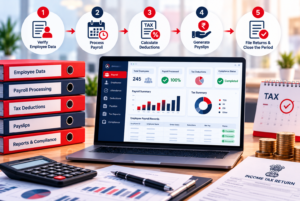
To get your year end payroll process right, you need to focus on each employee’s details. Before the year ends, the HR and finance teams must check every file. They must make sure it shows the current state of the team.
Step 8: Collect Missing Employee Declarations and Supporting Documents
First, check all investment and income proof documents. Missing paperwork can lead to wrong tax deductions. This can cause big problems for employees later.
Make sure rent receipts, insurance, and home loan interest are correct. Ask staff who haven’t sent in their tax-saving proofs yet to do so quickly.
Process New Joiners, Transfers, Promotions, Leave Without Pay, and Final Settlements
Handling changes in the team is key to the year end payroll process. You need to update payroll for new hires or those who moved roles.
For those leaving, settle their final pay quickly. This includes unpaid leave and any salary changes they were owed.
Calculate Notice Pay, Leave Encashment, Bonus, Gratuity, and Recoveries Accurately
When calculating final benefits, be very precise. Use the table below to make sure you include everything in the final pay:
| Benefit Component | Calculation Basis | Key Consideration |
|---|---|---|
| Notice Pay | Contractual period | Recoveries for shortfalls |
| Leave Encashment | Earned leave balance | Company policy limits |
| Gratuity | Years of service | Statutory eligibility |
Update Employee Tax Regime Elections and Personal Information
At year’s end, employees might change their tax choices. Make sure these changes are made in the payroll system.
Also, check that personal details like PAN, Aadhaar, and bank numbers are up to date. Accurate data entry stops payment issues and smooths tax filing.
Deliver Payslips, Tax Statements, and Form 16 Through Secure Channels
The last step is to give out important documents to employees. Use secure portals or emails to send payslips and Form 16.
Security is key when sharing financial info. Securely sending these documents keeps employee data safe and builds trust.
Meet Labour Laws Compliance India Requirements by Location
To fully comply with legal compliance India, businesses need to tailor their payroll to each state’s rules. Because laws change at state borders, a single plan won’t work. Companies must use a local approach to deal with the different rules.
Step 9: Map Payroll Requirements to Each State and Union Territory
Each state has its own payroll rules and filing needs. You must know which state each employee works in. Mapping these requirements helps your payroll system handle taxes and benefits right.
Check Minimum Wages, Wage Periods, Payment Deadlines, and Overtime Rules
Minimum wages change often, affecting your payroll. Keeping up with these updates is key to avoid fines. Payment times and overtime rules also differ, making labor laws compliance India a moving target.
Review State Rules Under the Shops and Establishments Acts
The Shops and Establishments Act rules most businesses in India. Each state has its own version, covering:
- Working hours and breaks.
- Office opening and closing times.
- License registration and renewal.
- Holidays and leave policies.
Verify Bonus, Gratuity, Leave, Maternity, and Equal Pay Compliance
You also need to follow laws on bonuses, gratuity, leave, maternity, and equal pay. Make sure your legal compliance india covers these areas:
- On-time bonuses.
- Gratuity for long-term employees.
- Maternity and equal pay acts.
- Leave balances.
Document Remote, Hybrid, Contract, and Multi-State Workforce Obligations
Today’s work setups make labor laws compliance India more complex. For remote or hybrid workers, the law depends on where they report. Keep clear records for contract workers to show they’re not permanent staff.
Keeping accurate records for workers in different states is vital for audits. Make sure your payroll software can handle taxes and deductions for workers in various states.
Submit Payroll Reports and Preserve Filing Evidence
After you finish the calculations, it’s time to submit the reports. Following Indian payroll regulations is key to keep your company in good shape. Doing this right helps avoid fines and legal trouble.
Step 10: Complete Provident Fund and ESI Electronic Filings
Today, most reports must be filed online for quick and clear tracking. Make sure to upload all Provident Fund (PF) and Employee State Insurance (ESI) payments on time. Being accurate in these filings is very important to keep employee benefits right.
Submit Professional Tax, Labour Welfare Fund, and State Payroll Returns
You also need to meet state-specific rules. This means filing Professional Tax (PT) and Labour Welfare Fund (LWF) reports as each state requires. Not following these rules can cause big problems.
Complete TDS Returns, Certificates, and Other Year-End Tax Filings
The last step is handling your year end tax filings, like Tax Deducted at Source (TDS). You must give out Form 16 certificates to all employees on time. These are key for their tax filing and show you followed tax rules.
Record Filing Acknowledgments, Challans, Correction Statements, and Payment Receipts
Keeping records is as important as filing the reports. You should keep a place for:
- Digital filing acknowledgments for every submission.
- Challans confirming the successful transfer of statutory payments.
- Correction statements if any revisions were required post-filing.
- Official payment receipts from government portals.
Maintain Payroll Reporting Requirements for Internal and Regulatory Reviews
Good payroll reporting requirements help during audits or government checks. Keeping your records organized helps your team quickly find what they need. Having a clear audit trail shows you’re open and do things well in payroll.
Run a Final Payroll Audit and Strengthen Internal Controls
Doing a final payroll audit is the ultimate safeguard for your company’s money. It checks if your steps follow legal compliance India rules before the new year starts.
Review Payroll Access, Approval Workflows, and Segregation of Duties
First, see who can change your payroll software. Make sure no one can do everything by themselves.
Having segregation of duties stops bad changes. Check your approval steps. Make sure two people must okay each payroll.
Test Master Data Changes, Manual Entries, and Off-Cycle Payments
Check your master data for mistakes, like wrong bank info or old tax status. Look at all manual entries to make sure they match the real documents.
Off-cycle payments can hide errors. Check these payments against your payroll records to keep things right.
Obtain Approvals for Exceptions, Retroactive Changes, and One-Time Payments
Any special payments or changes need clear proof. Documented approvals are key for one-time payments to avoid problems later.
Protect Personal, Tax, Bank, and Identity Information
Your payroll system has sensitive info. Use robust encryption to keep it safe. Only let needed people see bank and ID info.
Apply Indian Record-Retention and Data-Protection Practices
Follow local rules for keeping payroll records. Keep digital and paper records as long as Indian laws say. This meets payroll reporting requirements.
Document Corrective Actions Before Opening the New Payroll Year
Use a detailed payroll compliance checklist to note any problems found. Fixing these issues now stops them from being problems next year.
| Audit Category | Primary Objective | Action Required |
|---|---|---|
| Access Controls | Prevent Fraud | Review User Permissions |
| Data Integrity | Ensure Accuracy | Validate Master Records |
| Statutory Filings | Maintain Compliance | Verify Final Challans |
| Exception Handling | Audit Readiness | Document All Approvals |
Decide When Payroll Compliance Services Are Appropriate
Choosing between handling payroll yourself or getting help is a big decision. As your team grows, managing taxes and deductions can get too hard. The right payroll compliance services can make this process easier and less stressful.
Compare In-House Payroll Administration With Outsourced Support
Handling payroll yourself means you need a team that knows all the rules. But, it can lead to mistakes and missed deadlines. Outsourcing payroll to experts can protect your business from fines.
Evaluate Providers for Indian Tax, Statutory, and Multi-State Expertise
Look for a partner who knows all about Indian laws. They should be good at handling different state rules, like Professional Tax. Expertise is key in India’s complex tax system.
Check Data Security, Filing Controls, Service-Level Agreements, and Audit Support
Make sure the provider keeps your data safe. Check their Service-Level Agreements (SLAs) for how fast they do things. Good filing controls help avoid mistakes and keep your data safe.
Define Business Responsibilities for Approvals, Employee Data, and Statutory Payments
Even with help, you’re in charge of some things. You need to keep employee data right and approve payroll on time. Good communication is key to making sure payments are made right and on time.
Use a Service Provider Without Losing Oversight of Year-End Compliance
Outsourcing doesn’t mean you can ignore compliance. Hold regular meetings to check that everything is up to date. This way, you can make sure your business follows all labor laws compliance India rules all year.
| Feature | In-House Payroll | Outsourced Support |
|---|---|---|
| Regulatory Updates | Manual Monitoring | Automated/Expert-Led |
| Data Security | Internal Responsibility | Encrypted/Managed |
| Audit Readiness | High Effort Required | Proactive Support |
| Cost Structure | Fixed Staffing Costs | Scalable Service Fees |
Conclusion
Getting through the year-end smoothly needs careful planning. You must keep employee records right and make all necessary payments. Also, having strong controls is key to staying in line with the law.
Handling year-end tax filings is a big job. You need to pay close attention to every detail in each state. Keeping all records and audits safe helps avoid legal trouble.
Some companies grow fast or work in many places. They might need help from experts in payroll compliance. This way, they can focus on their main work without getting bogged down by paperwork.
Contact Us & Think if you need outside help for your payroll. A good plan keeps your team on track. Start planning early to make the end of your payroll cycle smooth and stress-free.