
Today’s businesses face a world that changes fast. They need to be quick and precise. Old systems hold them back and make it hard to make fast decisions.
SAP S/4HANA is a new way of managing business. It’s a strong digital core for today’s complex markets.
Switching to this advanced platform is now a must. It’s key for companies to stay ahead in our digital world. This tech helps firms grow and innovate for the long run.
Key Takeaways
- The platform serves as a modern foundation for complex global business operations.
- Real-time data processing allows for faster and more accurate decision-making.
- Moving to this system is a strategic requirement for staying competitive today.
- The software effectively replaces outdated legacy systems that limit organizational growth.
- Digital transformation is essential for companies operating in a fast-paced economy.
The Evolution of ERP Systems in the Indian Market
The journey to modern enterprise resource planning in India shows the country’s fast growth. It has become part of the global economy. Businesses have moved from simple bookkeeping to complex, data-based systems. This change is key for local firms to compete worldwide.
From Legacy Systems to Digital Transformation
At first, many companies used old, separate systems for managing their work. These systems made it hard for leaders to see how the company was doing. Digital transformation has changed this, bringing all departments together under one digital system.
Today, there are platforms that give a single view of finance, supply chain, and HR. These tools help companies work better and make fewer mistakes. This change is vital for businesses to grow in the Indian market.
The Unique Challenges Faced by Indian Enterprises
The journey to digital transformation is not easy. Indian businesses face special challenges that need special plans and flexible software. These challenges have made it hard for many to adopt advanced enterprise resource planning tools.
Some big challenges include:
- Complex Regulatory Environments: Dealing with many tax laws and updates.
- Infrastructure Gaps: Overcoming internet issues in remote areas for real-time data.
- Cultural Resistance: Changing from old ways to new digital processes.
- Scalability Demands: Growing fast but keeping systems stable and strong.
To solve these problems, it’s important to understand the Indian market. By connecting old ways to new global standards, companies can use their enterprise resource planning to grow. This approach makes digital transformation a base for lasting growth, not just a quick fix.
Understanding the Core Architecture of SAP S/4HANA
SAP S/4HANA has a new design for quick and efficient work. It leaves old systems behind for a single, fast digital core. This core meets the quick needs of Indian businesses.
In-Memory Computing and Real-Time Data Processing
The platform uses in-memory computing. It keeps data in RAM, not on slow disks. This change makes real-time data processing possible.
Now, leaders can see important info right away. They don’t have to wait for overnight reports. This lets them act fast on market changes.
Simplifying the Data Model for Enhanced Performance
The design also makes data handling simpler. It cuts down on extra data and structures. This makes SAP S/4HANA smaller and faster.
This simplification boosts performance in all areas. Big data sets are handled smoothly, making complex searches quicker. Businesses get better at handling big tasks.
With this setup, companies can move faster and grow without trouble. The system stays strong and ready for new ideas.
Case Study: Digital Transformation at a Leading Indian Manufacturing Firm
We look at how a big Indian maker became modern. They chose SAP S/4HANA to leave old systems behind. This move helped them grow faster.
Identifying Operational Bottlenecks Before Implementation
The company had big problems before changing. They couldn’t make decisions fast because of bad data. The main issues were:
- Inconsistent inventory tracking across multiple regional warehouses.
- Delayed production schedules due to manual procurement updates.
- High error rates in manual data entry for monthly audits.
Strategic Deployment of SAP S/4HANA Modules
The team chose a step-by-step plan to avoid stopping work. They focused on the most important parts first. This way, everyone could learn the new system without stopping production.
Optimizing Supply Chain Visibility
They added new modules for better supply chain visibility. Now, they can see everything from start to finish. This cuts down on waste and keeps production running smoothly.
Streamlining Financial Reporting and Compliance
The last step was making financial reporting easier. They added tax compliance to the ERP. SAP S/4HANA now makes reports that are ready for audits and meet all rules.
Driving Business Agility Through Intelligent Automation
To achieve business agility, companies need a big change in how they work. In India’s fast market, staying ahead means using new ways. Intelligent automation helps make businesses quick to change with what customers want.
Leveraging Artificial Intelligence and Machine Learning
Today, companies use artificial intelligence and machine learning to handle big data. These tools spot things humans might miss, giving actionable insights right away. This helps leaders make smart choices for the future.
Systems get better with time, learning from past data. This lets businesses predict changes instead of just reacting. Predictive modeling is key, making sure resources go where they’re most needed.
Automating Routine Tasks to Empower Human Capital
In India, many businesses waste time on simple tasks. Intelligent automation takes over these tasks, freeing up time for more important work. This is key for creativity and new ideas.
When people aren’t stuck on simple tasks, they can tackle big projects. This makes the team more engaged and boosts business agility everywhere.
Scalability and Cloud Readiness for Growing Indian Businesses
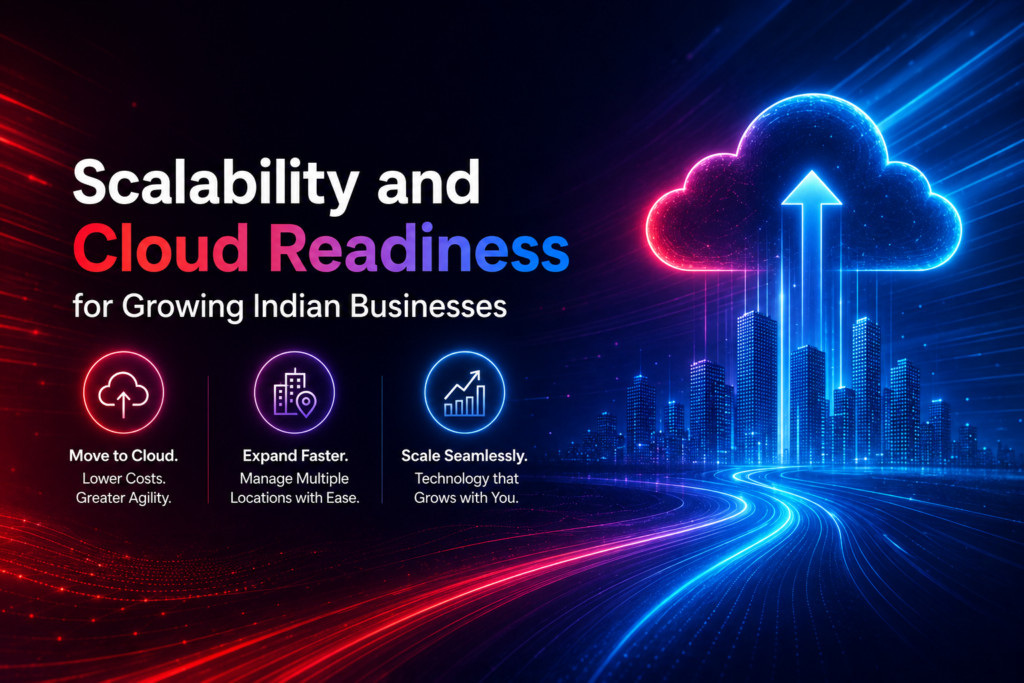
Scaling a business in the Indian market needs a strong tech base. As companies grow, they must adapt quickly to stay ahead. Old systems often hold them back, not help them grow.
Transitioning from On-Premise to Cloud Infrastructure
Switching to cloud infrastructure is a big step for businesses. It lets them cut costs and focus on new ideas. No more worrying about server updates and hardware changes.
Cloud systems are flexible, growing or shrinking as needed. This keeps operations lean and software running smoothly. Updates happen fast, without manual effort.
Supporting Rapid Expansion and Multi-Location Operations
Handling growth in many places needs a central system. Cloud-based ERPs let firms manage all locations from one place. This gives leaders the data they need, no matter where they are.
Expanding into new areas is faster with cloud tech. No long waits for new hardware. The tech grows with the company, supporting its goals.
| Feature | On-Premise ERP | Cloud ERP |
| Capital Investment | High Upfront Cost | Subscription Based |
| Scalability | Limited/Slow | Instant/Elastic |
| Maintenance | Internal IT Team | Managed by Provider |
| Accessibility | Office Network Only | Anywhere/Any Device |
Ensuring Regulatory Compliance and Data Security
Indian business rules are complex. Companies need a strong digital base. They must keep up with regulatory compliance and protect data. This is key to avoid legal issues and keep trust with stakeholders.
Meeting GST and Local Statutory Requirements
The Goods and Services Tax changed how Indian businesses handle money. Keeping up with GST compliance is now a main job of smart ERP systems. This makes it easier to avoid mistakes.
Automation is key here. Real-time tax work helps companies see their money better. This makes sure all deals follow local laws, easing audit worries.
Advanced Security Protocols in the SAP Ecosystem
In today’s world, data security is the first line of defense against cyber threats. The SAP system has strong protection for important business data. It keeps info safe and only lets the right people see it.
Companies get help from proactive monitoring and strong encryption. These tools help firms grow without worrying about data leaks. Security is not just a feature; it is the backbone of sustainable digital operations.
The Role of SAP S/4HANA in Data-Driven Decision Making
Turning raw data into a strategic asset is key for a digital business. In India’s fast economy, leaders need more than just old reports to win. SAP S/4HANA helps make complex data into actionable intelligence.
Advanced Analytics and Embedded Reporting Tools
Today’s companies gain a lot from analytics in their core processes. They don’t need separate systems anymore. Teams get real-time dashboards that show the latest operations. This seamless integration means every department works from the same truth.
Reporting tools let managers dive into specific metrics easily. They can see performance indicators and fix problems fast. This is key for keeping operations smooth in big companies.
Predictive Insights for Market Volatility
Dealing with the ups and downs of markets needs a forward-thinking approach. Predictive insights help businesses see changes in demand and supply chain issues early. This way, they avoid just reacting to problems.
These advanced models use lots of data to predict the future well. Companies that use data-backed strategies do better in the long run. They become more stable and profitable. Being able to make good decisions in a changing world is what Indian firms need.
Overcoming Implementation Hurdles in the Indian Context
Companies in the Indian market face special challenges when they adopt new ERP systems. The technical side is important, but people’s attitudes are key to success. Leaders need to get ready for resistance and help their teams adjust to new ways of working.
Change Management and Employee Training Strategies
Switching to SAP S/4HANA needs a strong plan for change. Employees might worry about new ways of working. So, it’s vital to talk clearly and build trust. Comprehensive training programs make sure staff can use the new system right away.
Good strategies include:
- Interactive workshops for different roles.
- Support channels for quick help.
- Programs that reward quick adoption.
Partnering with Certified SAP Implementation Experts
Handling a big rollout is tough without expert help. Working with certified experts gives the technical know-how to meet business goals. They know the Indian market rules and can avoid common mistakes.
Choosing the right partner means the system can grow and stay safe. Experts help firms make the most of their investment. They make sure the change happens smoothly and fast.
| Strategy Component | Focus Area | Expected Outcome |
| Change Management | Cultural Alignment | Higher User Adoption |
| Employee Training | Skill Development | Increased Productivity |
| Expert Partnership | Technical Precision | Reduced Implementation Risk |
Conclusion
Today, businesses face a big choice. They must be quick to change to stay ahead. Choosing SAP S/4HANA shows they’re ready for the future.
This platform changes how companies work in India. It uses smart automation and cloud power. It turns data into useful information for quick decisions.
By investing in this tech, teams can create new ideas instead of just doing tasks. Leaders who adopt this approach will lead their companies to success in the digital world.
Starting your digital transformation journey is the first step to staying ahead. Check your current setup to see how these tools can improve your business. Connect with Us to begin making your company smarter and stronger.