
In today’s fast-paced market, companies must stay agile to survive. Many organizations now rely on enterprise resource planning to connect their departments and streamline daily operations.
By centralizing data, firms gain a clear view of their performance. This visibility is essential for leaders who want to make smarter decisions quickly. When teams work from a single source of truth, efficiency naturally increases.
Implementing sap erp software acts as a catalyst for long-term success. It provides the digital infrastructure needed to scale operations without losing control. As companies in India look to expand, this technology ensures they remain competitive on a global stage.
Ultimately, investing in these tools is about more than just organization. It is a strategic move to drive sustainable business growth in an unpredictable economy.
Key Takeaways
- Centralized data systems improve operational efficiency across all departments.
- Real-time insights allow leadership to make faster, data-driven decisions.
- Integrated platforms provide the necessary agility to adapt to market changes.
- Modern digital infrastructure is a prerequisite for scaling business operations effectively.
- Strategic technology adoption remains a primary driver for long-term competitive advantage.
The Strategic Importance of SAP ERP Software in the Indian Market
The Indian business world is changing fast. Companies are moving to digital systems to stay ahead. Sap erp software is key for success. It helps firms work better and stay quick in a fast economy.
Understanding the Digital Transformation Landscape in India
Digital transformation is now a must for indian market businesses. They’re leaving old systems for new ones that show data in real time. This helps leaders make smart choices for the future.
Indian companies face the challenge of growing fast but staying efficient. Using new tech helps them do tasks better and cut down on mistakes. This keeps them strong against market changes and what customers want.
Why SAP ERP Software is the Industry Standard for Scalability
Scalability is where SAP stands out. It grows with your business, no matter where you are. This is key for companies that expect to change a lot.
The table below shows why SAP is great for growing businesses:
| Feature | Operational Benefit | Impact on Growth |
| Cloud Integration | Remote accessibility | High |
| Modular Design | Customized functionality | High |
| Data Analytics | Informed decision-making | Very High |
| Compliance Tools | Regulatory adherence | Medium |
Sap erp software is key for growing businesses. It supports digital transformation in the indian market. This gives companies an edge and keeps their systems ready for new ideas.
Preparing Your Organization for SAP Implementation
Planning is key for a successful enterprise resource planning rollout. Before starting, make sure your company is ready for the big change. A good implementation strategy lowers risks and helps teams deal with digital changes.
Assessing Current Infrastructure and Readiness
Start by checking your current tech setup. See if your servers and network can handle sap erp software. Finding technical gaps early saves time and money later.
Look at your data and workflows too. Good data and clear processes are important for a smooth move. If your current ways are messy, now’s the time to fix them.
Defining Clear Business Objectives and KPIs
Every digital change needs a clear plan. Set specific goals that show your growth plans in India. Use KPIs to measure success and see if you’re getting a good return.
Choose important metrics like how fast you process orders or how accurate your reports are. Clear goals help everyone stay focused. This focus is key for good project management.
Assembling the Right Implementation Team
A good team is essential for a smooth transition. You need people who know both the business and the tech. Include these roles in your main team:
- Executive Sponsors: They give vision and clear the way.
- Functional Leads: They connect business processes with the new sap erp software.
- Technical Architects: They handle system integration and data moves.
- Change Management Specialists: They make sure staff gets trained and on board.
Choosing the right team strengthens your implementation strategy. Good project management comes from working together. Empowering your team from the start leads to success.
Mapping Business Processes to SAP Modules
Getting your business processes into SAP is key. It’s like making a blueprint for your digital change. By writing down how your teams work, you make sure the software helps you, not hinders.
Identifying Core Functional Requirements
First, you need to check your current workflows. Look at what makes your business run well and what doesn’t. Knowing these points helps pick the right SAP modules for your needs.
- Document current procurement and supply chain cycles.
- Analyze financial reporting and accounting workflows.
- Identify gaps in data visibility across departments.
- Map customer service interactions to sales modules.
Aligning SAP S/4HANA Capabilities with Operational Needs
Today’s businesses need s/4hana to keep up in India. It gives fast, smart data that helps managers make better choices. Matching its power with your business needs brings big benefits and boosts productivity.
This platform is great at handling big data. It gives a clear view of your company, helping it grow. Using these tools keeps your business quick to adapt in a fast-changing world.
Customization Versus Standard Best Practices
Choosing between standard practices and custom setups is tough. Custom might seem good, but it can cost more and cause problems later. Going with standard business processes usually means faster, cheaper success.
| Feature | Standard Best Practices | Custom Configuration |
| Implementation Speed | Fast and Predictable | Slow and Complex |
| Maintenance Effort | Low (Automated Updates) | High (Manual Testing) |
| System Scalability | High | Variable |
Try to use s/4hana standard features first. Save custom work for things that really set you apart. This way, you keep your system stable and strong over time.
Configuring SAP ERP for Local Compliance and GST
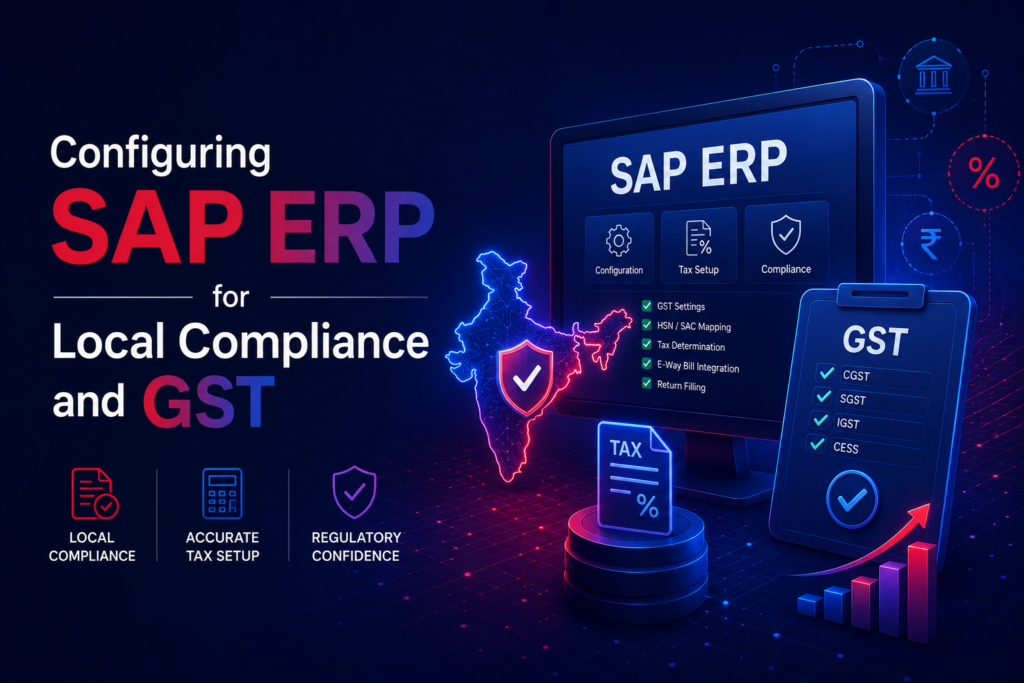
Understanding local tax rules is key to a successful SAP ERP setup in India. Companies must deal with many financial rules that need careful planning. By adding these rules to your digital setup, you lay a strong base for growth.
Navigating Indian Tax Regulations within SAP
India’s tax rules are complex and need quick changes. SAP offers strong tools to help businesses fit these rules into their work. This keeps all transactions in line with the law from the start.
To set up right, you need to create tax codes and master data that match local rules. When done right, the system applies the right taxes to all deals. This helps avoid fines and keeps your books right.
Setting Up Automated GST Reporting
Manual entry can lead to mistakes and big fines. Using automated GST compliance in SAP changes how you handle tax filings. It uses built-in tools to pull data for accurate tax reports.
Automation also makes checking your books against the government easier. This lets your finance team focus on big-picture tasks. Consistency is key in the fast-paced Indian market.
Ensuring Statutory Compliance and Audit Readiness
Being ready for audits is vital for your business’s future. Your SAP setup should have detailed audit trails for all financial changes. These logs make audits easier and more transparent.
Keeping your system up to date is also important. It helps you follow new tax laws and formats. By focusing on statutory compliance, you avoid legal issues and gain trust from others. The table below shows the benefits of moving to an automated SAP system.
| Feature | Manual Process | Automated SAP Framework |
| Data Accuracy | High risk of human error | High precision and validation |
| Reporting Speed | Slow and labor-intensive | Real-time generation |
| Audit Trail | Fragmented and incomplete | Centralized and transparent |
| Compliance Risk | High exposure to penalties | Minimized through logic |
Integrating Data Migration Strategies for Seamless Transition
Getting your business to a new ERP system is tough. It’s all about moving old data to a new place. A good data migration plan keeps things running smoothly and your data right.
Cleaning and Validating Legacy Data
First, check your old data for errors. Old systems often have bad data that can mess up your new SAP system. Cleaning this data is key to a good start.
Make sure the data is right by getting everyone involved. This way, you can get rid of old files and make things faster. It also helps avoid mistakes when you switch over.
Choosing the Right Migration Tools
Picking the right tools is important for a smooth move. Whether you’re moving to the cloud or not, the tools must work with SAP S/4HANA. Look for these things when choosing:
- Scalability: Can it handle lots of data?
- Compatibility: Does it work with your old system?
- Automation: Can it help avoid mistakes?
Testing Data Integrity Before Go-Live
Testing is the last step before you go live. You need to test everything to make sure it works right. This meticulous validation finds problems before they cause delays.
Testing like you’re really using it helps. This way, you know everything will work as it should. Only say yes to going live when you’re sure everything is perfect.
Training Your Workforce for SAP Adoption
Teaching your team well is key to SAP success. The software is the tech base. But, how your team uses it depends on their training. Changing how you work is as important as the tech change.
Developing Role-Based Training Programs
Generic training doesn’t meet everyone’s needs. It’s better to have training for each role. For example, a buyer needs different skills than a financial manager.
Segmented training helps users learn what they need. This makes them more confident and productive faster.
Creating Documentation and Support Resources
Even the best-trained might need help later. Good documentation is key to keeping things running smoothly. Offer different types of learning materials, like:
- Step-by-step guides for common tasks.
- Short video tutorials for quick help.
- A knowledge base for common questions.
These tools help staff solve small problems on their own. This saves IT time and keeps work flowing.
Overcoming Resistance to Change
New systems can make people nervous. Good change management talks about the benefits. When staff see how it helps them, they’re more open to change.
Leaders should listen to concerns and be open. This turns hesitation into support. Investing in your team is the best way to get the most from new tech.
Optimizing Performance Through Real-Time Analytics
To grow your business, you need to understand your data in real time. In India, companies are using data to stay ahead. Real-time analytics helps leaders predict market changes before they happen.
Leveraging SAP Fiori for Enhanced User Experience
The success of software depends on how easy it is for employees to use. SAP Fiori makes complex tasks simple and user-friendly. This makes it easier for different teams to use the system.
- Simplified navigation makes it easier for new staff to learn.
- Responsive design works on all devices.
- Personalized dashboards show users what they need to do first.
Utilizing Embedded Analytics for Decision Making
Having business intelligence in your workflow saves time. It lets teams make quick, accurate decisions. This keeps everyone productive.
Embedded analytics give a clear view of important data. This lets managers focus on strategy, not just data. It’s a big help for growing businesses.
Monitoring System Health and Resource Allocation
Keeping your system healthy is key for good performance. Monitoring helps find problems before they affect users. It also makes sure your system can handle busy times without extra costs.
| Monitoring Feature | Traditional Approach | Real-Time Approach |
| Data Latency | Delayed (Daily/Weekly) | Instantaneous |
| Issue Detection | Reactive (Post-Failure) | Proactive (Predictive) |
| Resource Usage | Static Allocation | Dynamic Scaling |
Using these tools helps your business use every asset well. Regular monitoring and real-time analytics help your business grow and work better.
Troubleshooting Common Implementation Challenges
Getting digital transformation right often depends on tackling unexpected problems. Even with a solid implementation strategy, big companies in India face hurdles. Spotting these issues early is key to keeping things running smoothly.
Addressing Integration Bottlenecks
Getting data to flow smoothly between old systems and new SAP modules can be tough. System integration needs careful planning to avoid data problems. If data gets stuck, your team must check APIs and middleware to fix it.
Managing Scope Creep During Deployment
Good project management stops small changes from turning into big delays. When people ask for more features during deployment, it can throw off plans and budgets. Having a clear change control board helps keep things on track.
Resolving Post-Implementation Performance Issues
After the system is live, users might find it slow or have errors. A solid implementation strategy includes a support phase to keep an eye on things. By looking at user feedback and server logs, your IT team can make the system run better.
| Challenge Type | Primary Cause | Mitigation Strategy |
| Integration Errors | Data mapping mismatches | Automated validation testing |
| Scope Creep | Unclear project boundaries | Strict change control process |
| System Latency | Resource misallocation | Real-time performance monitoring |
| User Resistance | Lack of training | Role-based support resources |
Conclusion
Choosing SAP S/4HANA is a big step for any business wanting to lead in India. It’s the start of long-term success and being quick in a fast digital world.
When your team uses these tools well, they can make daily tasks better. By focusing on what really matters, they can do more important work. This makes your team more precise and ready to act.
Keeping your team trained is key to staying ahead. Regular checks and updates make sure you follow local and global rules. This keeps your business strong and ready for change.
Getting better at digital needs time and a clear plan. By focusing on making things run smoothly, you can grow bigger. Talk to your team today to start your growth plan.