
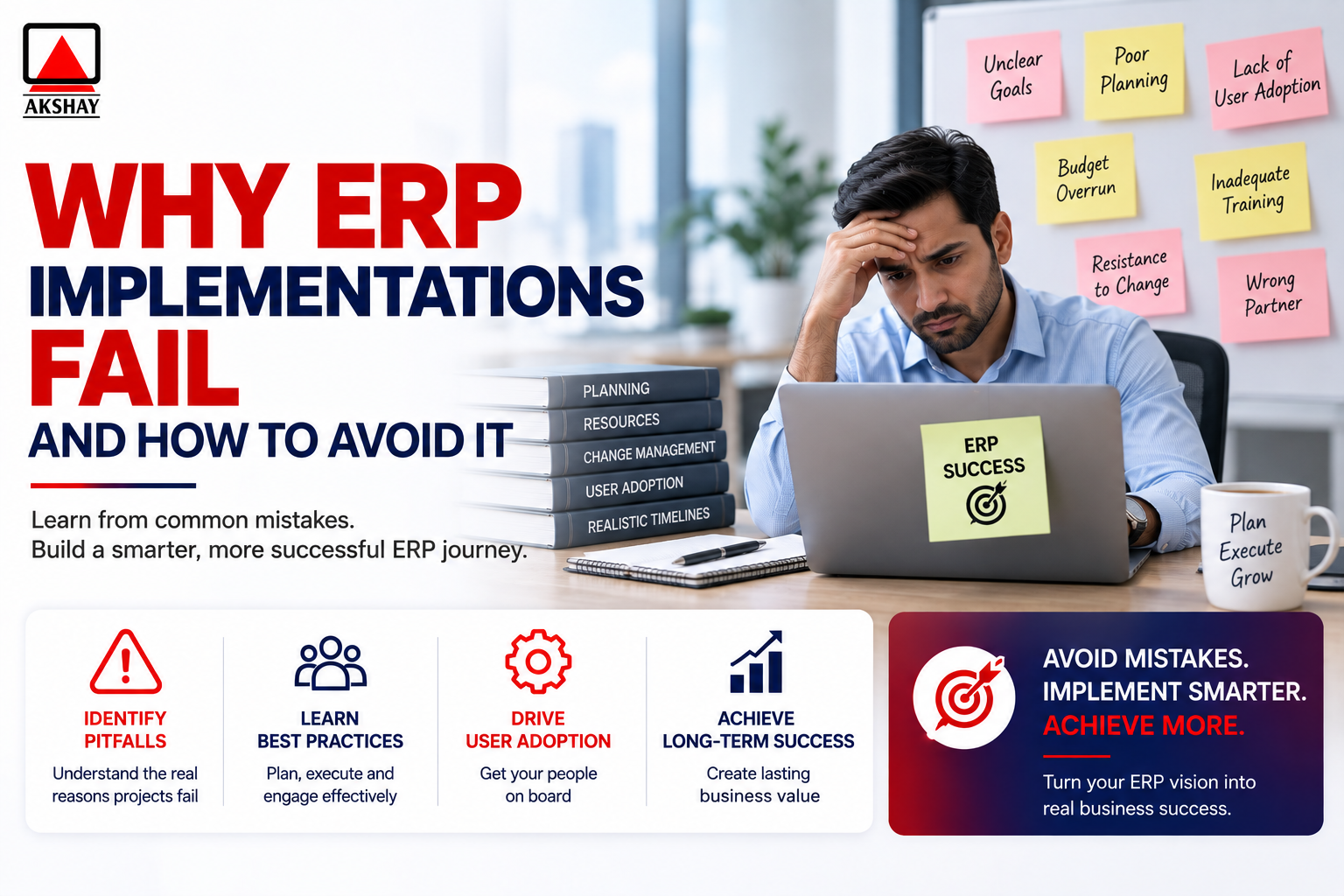
Modern Indian businesses are growing fast to compete worldwide. They use Enterprise Resource Planning systems to manage this growth. These digital tools aim to make workflows smoother and increase productivity across all departments.
But, the path to digital transformation is full of hidden challenges. Leaders often wonder why erp implementations fail even after spending a lot on new technology. Knowing these common problems is the first step to getting a good return on your investment.
Strategic planning is key to a successful software rollout. By setting clear goals and aligning the team, companies can handle complex changes with confidence. Making these steps a priority is vital for avoiding erp implementation failures and helping your business succeed in a competitive market.
Key Takeaways
- Digital transformation is vital for scaling modern Indian enterprises.
- Strategic planning serves as the foundation for long-term success.
- Identifying common risks early prevents costly project delays.
- Team alignment ensures smoother adoption of new software systems.
- Proactive management protects your organization’s digital investment.
Understanding ERP Systems
Enterprise Resource Planning, or ERP, is key for companies to grow fast. It’s a centralized software suite that links different parts of a business. This helps all departments work together smoothly.
ERP connects finance, human resources, and supply chain management. It makes sure info moves well across the company. This makes data accurate and consistent, which is very important.
What is an ERP System?
An ERP system is a big platform that makes daily business tasks easier. It replaces old ways like spreadsheets with a single place for all data. This way, teams can see real-time info easily.
This setup lets managers watch how different parts of the business are doing at the same time. Having all data in one spot means fewer mistakes. This leads to higher operational reliability.
Importance of ERP in Modern Businesses
In India’s fast-growing economy, using technology is key to success. ERP systems give data-driven insights for quick, smart decisions. This is a big plus for any business.
Getting more efficient is why companies choose ERP. It automates boring tasks. This lets workers focus on big goals that help the business grow and make more money.
| Operational Area | Manual Process | ERP-Integrated Process |
|---|---|---|
| Financial Reporting | Slow, prone to errors | Real-time, automated |
| Inventory Tracking | Disconnected logs | Centralized visibility |
| HR Management | Paper-based files | Digital, secure access |
| Supply Chain | Fragmented communication | Unified workflow |
Common Reasons for ERP Implementation Failure
Knowing why ERP implementations fail is key to success. Many Indian businesses spend a lot on tech but forget about strategy. Spotting these issues early helps protect investments and leads to better results.
Lack of Clear Objectives
Not having clear goals is a big reason for project failure. Without specific KPIs, projects can grow too big and take too long. This makes teams lose focus and fail.
Insufficient Training and Support
Knowing how to use new tech is vital. Yet, many reasons for ERP failure come from poor training. Without support, employees won’t use the new system, causing a big gap.
Resistance to Change
Changing culture is hard. Employees like old ways because they’re safe. If leaders don’t tackle these issues, the whole project can fail.
The table below shows how these issues affect performance during an ERP rollout:
| Failure Factor | Primary Impact | Risk Level |
|---|---|---|
| Lack of Objectives | Scope Creep | High |
| Poor Training | Low Adoption | Medium |
| Cultural Resistance | System Rejection | Critical |
| Resource Mismanagement | Budget Overruns | High |
Planning ahead is key to avoid these risks. By being open and providing enough resources, companies can dodge common reasons for ERP failure. Knowing why ERP implementations fail helps leaders build a stronger, more efficient business.
Poor Project Management Practices
Poor planning and oversight are big reasons for erp failure in today’s business world. Without a clear plan, projects can lose direction. Effective management helps avoid common problems in big software changes.
Underestimating Time and Resources
Many companies set unrealistic goals for their digital changes. They don’t think about how hard data migration and testing can be. This leads to spending too much money and burning out staff.
Having enough resources means more than just money. It’s also about having the right people and tools. Companies should plan for delays to keep projects productive, not a waste.
Inadequate Stakeholder Engagement
Keeping everyone informed is key to avoiding erp project management issues. If teams aren’t involved early, they might not accept the new system. Active participation from leaders makes sure the software fits everyone’s needs.
Staying on track needs regular updates and feedback. If people feel left out, they won’t use the new tools well. Here’s how good and bad management differ:
| Management Aspect | Successful Approach | Ineffective Approach |
|---|---|---|
| Timeline Planning | Includes buffer time | Optimistic, rigid deadlines |
| Resource Allocation | Dedicated cross-functional teams | Understaffed, part-time focus |
| Stakeholder Input | Continuous feedback loops | Top-down mandates only |
| Risk Management | Proactive mitigation plans | Reactive crisis management |
Selecting the Wrong ERP Solution
Many organizations face problems when they pick an ERP solution that doesn’t fit their needs. This mistake is often seen as one of the common erp implementation mistakes. Leaders need to really know their business before choosing a vendor.

Misalignment with Business Needs
Companies often pick software based on its popularity, not if it fits their needs. If the software can’t handle your business’s unique ways, your team will face big challenges. Customization often becomes a necessity in these cases, leading to more technical debt and delays.
To avoid this, you should do a detailed gap analysis. This makes sure the chosen system really solves your business’s problems. Think about these things when looking at solutions:
- Scalability: Does the software grow with your business volume?
- Integration: Can it talk well with your current tools?
- User Experience: Is the interface easy for your staff to use?
Overcomplicated Features
Another mistake is buying a big enterprise suite with lots of features you won’t use. While it sounds good, too many features can make things hard for users. This can make your budget go up and training harder.
It’s better to focus on the basics than to chase every feature. When looking at erp software failure reasons, too many features are often the main problem. Simplicity and usability should always come first, not just for the sake of having lots of features.
Budget Overruns and Financial Mismanagement
A clear financial plan is key to avoid common erp implementation mistakes. Many focus only on the software cost, ignoring the full economic impact. Without seeing the total cost, projects often face financial trouble before they finish.
Hidden Costs of ERP Implementation
There are invisible expenses that can make the budget go up. Companies often forget about the ongoing costs after the system is launched. These costs can add up fast if not planned for early on.
Hidden costs often come from:
- Ongoing maintenance and software subscription renewals.
- Complex data migration fees to move old data.
- Unexpected training requirements for staff to use the system well.
- Infrastructure upgrades for new cloud or on-premise systems.
Importance of Detailed Budgeting
Creating a detailed financial plan helps avoid common erp implementation mistakes. A detailed budget should track the project from start to finish. This way, leaders can make sure they have enough money to finish the project.
Clear budgeting lets teams spot problems early. Having money set aside for surprises helps avoid stopping the project. A careful financial plan makes sure the ERP system is worth the cost, not a waste of money.
Data Migration Challenges
Moving old data to a new ERP system is very hard. The software might be good, but the data quality is key. Fixing these erp implementation challenges early helps keep things running smoothly.
Risks Involved in Data Transfer
Transferring data to a new system has many technical problems. A big risk is data corruption, where data gets messed up. This can cause big delays and upset your IT team.
Also, there’s a chance of losing important old records. If the old and new systems don’t match up right, you’ll get big errors. These erp implementation challenges can mess up your daily work and financial reports.
Strategies for Successful Data Migration
To avoid these problems, clean your data well before moving it. Get rid of duplicates and fix names so data is good quality. Use rigorous validation protocols to check data is right.
It’s also key to map your data fields carefully. Do small tests first to find and fix problems. This way, you protect your business and make the change easier for everyone.
| Risk Factor | Potential Impact | Mitigation Strategy |
|---|---|---|
| Data Corruption | System instability | Automated validation |
| Historical Loss | Compliance issues | Comprehensive backups |
| Integration Errors | Workflow disruption | Field mapping audit |
Inadequate Change Management Processes
Successful digital transformation depends on how well your team adapts to change. While software features get a lot of talk, the human side is key to lasting success.
Importance of Change Management
Organizations often overlook the emotional and operational effects of switching to a new digital interface. When employees feel left out or unsupported, they might go back to old ways. This can hurt the whole investment.
It’s important to tackle these erp implementation challenges early to keep productivity up. By focusing on the human side, companies can lower anxiety. This helps staff feel sure about using the new tools.
Best Practices for Managing Change
Effective leadership means having a clear plan to help employees adjust. Clear strategies help the team understand the new goals and reduce pushback.
Here are some best practices for successful erp implementation to keep your team involved:
- Transparent Communication: Tell staff the reasons behind the change to build trust and cut down on doubt.
- Appoint Project Champions: Pick team members who can support their colleagues during the change.
- Continuous Feedback Loops: Make sure employees can share their thoughts and experiences with the new system.
- Tailored Training Programs: Offer specific training to help everyone see how the system helps their daily work.
By creating a culture that embraces innovation, businesses can turn challenges into strengths. A smooth transition means the technology supports the people, not the other way around.
Lack of Leadership Support
Many ERP projects fail because of a lack of support from top leaders. They see it as just a tech task, ignoring key erp project management issues that need their attention.
Having leaders who really support the project is essential. They must lead the change to keep everyone focused on big goals.
Role of Executives in ERP Success
Executives set the direction for the whole company. They explain why a new system is needed, helping everyone understand the bigger picture.
Leaders also make sure the project has enough money and resources. They can solve big problems and keep things on schedule.
Being there for important meetings shows they care. Without this, teams might lose focus, causing delays.
Encouraging Cross-Departmental Collaboration
Big projects fail when teams don’t work together. Leaders must break down barriers to make sure data and processes work well across the company.
Creating a culture where everyone shares ideas helps solve erp project management issues together. This way, the system works for everyone, not just a few.
In the end, strong leadership brings teams together. When leaders focus on unity, everyone can adjust to new ways of working with confidence.
Insufficient Testing Before Launch
Skipping the testing phase is a big risk for any business. Companies often rush to meet deadlines and skip important checks. This can lead to erp software failure reasons and costly downtime after launch.
Importance of Rigorous Testing
Testing is like a safety net before your software goes live. It helps find bugs and issues that could mess up your work. By testing well, you keep your business running smoothly.
Without good testing, teams find big problems only after it’s too late. This means expensive fixes and unhappy employees. Proactive validation helps your team use the new system without trouble.
Types of Testing to Consider
To deploy software well, you need to test in many ways. This checks if each part works right and if they all talk to each other. Here’s a table of key tests every project manager should do.
| Testing Type | Primary Objective | Key Benefit |
|---|---|---|
| User Acceptance Testing (UAT) | Validate end-user workflows | Ensures business process alignment |
| System Integration Testing | Check data flow between modules | Prevents data silos and errors |
| Performance Testing | Measure system response time | Avoids bottlenecks under load |
| Security Testing | Identify system vulnerabilities | Protects sensitive company data |
By doing these tests, companies can avoid big problems. Testing well before launch is key to success. It saves time, money, and keeps your business running smoothly.
Customization vs. Configuration
Customization and configuration are two paths for your ERP journey. They both aim to match software with business goals. But, they have big differences for long-term stability. Knowing best practices for successful erp implementation means understanding these differences.
Risks of Over-Customization
Over-customization means changing software too much. This makes the system hard to manage. Modifying the source code creates a unique environment that’s hard to support.
Custom code often breaks with software updates. Vendors release patches to improve security and performance. But, custom code may not work with these updates. This leads to expensive and time-consuming manual fixes every time an upgrade is needed.
When to Choose Configuration Over Customization
Configuration uses the software’s built-in tools to adjust settings and workflows. This is safer because it keeps the core system intact. Using standard industry processes is a key best practice for successful erp implementation.
Choose configuration whenever you can. This makes your system scalable and agile. By matching your business processes with the software’s workflows, you reduce complexity. This lets your organization easily adopt new features and stay up-to-date with technology.
In the end, choosing configuration over customization protects your investment. It makes maintenance simpler. Your IT team can focus on innovation instead of fixing broken code. Following these best practices for successful erp implementation will help your company grow in India and beyond.
Post-Implementation Evaluation
The journey doesn’t end when your ERP system goes live. Many businesses in India find the true value after the initial launch. A thorough review helps avoid erp implementation failures by addressing post-deployment gaps.
Assessing ERP Performance
To measure success, look beyond simple uptime stats. Quantitative data shows how well the software fits your daily workflows. Tracking specific metrics helps leaders find and fix productivity bottlenecks.
Here’s a table to show which metrics are key for your business health:
| Metric Category | Primary KPI | Target Outcome | Frequency |
|---|---|---|---|
| Operational Efficiency | Order Processing Time | Reduction by 15% | Monthly |
| Financial Accuracy | Invoice Error Rate | Below 1% | Quarterly |
| User Adoption | System Login Frequency | Above 90% | Weekly |
| Data Integrity | Duplicate Record Count | Zero Tolerance | Monthly |
Gathering direct user feedback is key. Employees spot usability issues that reports miss. Regular surveys and feedback sessions keep the software empowering, not frustrating.
Continuous Improvement Practices
Technology changes fast, and your ERP must keep up. A mindset of continuous improvement keeps your system in line with market demands. This proactive approach is key to avoiding erp implementation failures in future upgrades or expansions.
Review system capabilities every six months. This lets your IT team apply patches and refine configurations. Treating the ERP as a living asset protects your investment and keeps you competitive in India.
Future Trends in ERP Implementations
Modern businesses need to keep up with new tech to stay ahead. They must navigate digital changes carefully to avoid common problems.
Cloud-Based Solutions
The industry is moving fast to cloud-based systems like SAP S/4HANA Cloud or Oracle NetSuite. These options are flexible and save money upfront. They help businesses grow without the hassle of old hardware.
Artificial Intelligence Integration
Artificial intelligence is changing how companies handle data and tasks. Tools like Microsoft Dynamics 365 use smart analytics to make decisions better. This helps avoid problems by spotting issues early.
Your company can do well by using these new tools. Check your digital plan to stay quick in a fast-changing world. Share your views on these changes or talk to our experts about your next steps.