
In the fast-changing Indian business world, companies have a big choice to make. Moving to a digital setup is now a necessity for survival. Choosing the right ERP deployment model is key for long-term success.
Finding the right cloud service type is all about knowing your goals. You might want to keep data safe, save money, or grow fast. Your choice helps you compete globally. Strategic alignment between tech and goals is essential for growth.
Looking at your infrastructure needs helps your software support your team. This guide helps you make smart choices for a future-ready business.
Key Takeaways
- Selecting the right architecture is vital for maintaining a competitive edge in India.
- Aligning technology with long-term goals prevents costly future migrations.
- Understanding different deployment options helps balance security and performance.
- Scalability remains a primary driver for modern digital transformation efforts.
- Informed decision-making reduces operational risks during system implementation.
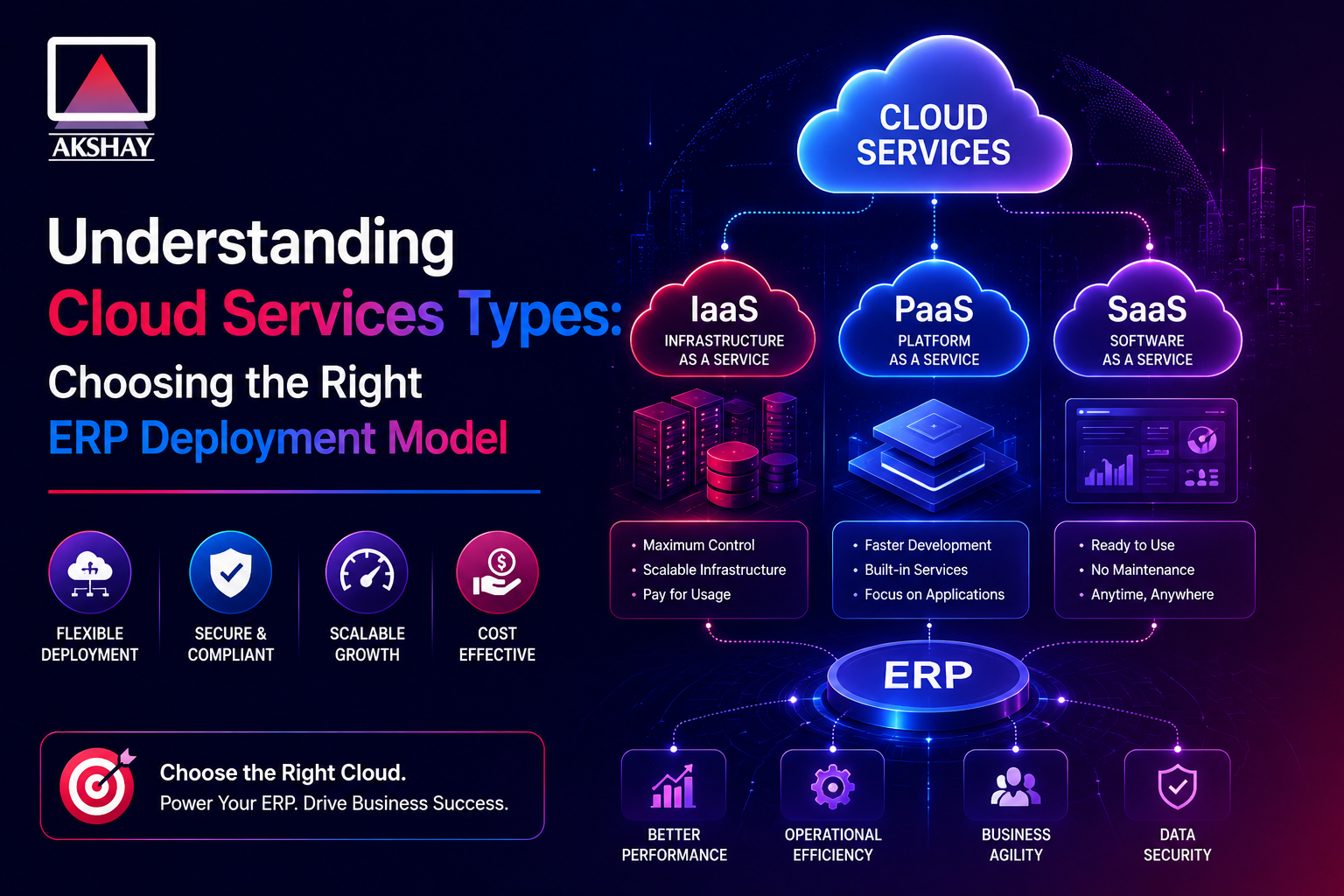
Defining Cloud Services Types for Modern ERP Systems
It’s key for IT leaders to know about cloud services types in the complex Indian tech world. Each model has its own mix of control, upkeep, and growth. Choosing the right one helps match your digital setup with your business aims.
Infrastructure as a Service (IaaS) for ERP Hosting
IaaS for ERP gives you the basics for your systems. It has computing power, storage, and networking without handling hardware. It’s great for those who want control over their systems and software.
Using AWS or Azure, Indian businesses can grow their resources easily. This keeps your ERP system fast during busy times. It also means no more worries about keeping data centers running and keeps your system safe.
Platform as a Service (PaaS) for Custom ERP Development
PaaS for ERP is a strong place for developers to work on custom parts. It hides the tech details, letting your team focus on the app and business logic. It’s perfect for companies needing special features not in standard software.
This method makes making new features faster. It has tools for linking and managing databases, making unique workflows easier. This way, your company can innovate quickly and keep standards high across all areas.
Software as a Service (SaaS) for Standardized ERP Delivery
SaaS ERP benefits include quick setup and little upkeep for users. The vendor handles everything, like updates and security. It’s the top pick for those wanting a set cost and quick access to standard features.
This way, your team can get to important data from anywhere with internet. It means no fuss with IT, letting your team grow the business. Here’s a look at these three main cloud types to help you choose.
| Model | Control Level | Maintenance Burden | Best Use Case |
| IaaS | High | High | Legacy Migration |
| PaaS | Medium | Medium | Custom Development |
| SaaS | Low | Low | Standardized Operations |
Assessing Your Business Requirements in the Indian Market
Success in the Indian ERP market depends on finding the right solution. It must match your growth goals. Look beyond basic features to ensure it supports your long-term needs.
A deep look at your internal processes is key. It helps in a smooth digital change.
Evaluating Scalability Needs for Growing Enterprises
As your business grows, your software must too. ERP scalability is essential for market success. You need a system that grows with you without major changes.
Think about these when planning for growth:
- The ability to add new modules as your business lines diversify.
- Support for high-concurrency environments during peak operational seasons.
- Seamless integration with third-party applications and local payment gateways.
Analyzing Data Sovereignty and Compliance Regulations in India
Working in India means following strict data laws. Data sovereignty India requires careful handling of user data. Make sure your cloud provider has local data centers.
Compliance is not optional. Not meeting these standards can lead to big legal problems. Check that your vendor has strong data residency and audit tools. This keeps your data safe and visible.
Determining Budgetary Constraints and Total Cost of Ownership
Planning your ERP budget is more than just the upfront cost. You need to think about the Total Cost of Ownership (TCO). This includes training, maintenance, and infrastructure upgrades.
Focus on these financial areas to stay within budget:
- Subscription models versus perpetual licensing costs.
- Expenses related to data migration and system customization.
- Long-term support and managed service fees for cloud infrastructure.
Plan early to make a smart investment. A clear financial plan helps avoid extra costs. It keeps your digital transformation profitable.
Step One: Evaluating On-Premise Versus Cloud ERP Models
Choosing the right ERP deployment model is key for your digital journey. In India, picking between old hardware setups and new online platforms shapes your future. It affects how well you work.
Identifying the Limitations of Legacy On-Premise Systems
Many companies stick with old systems that hold them back. These setups are hard to change and grow with. They make it tough to add new tools or scale up fast.
Big problems with on-premise ERP include high costs upfront and constant server upkeep. Also, these systems often can’t talk well with new web apps. This leads to data being stuck in silos.
Recognizing the Agility Benefits of Cloud-Based ERP
Cloud ERP lets businesses move fast in a fast market. It means updates happen right away and you can check important info from anywhere. This is key for teams working together across India.
This flexibility is vital for teams needing to work together fast. Modern cloud platforms also mean your IT team can focus on growth, not just keeping systems running.
| Feature | On-Premise ERP | Cloud ERP |
| Deployment Speed | Slow (Weeks/Months) | Rapid (Days/Weeks) |
| Maintenance | Internal IT Required | Managed by Vendor |
| Scalability | Limited by Hardware | Highly Elastic |
| Cost Structure | High Upfront CapEx | Predictable OpEx |
Step Two: Selecting the Right Cloud Deployment Strategy
Choosing the right cloud environment is key for any Indian business. It’s about picking a model that fits your needs and goals. This choice affects your success and growth.
Public Cloud ERP for Cost-Efficiency and Rapid Deployment
A public cloud ERP is great for growing companies. It’s fast and cuts down on costs. You share resources, saving money upfront.
Your IT team can focus on business, not tech. This is perfect for those who want to grow fast and be agile.
Private Cloud ERP for Enhanced Security and Control
For sensitive data, a private cloud security is best. It keeps your ERP safe and separate from others. This is for those who need top security.
You have full control over updates and settings. It’s great for companies with strict rules or special data needs.
Hybrid Cloud ERP for Balancing Flexibility and Data Privacy
A hybrid cloud strategy is ideal for many. It keeps important data safe while letting you innovate. This way, you can modernize at your own pace.
It’s flexible, letting you move workloads as needed. This is perfect for companies with evolving needs.
| Deployment Model | Primary Benefit | Best For | Control Level |
| Public Cloud | Cost-Efficiency | Startups & SMEs | Low |
| Private Cloud | Data Isolation | Large Enterprises | High |
| Hybrid Cloud | Balanced Flexibility | Legacy Integration | Medium |
Step Three: Analyzing Vendor Capabilities and Local Support
Finding the right ERP partner is key for businesses in India. Your digital change needs good tech and people skills. Strategic alignment with your goals and the vendor’s service is vital for growth.
Assessing Global ERP Providers with Local Indian Data Centers
Look for ERP giants with Indian data centers. This cuts down on slow software and meets data rules. It’s important for today’s businesses.
A global provider with local presence is ideal. They offer top tech and regulatory peace of mind. Check their server locations and disaster recovery plans before choosing.
Evaluating Local Implementation Partners and Support Ecosystems
You need a partner who knows local business culture. Local partners make complex software fit your workflow. They offer on-the-ground technical support for quick fixes and less downtime.
The table below shows the differences in support models to help you decide:
| Support Feature | Global Direct Support | Local Partner Ecosystem |
| Cultural Context | Limited | High |
| Response Time | Standardized | Immediate |
| Technical Expertise | Product-Focused | Industry-Specific |
| Cost Efficiency | High Initial Cost | Optimized Value |
Check both the global provider and local support. Strong local partnerships help your ERP grow with your business. This is key for success in a competitive market.
Step Four: Addressing Data Security and Regulatory Compliance
Modern businesses in India must focus on security to succeed. They move sensitive data to the cloud, making data protection key. A secure ERP keeps your business safe from cyber threats and keeps things running smoothly.
Navigating the Digital Personal Data Protection Act (DPDP)
The Digital Personal Data Protection Act has changed how Indian companies handle data. Now, DPDP Act compliance is a must for any business with personal data. Your ERP must handle user consent, data minimization, and the right to erasure.
To meet these rules, your plan should include:
- Tracking all data flows to find personal info in your ERP.
- Having a data protection officer to follow rules.
- Creating clear data retention policies to delete old records.
Implementing Robust Encryption and Access Controls
Technical measures protect against unauthorized access. ERP data encryption keeps data safe from hackers, even in a breach. Encrypt data both in the cloud and during network transfers.
Identity management is also key. Role-Based Access Control (RBAC) limits system access based on job roles. This granular approach reduces data leak risks and lets employees only see what they need.
Combining strict DPDP Act compliance with ERP data encryption builds trust. These steps protect your brand and let you focus on growing your business.
Step Five: Planning for Seamless ERP Migration
Companies in India need to focus on keeping data clean and plan well for a smooth move to cloud ERP. Moving your main business processes is a big step. It needs careful preparation and a clear plan. Good data quality is key for a successful digital change.
Conducting a Thorough Data Audit and Cleansing
Before moving data to the cloud, you must check your current records carefully. ERP data cleansing is key to get rid of old or wrong data. Clean data is the base for good reports and smart decisions in your new setup.
Talking to your team leaders during this check helps find out which data is most important. This makes sure only the best data goes to the new system. Spending time on ERP data cleansing now saves trouble and money later.
Creating a Phased Migration Roadmap to Reduce Downtime
A detailed ERP migration roadmap is key to keep business running smoothly during the change. Most Indian companies choose a step-by-step approach instead of a big change all at once. This way, they can test parts of the system before moving on, lowering risks.
Following a phased ERP migration roadmap helps tackle problems as they come up without stopping your whole supply chain. This slow and steady approach keeps your team working while the new system is set up. Strategic planning is the main way to avoid unexpected stops during your cloud move.
| Migration Strategy | Downtime Risk | Complexity Level |
| Phased Rollout | Low | Moderate |
| Parallel Adoption | Minimal | High |
| Big Bang Cutover | High | Low |
Step Six: Managing Change and User Adoption
Success in digital transformation comes from people, not just technology. Moving to a cloud platform is key, but success also depends on your team’s adoption. A strong change management ERP helps your staff feel supported during the change.
Training Employees on New Cloud-Based ERP Interfaces
Good training is essential for using systems well. Offer role-based training that fits each employee’s job. This way, they learn how the new interface makes their work easier.
Here are some user adoption strategies to help:
- Host interactive workshops that mimic real business situations.
- Make a library of short, easy-to-use video tutorials.
- Choose “super users” in each department for quick help.
Overcoming Cultural Resistance to Digital Transformation
Change can be hard, even for big Indian companies. Leaders must explain the long-term benefits of the new system. When people see how it cuts down on manual work and boosts accuracy, they’re more likely to support it.
Being open is key for change management ERP success. Talk about why you’re upgrading and listen to everyone’s thoughts. This builds a culture of growth and turns doubters into supporters. Empowering your team to use the new system is the best way to a smooth digital future.
Step Seven: Monitoring Performance and Optimization
Getting your ERP system up and running is just the beginning. You need to keep it running well to meet your business needs. By staying alert, you can keep your system in top shape and grow steadily.
Tracking Key Performance Indicators for ERP Efficiency
To stay ahead in India, you must watch your ERP performance metrics closely. These metrics show how well your system works and where it might slow down. By keeping an eye on these, you can fix problems fast.
Here are some key metrics to track:
- System Uptime: Make sure it’s always available when you need it.
- Transaction Processing Speed: See how fast it handles lots of data.
- User Adoption Rates: Check if your team is using it well.
- Error Frequency: Find and fix common tech issues quickly.
Leveraging Analytics for Continuous Process Improvement
Don’t just keep it running; use reports to make it better. These analytics turn data into useful tips for improving your workflow. Continuous improvement helps you get the most out of your investment.
By looking at trends, you can make smart choices that help your business grow. This way, your software stays a strategic asset that helps you succeed. Regularly checking these reports lets you stay ready for changes in the market.
Common Pitfalls to Avoid During ERP Deployment
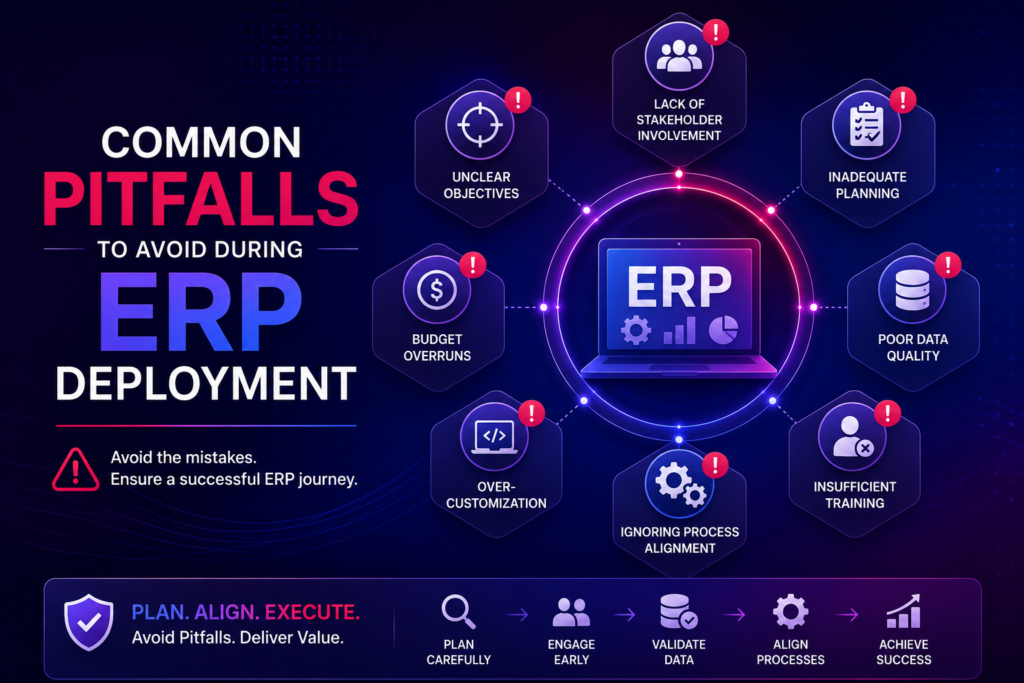
Even the most advanced software can fail if the implementation process ignores critical technical realities. Many organizations in India face big delays because they overlook ERP integration pitfalls early on. To keep your project on track and within budget, proactive management is key.
Underestimating Integration Complexity with Existing Systems
Many make the mistake of thinking a new cloud platform will easily connect with old software. These older systems often keep data in separate places. This makes it extremely difficult to see your whole business clearly. Not planning for this early on can lead to big costs.
To dodge these ERP integration pitfalls, your team needs to check all current software links. Here are some common problems you might face:
- Incompatible data formats between old databases and cloud APIs.
- Hidden dependencies that cause system crashes during data migration.
- Lack of standardized protocols for real-time information exchange.
Ignoring the Importance of Scalable Bandwidth and Connectivity
Many businesses focus too much on software features and forget about the network needed to support them. In India, where internet quality varies, reliable bandwidth is vital for cloud-based ERP systems. If your network can’t handle more traffic, users will face frustrating latency and downtime.
Make sure your network is ready for a modern, cloud-native setup. Investing in scalable connectivity solutions now helps avoid future problems. By tackling these ERP integration pitfalls and infrastructure gaps, you safeguard your investment and ensure a smooth transition for your team.
Future-Proofing Your ERP Strategy in India
The business tech scene in India is changing fast. It’s moving towards smart automation. To stay ahead, companies need to leave old systems behind and adopt new, smart ones. A strong Industry 4.0 ERP plan is key for this change. It keeps your business quick and ready for the fast-changing global market.
Integrating Artificial Intelligence and Machine Learning
Today’s businesses use artificial intelligence to turn data into useful info. By adding machine learning to your main processes, you can make tough decisions without needing people. Predictive maintenance is a great example. It uses sensors to check on equipment and stop big problems before they start.
These smart systems learn from past data to make supply chains and inventory better. In India, this means you can guess demand better during big festivals or when there are supply chain issues. Automated workflows also cut down on mistakes. This lets your team focus on important tasks, not just routine stuff.
Preparing for Emerging Technologies and Industry 4.0 Standards
Choosing an Industry 4.0 ERP setup lets you connect IoT devices to your operations. This gives you a clear view of everything happening in your business. By following global standards, Indian companies can work smoothly with others around the world.
To stay ahead, you need to keep innovating and use software that’s easy to change. As new tech like blockchain or edge computing comes along, your system should be able to use it without a big update. Here’s a look at how things are changing.
| Feature Category | Traditional ERP | Industry 4.0 ERP |
| Data Processing | Batch Processing | Real-time Analytics |
| Decision Support | Manual Reporting | AI-Driven Insights |
| Connectivity | Siloed Systems | IoT Integration |
| Maintenance | Reactive Repairs | Predictive Maintenance |
Investing in these advanced features now means your business will not just get by. It will thrive. Digital maturity is what every business wants to achieve in today’s India.
Conclusion
Choosing the right cloud deployment model is key for business growth in India. Companies need to match their tech with strict rules for stability. A good plan balances needs with the Digital Personal Data Protection Act’s changes.
Success comes from always getting better and managing change well. Leaders who focus on training and keeping data safe get more from their tech. This approach helps companies grow beyond just automating tasks.
Start your journey to excellence by knowing your business well. Check how your systems stack up against big names like SAP, Oracle, or Microsoft. Working with local partners keeps your project on track and ready for market changes.
Start checking your processes now. Building a strong framework gets your company ready for Industry 4.0. Share your digital migration stories to help others grow too.