
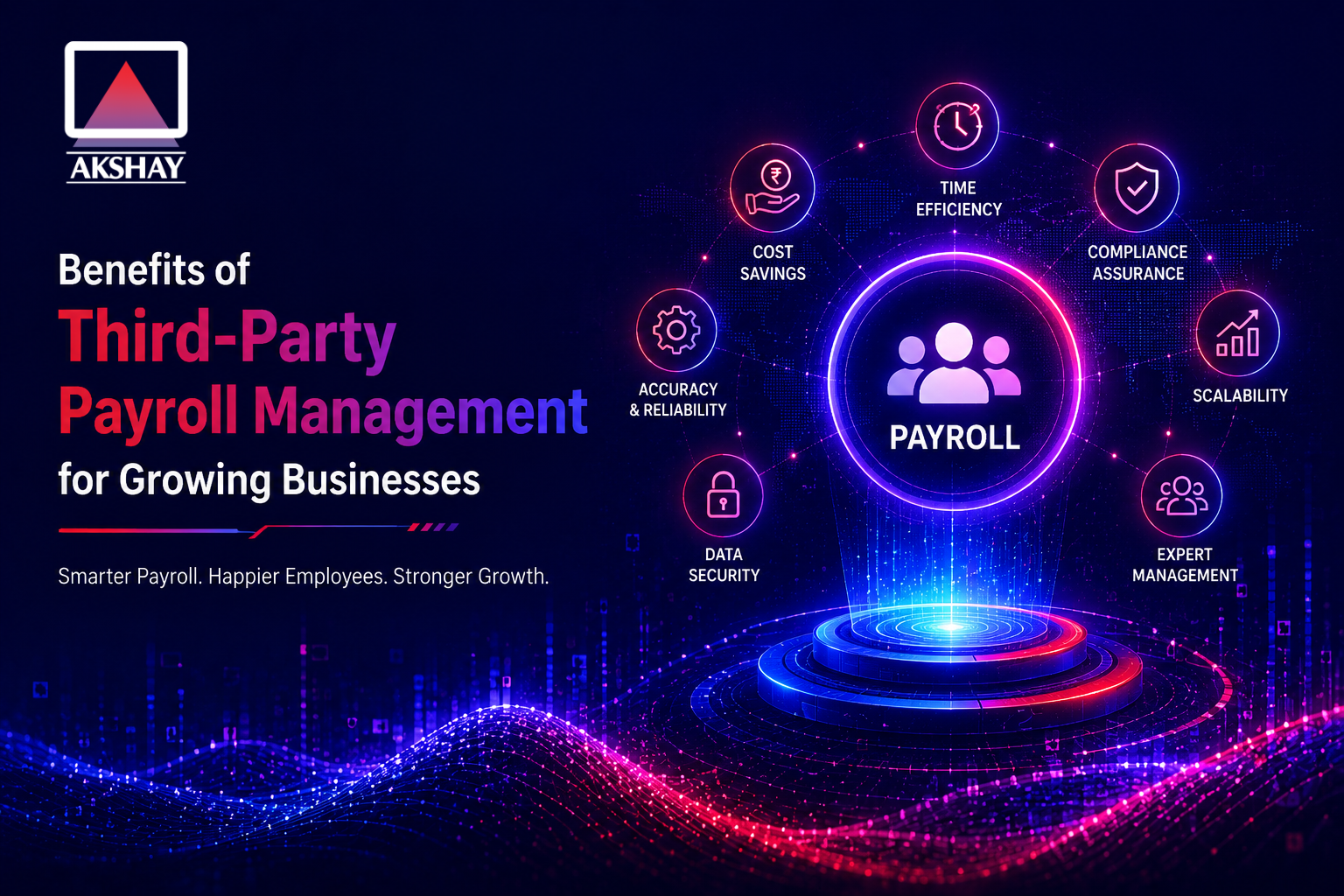
Businesses in India growing fast face big challenges. As your team gets bigger, handling salaries and taxes can be too much for HR.
Using third-party payroll management is key for success. It lets leaders focus on what matters most: growing the business and being creative.
Starting with payroll management best practices helps avoid big mistakes. Doing things manually can lead to problems with following the rules and keeping data right. Getting help from outside experts makes things smoother and ensures everyone gets paid right on time.
This guide shows how companies keep up with the fast market by improving HR.
Key Takeaways
- Outsourcing tasks lets leaders focus on growing the business.
- Starting with good processes early avoids big mistakes.
- Experts bring new tech and keep up with rules.
- Smarter operations make employees happier and more trusting.
- Flexible solutions help as businesses grow fast.
The Current Landscape of Payroll Management in India
In India, as companies grow, old ways of handling pay are no longer working. The rules are complex, with many central and state laws to follow. This makes it hard for businesses to focus on what they do best.
Challenges Faced by Scaling Indian Enterprises
Handling scaling business payroll is tough for growing companies. They face many labor laws, like Provident Fund (PF) and Employee State Insurance (ESI). Mistakes in these areas can cause big financial problems.
Also, dealing with lots of data slows down growth. When companies grow, tax rules get even harder. Using old software can lead to data silos and problems with pay.
The Shift Toward Outsourced Solutions
More companies are turning to outsourced payroll solutions. This lets them focus on growth, not just pay. It’s a smart move for any business looking to grow.
Outsourcing means experts handle the rules, keeping companies safe. It’s a strategic necessity for success in India’s market.
Understanding the Core Advantages of Third-Party Payroll Management
Using third-party payroll management changes how businesses deal with money. It lets companies focus on growing and improving. Leaders can now spend more time on hiring great people and coming up with new ideas.
Enhancing Operational Efficiency and Focus
Internal teams often get stuck in manual tasks like data entry and tracking rules. HR payroll efficiency improves when these tasks are done by others. This frees up HR to work on keeping employees happy and helping them grow.
Streamlining these processes makes companies more flexible. It lets HR teams be strategic, not just stuck in paperwork.
Reducing Human Error in Salary Processing
Manual systems often make mistakes that cost a lot of money and trouble. Payroll automation benefits help avoid these errors. Automated systems make sure taxes, deductions, and pay are correct every month.
Automation means less chance of mistakes. This makes employees trust that they will get paid right and on time.
Scalability for Rapidly Expanding Teams
As companies grow, managing pay gets more complicated. Scaling business payroll needs a system that can grow with the company. Third-party providers offer the tools to handle big growth without losing quality.
These solutions can keep up with hiring many new people or expanding into new areas. Scalability ensures that your operations remain smooth, no matter how fast you grow. This is key to staying ahead in India’s fast market.
Assessing Your Business Readiness for Outsourcing
Many business leaders find it hard to know when their payroll processes are a problem. As your business grows in India, handling salaries, taxes, and filings gets much harder. Spotting these signs early is key to keeping your workplace healthy and productive.
Identifying Internal Payroll Bottlenecks
Payroll processing errors often show when a system is failing. If your HR team is always fixing mistakes, not growing your business, it’s time to change. These mistakes can cause delays and upset your employees.
Evaluating Cost-Benefit Ratios
Before switching, look at the costs of doing things yourself. Payroll cost reduction comes from understanding the time and money spent on compliance and software. Seeing these costs helps you see the benefits of using a professional service.
Determining When to Transition from Manual Systems
Choosing when to leave spreadsheets is a big decision for any business. Think about the payroll automation benefits when your team gets too big or laws get too complex. Moving at the right time keeps your business flexible and in line with the law.
| Indicator | Manual System | Automated System |
| Data Accuracy | High risk of human error | High precision and validation |
| Compliance | Manual tracking required | Automatic updates to laws |
| Time Investment | High administrative burden | Minimal oversight needed |
| Scalability | Limited by staff capacity | Easily handles team growth |
Step-by-Step Guide to Selecting a Payroll Provider
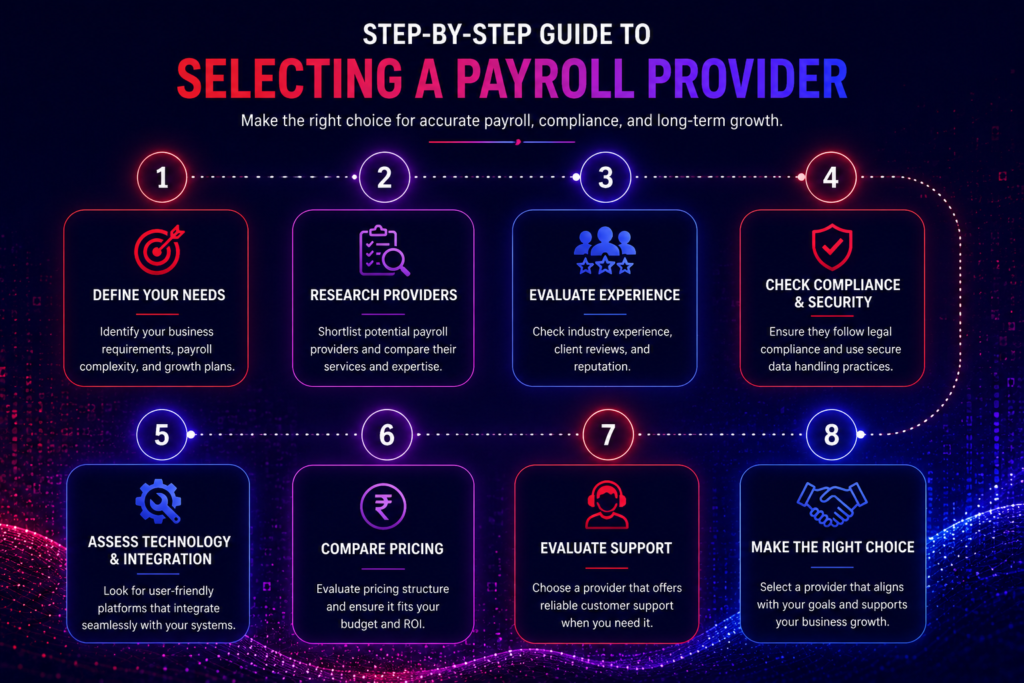
Finding the right payroll outsourcing India partner needs a clear plan. First, know what you need to avoid wrong choices. This step is key for a good partnership.
Defining Your Specific Payroll Requirements
Start by checking your current team size and pay cycles. See if you need help with special pay types like variable pay or stock options. Being clear here helps you find the right provider for your business.
Vetting Potential Vendors for Indian Statutory Expertise
When picking a payroll vendor, focus on their local law knowledge. Look for a partner who knows payroll statutory requirements well, like PF and ESI. Ask for examples of how they handled taxes for similar businesses.
- Check for certifications in payroll management and data security.
- Request references from existing clients in your specific industry.
- Assess their responsiveness to urgent compliance-related queries.
Reviewing Service Level Agreements and Technology Integration
After narrowing down your choices, look at the technical and legal sides. A good payroll system integration is vital for smooth work with your HR software. Also, check their payroll technology solutions for real-time reports and employee access.
Lastly, carefully review the Service Level Agreement (SLA). Strong SLAs set clear times for payroll and penalties for mistakes. Make sure the contract protects your employee data.
Implementing Third-Party Payroll Systems
Switching to a third-party payroll service is a big step for any growing business in India. A good payroll migration guide helps your team move smoothly. It makes sure the change goes well without any problems.
Preparing Employee Data for Migration
Good data is key for a smooth move. First, check your current data for errors and duplicates. Clean data helps avoid mistakes when you start using the new system.
Make sure all important details like UAN and PAN are correct for each employee. Putting data in a standard format makes uploading faster. Getting it right here saves your HR team a lot of time later.
Establishing Communication Channels with the Provider
Good communication is vital for payroll system integration. Choose one person to handle urgent questions during setup. This person can quickly solve any problems.
- Have weekly meetings to check on progress.
- Use shared tools for updates.
- Have a plan for solving tough payroll problems.
Conducting Parallel Runs to Ensure Accuracy
Before switching fully, run payroll on both old and new systems. This is called a parallel run. Checking these results helps find and fix any mistakes before they affect your team.
It’s important to keep your team’s trust during the change. When the data looks the same on both systems, you can switch. This careful way reduces risks and keeps your business in line with laws.
Navigating Statutory Compliance in India
Indian payroll rules are complex and need constant watch and skill. As your business grows, keeping up with payroll compliance India gets harder. Not following these rules can cause big financial losses and legal issues.
Managing Provident Fund and ESI Contributions
The Employees’ Provident Fund (EPF) and Employees’ State Insurance (ESI) are key parts of India’s social security. These payroll statutory requirements are a must for many companies when they hit certain employee numbers. Handling these contributions right and on time is key to protecting your workers.
Accuracy is non-negotiable when dealing with government sites. Many growing companies find it hard to handle monthly filings and checks. Outsourcing these tasks helps make sure your contributions are right and on time, reducing the chance of not following the rules.
Handling Professional Tax and TDS Deductions
Tax management is a big part of your financial duties. Getting payroll tax deductions India, like Professional Tax (PT) and Tax Deducted at Source (TDS), right is important for a clean audit. These taxes change by state and income level, making them easy to mess up if done by hand.
- Professional Tax: Changes a lot across different Indian states, needing local knowledge.
- TDS Compliance: Needs accurate calculation, timely deduction, and quarterly return filing.
- Penalty Mitigation: Regular, automated processing stops expensive interest charges and legal warnings.
Staying Updated with Changing Labor Laws
The rules in India change often, with updates to labor codes and tax laws. Keeping up with payroll statutory compliance needs a team that watches these changes closely. Payroll experts keep your processes up to date with new laws.
Using expert systems helps your business avoid old practices. This lets your HR team focus on growth, not just legal updates. Staying ahead of the curve is the best way to keep your company’s good name and profits safe.
Mitigating Risks and Ensuring Data Security
A secure payroll system is key to trust between employers and employees in India. Payroll risk management means finding and fixing problems before they happen. This keeps your business safe and your employees happy.
Protecting Sensitive Employee Information
Payroll deals with very private info like PAN numbers and bank details. It’s critical to have payroll data security in today’s world. Make sure your provider uses strong encryption and two-factor login to keep data safe.
Regular security checks help make sure your provider meets top standards like ISO 27001. Limit who can see or change payroll data. This helps stop leaks or fraud.
Ensuring Business Continuity During Transitions
Changing to a new payroll system can be tough. Keeping payroll business continuity ensures everyone gets paid on time. A good plan helps avoid mistakes and keeps things running smoothly.
- Keep old and new systems running at the same time during the switch.
- Have a plan for backing up data to avoid losing it.
- Have a backup plan for when digital systems fail.
Managing Vendor Accountability and Performance
Choosing a payroll vendor is just the start. You need to make sure they meet your standards. Set clear goals and check on their work often.
Here are some key things to watch:
| Metric | Purpose | Frequency |
| Accuracy Rate | Ensures error-free salary calculations | Monthly |
| Compliance Score | Verifies statutory filing timeliness | Quarterly |
| Response Time | Measures support efficiency | Monthly |
Keep talking to your provider to build trust. Do yearly checks to make sure they’re meeting your needs and following Indian laws.
Measuring the ROI of Outsourced Payroll
Figuring out the return on investment for your payroll shows new ways to grow. Moving to third-party payroll management lets companies focus on big goals. A good payroll ROI calculation looks at costs and time saved.
Tracking Time Savings for HR Teams
Manual tasks and checks take up a lot of time each month. Automating these tasks boosts HR payroll efficiency. You can then use the saved time for more important things like training.
Analyzing Reductions in Compliance Penalties
Dealing with payroll compliance India is tough for growing companies. Mistakes in tax or late payments can lead to big fines. Outsourcing these tasks lowers the risk of penalties and keeps your company’s image good.
Calculating Long-Term Cost Savings
To see the real payroll cost reduction, compare the costs of doing it yourself versus outsourcing. This includes software, training, and the cost of mistakes. The table below shows the financial differences.
| Metric | In-House Payroll | Outsourced Payroll |
| Operational Cost | High (Fixed) | Low (Variable) |
| Compliance Risk | High | Minimal |
| HR Focus | Administrative | Strategic |
| Scalability | Limited | High |
Investing in professional services can save money through better accuracy and lower costs. By watching these numbers, you’ll see how your business grows with a better payroll plan.
Conclusion
Switching to third-party payroll services is a big step for growing Indian businesses. It lets leaders focus on important tasks. This way, every employee gets paid right and on time.
Using the latest payroll management practices is key for a stable future. It keeps your business safe and builds trust with your team. This is because you follow all laws and keep your data safe.
By outsourcing, your team can work on big projects. You can focus on your main goals. Experts handle the complex tasks like taxes and labor laws.
These steps make your business ready to grow. You become more flexible and can handle market challenges better. Start this change now for a better, more efficient future.