

A vacancy that arrives without a ready pool of qualified candidates can force a team to choose between delaying work and rushing a hire. Talent acquisition strategies help Indian employers prepare for future hiring needs, not just the next open role. A reactive approach can leave teams short of the skills needed to meet business goals. It can also create a poor experience for candidates who face unclear steps or rushed decisions.
This guide offers practical ways to connect hiring with business goals, reach skilled candidates, and give them a clear, fair experience. It also covers what happens after a person joins, because retention affects the value of every hire. A useful hiring plan starts by deciding which future business needs the workforce must be ready to meet.
Key Takeaways
- Plan hiring around business needs, not only open vacancies.
- Check workforce gaps before choosing how to fill them.
- Set clear expectations for candidates at each hiring step.
- Use evidence and shared criteria to support selection decisions.
- Track outcomes and support new hires after they start.
What Do Talent Acquisition Strategies Include?
Talent acquisition plans for the people an organization will need over time, while recruitment addresses the vacancies it needs to fill now. A long-term view helps teams connect hiring with business priorities and future skills. Recruitment fills an immediate vacancy; talent acquisition builds the capacity to meet changing needs.
A talent acquisition strategy framework gives that work a shared shape. It links business priorities to market conditions, the employer offer, decision ownership, and the team’s ability to act. That structure keeps hiring decisions from becoming a string of unrelated requests.
Talent Acquisition Versus Recruitment
Talent acquisition is the long-term hiring function: it sources, attracts, and retains people who help the business meet its goals. Recruitment focuses on filling current vacancies, often within a shorter time frame. Both matter, but they solve different problems.
| Dimension | Talent acquisition | Recruitment |
|---|---|---|
| Time horizon | Long-term workforce needs | Current vacancy |
| Primary aim | Build talent for business goals | Fill an open role |
| Typical focus | Future skills and relationships | Candidate selection and offer |
This long-term approach can include planning talent pools before a role opens. Recruitment then handles the immediate steps for a specific vacancy. Teams need both, with clear owners for each kind of work.
Five Elements of a Strategy Framework
Five elements give a talent acquisition strategy framework its structure. Business alignment identifies which goals need people and skills. Talent market reality checks whether those skills are available and what employers compete for them.
Employer positioning defines what the organization offers candidates. Decision-making sets who approves roles, assessments, and offers. Operating capability covers the people, process, and tools needed to carry out the plan.
These elements work as one system. If the market has few candidates with a required skill, a team may need to train current employees or adjust the role. If managers do not agree on who makes decisions, even a strong candidate pool can stall.
Check that every hiring decision supports a business priority rather than treating each open role as an isolated request.
How Do You Align Hiring With Future Business Needs?
Start with the business plan for the next 1-5 years, then estimate which roles and skills will be needed to deliver it. Workforce planning is the process of comparing current workforce supply with future staffing demand and choosing actions to address gaps. Compare supply, demand, gaps, and solutions before setting hiring priorities.
That work turns broad business goals into decisions about people. It helps a team see where it can train current staff, where it needs new hires, and when outside capacity may help. The forecast should reflect likely changes, not just current headcount.
Forecast Workforce Supply and Demand
Begin with internal supply. Review current roles, skills, location, planned exits, and employees who may move into new work. Check whether managers can support those moves and whether key skills depend on one person.
Then assess external supply. Look at the talent available in relevant markets, including skill levels and likely competition for candidates. A role that seems easy to fill in one city may be harder to fill elsewhere.
Forecast demand from business plans, expected workload, and new projects. List the roles and skills needed over the next 1-5 years. Compare that demand with internal and external supply to identify gaps in number, skill, or timing.
Solution analysis weighs ways to close each gap. Options include recruitment, training or retraining, contingent staffing, and outsourcing. The four-B choices make these paths easier to compare: build skills inside, buy through hiring, borrow outside capacity, or bridge a gap through upskilling.
Turn the Strategy Into a Working Plan
A talent acquisition strategy template should make each choice visible. McLean & Company identifies four areas to assess: candidate awareness and experience, TA process and accountability, TA technology, and TA competency. Use those areas to check whether the team can carry out its plan.
A practical working template should name the goal, the gap, the action, and the person responsible. Keep it short enough for business leaders to review. Add a review date so the plan can change when assumptions shift.
- Business objective and critical roles
- Supply, demand, and skills gaps
- Actions with accountable owners
- Measures and review dates
A talent acquisition strategy presentation can use six slides: business goals, workforce gaps, target roles, sourcing and employer position, selection and ownership, and measures. Each slide should answer a decision question, not just display background information.
Revisit the forecast when business priorities, budgets, or the available skills supply change.
Which India Employment Rules Should Shape the Plan?
In India, a hiring plan must account for both the central Labour Codes and applicable state requirements. The four Labour Codes took effect on November 21, 2025, consolidating 29 central labor laws. Wage, hour, leave, safety, and social security duties affect role budgets and written terms.
Employers should map the rules that apply to each location and employee group. State notifications and State Shops and Establishments Acts may add requirements. Check the rules for the state where the employee will work before finalizing a plan.
Check Wages, Hours, and Employee Benefits
The Code on Wages, 2019, provides for a central floor wage. State minimum wages cannot fall below that floor. Actual minimum wage rates vary by state or union territory, location, skill level, and industry.
A typical minimum wage is listed as INR 14,637 per month, but employers must follow the relevant state notification. The four Labour Codes also set core standards for working time, leave, safety, and social security. State rules can shape the details.
Working hours are capped at eight hours a day and 48 hours a week, with no more than six working days per week. Overtime, weekly and national holidays, and leave also affect staffing plans. A written appointment letter must state key employment terms.
Employer provident fund contributions are 12%. Gratuity is payable after five years, and maternity leave is 26 weeks. These figures should not be treated as identical conditions for every employee or role.
Employers must register with ESIC and manage contributions for employees earning ₹21,000 per month or less. Eligibility and contribution duties can depend on the employee and establishment. Build these costs into role budgets where they apply.
Account for Workplace and Industrial Relations Rules
The Occupational Safety, Health and Working Conditions Code requires a written appointment letter with key terms. Workplace safety duties also shape where and how work can be done. Hiring plans should account for the work setting, not just the job title.
Industrial relations rules can affect staffing changes and work continuity. If an establishment has multiple registered trade unions, it must recognize a union with at least 51% worker membership as the negotiating union. If none reaches that threshold, the establishment must form a negotiating council.
Workers must give 14 days’ prior notice before a strike. They cannot strike during that notice period or while conciliation, tribunal, or arbitration proceedings are pending. These limits matter when employers plan coverage for essential work.
State Shops and Establishments Acts can set local duties for hours, holidays, and leave. Confirm the relevant state notification and employee eligibility before setting pay or statutory-benefit assumptions.
How Do You Define the People and Skills You Need?
A useful candidate profile describes the work a person must deliver, not just the credentials they must already have. Start with outcomes, then name the skills and experience needed to achieve them. Separate must-have skills from those a person can learn on the job.
Describe the role in terms of its goals, key tasks, and working conditions. Add the essential technical and people skills. Include transferable capabilities, such as solving client problems or leading projects, when they matter more than a narrow job title.
Build Realistic Candidate Profiles
A strong profile says what success looks like in the first months and what the person will own. It names the skills needed on day one and the ones the team can teach. That distinction can widen the pool without lowering the role’s standards.
Include what candidates may value in an employer, such as learning, stable hours, or a clear path to more responsibility. Avoid assuming every candidate wants the same benefits. The profile should describe the real job, not an ideal person who rarely exists.
Hiring managers can review a draft profile before sourcing begins. Ask them to point to the work behind each requirement. Remove credentials that do not predict performance or meet a clear job need.
Use a Four-R Check Before Sourcing
The 4 R’s for recruitment are right people, right role, right time, and right cost. This is a practical planning checklist, not a statutory rule. It helps teams test whether the profile and hiring plan fit the need.
Right people asks whether the required skills and values are clear. Right role checks whether the work and decision rights are accurate. Right time asks when the person must start, while right cost checks pay against the budget.
The four R’s help define a hire, while the four B’s compare different ways to meet the need. Build through staff development, buy through recruitment, borrow through external capacity, or bridge through upskilling. The right answer may be a mix.
Ask hiring managers to justify each must-have requirement against the work the role actually needs to accomplish.
How Can You Make the Employer Brand Relevant to Candidates?
Candidates can judge an employer’s promises against what they see on its careers page, social channels, and employee reviews. Specific proof makes an employer value proposition, or EVP, more credible. Show what employees receive and experience, rather than relying on broad culture claims.
An EVP explains what an organization offers employees. It can include pay and benefits, culture, growth opportunities, and work-life expectations. Each claim should match what employees can see in daily work.
LinkedIn and Glassdoor are places candidates may use to research an employer. Their questions may differ by role. A specialist may want to know which tools the team uses, while an early-career candidate may ask about training.
- Clear EVP with real examples
- Informative careers page
- Employee stories about actual work
- Consistent social media posts
- Candidate feedback and review follow-up
Use employee stories to describe actual development opportunities, team routines, and work conditions. A short account of how a person learned a new skill is more useful than a claim that the company supports growth. Ask employees to share only what they can speak about honestly.
For a hard-to-fill specialist role, show the technical problems the person would solve and the team’s expertise. For a growing team, explain how new hires will shape work and share decisions. For an early-career role, describe training, feedback, and the first projects.
These are adaptable employer-branding approaches, not named case studies or guaranteed ways to attract people. The best choice depends on what the role offers and what candidates need to know. Social media should repeat accurate details, not promises that managers cannot keep.
Make each public promise specific enough that employees and candidates can recognize it in day-to-day work.
Which Sourcing Channels Build a Strong Pipeline?
A pipeline is strongest when it reaches the candidate groups each role actually requires, rather than relying on one familiar source. Choose channels by role, skill, location, and candidate habits. The 80/20 rule can reveal uneven results, but it cannot promise that one channel will always win.
Some teams find that 80% of their best hires come from 20% of sourcing channels. Treat that pattern as a signal to study, not a rule for every job. A channel that works well for one role may be weak for another.
Choose Channels for Each Candidate Group
Use a mix of direct and relationship-based channels. Track where candidates hear about the role and whether they match its needs. These five options give teams a starting point:
- Employee referrals
- Job boards and niche communities
- Social media and direct outreach
- Universities, events, and professional groups
- Internal mobility and alumni networks
Employee referrals can reach people who trust a current worker, but they should not become the only route. Job boards may bring wide reach, while niche communities can help with specialist roles. Direct outreach lets recruiters contact people who are not applying.
Universities and professional groups can build ties with people entering or advancing in a field. Internal mobility helps current employees pursue new roles. Alumni networks can reconnect a team with people who already know its work.
Use the 80/20 Rule Without Over-Relying on One Source
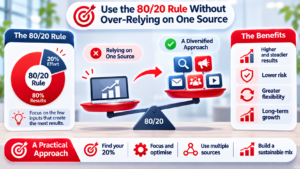
Source-to-hire ratios compare the number of candidates from a channel with the hires it produces. Job-ad performance can show whether an ad draws suitable applications or mostly unrelated ones. Look at both quality and volume.
Talent pooling means keeping useful relationships with candidates before a vacancy appears. A person who is not job hunting today may be open to a future role. Share relevant updates and ask before keeping in touch.
Test alternative channels even when one source performs well. Results can shift as roles, markets, and candidate habits change. Review channel quality alongside volume so a high application count does not disguise weak hiring outcomes.
How Do You Keep Candidates Informed and Engaged?
A candidate who knows the next step and expected timing is less likely to be left guessing during a hiring process. Clear updates give candidates a fair chance to plan. Set a specific timeline and follow up when promised, even when feedback is delayed.
At the first contact, explain the steps, likely dates, and who will make decisions. Confirm what information you need from the candidate. Do not assume a person understands the process or can attend at any time.
Set Expectations and Follow Through
Give candidates a clear time for a profile review or interview update. If you promise an answer by Friday, contact them by Friday. A short update is better than silence when a manager has not shared feedback.
Recruiters need to be accountable for their own promises and build relationships through steady contact. They should listen to candidate concerns and ask for the information they need. They should also avoid assuming that a candidate understands an unclear request.
When an interview date changes, explain what changed and offer a new time. When a role’s scope shifts, share the updated details before asking the candidate to continue. These small steps help candidates make informed choices.
Build Trust Through Responsive Communication
Recruiters who know the industry can give useful context on candidate trends, market rates, and skill availability. That knowledge helps them discuss realistic role expectations and compensation. It also helps hiring managers adjust plans when a skill is scarce.
Listen for questions about workload, location, pay, growth, and team structure. Answer directly when you know the facts. If another person must confirm a detail, say who will follow up and when.
Keep messages brief and easy to act on. A candidate should know whether to reply, prepare for an interview, or wait for an update. If feedback is delayed, send the promised update anyway and give the candidate a clear new time to expect an answer.
How Should You Assess and Select Candidates Fairly?
Fair selection starts when every candidate is assessed against the same role-related criteria. Use job evidence, not familiarity, to guide the decision. Prepare, ask consistent job-related questions, and listen actively during interviews.
Those are three practical golden rules of an interview. They help interviewers compare candidates on the work they can do. A structured process can combine resume review, skills assessments, interviews, references, and a documented decision.
Match Assessments to the Work
Use a work sample or skills test only when it reflects real tasks in the role. For example, a writing role may include a short writing exercise. Explain the task, time limit, and scoring method in advance.
Ask behavioral questions tied to the job, such as how a candidate handled a client problem or a missed deadline. Keep core questions consistent across candidates. Follow-up questions can clarify details without changing the standard.
Make each step accessible. Offer a clear way to request an adjustment and avoid tests that measure speed when speed is not part of the work. Do not treat cultural similarity as proof of ability.
Use Structured Interviews and Decisions
A scorecard can list the role’s key skills and a simple rating scale. Interviewers should record examples that support each rating. Shared criteria help a team compare evidence rather than relying on memory or personal taste.
Use reference checks where appropriate and with the candidate’s knowledge. Ask focused questions about work relevant to the role. Keep notes factual and consistent with the decision criteria.
After interviews, compare evidence in a group discussion. Note where assessors agree, where they differ, and what facts support the final choice. Record the evidence behind the decision so the team can explain how the chosen candidate met the role’s requirements.
What Skills and Pay Support an Effective Recruiting Team?
Recruiters need a mix of sourcing judgment, negotiation, technology fluency, and employer-brand skills to execute a hiring plan. Five core skills are strategic sourcing, negotiation, ATS proficiency, AI-tool proficiency, and employer branding. Pay estimates in India range from ₹3-₹5.5 LPA for junior recruiters to ₹30+ LPA for a head of talent acquisition.
Recruiters also need stakeholder communication and market knowledge. Those capabilities help them advise managers on role needs and candidate supply. They can be developed through coaching, feedback, and regular contact with hiring teams.
Build the Skills Recruiters Need
Strategic sourcing means finding candidates with the right skills through relevant channels. Negotiation helps recruiters discuss pay and role terms with candidates and managers. ATS proficiency means using an applicant tracking system to manage candidate records and hiring steps.
AI-tool proficiency helps recruiters use features such as matching or workflow support with care. Employer branding means explaining the employer offer in a way that fits the role. Recruiters should also know when a tool’s output needs human review.
These skills support different parts of the work. A recruiter may need strong sourcing for a rare skill, clear negotiation for a senior hire, or ATS fluency to manage many open roles. Training should reflect the team’s workload.
Compare Recruiter Pay by Experience Level
Estimated India recruiter pay for 2026 differs by experience and role scope. The figures below are estimates, not guaranteed pay. Use them as a planning range, then account for the job’s location, duties, and employer budget.
| Role or experience | 2026 estimated annual pay | Planning note |
|---|---|---|
| Fresher or junior recruiter | ₹3-₹5.5 LPA | Entry-level scope |
| Recruiter with 3-6 years’ experience | ₹7-₹12 LPA | Owns searches independently |
| Talent acquisition manager or lead recruiter | ₹15-₹25 LPA | Leads hiring work or a team |
| Head of talent acquisition | ₹30+ LPA | Sets function-wide direction |
These ranges do not set a required salary. A manager who leads a large team may have a different scope from a manager handling a small group of roles. Set compensation against role scope, experience, location, and the organization’s own budget before making an offer.
Which Recruiting Software and Platforms Should You Consider?
The right recruiting platform depends on whether the team needs consolidated employee data, agency sourcing, small-team automation, or deeper recruiting workflows. Start with the work the team must manage. Check data controls and stage-level reporting before choosing a platform.
Workday can suit teams already using Workday HCM when data consolidation matters more than recruiting depth. Lever, now called Employ, is noted for pipeline visibility and resume review. Each option fits a different workflow, so a shortlist should match the team’s needs.
Compare Tools by Team Needs
Rippling includes an ATS, AI-powered workflows, global hiring compliance, and unified employee data. Zoho Recruit offers candidate sourcing and resume management, with AI candidate matching. Manatal focuses on recruitment agencies and AI-driven candidate sourcing.
| Platform | Best fit | Notable capability | Listed price |
|---|---|---|---|
| Rippling | Teams seeking unified employee data | ATS and AI workflows | $8/employee/month |
| Zoho Recruit | Small and midsize businesses, agencies | Candidate matching | Free-$75/recruiter/month |
| Manatal | Recruitment agencies | AI-driven sourcing | $15-$55/user/month |
| BreezyHR | Small teams | Career sites and video interviews | Free-$529/month |
| Ashby | Mid-market recruiting teams | Built-in analytics dashboards | Not stated here |
BreezyHR includes candidate automations and EEOC/OFCCP reporting. Zoho Recruit is a budget-conscious option for small and midsize businesses and staffing agencies. Its hiring process blueprints are a notable strength.
Ashby offers built-in analytics dashboards for mid-market recruiting teams. Listed prices and features vary by plan. Check the plan details against the team’s actual needs before making a choice.
Check AI Controls and Analytics Before Buying
AI recruiting features should explain how they use candidate data. Look for clear permissions, audit trails, and controls to turn each feature on or off. The team should know who can see candidate records and what an AI feature does.
Useful analytics show candidate drop-off at each stage and which sources produce strong hires. Time-to-hire alone cannot show where candidates leave. A platform should help the team find a problem, not just display a total.
Use this checklist during a product review: data-use explanations, user permissions, audit trails, feature controls, stage-by-stage candidate drop-off, and sourcing quality. Test the platform against a real hiring workflow and verify who can access candidate data before rollout.
Which Metrics Show Whether the Strategy Is Working?
A useful hiring dashboard shows both how quickly candidates move and whether the resulting hires meet the organization’s needs. Use a small set of measures that point to actions. Time-to-fill and offer acceptance rate are useful, but neither explains every hiring result.
Process efficiency shows how smoothly candidates move through hiring. Hiring effectiveness shows whether the team selects people who meet role needs. Business impact asks whether hiring supports goals such as delivery, growth, or retention.
Track measures that can help managers find the next change to make. A simple dashboard may include four groups:
- Time-to-fill and offer acceptance
- Candidate drop-off and application completion
- Source quality and quality of hire
- New-hire retention and hiring-manager satisfaction
Time-to-fill measures the time needed to fill a role. Offer acceptance shows how often candidates accept offers. Application completion and candidate drop-off can reveal points where people leave the process.
Source quality looks at whether a channel brings candidates who meet role needs. Quality of hire should reflect the organization’s role and business priorities. It may consider performance, skills, or success in the work, rather than one score for every job.
Retention and hiring-manager satisfaction add another view of the result. Time-to-hire alone cannot show where candidates leave or which sources produce strong hires. Review a small set of measures regularly and change a process step only when the data identifies a specific problem.
How Can You Retain New Hires and Keep the Pipeline Useful?
The first months after an offer determine whether the role and employer experience match what a new hire expected. Good onboarding can help new employees settle into the work. Thirty percent of new hires quit within six months because of a poor onboarding experience.
Organizations that focus on onboarding retain 50% more new employees than those that do not. Onboarding should continue for at least one year. It should offer support beyond a first-day welcome and a set of forms.
Connect Hiring Promises to the Employee Experience
Realistic job descriptions and interviews help new hires understand the work they are joining. If the role differs from what they heard during hiring, trust can fall quickly. Managers should explain changes before the employee starts whenever possible.
Set clear goals for the first weeks and months. Schedule manager check-ins, introduce the team, and explain how the new hire can get help. Give the person access to the tools and information needed for the job.
Make development part of onboarding. Discuss skills the employee can build and how progress will be reviewed. Ask what is working and where the role still feels unclear.
Build Internal Mobility and Ongoing Development
Internal mobility gives employees a chance to move into new roles or take on different work. Skills development can prepare them for those changes. Succession planning helps the organization see where future openings may require new skills.
Within three years of hire, retention is 45% for employees without promotion or lateral moves. It is 70% for employees who are promoted and 62% for those who make lateral moves. These figures show why career movement can matter to retention.
Internal moves can also meet future workforce needs. A worker with related skills may need training before moving into a critical role. That path can reduce the gap between an opening and the skills available inside the company.
Review development plans with managers and employees, then connect learning to future work. Choose one critical role and map the skills an existing employee could develop to be ready for its next opening.
Conclusion
Connect with Us & create a strong hiring pipeline which built through clear business priorities and reliable follow-through, not by waiting for vacancies to appear. A talent acquisition strategy works when it links future needs with a fair process candidates can understand. It should also match the promises made during hiring with the experience people have after joining.
Start with one practical step: schedule a workforce-planning session with business leaders. Ask which roles or skills will matter most over the next few years. Put a planning meeting on the calendar and leave with three future roles or skill needs assigned to an owner.