

The Indian corporate world is changing fast. Companies are looking for better ways to manage their work. They want to stay ahead of the competition. Using SAP for Business is key for them to improve their operations.
Today’s businesses need strong tools to grow quickly and meet new market needs. With advanced resource planning, they can work more efficiently. This technology helps leaders make smart choices based on data.
This guide will help you understand enterprise software better. We’ll see how SAP for Business changes how work gets done. It’s for those starting out or wanting to make their systems better. This guide will help you succeed in today’s fast world.
Key Takeaways
- Understand the role of enterprise resource planning in the Indian market.
- Learn how to scale operations effectively using integrated software solutions.
- Discover the primary benefits of digital transformation for modern firms.
- Gain insights into strategic implementation and long-term system optimization.
- Identify the core components required for successful organizational growth.
Understanding the Role of SAP for Business in Modern Enterprises
In today’s world of digital transformation India, companies use integrated software to stay ahead. SAP for Business is key for organizations wanting to make operations smoother. It helps leaders make smart choices based on data, leading to growth.
Core Components of the SAP Ecosystem
The strength of this platform is its design. It connects different business areas into one unit. SAP enterprise software has special parts for today’s businesses. This makes sure everything works together well.
- Financial Accounting: It handles complex tasks and shows cash flow in real-time.
- Supply Chain Management: It makes logistics and inventory better, cutting waste and speeding up delivery.
- Human Capital Management: It makes payroll, hiring, and tracking employee performance easier.
Why Indian Businesses are Adopting SAP Solutions
Indian companies are growing fast to meet global needs. They need strong systems more than ever. Using SAP for Business helps them meet global standards and handle complex markets. This is key to India’s digital transformation.
Having one place for all data is a big reason for SAP’s popularity. When teams share the same data, they work better together. This leads to more productivity and quicker actions. With SAP enterprise software, Indian businesses can handle changes and challenges better.
Assessing Your Business Readiness for SAP Implementation
A successful SAP implementation India starts long before coding begins. Many rush into new software without knowing their current setup. Auditing your current state helps ensure the new system fixes real issues, not just digitizes old ones.
Evaluating Current Operational Bottlenecks
Identify where your workflows fail before adopting new tech. Many Indian companies face siloed departments that hinder communication. This leads to redundant tasks and slow decision-making.
By mapping your daily tasks, you can find where manual data entry or fragmented reports slow you down.
Look out for these common inefficiencies:
- Manual reconciliation of financial records across multiple branches.
- Lack of real-time visibility into inventory levels and supply chain movement.
- Fragmented procurement processes that lead to inconsistent vendor management.
Defining Clear Objectives and Key Performance Indicators
After finding your bottlenecks, define what success means for your SAP implementation India. Vague goals can cause scope creep and waste. Instead, aim for measurable benchmarks that match your business strategy.
Setting clear KPIs helps track your progress. Whether it’s cutting costs or speeding up orders, these metrics guide your team. Defining these goals early keeps your SAP implementation India focused on real value.
Selecting the Right SAP Solution for Your Needs
Many Indian businesses find it hard to pick between S/4HANA and Business One. The right choice affects your work efficiency for a long time. Make sure your software fits your company’s growth plans.
Comparing SAP S/4HANA and SAP Business One
It’s key to know what each platform is good at. SAP S/4HANA benefits include fast data processing and advanced analytics. It’s best for big companies with complex supply chains.
SAP Business One features are made for small to mid-sized businesses. It’s easy to use and helps manage finances, sales, and inventory. It’s perfect for growing companies that want to keep things simple.
| Feature | SAP S/4HANA | SAP Business One |
| Target Audience | Large Enterprises | Small/Mid-sized Businesses |
| Complexity | High | Low to Moderate |
| Scalability | Extremely High | Moderate |
Cloud vs. On-Premise Deployment Models
Choosing your infrastructure is as important as your software. Many are moving to SAP cloud migration to avoid server maintenance. Cloud options are more flexible and let teams work from anywhere.
But, some companies prefer on-premise for security or regulatory reasons. Think about these points when deciding:
- Cost Structure: Cloud is subscription-based, while on-premise costs a lot upfront.
- Control: On-premise gives you full control over your hardware and data.
- Maintenance: Cloud updates are handled by providers, but on-premise needs your IT team.
The best choice depends on your current needs and future growth. Whether you go for cloud or on-premise, make sure it fits your business’s tech needs.
Navigating the SAP Implementation Lifecycle
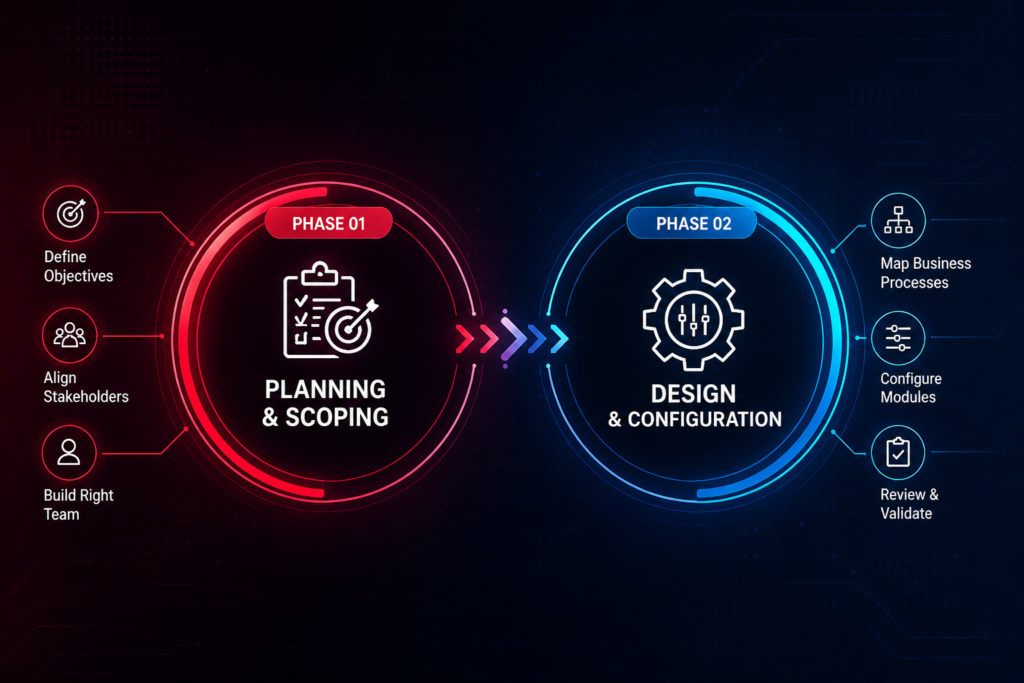
Starting an SAP journey needs a clear plan to reach your goals fast. A structured lifecycle is key for digital change, keeping everyone on track. By using a tested method, you can avoid risks and get the most from your investment.
Phase One: Project Planning and Scoping
SAP project planning is the base for success. Leaders must set the project scope to avoid extra work and use resources wisely. Clear communication between all is key to set realistic goals and deadlines.
Finding the right team is also important. You need people who know your business well and can connect IT with operations. This teamwork keeps the project focused on what the Indian market needs.
Phase Two: System Design and Configuration
After planning, focus on the technical setup. This stage maps your business to the software’s features. Customization must be careful to keep the system stable and ready for updates.
The technical SAP configuration steps are key to fit the platform to your needs. Engineers must make sure each module fits your data and reports. Precision here avoids costly mistakes and makes the transition smoother for users.
Project managers should check the design often. This helps spot problems early and keeps the project on track. Following these steps helps build a strong system for future growth.
Customizing SAP for Indian Regulatory Compliance
Understanding Indian financial rules is key for SAP success. Your software must meet the region’s financial needs. Precision here avoids big mistakes and keeps things running well.
Integrating GST and Local Tax Requirements
The Goods and Services Tax (GST) needs special setup in your ERP. GST compliance SAP solutions help automate tax for different states and products. This makes sure all invoices follow government rules.
Linking your supply chain to local taxes reduces errors. A good system also tracks tax credits well, helping your cash flow. Reliability in tax is key for a strong digital setup.
Managing Statutory Reporting and Audits
Your system must also handle government reports. SAP statutory reporting tools help your finance team make reports easily. These reports help with audits, both inside and outside your company.
Being ready for audits is easier with the right data setup. You can show all your data clearly to regulators. This keeps your company safe from fines and keeps your reputation strong.
| Compliance Feature | Manual Process | SAP Automated Solution |
| GST Filing | High Error Risk | Real-time Validation |
| Audit Trails | Fragmented Records | Centralized Logs |
| Tax Calculation | Time-Consuming | Instant Accuracy |
| Reporting | Delayed Insights | On-demand Analytics |
Data Migration Strategies for Seamless Transitions
A good SAP data migration strategy is key for your digital change. Many don’t see how hard it is to move old data to a new ERP system. Keeping your data clean means your new system works right from the start.
Cleaning and Preparing Legacy Data
First, check your old databases for mistakes. Data cleansing means fixing errors and getting rid of old data. This is very important for companies in India with data in many places.
Make sure your data looks the same in the new SAP system. Set rules for how data is entered and checked. This step stops problems that can happen with new software.
Ensuring Data Integrity During Transfer
Keeping data integrity means testing a lot during the move. You need to match old data fields with SAP’s very carefully. Tools can find mistakes before they cause problems.
Do practice runs in a test area. This lets your team check if everything moves right. Testing in stages helps avoid big problems when you switch to the new system.
| Migration Method | Primary Benefit | Best Use Case |
| Manual Entry | High Accuracy | Small, low-volume datasets |
| Automated ETL | High Speed | Large, structured databases |
| Hybrid Approach | Balanced Control | Complex, multi-source migrations |
Building an Effective SAP Implementation Team
The success of your digital transition depends on teamwork. A good team keeps your business strategy and technical work in sync. This is key during the SAP implementation India process.
Identifying Internal Stakeholders and Champions
To drive adoption, pick people who know your company well. These champions connect the technical team with users. They make sure the new system fits your business needs.
It’s important to have people from different departments. This ensures everyone’s needs are covered. Here are some key roles for your team:
- Executive Sponsors: They give the big picture and handle budgets.
- Process Owners: They set up what’s needed for different business areas.
- Change Agents: They help others adjust to new ways of working.
Partnering with Certified SAP Implementation Consultants in India
While your team is important, you might need extra help. A certified SAP consultant India brings the technical know-how you need. They handle complex setups and local rules.
Expert guidance helps you avoid project problems. With a SAP consultant India, your system will meet local tax and reporting rules.
A team that mixes your team’s knowledge with outside experts is the best choice. This team works together well. It reduces risks and makes your software investment worth it.
Training Your Workforce for SAP Adoption
Getting your team ready for SAP is key to digital success in India. The software is just a tool. It’s your team that makes it work. Investing in your people is as important as the tech you choose.
Developing Role-Based Training Programs
Generic tutorials don’t fit everyone’s needs. You need SAP training programs made for each job. A procurement officer needs different skills than a financial analyst or a warehouse manager.
Breaking SAP into role-specific modules helps users focus. This targeted approach reduces confusion and boosts confidence fast. Practical, hands-on workshops are great for teaching staff how SAP affects their work.
Overcoming Resistance to Change
It’s normal for employees to feel uneasy about new tech. Good SAP change management means clear communication about the benefits. When staff see how SAP makes their jobs easier, they’re more likely to accept the change.
Leaders should promote a culture of learning to ease the transition. Encourage feedback and support to make employees feel important. Open dialogue turns doubters into supporters.
| Training Method | Primary Benefit | Best For |
| Instructor-Led Workshops | High engagement | Complex workflows |
| E-Learning Modules | Self-paced flexibility | Basic system navigation |
| On-the-Job Mentoring | Real-time problem solving | Department-specific tasks |
Managing Costs and Budgeting for SAP Projects
Creating a solid SAP project budget is key to a successful digital change. Software costs are just the start. They make up a small part of the total needed for a full rollout.
Good financial planning means looking at all costs. This way, leaders can get the funds needed to keep projects moving.
Hidden Costs to Consider During Implementation
Many forget about the extra costs that pop up during setup. These hidden costs can add up fast if not planned for early on.
- Data Migration: Moving old data to new systems takes special tools and lots of work.
- Custom Development: Making the software fit your needs costs more, due to special rules or workflows.
- Ongoing Support: Keeping the system running, updating it, and training staff is key for long-term success.
- Change Management: Training and talking to employees is important to get everyone using the new system well.
Calculating Long-Term Return on Investment
Doing a good SAP ROI calculation shows the value of your investment over time. It looks at both direct savings and how the system makes things run smoother.
Here’s a table to help see how different costs affect your budget:
| Cost Category | Primary Focus | Impact Level |
| Licensing | Software Access | Fixed |
| Implementation | Configuration & Data | High |
| Maintenance | System Health | Recurring |
When you do a detailed SAP ROI calculation, look at more than just upfront savings. Think about how the system speeds up decisions, cuts down on mistakes, and helps your business grow in India. A smart SAP project budget is a strategic tool. It helps your company stay ahead in the long run.
Optimizing SAP Performance Post-Go-Live
Getting to go-live is just the beginning. It’s where your digital journey really starts. The real value comes from SAP system maintenance after that. This keeps your system up to date with your business needs.
Monitoring System Health and User Feedback
Good management starts with knowing how your system does every day. IT teams should watch key performance indicators to find problems early. Real-time monitoring helps fix issues fast.
But, don’t forget to listen to your team. They use the system a lot and might find things you don’t. A good way to get feedback helps you make the system better for everyone.
Scheduling Regular Updates and Maintenance
A system that doesn’t change can hold you back. You need to keep your SAP system maintenance up to date. This keeps your data safe and your system working well.
Staying ahead with updates means your business can use the latest tools. Here are some key tasks to keep your system running smoothly:
- Automated patch management to fix security issues.
- Regular database checks to keep things fast.
- Looking over custom code to make sure it works with updates.
- Testing disaster recovery plans to keep business running.
Seeing your software as a valuable asset pays off in the long run. Regular SAP system maintenance is key to a top-performing business.
Common Pitfalls to Avoid During SAP Deployment
Knowing what to avoid is key to a smooth SAP deployment. Many in India face delays and cost overruns. This is because they ignore important technical and human aspects. Spotting these risks early helps your team create a stronger plan.
Underestimating the Complexity of Data Mapping
Data migration is often the longest part of any tech integration. Many think it’s just copying old data to the new system. But, data mapping needs careful cleaning and checking to work right.
If your team doesn’t plan for different data formats or duplicate records, the system might not work well. Data integrity is key to your new digital setup. Spending more time on data mapping avoids big mistakes that could mess up your business.
Ignoring User Experience and Interface Design
A good system needs people to use it. But, many focus on the back-end and forget about the SAP user experience. If the interface is hard to use, people might not want to use it. This leads to low use and less work done.
Putting users first makes sure the software helps them, not hinders them. Here are some steps to make your deployment better:
- Conduct early testing with real users to find problems.
- Give comprehensive training that fits each job role.
- Make it easier to navigate to help new staff learn faster.
- Have a way to get feedback right after it’s launched.
By focusing on both tech and people, you can avoid common mistakes. A balanced approach means your investment will pay off in the long run. It will make your whole company work better.
Conclusion
Connect with Us & choose big step for your growing business in India. It needs careful planning from start to finish. The journey to digital transformation is complex. But, the benefits of better data and processes are worth it. Indian companies can stay ahead by using SAP. Success comes from clear goals, training, and good partnerships. Focus on these key areas for a smooth transition. Begin your SAP journey today for a better future.