
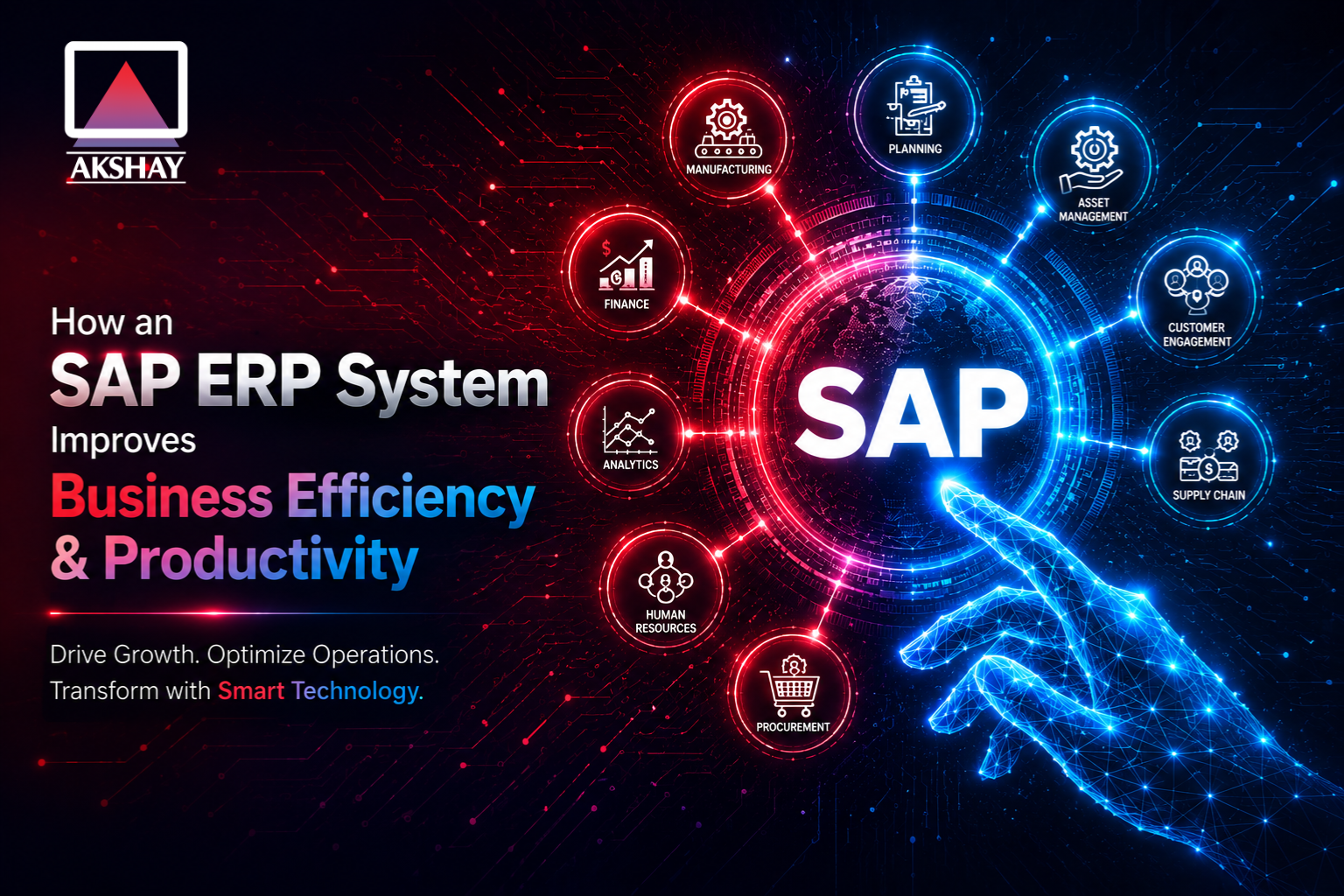
The modern Indian business world is changing fast. Companies must innovate and handle complex tasks every day. Using a strong SAP ERP System is key for growth.
By putting all data into one place, businesses get better at working. Teams can focus on important tasks, not just routine ones. This makes your productivity soar.
To stay ahead, leaders must embrace digital change. The right tech is a must for success in India’s fast-paced economy.
Key Takeaways
- Integrated software platforms centralize data to eliminate operational silos.
- Automation of routine tasks directly enhances daily business efficiency.
- Unified digital tools provide real-time insights for better decision-making.
- Adopting modern technology is essential for maintaining a competitive advantage in India.
- Streamlined workflows lead to a measurable increase in organizational productivity.
Understanding the Role of an SAP ERP System in Modern Business
The SAP ERP system is like the brain of a company. It connects all parts of a business into one place. This helps leaders make smart choices based on data.
This connection is key for staying ahead in today’s quick market.
Core Components of SAP ERP Architecture
The system has a three-layer design for best results. The presentation layer is the front end. The application layer deals with the business rules. The database layer keeps all data safe and up-to-date.
Why Indian Enterprises are Transitioning to SAP
Many Indian enterprises are moving to SAP. They want to leave old software behind. They need a system that can handle lots of transactions and keep data right across all branches.
By using SAP, companies can work better together and get more done.
Scalability for Growing Markets
As companies grow, their software needs to too. SAP’s design lets businesses add new features as they need them. This scalability means companies can enter new markets easily without changing their whole IT setup.
Regulatory Compliance and GST Integration
For local firms, dealing with taxes is a big deal. SAP helps with regulatory compliance, like the Goods and Services Tax (GST). This makes sure financial reports are right and ready for audits all the time.
| Feature | Legacy Systems | SAP ERP System |
| Data Integration | Fragmented Silos | Unified Database |
| Tax Reporting | Manual Entry | Automated GST |
| Scalability | Limited | Highly Flexible |
| Decision Making | Delayed | Real-Time Insights |
Assessing Your Current Business Infrastructure and Readiness
Starting a move to SAP means looking closely at your current setup. You need to know what works well and what doesn’t. This check makes sure your new software fits your business perfectly.
Identifying Operational Bottlenecks
Every growing company hits operational bottlenecks that slow things down. These problems often come from old ways of working or outdated software. By looking at your current steps, you can find where things slow down.
Finding these trouble spots early helps you build a better SAP setup. Streamlining these processes is key to getting the most from your investment. Skipping this step means you might just make old ways digital, not better.
Evaluating Existing Data Silos
Many Indian companies struggle with data silos. These are when different teams can’t share info easily. This makes it hard to see how your business is doing overall.
Getting rid of these silos is a big plus of using an integrated ERP system. You need to check how info moves between teams. Removing these barriers keeps your data up-to-date and easy to access for everyone.
Determining Hardware and Cloud Requirements
Choosing where to host your system is a big decision. You have to pick between keeping it on your own hardware or going to the cloud. This choice affects how easy it is to grow and how much you’ll spend on upkeep.
Many Indian companies choose a mix of both for security and flexibility. Think about your current IT setup and how it might change in the future. The table below shows important things to think about when checking your infrastructure.
| Assessment Factor | On-Premise Strategy | Cloud Migration |
| Initial Investment | High Capital Expenditure | Low Operational Expense |
| System Control | Full Internal Management | Managed Service Provider |
| Scalability | Limited by Hardware | High Elasticity |
| Maintenance | Manual Updates Required | Automated Updates |
Defining Strategic Objectives for ERP Implementation
Before you invest in new technology, you must define exactly what success looks like for your business. A well-structured ERP implementation needs more than just software. It needs a clear vision that connects your digital tools to your long-term goals. By setting precise targets, you ensure every rupee spent helps your company grow and become more efficient.
Setting Measurable Productivity KPIs
To track progress, you need to set business KPIs that reflect your unique needs. These metrics give a clear view of how your new system impacts daily performance. Without these benchmarks, it is nearly impossible to measure the true return on your investment.
- Inventory Turnover Ratio: Monitor how quickly your stock moves to reduce carrying costs.
- Order Fulfillment Cycle Time: Track the speed from customer order to final delivery.
- Financial Closing Duration: Measure the time required to finalize monthly accounts.
Aligning ERP Capabilities with Business Goals
Your chosen software must directly address your most pressing operational bottlenecks to provide real value. Many organizations fail because they treat the project as a technical upgrade. You should map every system feature to a specific goal, such as improving supply chain visibility or reducing manual data entry errors.
When your technology aligns with your objectives, you eliminate redundant processes that slow down your team. This alignment ensures that your ERP implementation supports your specific market position in India. Focusing on these core areas helps you avoid the common pitfalls of feature creep and scope inflation.
Establishing a Project Governance Framework
A strong governance framework acts as the backbone of your project, ensuring that all stakeholders remain accountable. This structure defines clear roles, decision-making authority, and communication channels throughout the deployment lifecycle. By creating a dedicated steering committee, you can quickly resolve operational bottlenecks as they arise.
Effective governance also ensures that your business KPIs remain the primary focus during every phase of the project. When team members understand their responsibilities, the entire ERP implementation process becomes more transparent and predictable. Clear leadership is the ultimate key to maintaining momentum and achieving your desired outcomes.
Selecting the Right SAP ERP Solution for Indian Market Requirements
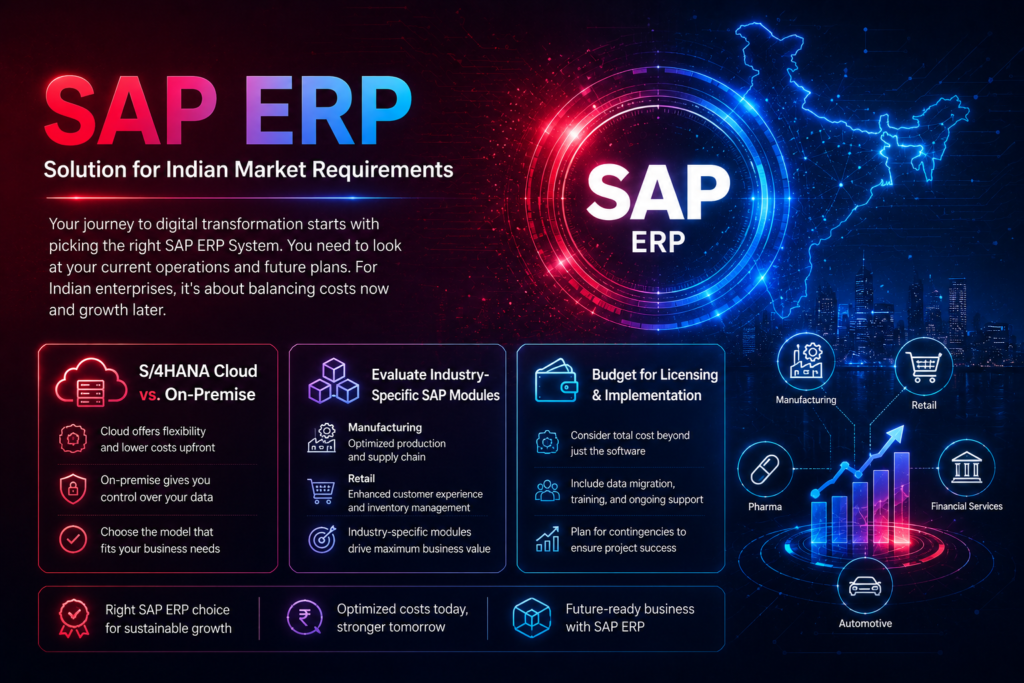
Your journey to digital transformation starts with picking the right SAP ERP System. You need to look at your current operations and future plans. For Indian enterprises, it’s about balancing costs now and growth later.
Comparing SAP S/4HANA Cloud vs. On-Premise
The move to S/4HANA has changed data management. You must choose between cloud or on-premise. Cloud offers flexibility and lower costs upfront. On-premise gives you control over your data.
Many choose cloud for less maintenance. But, those with strict rules might prefer on-premise for security. Here’s a comparison to help you decide:
| Feature | S/4HANA Cloud | On-Premise |
| Deployment Speed | Rapid | Moderate to Slow |
| Upfront Cost | Low (Subscription) | High (Capital Expenditure) |
| Data Control | Shared Responsibility | Full Internal Control |
| Maintenance | Managed by SAP | Managed by Internal IT |
Evaluating Industry-Specific SAP Modules
A good ERP implementation needs modules that fit your industry. India’s industries vary, from manufacturing to retail. SAP has modules for these sectors.
Manufacturing focuses on supply chain and production. Retail looks at customer experience and inventory. Customizing your suite makes it work for your business.
Budgeting for Licensing and Implementation Costs
Good financial planning is key for any project. You need to budget for more than just the software. Costs include data migration, training, and support.
It’s smart to have a backup fund for your ERP implementation budget. This helps with unexpected issues. Prioritizing your investment ensures you get the most value.
Planning the Data Migration and System Integration Process
Switching to an SAP ERP system is a big step. It starts with making sure your old data is right. Meticulous planning is key to a smooth transition. This ensures your new system helps your business grow.
Cleaning and Validating Legacy Data
First, get rid of old or wrong data. Moving bad data to SAP can make problems worse. Data cleansing means fixing errors, removing duplicates, and archiving old files.
Then, check the data to make sure it fits the new SAP system. This step stops system problems and gives you accurate, actionable insights right away.
Mapping Data Flows Between Departments
Many Indian companies face data silos that block information sharing. Understanding how departments use data is key. This helps break down barriers and unite your data.
Good mapping means finance, supply chain, and HR teams work together. Breaking down data silos lets you see your whole business clearly. This is vital for getting the most from your new ERP system.
Mitigating Risks During the Transition Phase
The transition phase has risks like downtime or lost access to important data. A strong risk management strategy is needed. This includes regular backups and testing in stages. A clear plan helps your team fix problems before they hurt your business.
- Perform full system backups before starting data transfer.
- Conduct pilot migrations to find and fix errors in a safe space.
- Establish a rollback plan to keep business running if tech issues pop up.
By being careful, you avoid common digital transformation problems. A good migration plan gives your SAP system the stability it needs to thrive.
Executing the Deployment of Your SAP ERP System
The execution phase is when your digital plan comes to life in your company. It’s a big step from planning to actually using a ERP implementation. A clear plan helps keep things running smoothly during this big change.
Step 1: Configuring the SAP Environment
First, you set up the base for your new digital world. This can be on servers you own or in the cloud. It’s important to make sure it fits your business needs well.
IT teams need to set up different areas for testing and live use. Getting this right helps your system grow with your business. This setup is key for your digital success.
Step 2: Conducting User Acceptance Testing
After setup, it’s time for User Acceptance Testing (UAT). This checks if the software works for your daily tasks. Getting users involved early helps find problems before it’s too late.
Every feedback and bug found should be fixed right away. Testing well makes sure your team is ready to use the new tools. A good UAT phase lowers the chance of mistakes after launch.
Step 3: Managing the Go-Live Transition
The final step, called the “cutover,” is very important. It’s when you switch to the new system. Keeping everyone informed is key during this time.
Try to switch during quiet times to not disrupt work too much. Planning well helps your business keep running smoothly while using new tech. Watch how the system works after it’s live to fix any quick issues.
Training Your Workforce for Maximum Productivity
An ERP system’s true value comes when your team knows how to use it. Technology works best when people use it every day. So, training your staff well is key to success.
By investing in your team, you make sure the system boosts productivity in all areas.
Developing Role-Based Training Programs
Generic training doesn’t meet the needs of different departments. Instead, create training for each role. This way, employees learn how their work helps the company’s business KPIs.
For example, a procurement officer and a financial analyst need different skills. Tailored training makes them more confident and proficient. Personalized learning paths mean fewer mistakes and faster learning.
Utilizing SAP Learning Hub Resources
The SAP Learning Hub has lots of digital content for learning. It has expert-led courses, forums, and practice areas. Using these resources keeps your team up-to-date with the latest system updates and best practices.
- Access to official SAP certification paths.
- Interactive simulations for real-world practice.
- On-demand webinars covering specific industry modules.
Encouraging User Adoption and Feedback Loops
High user adoption shows a successful system. Create clear ways for employees to share their thoughts and challenges. When they feel heard, they’re more likely to use the system well.
Regular feedback helps find areas for more training. By watching how the system affects business KPIs, you can improve. This cycle of learning and improvement keeps productivity high over time.
Optimizing Business Processes Through Real-Time Analytics
Modern businesses in India see the real value of S/4HANA in turning data into useful insights. Once set up, they focus on making workflows better. This boosts business efficiency.
Using real-time analytics, companies can move from just reacting to growing proactively.
Leveraging SAP Fiori for Enhanced User Experience
The look of your ERP system is key to how well your team works with data. SAP Fiori offers a modern, easy-to-use design. It makes daily tasks simpler for everyone.
This design cuts down on learning time. It lets employees quickly find important info. This makes your team more agile and ready for market changes.
Automating Financial Reporting and Supply Chain Tasks
Manual tasks and repetitive reports slow things down. Smart automation frees up time for deeper analysis. Automating financial reporting keeps your finances accurate and ready for audits.
Supply chain tasks also get a boost from automation. Alerts for low stock or delays help everyone stay on track. This reduces mistakes and keeps things running smoothly.
Using Predictive Insights for Strategic Decision Making
The main goal of digital change is to help leaders predict the future. Real-time analytics on past data reveals hidden patterns. These predictive insights guide smart, data-driven decisions.
Whether planning a new product or adjusting how you buy things, live data is a big plus. Using S/4HANA keeps your business efficiency high as you grow. These tools prepare you for tomorrow’s challenges.
Maintaining System Security and Compliance Standards
Security and compliance are key to a company’s success. Keeping sensitive information safe is a must. By focusing on data security, companies protect their secrets and keep their stakeholders’ trust.
Implementing Robust Access Control Policies
Good security starts with controlling who can access what. Using a least privilege model helps. It means employees only see what they need for their jobs.
- Define clear user roles based on job responsibilities.
- Conduct regular audits of user permissions to identify gaps.
- Enforce multi-factor authentication for all administrative accounts.
Regularly Updating SAP Security Patches
Cyber threats are always changing. Keeping your software up to date is key. SAP security patches protect against known threats. With real-time analytics, IT teams can spot problems early.
Keeping up with updates is vital. It stops expensive downtime. A good patching plan keeps your ERP safe from new threats.
Ensuring Data Privacy in Compliance with Indian Laws
Working in India means following strict rules, like the Digital Personal Data Protection (DPDP) Act. Your SAP setup must handle personal data carefully. This means tracking data to keep it safe.
Following global standards helps with international business. Adding privacy controls to your system makes it safe and open. Keeping up with these standards is key for success and peace of mind.
Conclusion
Getting an SAP ERP system is a big step for any business in India. It needs careful planning and clear goals. It also requires a focus on doing things better.
Seeing this as a journey, not just a project, is key. This way, your team can use data and workflows to their fullest. This keeps your business ready for the future.
Your SAP investment is the start of growing and innovating. By improving processes and using data, you make better decisions. This digital change will help your business stay strong.
Start by looking at your current work flow and see where you can do better. Talk to your team and keep your eyes on the future. Taking these steps now will help your business grow and work better. Contact Us for more details.