

In the fast-changing Indian business world, leaders must keep finances accurate. Today, companies use sap business planning and consolidation to make complex tasks easier. This software is a key place for all financial data.
It brings together different information, giving a clear view of a company’s health. This clear picture is key for success in a tough market. With good insights, teams can quickly adapt to new needs.
These tools help leaders make better financial decisions. They cut down on mistakes, letting companies focus on big plans. This way, every rupee is tracked well, helping growth in India.
Key Takeaways
- Centralizing fiscal data eliminates silos across departments.
- Real-time insights allow for faster, more accurate leadership choices.
- Automation reduces human error in complex reporting tasks.
- Strategic growth becomes easier with a unified view of assets.
- Indian firms gain a competitive edge through improved transparency.
Understanding the Role of SAP Business Planning and Consolidation in Modern Finance
The world of corporate finance in India is changing fast. Companies are moving from old, manual spreadsheets to new, integrated systems. This change helps them stay ahead in a world that’s getting more digital by the day.
The Evolution of Financial Planning in the Indian Market
Before, indian market finance used old methods like static reports and manual data for SAP Business Planning and Consolidation. But as businesses grew, these old ways couldn’t keep up. Now, companies need to give accurate, up-to-date info to everyone.
Using financial planning software is now a must, not just a nice-to-have. It helps teams deal with the local market’s challenges and keep up with changing tax laws. This way, they can spend more time on important analysis that helps them grow.
Core Capabilities of SAP Business Planning and Consolidation for Enterprise Performance
SAP Business Planning and Consolidation (BPC) is key for enterprise performance management. It brings budgeting, planning, and forecasting together in one place. This makes sure everyone works from the same information.
The platform has many benefits for today’s businesses:
- Real-time data synchronization across all business units.
- Advanced modeling for complex financial situations.
- Automated consolidation to cut down on mistakes.
By using these features, companies can make decisions faster and be more agile. Good enterprise performance management lets leaders see changes coming. Using top-notch financial planning software helps Indian businesses succeed globally.
Preparing Your Organization for SAP BPC Implementation
Creating a strong planning framework starts with understanding your financial data maturity. Many Indian companies jump into software without checking their data first. This mistake often causes delays and wrong reports.
Assessing Current Financial Data Maturity
Checking your current systems shows how healthy your financial data is. You need to see if your data is clean, the same everywhere, and easy to get to. Good data is key for planning to work well.
Companies should figure out where they stand to find what’s missing in their reports. Here’s a table showing the usual levels of maturity:
| Maturity Level | Data Quality | Reporting Capability |
| Initial | Manual/Fragmented | Reactive |
| Defined | Standardized | Periodic |
| Optimized | Automated/Real-time | Predictive |
Defining Key Performance Indicators for Strategic Alignment
Knowing your data, you must set clear goals that match your company’s vision. Strategic alignment makes sure budgets and forecasts align with your goals. Without these, planning can lose focus.
Leaders should work with different teams to set these goals. This teamwork makes everyone accountable and ensures the software helps the whole company. Clear KPIs help make better decisions.
Identifying Data Sources and Integration Requirements for SAP Business Planning and Consolidation
Getting ready technically means listing all your financial data sources. You need to find out about old ERPs or spreadsheets that feed into your planning. Strategic alignment needs this info to flow smoothly into your new system.
Writing down these needs early helps avoid big tech problems later. Make sure your IT team checks if your old databases can connect to the new one. Good planning here means a smoother start and more people using the system.
Configuring the SAP Business Planning and Consolidation Environment for Your Business Needs
A good SAP Business Planning and Consolidation is key for financial reporting accuracy in India. It makes sure your data matches your business activities. This setup helps finance teams move from manual spreadsheets to automated insights.
Setting Up Dimensions and Models for Financial Reporting
Defining your dimensions is the heart of a good setup. You need to map your company’s structure, cost centers, and profit centers. Precision here stops data silos and lets your financial models grow with your company.
When creating models, think about your Indian operations. This includes multi-entity consolidation and complex tax structures. A clean model design makes consolidation faster and improves monthly financial close speed. Consistent data structures keep your reports reliable over time.
Establishing Security and User Access Controls
Keeping fiscal info safe needs a strong security plan. Use role-based access controls to limit user data access. This reduces the chance of unauthorized changes and keeps your financial records safe.
Check user permissions often to spot system weaknesses. Limiting access to sensitive budget inputs promotes accountability in your finance team. Robust security protocols are essential for good governance.
Best Practices for Data Governance in Indian Regulatory Contexts
Following local standards is vital for businesses in India. Good data governance india means tracking data lineage and following the Companies Act and GST. These steps keep your company ready for audits.
| Configuration Area | Primary Objective | Compliance Focus |
| Dimension Mapping | Operational Alignment | Statutory Reporting |
| Access Controls | Data Security | Audit Readiness |
| Governance Framework | Data Integrity | Regulatory Standards |
Integrating these governance practices into your workflow protects your company. Proactive management of your data keeps your financial reports accurate and clear for everyone.
Step Two: Streamlining Budgeting and Forecasting Processes
Manual data entry slows down finance teams. It stops them from giving timely advice. Moving to digital tools helps avoid mistakes in old spreadsheets. This is key for staying ahead in India’s fast market.
Automating Data Collection from Disparate Systems
Finance teams face challenges with data in different software. Automated budgeting tools connect these systems. This makes sure everyone has the same accurate data for SAP Business Planning and Consolidation.
Implementing Driver-Based Planning Models
Companies can use driver-based planning instead of old spreadsheets. For example, a store might use footfall data to predict sales. This makes planning more dynamic and responsive to market changes.
Reducing Cycle Times for Annual Budgeting
Automated workflows make budgeting faster. Finance teams can then spend more time on analysis. This means quicker and more accurate budgeting and forecasting.
- Increased Agility: Respond to market changes in real-time.
- Enhanced Accuracy: Minimize human error in financial reporting.
- Strategic Focus: Spend more time on analysis and less on data entry.
Step Three: Executing Financial Consolidation with Precision
Precision is key for financial consolidation in growing Indian businesses. As companies grow, combining data from different places gets harder. Having one true version of data helps everyone get accurate reports.
Managing Intercompany Eliminations and Adjustments
Systems today make finding and fixing intercompany issues easier. By setting up these accounts early, you can eliminate double entries. This step cuts down on mistakes during the month-end close.
Rules for adjustments kick in automatically when data is uploaded. This makes sure all internal balances are correct across the company. Consistency in these steps is key for audits and clear operations.
Handling Multi-Currency Conversions for Global Operations
Indian companies in global markets face currency changes. SAP Business Planning and Consolidation handles these changes in real-time, using current market data. This keeps your global performance metrics up to date, no matter the currency shifts.
Ensuring Compliance with Indian Accounting Standards
Following Indian Accounting Standards (Ind AS) is a must for regulatory success. The platform offers templates that meet local reporting needs. These tools help finance teams stay on track and save time on manual work.
| Feature | Manual Process | Automated Consolidation |
| Data Accuracy | High Risk of Error | High Precision |
| Ind AS Compliance | Time-Consuming | Automated Reporting |
| Currency Updates | Delayed | Real-Time |
| Audit Trail | Fragmented | Centralized |
Step Four: Leveraging Advanced Analytics for Informed Decision-Making
Today, Indian businesses are moving from old reports to new, data-driven ways of making decisions. They are going beyond simple spreadsheets to find more value in their data. This change helps leaders make quick changes when the market shifts.
Utilizing Real-Time Dashboards for Executive Insights
Real-time analytics give a live look at your company’s finances. No more waiting for the end of the month. Leaders can see important numbers as they happen. This keeps them quick and informed.
- Instant tracking of revenue streams across different regions.
- Automated alerts for budget variances or spending spikes.
- Customizable views tailored to specific departmental needs.
Performing What-If Analysis and Scenario Modeling
With the market always changing, planning ahead is key. What-if scenario modeling lets businesses try out different economic scenarios. This helps them get ready for risks like supply chain problems or changes in currency value.
By trying out different scenarios, you can find the best way to move forward. This method takes the guesswork out of big financial decisions. It helps teams make strong backup plans to keep profits safe.
| Feature | Traditional Reporting | Advanced Analytics |
| Data Latency | High (Days/Weeks) | Low (Real-time) |
| Decision Style | Reactive | Proactive |
| Outcome Focus | Historical | Predictive |
Translating Financial Data into Actionable Business Strategies
The main goal of advanced analytics is to make complex data easy to understand. When data is clear, it helps businesses grow. Leaders can make smart choices, knowing they’re based on solid what-if scenario modeling.
Companies that use these tools become more accountable and precise. By using real-time analytics every day, your team stays ahead in the changing Indian market. This ensures every financial choice supports your company’s long-term goals.
Overcoming Common Challenges During SAP BPC Deployment
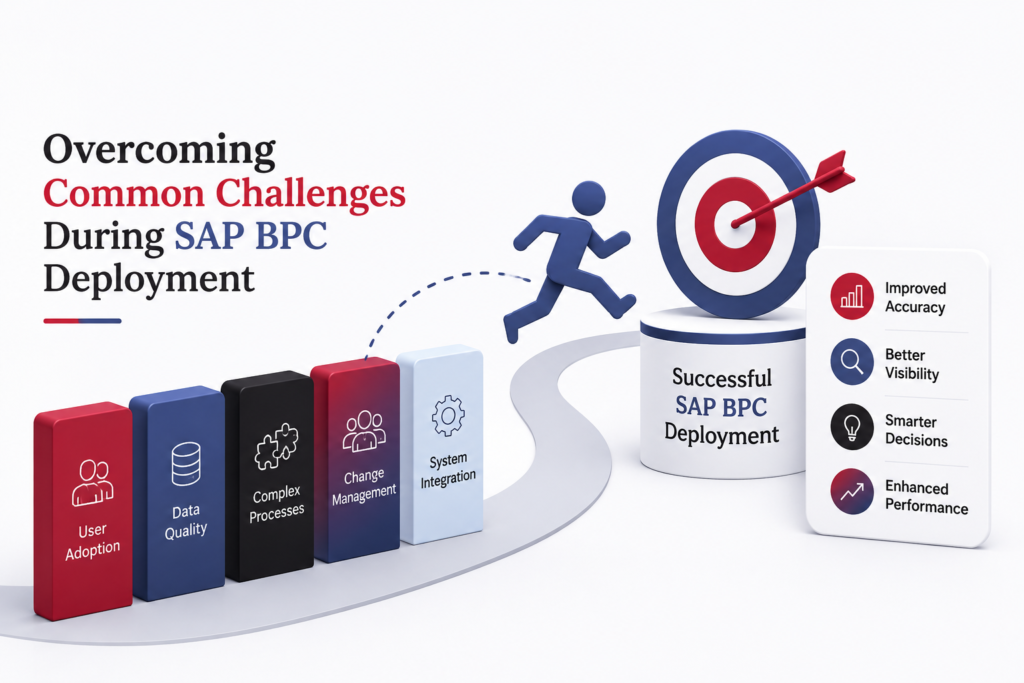
Many Indian companies face big challenges when they start their digital financial journey. The benefits of a unified platform are clear. But, sap bpc deployment challenges often come from old systems and mixed workflows. Planning ahead helps teams avoid these problems and make the transition smooth.
Addressing Data Quality and Integration Hurdles
Good data is the base of a strong financial system. Bad data quality management can mess up forecasts and reports. It’s important to clean up master data before moving it to the new system.
Linking with old ERP systems can be hard because of different data formats. A strong data governance plan makes sure data moves well between systems. Consistency is key when moving old data to new systems to keep reports right.
Managing Change and User Adoption Across Teams
Technology works best when people use it every day. People naturally resist change, more so if they’re used to old ways. Leaders must show the strategic value of the new system to get everyone on board.
Good training is key to help users get up to speed. Hands-on training makes users more likely to use the system. When people see how the software makes their jobs easier, they become its supporters.
| Challenge Category | Primary Risk | Mitigation Strategy |
| Data Integrity | Inaccurate reporting | Rigorous data quality management |
| System Integration | Data silos | Standardized API connectors |
| User Adoption | Low system usage | Targeted training sessions |
| Change Management | Cultural resistance | Executive sponsorship |
Optimizing SAP Business Planning and Consolidation for Long-Term Success
Companies that do well today see their financial software as a key asset. Getting the most from sap business planning and consolidation takes more than just setting it up. It needs a plan to keep it up-to-date with market changes and company growth.
Continuous Improvement of Planning Models
Your financial models should grow with your business strategy for SAP Business Planning and Consolidation. As India’s market changes, old models lose their usefulness. Regular audits of your planning logic keep your forecasts on track with today’s business.
Here are key steps for keeping your models sharp:
- Check your assumptions every quarter to match market changes.
- Make complex calculations simpler to speed up system use.
- Use feedback from team leaders to make sure models fit business needs.
- Get rid of old data to keep systems fast and efficient.
Integrating SAP BPC with SAP S/4HANA for Enhanced Performance
The real power of your financial setup comes from sap s/4hana integration. Connecting your planning tools to your main ERP system removes data gaps and manual checks. This smooth flow of data is key for real corporate performance optimization.
When these systems work together, finance teams get instant data. This speeds up decision-making. This integration makes your financial team more agile and ready for market changes. Embracing this technical synergy turns your finance team into a strategic leader.
The mix of sap business planning and consolidation and sap s/4hana integration lays a strong base for growth. By always looking ahead, your company keeps its financial systems strong and reliable for the future.
Conclusion
Adopting SAP Business Planning and Consolidation is a big step for companies in India. It turns data into a tool for growth. Leaders who use it get a clear picture of their finances.
Success comes from being ready and setting up your digital space right. Your team must focus on keeping data accurate. This lets you use these tools to their fullest.
Connecting these steps with SAP S/4HANA makes information flow smoothly. This helps you adjust quickly to market changes. You can make detailed plans, giving you an advantage over others.
Technology is key to financial success with the right strategy. Companies that follow this path become strong and flexible. Begin your path to better decisions today for a bright future & good SAP Business Planning and Consolidation.