
Choosing the right expert for your digital change is a critical decision for any growing company in India. Many business owners find it hard to pick between an official SAP Business One Partner and an independent ERP consultant.
Both professionals want to make your operations better. But, they have different approaches and accountability. It’s key to know these differences before you decide on a software plan.
An official SAP Business One Partner gives you certified support and direct access to vendor resources. On the other hand, an independent ERP consultant can offer a wider view that might fit your specific needs better.
Your choice will greatly affect how your company uses new technology. By looking at your unique needs, you can make sure your implementation is a success. This will help your business grow in the long run.
Key Takeaways
- Official partners provide certified expertise and direct access to vendor updates.
- Independent consultants offer flexible, vendor-neutral advice for unique business models.
- The Indian market requires a clear understanding of local compliance and support standards.
- Choosing the right professional is vital for a smooth digital transformation journey.
- Careful evaluation of your operational needs prevents costly implementation mistakes.
Defining the Roles in the Indian ERP Ecosystem
The Indian market offers two paths for companies to modernize with enterprise software. Understanding the roles of ERP implementation India is key. Knowing who provides the tech and strategy helps your business align with the right expertise.
What is an SAP Business One Partner?
An SAP Business One Partner is a certified entity authorized by SAP. They sell, install, and support SAP software. They get special training to meet global standards.
Working with a partner means you get a team with direct SAP access. They help set up the system to fit your business needs. Choosing an authorized partner is key for official procurement and support.
Defining the Independent ERP Consultant
An independent ERP advisor works without vendor ties. They focus on your business interests. An ERP consultant helps with process changes and choosing vendors.
Many Indian companies hire these advisors for complex projects. They make sure the software fits your needs. Their unbiased perspective helps avoid common ERP implementation India mistakes.
| Feature | SAP Business One Partner | Independent ERP Consultant |
| Primary Focus | Software Sales & Technical Setup | Strategic Advice & Process Design |
| Vendor Relationship | Authorized Representative | Neutral Third-Party |
| Key Value | Official Support & Licensing | Objective Project Oversight |
Choosing between a partner and an ERP consultant depends on your needs. A partner is great for technical setup. But, an independent ERP advisor offers strategic guidance for success.
Core Responsibilities of an SAP Business One Partner
Choosing the right SAP Business One Partner is key for any Indian business. They connect your company to the SAP world. This ensures your business uses the latest technology.
Software Licensing and Official Procurement
The start of your ERP journey is the procurement process. An authorized partner handles SAP B1 licensing. They make sure you get the right modules for your industry.
Working with an official partner means you get real software keys. This official procurement keeps your investment safe. It also makes sure your business follows all rules and policies.
Technical Implementation and Customization
Setting up an ERP system needs a lot of technical skill. A good partner is great at ERP software customization. They make the software fit your business needs.
They work on making the system better for your daily work. Their team does things like:
- Matching your business needs with the system’s functions.
- Creating special reports for better decisions.
- Connecting your ERP with other apps.
Ongoing Support and Maintenance Agreements
The partnership doesn’t stop after setup. You need SAP Business One support to keep things running smoothly.
Partners offer maintenance plans. These include regular checks and monitoring. This proactive approach keeps your system running well. It lets your team grow without worrying about tech issues.
The Scope of Work for an Independent ERP Consultant
An ERP consultant is key in linking your business needs with technical solutions. They focus on your company’s long-term success, not just selling software. They help you create a strong ERP strategy to succeed in the Indian market.
Strategic Business Process Re-engineering
First, a consultant checks your current work flows. This business process re-engineering phase makes sure you don’t just automate bad habits. It makes your work more efficient and accurate.
This step finds and fixes problems that slow you down. They work with your team to plan what you need next. This way, the technology you choose fits your goals, not the other way around.
Vendor Selection and Software Agnostic Advice
Hiring an independent expert gives you unbiased advice. They don’t make money from software sales, so their advice is pure. This is key when picking an ERP vendor.
They look at different software based on your needs and budget. They help you avoid spending too much on things you don’t need. This saves your money and makes sure the software fits your work style.
Project Management and Quality Assurance
Good ERP project management is essential for a smooth change. An independent consultant watches over the project. They make sure it’s done on time and meets quality standards.
They also check if the system works as planned. This ensures your investment pays off. They keep an eye on things to avoid problems and make sure you get value for your money.
Key Differences in Certification and Credibility
Credibility in the Indian ERP market comes from official status and experience. When picking partners, know the difference between official vendors and independent advisors.
SAP Official Accreditation Standards
Official partners must follow strict SAP certification standards. This keeps them up-to-date with software, support, and training.
They go through regular checks to show they’re good at their job. This rigorous framework makes sure they follow global standards and help local businesses.
The Role of Experience and Industry Certifications
Independent consultants earn respect through their projects and certifications. They might not be official partners but have valuable skills like PMP or Six Sigma.
They use their broad industry knowledge to give advice tailored to your business. Check their past work and references to see if they fit your needs.
| Feature | SAP Partner | Independent Consultant |
| Primary Credential | Official SAP Certification | Industry/Project Management Certs |
| Vendor Access | Direct access to SAP support | Third-party advisory role |
| Core Focus | Technical implementation | Strategic business alignment |
Choosing the right partner depends on your project’s needs. Verifying the qualifications of your partner is key to success.
Cost Structures and Financial Implications
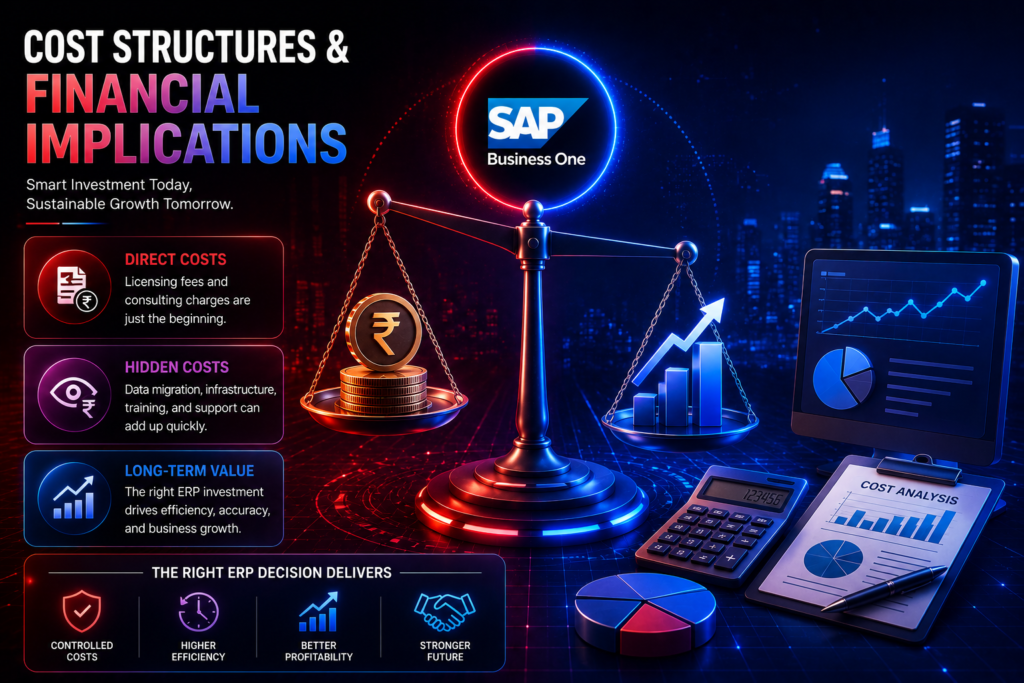
Understanding ERP spending is key for business leaders in India. A detailed ERP cost analysis helps spot fixed costs and variable expenses. This knowledge helps avoid budget problems during deployment.
Direct Licensing Costs vs. Consulting Fees
The cost model for SAP Business One has two parts. First, there are SAP B1 licensing fees. These can be a one-time payment or a subscription. These costs are usually fixed and set by the vendor.
Consulting fees, on the other hand, vary based on the project’s scope. Independent consultants charge by the hour or by project milestone. Partners may offer bundled services, but consultants provide clear time breakdowns for better budget control.
Hidden Costs in ERP Implementations
Many overlook the total cost of ownership. Data migration can be expensive if your systems are messy. You also need to consider infrastructure upgrades like server hardware or cloud hosting.
Training and change management costs are often underestimated. Investing in employee adoption is critical but often overlooked. Not budgeting for post-go-live support can lead to productivity drops that cost more than training.
Long-term Value and Return on Investment
Calculating the ROI on ERP looks beyond the initial phase. A good deployment leads to better operations, fewer errors, and improved inventory management. These improvements save money over time.
When evaluating your investment, think about the platform’s long-term scalability. A system that grows with your business is more valuable than a cheap, inflexible one. Strategic planning ensures your investment pays off in the long run.
| Cost Category | Partner Model | Consultant Model |
| Software Licensing | Fixed/Standardized | Vendor-Neutral |
| Implementation Fees | Bundled/Project-based | Hourly/Milestone-based |
| Support Structure | Annual Maintenance | On-demand/Retainer |
| Strategic Focus | Product-Centric | Process-Centric |
Navigating the Indian Market Landscape
Success in the Indian ERP market comes from adapting to local rules and ways of doing things. Companies planning an ERP implementation India must go beyond global standards. They need to meet specific regional needs.
Regional Expertise and Local Compliance
Doing business across India’s many states needs a deep understanding of local practices and logistics. Local experts help connect international software with local realities.
Compliance with local laws is key for business to keep going. Working with those who know the local scene ensures your system stays up-to-date and legal.
Understanding GST and Indian Statutory Requirements
The Goods and Services Tax changed how businesses report finances across the country. A strong GST compliance ERP is vital for automating tax and ensuring accurate filings.
Manual workarounds can cause expensive mistakes and penalties during audits. A specialized system handles complex tax rules. This lets your finance team focus on growth, not just data entry.
Availability of Talent and Support Infrastructure
The success of digital changes depends on ERP talent availability in the local area. Having skilled consultants means your team can solve problems and improve workflows as your business grows.
Good SAP Business One support is essential for daily operations. A solid local support system cuts downtime. It gives you the confidence to stay ahead in a fast market.
When to Choose an SAP Business One Partner
For businesses aiming for seamless integration, partnering directly with an authorized expert is often the best path forward. Choosing an SAP Business One Partner ensures your organization stays up-to-date with the latest software standards and best practices. This direct connection provides a solid foundation for long-term digital transformation.
Ideal Scenarios for Direct Partnership
Direct engagement is highly recommended for companies that prioritize vendor accountability and long-term stability. If your business needs a standardized implementation that follows official SAP methodologies, a direct partner is your best choice. Consistency is key when scaling operations across different Indian states.
Organizations that prefer a single point of contact for both licensing and technical support will find this model most efficient. By working directly with an authorized firm, you eliminate the middleman and ensure that your business processes are handled by certified professionals. This approach is effective for firms looking to minimize risks during the initial deployment phase.
Access to Exclusive SAP Resources and Updates
Being part of the SAP partner ecosystem grants your business a significant competitive advantage. You gain early access to critical software updates, security patches, and specialized training materials that are not available to the general public. This ensures your system remains future-proof and compliant with evolving Indian statutory requirements.
Further, an official partner acts as a direct bridge to the vendor’s internal support teams. This connection is vital for resolving complex technical issues quickly, ensuring minimal downtime for your operations. Leveraging the full strength of the SAP partner ecosystem allows your team to focus on growth while the experts manage the technical complexities of your ERP environment.
When to Hire an Independent ERP Consultant
Decisions need a fresh view, free from sales pressure. Many teams in India struggle with big digital changes. A ERP consultant offers the needed watch to match your growth plans.
Managing Complex Multi-Vendor Environments
Today’s businesses mix old systems, cloud services, and special tools. When these don’t talk to each other, things slow down. An independent expert makes a plan that ties everything together.
They manage projects well, avoiding blame games between vendors. This keeps your technical infrastructure strong and united. You can make each vendor answer for their part without bias.
The Need for Unbiased Strategic Guidance
Hiring an independent ERP advisor means getting real advice. They don’t make money from software sales. Their goal is to help your business succeed the best way.
They keep things fair, helping you choose wisely between updates or new systems. An independent ERP advisor blocks out pushy sales. They focus on what’s best for your business, saving you money and boosting your investment.
Risk Mitigation and Project Success Factors
Successful digital transformation in India depends on managing project risks well. A clear plan for ERP implementation India helps avoid common problems. These problems can cause budget overruns or stop operations.
By spotting threats early, leaders can keep the project moving. This is key for the whole software deployment process.
Ensuring Accountability in Implementation
Clear ownership is key for ERP project management. When everyone knows their role, mistakes due to confusion are less. Accountability starts from the beginning and goes to the end.
Companies should have a plan to track progress. This lets project managers fix problems before they get big. Defining clear roles keeps everyone working towards the same goals.
Balancing Technical Expertise with Business Strategy
Good ERP risk mitigation needs more than tech skills. The system must also meet the company’s goals. If IT and business goals don’t match, projects often fail.
Leaders should make a detailed ERP strategy. This strategy should focus on how the software helps the business. Strategic alignment makes sure tech choices help the company grow and work better.
Conclusion
Choosing between an SAP Business One Partner and an independent ERP consultant with Akshay Software Technologies Private Limited is key. It shapes your digital transformation’s future. Your choice depends on whether you want direct vendor access or neutral strategic advice.
An SAP Business One Partner gives you the technical support and official backing for a smooth setup. This is best if you need deep product knowledge and easy SAP integration.
Independent ERP consultants focus on unbiased process improvement. They help you choose the right vendor and keep your business goals in mind.
Do a detailed needs assessment before making a choice. Look at your team’s skills and your future needs. Choosing wisely means a better return on your investment.
Talk to your stakeholders about these priorities now. Good communication at this time avoids costly mistakes later. A well-thought-out plan is the key to lasting success.