

The Indian business world is changing fast. Companies must go digital to keep up globally. Updating core systems is now a critical necessity for growth.
Many are choosing Rise with SAP for a smoother cloud transition. It offers a solid base for flexible and growing businesses. Moving to the cloud brings more agility and innovation.
But the real benefit is in customization. SAP Add-On Integration lets companies fit software to their needs. These tools greatly improve ERP performance and work efficiency. A strong cloud platform with the right enhancements empowers teams to make quick, smart decisions.
Key Takeaways
- Digital transformation is essential for Indian businesses to remain competitive.
- Cloud migration provides a scalable foundation for modern enterprise operations.
- Customized add-ons help align software functionality with unique business goals.
- Optimized systems lead to measurable improvements in daily operational efficiency.
- Data-driven decision-making becomes easier with a modernized, integrated architecture.
The Evolution of ERP Landscapes in India
A new wave of change is sweeping through India’s business world. Companies are leaving old, fixed systems for newer, cloud-based ones. This digital transformation India move is more than a trend; it’s a big change in how businesses stay ahead.
Digital Transformation Trends in the Indian Market
Today, Indian businesses focus on real-time data access for making quick decisions. Leaders know they must be ready to change fast in a changing world. So, many are investing in systems that support work from anywhere and on mobile devices.
This change helps companies bring together different parts of their business into one system. Cloud tools make operations smoother and cut down on manual work. This is key for growing in India’s diverse market.
Challenges Faced by Legacy ERP Systems
Even with the push for new systems, many face legacy ERP challenges that slow them down. Old systems need a lot of money for upkeep and upgrades. They also can’t easily adapt to today’s mobile work styles.
Also, these old systems often keep data separate, making it hard for teams to work together. This leads to less productivity across the whole company. Fixing these technical bottlenecks is the first step to better performance.
| Feature | Legacy ERP Systems | Modern Cloud ERP |
| Deployment | On-Premise Hardware | Cloud-Native SaaS |
| Maintenance | High Manual Effort | Automated Updates |
| Accessibility | Office-Bound Only | Anywhere, Any Device |
| Scalability | Limited and Costly | Instant and Elastic |
Understanding the Core Value of Rise with SAP
Rise with SAP is a big step for companies wanting to update their digital core. It helps businesses move away from old IT systems. This makes them more agile and focused on their main goals.
This approach makes sure technology helps businesses grow, not hold them back.
Business Transformation as a Service
The heart of this idea is Business Transformation as a Service. It combines software, infrastructure, and services into one package. This makes it easier for companies to grow digitally.
Companies don’t have to deal with many vendors anymore. They get a unified experience that grows with them. Leaders can focus on big goals, not just keeping IT running.
Cloud Migration Strategies for Indian Enterprises
Cloud migration needs careful planning to avoid problems. Indian companies face special challenges like keeping data local. A step-by-step plan helps keep business running smoothly.
Using standard tools makes cloud moves safer. This reduces the risks of big digital changes. Here’s a table showing the old way versus the new service-based model.
| Feature | Traditional ERP | Rise with SAP |
| Infrastructure | On-premise/Self-managed | Cloud-based/Managed |
| Cost Structure | High Capital Expenditure | Predictable Subscription |
| Maintenance | Manual Updates | Automated Services |
| Scalability | Limited/Slow | High/Instant |
Choosing a clear cloud migration path helps businesses stay ahead. With Rise with SAP, companies get a strong system for the future. It’s more than just updating technology; it’s changing how value is shared in India.
The Strategic Role of SAP Add-On Integration
Modern businesses in India find that standard software can’t meet all their needs. SAP Add-On Integration connects generic ERP functions to your business’s unique workflows.
These tools help companies fill the gap between standard systems and their specific needs. This way, they keep their core system streamlined. Yet, they also get the flexibility to stay ahead of competitors.
Extending ERP Functionality Beyond Standard Modules
ERP modules are a good start, but they don’t cover all industry or local rules. Specialized components help businesses enhance productivity without the hassle of custom coding.
These extensions fit into your system like building blocks. They help with things like advanced tracking or special financial reports. This way, your system grows with your business.
Ensuring Compatibility with SAP S/4HANA Cloud
Keeping your system stable is key for any digital change. It’s important to make sure new features work well with the SAP S/4HANA Cloud. This avoids technical problems.
Following cloud standards keeps your system running smoothly. It makes sure your system is fully supportable during updates. This way, Indian businesses can use the cloud’s power while keeping their systems secure and ready for new ideas.
Optimizing Business Processes Through Seamless Integration
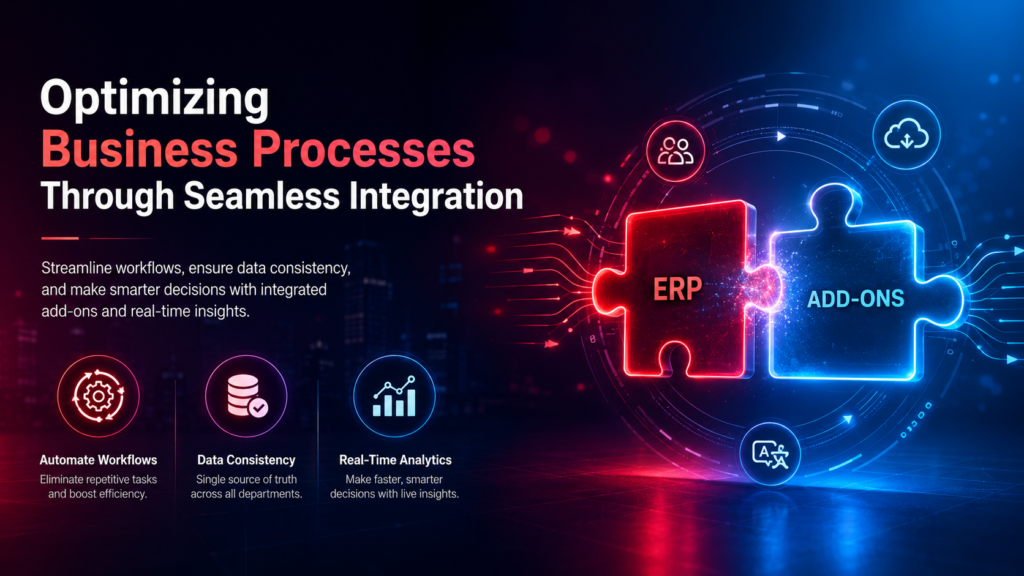
Unlocking your ERP system’s full power starts with making your workflows smoother. Many Indian businesses face problems with systems that don’t talk to each other well. This makes it hard for teams to work together effectively.
By focusing on making everything connected, businesses can create a single space where info flows freely. This helps every department work together better.
Automating Workflows with Integrated Add-Ons
Using special add-ons can replace boring, repetitive tasks with business process automation. This change cuts down on mistakes and lets your team focus on important tasks. Efficiency gains are quick when these tools handle tasks like data entry.
Integrating these solutions makes your business more flexible and ready to adapt to changes. Here are some benefits of using automated tools:
- Reduced operational costs by cutting down on manual work.
- Faster cycle times for important tasks like buying and selling.
- Improved employee satisfaction by making work less boring.
- Enhanced scalability to grow quickly in India.
Data Consistency and Real-Time Analytics
Big companies often struggle with data silos that hide the truth. True business process automation needs a single source of truth. When your add-ons work well with your ERP, everyone sees the same accurate info.
This consistency is key for real-time analytics. Leaders don’t have to wait for monthly reports to know how the business is doing. They can see up-to-the-minute insights to make quicker, smarter decisions.
Using real-time analytics helps spot trends and risks early. This way, your ERP becomes a strong tool for staying ahead in the digital world.
Technical Considerations for Successful SAP Implementations
Technical precision is key for a successful SAP deployment in India. Companies need a strong base for all software parts to work well together. Proper technical governance is essential for a top ERP environment.
Managing API Connectivity and Middleware
Good communication between systems needs strong middleware connectivity. Advanced layers help connect old apps with new cloud ones. This makes data flow smoothly across the whole system.
Middleware is like a translator in IT. It lets different systems talk to each other in real-time. This is important for quick changes in business. Reliable middleware connectivity helps avoid slowdowns and supports fast growth.
Security Protocols for Cloud-Based Add-Ons
Keeping data safe is a big deal for Indian companies using the cloud. They must use strong cloud security when adding new features. These steps protect data from hackers and unauthorized access.
Encryption and identity management are key to a safe setup. Strict access rules help keep data safe while using the cloud’s benefits. Comprehensive cloud security means innovation and safety go hand in hand.
Enhancing ERP Performance with Rise with SAP
Scaling your digital setup needs a platform that grows with you. As Indian businesses grow, they must adapt quickly to market changes. Rise with SAP helps them do this without huge upfront costs.
Scalability and Resource Management
This framework is all about scalability. Businesses can adjust resources as needed, keeping IT budgets in check. Moving away from fixed hardware lets companies scale up or down fast.
This frees up time for innovation, not just keeping the IT running. The main benefits are:
- Cost Efficiency: No big upfront costs for hardware.
- Elastic Resources: Computing power adjusts to workload needs.
- Operational Agility: Quick deployment of new business modules.
Reducing Latency in Global Operations
Keeping ERP performance high is key for teams worldwide. Cloud-based systems help reduce data delays, keeping productivity up. Localized cloud nodes ensure fast, reliable access to business data for remote teams.
This fast access means decision-makers get the info they need quickly, no matter where they are. Reducing latency means faster transactions and better user experiences. Companies focusing on these areas stay ahead in the Indian market and globally.
Customization Versus Standardization in the Cloud Era
Finding the right balance is key for cloud success. Many used heavy ERP system changes to fit their needs. But, this often leads to technical debt that slows growth.
Maintaining Clean Core Principles
The Clean Core idea is vital for digital transformation. Keeping the core system simple helps SAP S/4HANA Cloud stay stable and up-to-date. This way, companies can adopt new tech quickly without breaking custom code.
Standard processes help Indian businesses follow global best practices. By keeping the core simple, upgrades are easier. This streamlined approach saves time and resources, letting IT teams focus on new projects.
Leveraging SAP Business Technology Platform
The SAP BTP is key for adding features without harming the core. Developers build custom apps and integrations here. This side-by-side extension model keeps the core clean while meeting business needs.
Using SAP BTP offers a secure, scalable space for innovation. It connects SAP S/4HANA Cloud with other systems or tools easily. This flexibility is vital for staying competitive in a fast-changing market.
| Feature | Traditional Customization | Side-by-Side Extension |
| Core Integrity | High Risk of Corruption | Maintained (Clean Core) |
| Upgrade Path | Difficult and Costly | Simple and Automated |
| Development Speed | Slow | Fast and Agile |
| Maintenance Effort | High | Low |
Industry-Specific Benefits for Indian Businesses
To succeed in India, you need to know the local market well. Many find standardized software doesn’t fit India’s unique needs. Specialized integrations help meet both global and local standards.
Manufacturing and Supply Chain Optimization
The Indian manufacturing sector has big challenges. These include broken logistics and complex schedules. A strong manufacturing ERP gives total visibility over the supply chain.
This means raw materials arrive on time. It cuts down waste and boosts production speed.
Integrated solutions track goods in India’s varied transport networks. This automation helps companies quickly adapt to changes. It’s key to staying ahead in a fast-growing market.
Retail and E-commerce Integration Capabilities
Digital shopping is growing fast in India. Businesses need new ways to manage stock. A modern retail ERP helps manage sales online and in-store smoothly.
Real-time data analytics help retailers understand what customers want. This lets them adjust their products quickly. It also cuts down on errors by linking online stores to back-end systems.
| Industry Sector | Primary Benefit | Key Integration Focus |
| Manufacturing | Production Efficiency | Supply Chain Logistics |
| Retail | Omnichannel Sales | Real-time Inventory |
| E-commerce | Customer Experience | Automated Order Fulfillment |
Best Practices for Managing SAP Add-On Lifecycles
Keeping your software up to date is key to success in India. Focus on SAP lifecycle management to protect your digital assets. This approach helps your business grow over time.
Good management stops technical debt from building up. It keeps your systems running smoothly.
Vendor Selection and Compliance Standards
Finding the right partner is critical for a stable ERP setup. Do your homework to make sure SAP Add-On Integration meets high standards. Check if vendors follow Indian and global data laws.
- Look at the vendor’s history with security updates.
- Make sure it works well with the latest SAP S/4HANA.
- Check if it supports clean core principles.
Monitoring Performance and Regular Updates
After adding an add-on, the job is not done. You need to watch it closely to catch problems early. A strong SAP lifecycle management plan helps track performance and use of resources.
Keeping software up to date is crucial for security and stability. Regular updates prevent risks from old software. With SAP Add-On Integration updates, your business stays flexible and secure.
Conclusion
Modern businesses in India are at a key moment in their digital journey. Adopting Rise with SAP gives them a strong base to handle market changes. This move helps them break free from old systems and become more agile.
Choosing the right add-ons is key to unlocking ERP’s full power. This choice makes systems flexible and ready for different needs. It keeps main processes simple while allowing for new ideas.
Leaders must focus on these integration steps to stay ahead. Companies that pick cloud tech now will grow and do well in the future. The journey ahead needs ongoing improvement and smart tech use.
Start by checking your digital setup. Work with your IT team to make your SAP plan match your business goals. Your smart moves today will help your business grow strong and perform well tomorrow.