
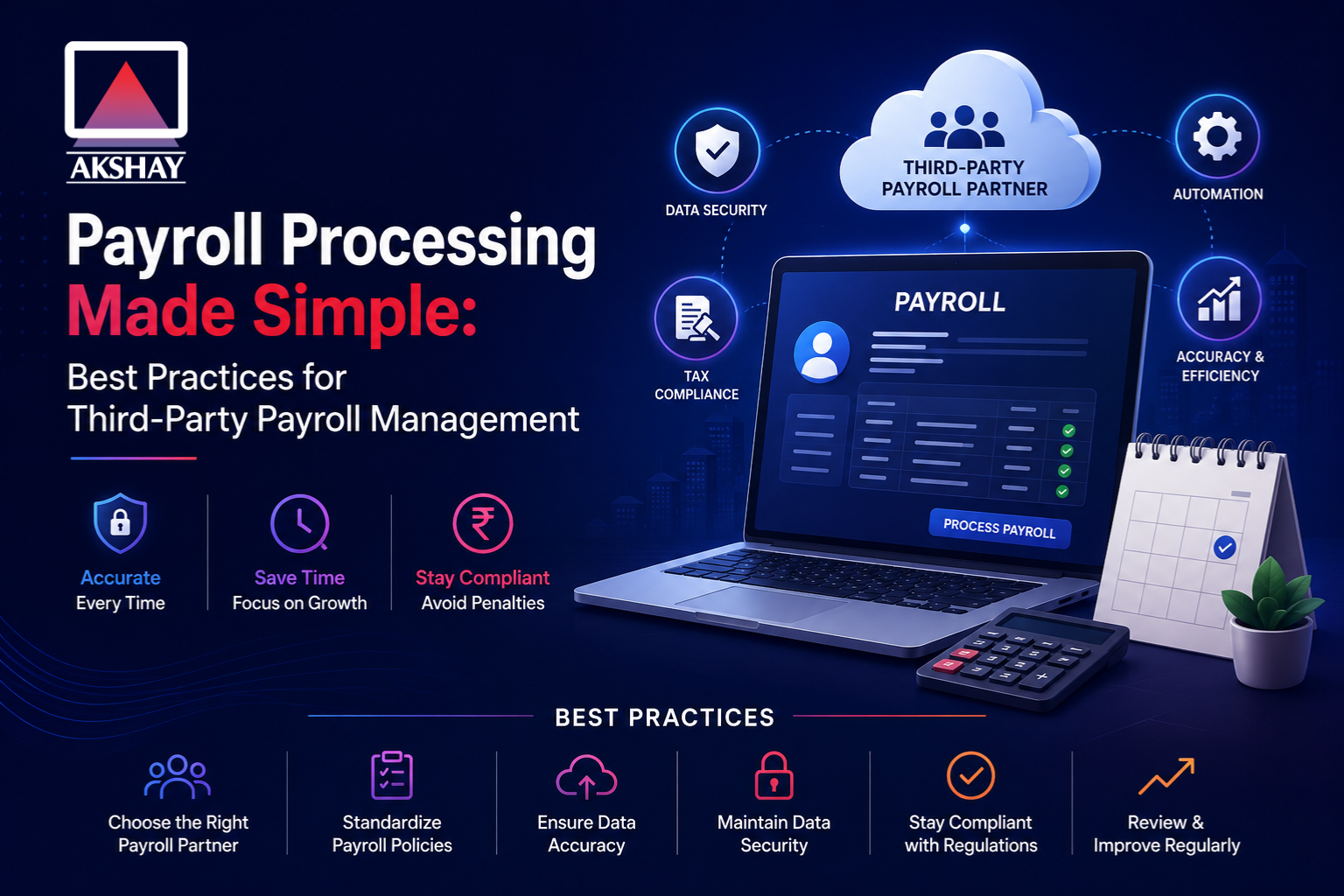
Managing employee pay in India can be very hard. Many companies use old systems that cause mistakes and legal problems. Efficiency is key for success, but old ways often slow things down.
Using third-party payroll services is a smart move for today’s businesses. It lets companies focus on what they do best while making sure everyone gets paid right. This change brings together different parts of payroll into one, professional system.
Keeping payroll processing up to par is vital for keeping employees happy and stable. When workers trust their pay, the whole company does better. This guide shows how to use outside help to make your business run smoother and better.
Key Takeaways
- Manual systems often create unnecessary compliance risks for Indian businesses.
- Outsourcing administrative tasks allows leadership to focus on core growth strategies.
- Accuracy in compensation builds essential trust between employers and their staff.
- Modern frameworks replace error-prone workflows with streamlined, digital solutions.
- Professional management ensures consistent adherence to local labor regulations.
Understanding the Landscape of Payroll Processing in India
Payroll processing in India is a big challenge. It needs precision and deep local knowledge. The Indian corporate world faces a complex set of rules.
Companies struggle to keep up with these rules. This is why many turn to payroll outsourcing. Outsourcing helps them stay focused on their main goals.
Dealing with payroll compliance India standards is tough. Employers must overcome many hurdles. If they fail, they face big penalties and legal issues.
- Managing diverse state-specific labor regulations and professional tax variations.
- Ensuring accurate and timely filing of statutory returns like PF, ESI, and TDS.
- Adapting to frequent updates in tax legislation and reporting formats.
- Maintaining absolute confidentiality while handling sensitive employee financial data.
Local knowledge is key to success in this area. It helps companies meet legal needs and handle daily tasks. When businesses focus on payroll compliance India, they earn trust from their workers. Good payroll processing is about more than just paying salaries. It’s about keeping the whole organization strong through payroll outsourcing.
Assessing Your Organization’s Need for Third-Party Payroll Services
If your finance team is stuck fixing data errors, it’s time for a change. Many businesses hit a point where manual payroll slows them down. Third-party payroll services can turn these problems into a smooth, automated process.
Identifying Internal Payroll Pain Points
Signs your system is failing include many data entry mistakes and slow paydays. These issues often come from old spreadsheets or software that can’t handle taxes. Administrative burnout happens when HR is too busy with simple tasks to focus on important work.
Choosing payroll outsourcing means handing over tedious tasks to experts. This frees up your team to do more important work. It also cuts down on mistakes, which is key for keeping your team’s trust.
Evaluating Scalability and Compliance Requirements
As your company grows, managing taxes and laws gets harder. Keeping up with India’s changing rules needs constant effort and knowledge. A third-party payroll service keeps your business in line with laws, no matter how fast you grow.
Scalability is also key when deciding to leave manual systems behind. If your setup can’t handle more employees, you’ll face delays. Proactive planning through payroll outsourcing lets you grow without adding to your costs.
| Feature | In-House Payroll | Outsourced Payroll |
| Data Accuracy | High Risk of Error | High Precision |
| Compliance | Manual Updates | Automated Updates |
| Scalability | Limited | Highly Scalable |
| Cost Structure | Fixed Overhead | Variable/Predictable |
Selecting the Right Third-Party Payroll Provider
Choosing a third-party payroll provider is more than just outsourcing. It’s a strategic move for business continuity. Making the wrong choice can cause delays and financial risks. You need to find a partner that fits your specific needs.
Key Criteria for Vendor Evaluation
Look for a provider with a proven track record in your industry. A good payroll service provider should grow with your company. Scalability keeps your payroll efficient during growth.
Check their customer support and how fast they solve problems. A partner with dedicated account management is often better than automated services. Always ask for references to check their performance.
Verifying Statutory Compliance Expertise
In India, statutory compliance is essential. Your provider must know local labor laws well. Not following these laws can lead to penalties and legal issues.
Ask how they keep up with government changes. A good partner has a legal team for this. This vigilance keeps your payroll compliant and ready for audits.
Assessing Technology and Data Security Standards
Modern payroll needs strong payroll software. Check if the software is easy for your HR team and employees. It should also integrate well with your HRMS or attendance tools.
Data security is key when handling employee info. Make sure the provider uses advanced encryption and follows strict privacy rules. The table below shows what to look for in a provider.
| Evaluation Metric | High-Performance Provider | Average Provider |
| Compliance Support | Real-time updates | Manual updates |
| Data Security | ISO/SOC2 Certified | Basic firewall |
| System Integration | API-based connectivity | Manual file uploads |
| Support Response | Under 4 hours | 24-48 hours |
Establishing a Seamless Onboarding Process
A smooth start with a new payroll partner begins with a good payroll onboarding phase. This first step is key for working well together and keeping data right. A clear plan helps avoid problems that can mess up your finances.
Data Migration and Integration Strategies
Moving employee records to a new system is very important. Make sure all old data fits well in the new system used by your payroll service provider. Getting this right is very important to avoid mistakes in taxes or pay.
It’s also key to link with your HR software smoothly. Good systems work together to track work hours and leave. Here are steps for a good setup:
- Check all employee data carefully.
- Make sure data formats match the new system.
- Test both systems to check calculations are correct.
Defining Roles and Responsibilities
Good communication between your HR team and the outside partner is essential. Use a RACI matrix to show who does what. This makes sure everyone knows their job in payroll and deadlines.
Your team should check things like extra pay and work hours. The payroll service provider handles the hard stuff like taxes. Setting these roles early helps everyone work together better and avoid problems.
Standardizing Payroll Data Collection and Verification
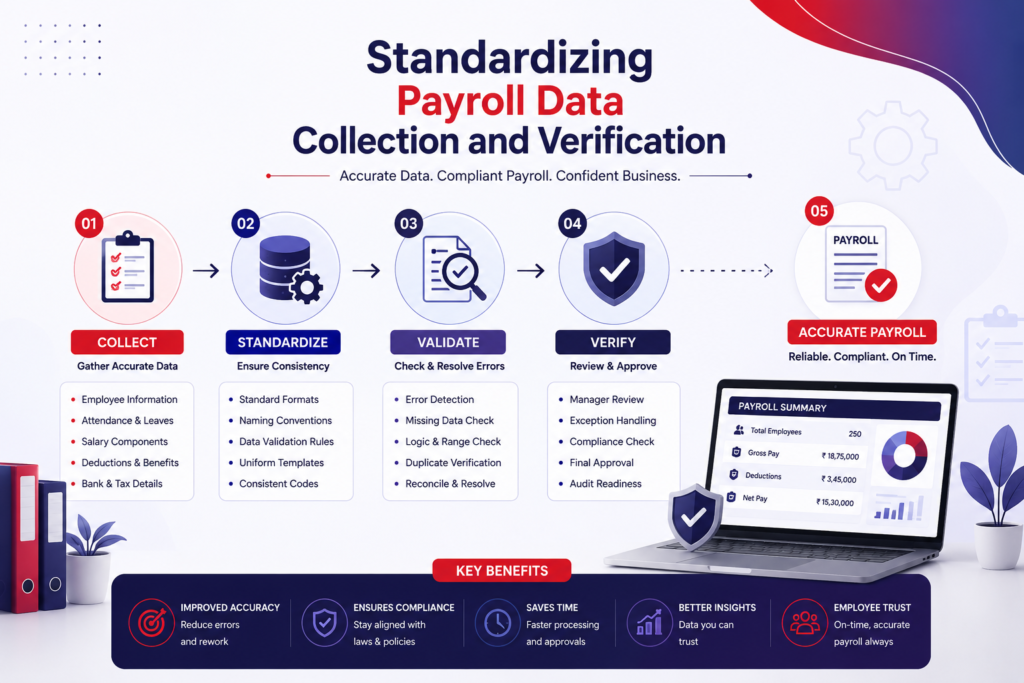
Accurate payroll starts with clean, standard data. When data is scattered, errors grow. A single system for employee payroll data makes pay cycles reliable.
Implementing Automated Attendance Tracking
Manual logs can lead to errors and take a lot of time. Switching to payroll automation gets rid of these issues. It also makes tracking easier and more transparent.
Automated systems make tracking smoother by linking it to payroll. This saves HR time for more important tasks. Efficiency gains are seen right away.
Validating Employee Information and Tax Declarations
Keeping personal and tax info up to date is key in India. A strict check process is needed to keep data accurate. This avoids big fines during tax time.
Here are some steps to check data:
- Check PAN and Aadhaar against government databases.
- Make sure investment declarations match tax choices.
- Verify bank details to avoid salary issues.
These steps build trust and compliance. Using payroll automation for checks means every payment is right. This keeps the company ready for audits.
Navigating Statutory Compliance and Tax Deductions
Keeping up with legal changes is key for payroll compliance India. Companies must follow many laws to protect workers and avoid legal trouble. It’s important to understand these rules well.
Managing Provident Fund and ESI Contributions
The Employees’ Provident Fund (EPF) and Employee State Insurance (ESI) are important for workers in India. Employers need to make sure these payments are right. Consistency is key to avoid problems during audits.
- Ensure accurate monthly wage reporting for EPF calculations.
- Monitor ESI eligibility thresholds for all new hires.
- Verify that employer and employee contributions match statutory rates.
Handling Professional Tax and TDS Requirements
Payroll tax deductions need careful attention, like Professional Tax and Tax Deducted at Source (TDS). Professional Tax changes by state, making it hard for companies with many locations. TDS must be right to follow income tax rules.
Strategic tax management can help lower costs for employers and employees. Automating these tasks reduces mistakes. This is important for following statutory compliance everywhere.
Ensuring Timely Filing of Statutory Returns
Missing filing deadlines can cause big problems and harm a company’s reputation. Having a strict plan for payroll compliance India helps avoid these issues. Being proactive with filings keeps a company’s record clean.
| Statutory Component | Frequency | Primary Objective |
| Provident Fund | Monthly | Retirement Security |
| ESI | Monthly | Medical Benefits |
| Professional Tax | Monthly/Annual | State Revenue |
| TDS | Monthly | Income Tax Adherence |
Putting statutory compliance first lets leaders focus on growing the company. By making payroll tax deductions smooth, companies build a strong base for success. Reliability and accuracy are key in the Indian rules.
Managing Variable Pay and Reimbursements
Variable pay and reimbursements can be tough for payroll teams in India. They change based on how well someone does their job and how much they spend. It’s important to manage these well to keep employees happy and financial records clear.
Structuring Incentive and Bonus Payouts
Companies need a clear plan for bonuses to avoid mistakes. Using performance software with payroll systems helps. This cuts down on manual work and makes sure bonuses are given out right.
Here are some tips for managing bonuses:
- Make sure everyone knows who can get bonuses.
- Match bonus times with the company’s budget year.
- Check claims before paying them out.
- Tell everyone when they’ll get their bonuses.
Streamlining Expense Claims and Approvals
Manual expense claims can slow things down. Using digital systems speeds up and makes it easier to track. This lowers the chance of mistakes and makes sure claims follow the rules.
Managers should be open about claim status. Digital systems make it simpler to keep records for taxes. Telling employees about reimbursement rules builds trust at work.
Leveraging Technology for Real-Time Payroll Visibility
Real-time payroll data is now a must for growing businesses in India. Modern payroll software helps move away from old spreadsheets. It makes financial data accurate and easy to access always.
Utilizing Employee Self-Service Portals
Employee self-service portals connect workers with HR. They let staff see payslips, tax info, and more without HR help. Empowering employees cuts down on payroll team work.
When staff manage their info, errors drop a lot. These portals have cool features like:
- Instant access to salary history.
- Direct tax planning with investment proofs.
- Real-time leave and attendance tracking.
Generating Automated Payroll Reports and Analytics
Payroll automation gives leaders the data they need for smart decisions. No more waiting for month-end reports. Managers can check costs and trends anytime.
Advanced analytics tools spot salary and tax trends. This helps companies save money and follow the law. Data-driven decisions are key for a modern, efficient payroll strategy.
Handling Payroll Queries and Grievance Redressal
A good system for payroll grievance redressal is key to a happy workplace. When employees feel listened to, they trust their company more. Dealing with money worries with kindness is as important as getting the numbers right.
Establishing a Dedicated Support Channel
Companies should have a central place for questions. This way, no question is missed and every problem is followed up. Having a single point of contact makes things clearer and faster.
In India, many firms use online HR portals to help. These sites let workers send in questions, add files, and check on their issues anytime. This method cuts down on mistakes and keeps things tidy.
Maintaining Transparency in Communication
Being open is the best way to avoid salary issues. If there’s a problem, HR should explain it clearly and based on facts. Clear talk helps keep things professional and stops rumors.
It’s important to keep workers updated when fixing payroll problems. If fixing it takes time, tell them when it will be done. This shows you care and builds trust.
| Support Channel | Response Time | Best For |
| HR Ticketing Portal | 24-48 Hours | Complex payroll discrepancies |
| Dedicated Email ID | 48-72 Hours | General policy inquiries |
| In-Person HR Desk | Immediate | Urgent grievance redressal |
Conducting Regular Payroll Audits and Quality Checks
A regular payroll audit is key for any growing Indian business. It helps avoid costly mistakes and fines. Proactive oversight keeps your business running smoothly.
Identifying Discrepancies and Reconciliation
The first step in a payroll audit is to compare your payroll records with bank statements and attendance logs. This shows any differences in salary, taxes, or contributions. Finding these issues early stops small mistakes from becoming big problems.
If you find a problem, look closely at the source data. It might be a tax mistake or outdated employee info. Fixing it right away keeps your financial reports reliable.
Ensuring Continuous Improvement in Processes
Every payroll audit offers insights for better processes. Use the data to spot and fix workflow problems. Turning these insights into plans helps avoid future errors.
Think about adding automated checks to catch mistakes early. Improve your controls based on audit results. This makes your payroll system better and more efficient. Always working to improve is essential for a top-notch payroll team.
Mitigating Risks in Third-Party Payroll Management
Third-party payroll services are very helpful but need careful watching to avoid data breaches. Companies must be proactive to keep their security high, even with outside help.
Protecting Sensitive Employee Data
Keeping employee payroll data safe is very important in India. Make sure your service provider uses strong encryption and multi-factor authentication. This stops unauthorized access.
Also, sign strict confidentiality agreements with your vendor. These agreements protect your sensitive info during the payroll management process.
Managing Vendor Performance and Service Level Agreements
Clear goals are key to a good partnership. Set up detailed Service Level Agreements (SLAs) that outline what needs to be done and when.
These agreements help make sure your third-party payroll provider does a great job. They must be accurate and on time. Check these metrics often to catch problems early.
By keeping a close eye on your vendors, you can outsource without risking your security. Regular checks on payroll management performance keep your company safe and efficient.
Conclusion
Mastering your administrative workflow is key to growing in India. Companies that focus on accuracy and follow rules build trust with their team. This focus on doing things right makes everyday tasks a strong point against competitors.
Good payroll processing means using smart strategies and modern tech. By doing this, your business can grow and adapt in different places. It moves from just entering data to making work smooth for everyone.
Choosing professional payroll processing helps your business stay strong and safe. Leaders who focus on these areas let their teams work on new ideas and main goals. Start improving your systems today to keep up with changes. Your journey to being better starts with how you handle payroll now.