
By 2026, the digital world has changed a lot. It’s no longer just an upgrade. Now, it’s a fundamental requirement for businesses to survive. Companies in India are leaving old, stiff software behind.
They are moving to more flexible, web-based systems. This change is big.
Cloud Computing has made operations faster and more powerful. Businesses see these tools as key to their success. They are not just for keeping records anymore.
Today’s ERP Systems are more than just software. They are platforms for growth and change. Companies that use them are ahead in the digital world.
They can grow and change quickly. Choosing the right technology is key to success.
Key Takeaways
- Digital transformation is now a core requirement for business longevity in 2026.
- Modern software architectures provide the agility needed to navigate fast-paced markets.
- Static back-office tools are being replaced by dynamic, integrated platforms.
- Scalability is the primary driver for adopting new enterprise technology.
- Competitive advantage in the digital economy relies on real-time data access.
The Current State of ERP Adoption in India
Digital transformation is now a must for Indian companies. Indian enterprises are looking to make their workflows smoother and data easier to access. This move away from old software models is a big change.
Shifting from On-Premise to Cloud-Native Solutions
Many companies are leaving behind old, hard-to-maintain ERP systems. These systems are slow to adapt to today’s fast business world. Cloud-native platforms offer the flexibility to grow without spending a lot of money.
Switching to the cloud makes updates easy and teamwork better, even when teams are far apart. This change is key for staying ahead in today’s economy. Modern ERP software is much more agile than old setups.
The Impact of Digital India Initiatives on Enterprise Software
Government programs have helped speed up the use of new tech in India. The Digital India initiative has built the digital backbone needed for digital transformation. With better internet, more businesses can use advanced tools every day.
This support helps even small businesses invest in top-notch ERP software. With cheaper internet and data, starting with cloud solutions is easier. This puts Indian enterprises in a good spot to use data for success.
| Feature | On-Premise ERP | Cloud-Native ERP | Business Impact |
| Deployment | Local Servers | Remote Cloud | High Agility |
| Maintenance | Manual Updates | Automated | Reduced Downtime |
| Scalability | Limited/Expensive | On-Demand | Cost Efficiency |
| Accessibility | Office Only | Anywhere/Anytime | Remote Work |
The data shows ERP systems are key for today’s business plans. As these technologies get better, the difference between old and new systems will grow. Companies that adapt now will likely lead their fields soon.
Assessing Your Business Readiness for Cloud Migration
Starting a cloud adoption journey needs a clear plan. First, check if your business is ready. Leaders must review their team’s skills and systems. This step makes sure your Cloud Migration fits your future goals.
Evaluating Existing Infrastructure and Legacy Systems
Many Indian companies use old tech that doesn’t meet today’s needs. These Legacy Systems block data sharing between teams. By checking your Cloud Infrastructure, you can see what’s ready to move and what needs a big change.
Make a list of all servers, databases, and apps you use. This list shows if your setup can handle today’s demands. Updating your core architecture is key to being digitally agile.
Identifying Bottlenecks in Current Operational Workflows
Digital changes are about more than tech; they’re about making work better. Map out your daily tasks to find slow spots. These problems often come from old software that doesn’t talk well with others.
Fixing these issues lets your team do important work, not just fix problems. Improving these workflows before moving makes sure your new setup works great from the start.
Financial Feasibility and ROI Projections
It’s important to know the total cost of any big IT change. Compare keeping old hardware with the cloud’s subscription model. A solid financial plan shows the cloud’s long-term benefits.
| Metric | On-Premise Cost | Cloud Model |
| Hardware Maintenance | High | Minimal |
| Scalability Costs | High (Capital) | Low (Operational) |
| Security Updates | Manual/Expensive | Automated/Included |
Calculating your ROI means looking at more than just setup costs. Think about how more productivity and less downtime improve your system. Focusing on these points helps make a strong case for going digital.
How Cloud Computing is Transforming ERP Architecture
Cloud computing is changing how ERP systems are made and used. Old, stiff systems are being replaced by flexible, quick ones. This change lets companies move from big, local computers to a more fluid and responsive digital setup.
Real-Time Data Processing and Analytics
Now, real-time analytics are key for quick decision-making. Managers don’t wait for monthly reports anymore. They can see live dashboards that show how things are going right now.
This quick look at data helps spot problems early. Instant access to data keeps all teams on the same page. This shift from slow to fast management is a big win for cloud tech.
Enhanced Scalability for Growing Indian Enterprises
Business scalability is built into cloud software, which is key for Indian enterprises growing fast. Companies don’t need to buy lots of servers that sit idle. They can change how much they use based on demand.
This flexibility helps both new and big companies grow without spending a lot. Whether expanding or launching new products, the system grows with them. Efficiency stays high because resources are used only when needed.
Integration with Artificial Intelligence and Machine Learning
The next big thing is Artificial Intelligence and machine learning in enterprise software. These tools do tasks like predicting maintenance and forecasting demand. They were once done by hand. By adding these to ERP, companies can get more from their data.
Machine learning gets better over time by learning from past data. This makes a self-optimizing system that lets teams focus on important work. The table below shows how cloud-native systems differ from old ones.
| Feature | Legacy ERP | Cloud-Native ERP |
| Data Access | Batch Processing | Real-Time Analytics |
| Scalability | Manual Hardware Upgrades | Dynamic Auto-Scaling |
| Intelligence | Basic Reporting | AI & Machine Learning |
| Deployment | On-Premise Servers | Cloud-Based Infrastructure |
Step One: Defining Your Strategic Objectives and KPIs
Starting your Digital Transformation journey needs a solid plan. You must know what you want to achieve. This way, your tech choices will help you reach your goals, not just fix current issues.
Aligning ERP Capabilities with Business Goals
Every business in India has its own needs. You might need better supply chain management or financial reports. Match your problems with the right cloud platform features. This avoids the trap of making your software too custom.
When your software matches your goals, it boosts growth. It lets your team do more important work, not just enter data. Focus on solving big problems to keep your Digital Transformation on track and affordable.
Setting Measurable Success Metrics
Setting clear goals is key to tracking progress. These goals guide your team and show the value of your investment. For many Indian companies, the main goal is to work more efficiently.
The table below shows important metrics for checking your system’s success:
| Metric Category | Primary KPI | Target Outcome |
| Operational Efficiency | Process Cycle Time | 20% Reduction |
| Financial Accuracy | Reporting Speed | Real-time Access |
| Resource Utilization | System Downtime | Less than 0.1% |
| Data Management | Manual Entry Errors | Near-zero Rate |
Tracking these metrics helps you make smart choices during setup. Regular checks let you tweak your plan if needed. This keeps your business flexible and competitive.
Step Two: Selecting the Right Cloud ERP Vendor for Indian Markets
Finding the right SaaS ERP is key for your business. It affects your work for years. Look for a platform that fits your business needs.
Comparing Top Providers like SAP S/4HANA and Oracle NetSuite
The market has great solutions. But, picking between giants like SAP S/4HANA and Oracle NetSuite needs thought. They serve different business needs.
| Feature | SAP S/4HANA | Oracle NetSuite |
| Primary Focus | Large-scale Enterprises | Mid-market Growth |
| Deployment | Hybrid/Cloud | Cloud-Native |
| Scalability | High Complexity | High Agility |
SAP S/4HANA suits big manufacturing firms. Oracle NetSuite is great for fast-growing businesses that value ease.
Evaluating Local Support and Compliance with Indian Regulations
India has its own tax laws and rules. Your ERP must follow Indian Market Regulations. This includes GST and data laws.
A good vendor knows these rules well. They keep your ERP Software up to date. Local support teams help quickly, without time zone issues. Make sure data is stored in India to meet laws.
Assessing Subscription Models and Total Cost of Ownership
Don’t forget the costs of cloud contracts. The Total Cost of Ownership includes more than the monthly fee. It also includes setup, training, and upkeep.
Ask for a clear cost breakdown when looking at a SaaS ERP. Hidden costs can come from storage, API fees, or support. Knowing the Total Cost of Ownership helps keep your budget safe. It also makes sure your investment meets Indian Market Regulations and your financial goals.
Step Three: Planning Data Migration and Security Protocols
Data security is key for Indian businesses moving to cloud ERP systems. The Cloud Migration process needs a strong plan to avoid data loss or unauthorized access. A secure start protects your business from digital threats.
Ensuring Data Integrity During the Transition
Keeping your data accurate is critical when moving to a cloud system. Clean and check your data before moving it. This meticulous preparation stops bad data from hurting your new ERP.
Tools for automated mapping keep data structures the same. Checking data at each step reduces downtime risk. Data integrity is key for a smooth digital change.
Implementing Robust Cybersecurity Measures
A strong security plan covers both inside and outside threats during migration. Use a multi-layered defense to protect your data. This includes watching for threats and controlling user access.
Data Encryption Standards
Keeping data safe is a must for today’s businesses. Use Data Encryption like AES-256 to keep data safe if it’s caught. These steps are vital for Data Security in the cloud.
Compliance with Data Localization Laws
Understanding Indian Market Regulations is important for businesses. Make sure your cloud provider meets Data Localization rules. This means keeping certain data in the country.
Not following these laws can hurt your business. Choose a cloud provider that follows local rules. This makes your system resilient and trustworthy. Always check if your cloud meets India’s data laws.
Step Four: Managing Change and Employee Training
The success of any ERP Implementation depends on how well your team adapts. While software updates are technical, the real challenge is getting people to use it. Companies that don’t consider the emotional side often see a drop in productivity.
Overcoming Resistance to New Technology
Change can make people nervous, as it disrupts their routines. Leaders must explain the long-term benefits of the new system. Showing how it makes daily tasks easier can help calm fears.
Getting key people involved early makes them feel like they own the change. When employees feel heard, they’re more likely to accept the new system. Effective Change Management means tackling concerns before they become big problems.
Developing Comprehensive Training Programs for Staff
One training plan doesn’t fit everyone in a company. It’s important to create tailored learning paths for different roles and skills. This way, everyone knows how the new software affects their job.
Hands-on workshops help build confidence before the system is live. Giving staff a safe space to practice without fear is key. Continuous support through help desks or guides helps solidify the training.
Investing in your team is as important as investing in the technology. By focusing on Change Management, your business can reach its full ERP Implementation goals. A well-trained team is the key to success in today’s Indian business world.
Step Five: Executing the Deployment and Integration
Starting to act is key in your digital transformation journey. In India, companies face special challenges. A clear plan is needed for success.
Breaking the project into parts helps keep things running smoothly. This way, you can update your main processes without stopping work.
Phased Implementation Strategies
It’s wise to roll out in phases to avoid problems. Start with less important parts first. This lets your team get used to the new system without hurting your main work.
Gradual adoption lets you find and fix issues early. After the first parts are working well, you can add more complex features. This keeps your team working well during the change.
Connecting ERP with Existing Third-Party Applications
Your new ERP should be the center of your business. To do this, it needs to work well with your current software. Here are some key things to focus on:
- API-First Connectivity: Use new APIs to connect your ERP with CRM, HR, and payroll systems.
- Data Synchronization: Make sure data flows in real time between systems to avoid gaps in information.
- Unified Dashboards: Put all reporting tools together for a single place for management to check everything.
Good integration lets your team use what they already have. It also brings new cloud benefits. This helps keep your whole organization running smoothly.
Testing and Quality Assurance Procedures
Thorough testing is the last step before you go live. You need to do User Acceptance Testing (UAT) to make sure the software fits your needs. This means real users doing their daily tasks to check if the system works right.
Quality assurance also means checking data carefully. Making sure old data moved correctly is key for accurate reports. By focusing on these digital transformation steps, you make sure your cloud deployment goes smoothly. This supports your future growth.
Step Six: Monitoring Performance and Scaling Resources
After you launch your digital project, keeping an eye on it is key. You need to make sure everything runs smoothly. This means watching your SaaS ERP closely.
By watching your SaaS ERP closely, you make sure it works well. This helps you find problems early. It keeps your business running smoothly.
Utilizing Cloud Dashboards for Real-time Insights
Today’s tools give you quick looks at how things are going. With Real-time Analytics, you can see how your business is doing right away. This helps you make quick decisions.
These tools show you important info in a clear way. Leaders can make smart choices fast. This lets you keep up with changes quickly.
Scaling Infrastructure Based on Seasonal Demand
Cloud-based software is great because it can grow with your business. In India, demand can change a lot. For example, more people shop during Diwali.
You can change your Cloud Infrastructure as needed. This means your SaaS ERP can handle more users when it’s busy. And it saves money when it’s not.
Using elastic resources keeps your business running well. It helps you stay ahead in a changing world. By focusing on Business Scalability and Real-time Analytics, you get an edge.
Overcoming Common Challenges in Cloud ERP Implementation
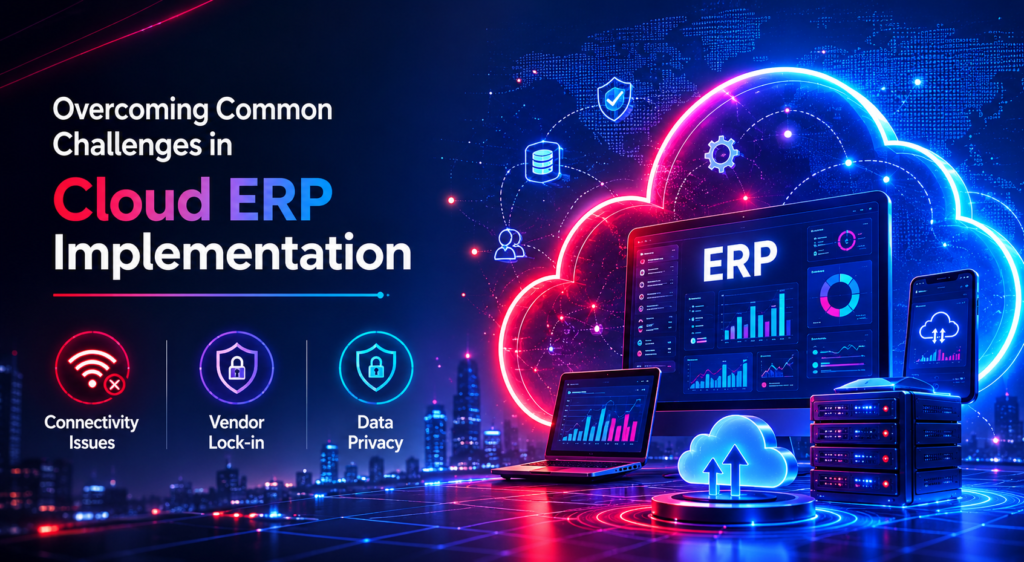
Even the most advanced Cloud Deployment projects face obstacles. These need practical, localized solutions. The shift to modern software offers great benefits. But, businesses must tackle specific technical and operational hurdles for a smooth transition during their ERP Implementation journey.
Addressing Connectivity Issues in Remote Locations
For enterprises across India, stable internet access is key. High-speed connectivity can fail in areas with poor infrastructure. To keep productivity up, companies should try these strategies:
- Implement offline-first capabilities for staff to record data locally before syncing with the cloud.
- Use edge computing to process tasks near where data is generated.
- Invest in redundant network paths, like satellite or secondary fiber lines, for uninterrupted business continuity.
Mitigating Risks of Vendor Lock-in
Leaving Legacy Systems behind can make you worry about being too dependent on one service provider. This can limit your future flexibility and bargaining power. To stay in control, focus on interoperability and clear exit strategies.
Make sure your service level agreements have data portability provisions. Choose platforms with open APIs for easy integration or migration as your business grows. A modular architecture helps avoid being stuck in a proprietary ecosystem.
Managing Data Privacy Concerns
As you move sensitive information to the cloud, Data Security is key. Following the Digital Personal Data Protection (DPDP) Act is vital for any Indian business. Protecting your digital assets needs a multi-layered defense strategy.
Here are important steps to keep your information safe:
- Use end-to-end encryption for all data stored and transmitted in your cloud environment.
- Do regular security audits to find vulnerabilities before they’re exploited.
- Implement strict identity and access management to ensure only authorized people handle sensitive records.
Conclusion
The business tech scene in India is changing fast. Cloud Computing is now key for staying ahead. It’s a must for growing in the global market.
ERP Systems are the heart of this change. They use real-time data and analytics for better decisions. Success comes from matching tech upgrades with business goals.
Security and training are key in this shift. Keeping data safe and teaching your team is important. This way, your investment pays off in the long run.
Starting your digital journey means being open to new ideas. Look at your current ways and move towards being more flexible. Share your cloud migration stories or get advice from experts for lasting growth.