
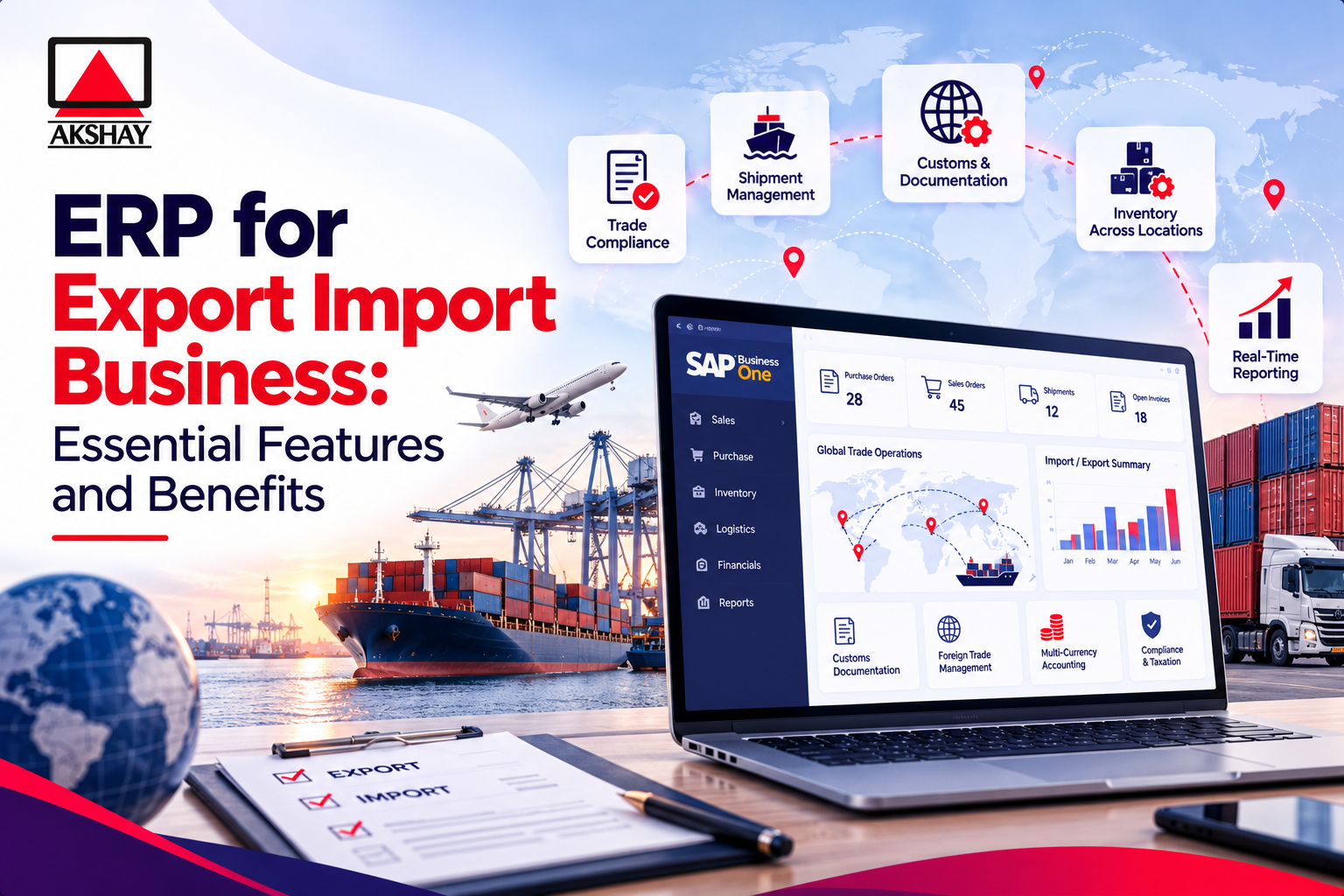
Managing international trade needs precision and speed. Companies in India face challenges like GST, IEC compliance, and customs documents. They also have to track global shipments.
An erp for export import business is like the brain of your operations. It connects procurement, logistics, and finance. This helps your team stay ahead of rivals.
These platforms use foreign exchange rates and real-time inventory data. They make the trade cycle simpler. You can go from initial quotes to final profit analysis with unmatched accuracy.
This digital system helps managers make smart decisions. It also keeps them in line with local and international laws.
Key Takeaways
- Centralize trade operations including IEC and GST compliance within one platform.
- Automate the complete trade cycle from procurement to final shipment settlement.
- Gain real-time visibility into foreign exchange fluctuations and currency impacts.
- Improve profit margins through detailed cost analysis and inventory tracking.
- Ensure seamless coordination between customs documentation and logistics providers.
Why Indian Export Import Companies Need Specialized ERP Software
Indian businesses face big challenges when moving goods across borders. As global markets grow, old ways of doing things hold them back. A special export import erp system helps them meet international needs.
Trade complexity across suppliers, customers, ports, and currencies
Managing a global supply chain is tough. You need to keep track of shipments at many ports. You also have to deal with changing exchange rates and different supplier times. An integrated platform keeps all data in sync from start to finish.
Operational risks caused by disconnected spreadsheets and systems
Many companies use broken spreadsheets for trade. This leads to duplicate data entry, missed deadlines, and wrong prices. Working in silos makes it hard to see what’s happening in real time. A strong erp for import export companies fixes these problems by giving everyone the same view.
India-specific requirements involving IEC, GST, customs, and foreign exchange
Doing business in India means following strict rules. You need to handle things like the Import Export Code (IEC) and GST. You also have to deal with foreign exchange changes and FEMA rules. Special software makes these compliance-heavy tasks easier, freeing up your team.
| Feature | Manual Spreadsheets | Specialized ERP |
|---|---|---|
| Data Accuracy | High risk of human error | Automated validation |
| Compliance | Manual tracking required | Built-in GST/IEC alerts |
| Visibility | Limited to local files | Real-time global access |
| Currency | Manual conversion updates | Live exchange rate sync |
How erp for export import business Supports the Complete Trade Cycle
An effective erp for export import business makes trade cycles smooth and automated. It keeps all data in one place. This helps avoid problems when moving goods across borders.
Step 1: Capture quotations, purchase orders, and customer requirements
The first step is to record what customers need and ask for. This digital start makes sure quotes and orders match up well. It cuts down on mistakes that happen when things are done by hand.
Step 2: Convert confirmed orders into procurement and production plans
When an order is confirmed, the system starts the next steps. This seamless transition keeps your stock right where it should be. It also meets customer deadlines without any hold-ups.
Step 3: Coordinate documentation, freight, customs, and shipment milestones
Global logistics need to be on time and paperwork right. An international trade ERP solution helps track every step. From booking freight to getting cleared at the destination port.
Step 4: Reconcile receipts, payments, duties, taxes, and landed costs
The last step is to make sure the books are balanced. This includes all costs like customs duties, taxes, and freight. It shows the real landed cost of your imports.
Use a single transaction record from order confirmation through settlement
Keeping one record for each trade helps a lot. It gives managers a clear view of how things are going. They can check on finances and how well things are running easily.
| Trade Stage | Manual Process | ERP-Driven Process | Key Benefit |
|---|---|---|---|
| Order Entry | Spreadsheets | Automated Capture | Data Accuracy |
| Procurement | Disconnected | Integrated Planning | Reduced Lead Time |
| Logistics | Email Chains | Real-time Tracking | Better Visibility |
| Settlement | Manual Audit | Automated Reconciliation | Profit Control |
Essential Trade Management Features in an Export Import ERP System
An effective export import ERP system is key for your global trade. It centralizes data, helping you control your supply chain better. This is important for businesses in India’s fast market.
Export and import order management
Managing orders across time zones needs a single platform. A good system tracks every detail from start to finish. This keeps your teams on the same page, avoiding mistakes.
Product classification with HS codes and country-specific requirements
Right product classification is key for trade compliance. An ERP helps map items to HS codes, meeting India and other countries’ rules. Proper classification avoids customs penalties and delays.
Document generation for invoices, packing lists, certificates, and shipping instructions
Quality international trade documentation is vital for customs clearance. Modern software creates these documents automatically. It uses order data, reducing errors and speeding up the process.
Shipment tracking for containers, vessels, air cargo, and inland transportation
Keeping customers informed is important. A good shipment tracking ERP gives real-time updates on your goods. This builds trust with partners and clients.
Automated alerts for cutoffs, delays, renewals, and missing documents
Timely alerts are key for managing trade. The system sends alerts for important milestones. These help your team avoid delays in international trade documentation.
| Feature Category | Manual Process | ERP-Driven Process |
|---|---|---|
| Order Tracking | Spreadsheet updates | Real-time dashboard |
| Compliance | Manual HS code lookup | Automated classification |
| Documentation | Manual drafting | Instant generation |
| Shipment Visibility | Email inquiries | Integrated shipment tracking ERP |
Using a specialized export import ERP system boosts efficiency and accuracy. Investing in the right technology helps your business grow in the global market.
Compliance and Documentation Controls for Indian Global Trade
Indian trade’s complex rules need strong digital watch. Top ERP for import export companies help manage data well. They make sure all deals follow the law.
Managing IEC, GST, customs, and DGFT-related data
Keeping IEC, GST, and DGFT data in one place is key. It makes data easy to find during checks. This cuts down on mistakes that cost a lot.
Connecting trade workflows with ICEGATE and authorized customs processes
ICEGATE ERP integration links your work to government sites. It makes filing faster and more accurate. Automated data syncing saves time, letting your team focus on logistics.
Supporting FEMA, RBI, foreign exchange, and export realization requirements
Handling foreign exchange and export money is critical. A Indian export compliance ERP tracks payments and follows FEMA and RBI rules. It links money to shipments, helping control cash flow and reports.
Maintaining audit trails, approval controls, and document retention
Keeping a clear audit trail is key today. Systems with strict approval rules ensure documents are okay to process. They also keep records for a long time.
- Automated alerts for expiring licenses or certificates.
- Secure storage for historical shipping and financial records.
- Granular user permissions to protect sensitive trade data.
Reducing compliance errors without replacing licensed customs or tax advice
Software is a big help, but can’t replace experts. It makes workflows smoother and spots problems early. Always talk to customs brokers or tax pros for legal advice.
Inventory and Supply Chain Management for Import Export Operations
Effective supply chain control is key for any successful international trade. Businesses need import export management software to keep track of their assets. Without a central system, tracking goods across long distances is hard.
Multi-location inventory across warehouses, ports, bonded facilities, and transit
Global trade moves products through many stages. An integrated system lets managers check stock levels in real-time, no matter where it is. This is important for Indian companies dealing with complex customs and transit hubs.
Batch, lot, serial number, and shelf-life tracking for traded goods
Many industries, like pharmaceuticals or food exports, must follow strict quality standards. Using import export inventory management tools, companies can track specific batches or serial numbers. This helps ensure products with limited shelf life are shipped first, reducing spoilage or obsolescence risk.
Reorder planning based on lead times, demand, and shipment uncertainty
Supply chain volatility is a challenge for every exporter. Advanced erp for supply chain management in import export platforms use past data to figure out the best reorder points. They account for changing lead times and port delays, helping businesses keep inventory lean without running out.
Supplier, freight forwarder, carrier, and warehouse coordination
Trade success depends on smooth communication among stakeholders. A unified platform acts as a single source of truth. It ensures freight forwarders and warehouse managers are always on the same page, preventing costly delays and ensuring documents match inventory movements.
Connecting inventory availability with purchase, sales, and shipment commitments
The real strength of an automated system is linking inventory data with commercial commitments. When a sales order is confirmed, the system reserves the stock, avoiding overselling. This integration helps procurement teams know when to restock based on confirmed shipment schedules.
| Inventory Feature | Manual Tracking | ERP-Driven Management |
|---|---|---|
| Real-time Visibility | Delayed/Inaccurate | Instant/Precise |
| Batch Traceability | High Error Risk | Automated Compliance |
| Reorder Logic | Guesswork | Data-Driven Planning |
| Stakeholder Sync | Email-Dependent | Centralized Portal |
Finance, Landed Cost, and Currency Management Capabilities
A strong erp solution for global trade changes how companies deal with money. It goes beyond simple bookkeeping. This gives businesses the clear view they need to handle the ups and downs of the international market.
With this precision, every rupee spent is tracked in the final product’s profit.
Calculating the complete landed cost of imported products
Just looking at supplier invoices can lead to wrong profit reports. A landed cost ERP adds up all costs to bring goods into India. This gives you a true picture of your investment before the product arrives.
Recording customs duties, freight, insurance, handling, and local transportation
The system tracks all extra costs that affect your profit. This includes customs duties, international freight, insurance, and local fees. By putting all these costs in one place, you avoid missing out on expenses that cut into your profit.
Managing multiple currencies, exchange-rate changes, and foreign bank charges
Dealing with different currencies needs a smart multi-currency trade finance ERP. It keeps up with market changes. It also tracks foreign bank fees, making sure your books are right with Indian rules.
Linking sales invoices, purchase invoices, letters of credit, and payment milestones
Connecting finance and procurement is key for managing cash flow. The platform links LCs to purchase invoices and shipment milestones. This automated synchronization stops payment delays and keeps your financial records in sync with your trade activities.
Using real-time profitability views by order, product, customer, and shipment
Now, management teams can see real-time profitability dashboards for better decisions. You can quickly see margins for different products or routes. This helps spot which customers or shipments are growing your business.
| Cost Factor | Manual Tracking | ERP-Driven Tracking |
|---|---|---|
| Customs Duties | Estimated/Delayed | Real-time/Automated |
| Currency Fluctuations | High Error Risk | Instant Conversion |
| Landed Cost Accuracy | Low | High |
| Profitability Analysis | Monthly/Quarterly | On-Demand |
How Cloud-Based ERP for International Trade Improves Collaboration
Cloud-based ERP for international trade changes how Indian businesses handle global tasks. It moves away from old systems. Now, everyone works from one place.
Providing secure access to teams, branches, partners, and decision-makers
Today’s trade needs constant connection between offices, warehouses, and remote spots. A single platform lets users access important data from anywhere.
This real-time visibility helps leaders make fast decisions. Whether in Mumbai or a distant port, your team stays in sync.
Sharing shipment status and documents without uncontrolled email attachments
Email threads for sharing documents can cause errors and security issues. Secure ERP collaboration offers a better way with a central document spot.
Every document, like invoices and certificates, stays with its shipment. This keeps partners up-to-date with the latest trade documents.
Integrating email, banking, logistics, e-commerce, and customer relationship systems
Good cloud trade management software is like a digital hub. It links your banking, logistics, and CRM tools into one system.
This setup automates data entry, cutting down on mistakes. It also speeds up your order-to-cash process a lot.
Scaling users, locations, transactions, and reporting as the company grows
As your business grows, so should your software. Cloud platforms let you add users or locations easily without big costs.
You can also grow your transaction volume and reporting. This flexibility helps your business grow without being held back by your system.
Evaluating data residency, access permissions, backups, and vendor security
Choosing the right platform means keeping your trade data safe. Make sure the vendor meets local data rules and uses strong encryption.
Set strict access rules to protect financial info. Regular backups keep your business running smoothly, even when tech issues pop up.
Business Benefits of an ERP Solution for Global Trade
Using an erp solution for global trade changes how Indian businesses handle their international work. It brings all data together, ending the need for many separate systems. This leads to better growth and work quality.
Shortening order-to-shipment and order-to-cash cycles
In international markets, speed is key. An integrated system speeds up information flow. This lets teams handle orders quicker and cuts down the time from shipment to payment.
This efficiency keeps money moving, not stuck in paperwork or waiting tasks.
Reducing stockouts, excess inventory, demurrage, and detention costs
Good erp for supply chain management in import export tracks inventory well. It keeps stock levels right, avoiding high costs of emergency buys or storage. It also cuts down on demurrage and detention fees by using real-time data.
Improving shipment visibility and customer service
Being open is key for modern trade. Giving updates on where containers are and when ships will arrive builds trust. With real-time data, your team can give quick updates to clients, making them happier.
Increasing compliance accuracy and reducing manual rework
India’s trade rules are strict. Automated systems check data against these rules, cutting down on mistakes. This lets your team focus on growing the business, not fixing the same errors over and over.
Strengthening profit control through accurate landed-cost analysis
Knowing the real cost of a product is vital for keeping profits up. An erp solution for global trade tracks all costs, like duties, freight, and insurance. This detailed view helps keep prices right and protects profits from hidden costs.
Measuring benefits with cycle time, document accuracy, margin, and on-time delivery metrics
To get the most from global trade ERP benefits, track important numbers. We suggest watching these to see if your investment is worth it:
- Cycle Time: Look at how long it takes from order to delivery.
- Document Accuracy: Check how often customs and shipping papers are correct.
- Margin Analysis: See how much profit you make per shipment after all costs are added up.
- On-Time Delivery: Check how reliable your logistics and supply chain are.
How to Choose the Best ERP Software for Export Import Business
Finding the best ERP software for export import business is key. It affects your business’s future success. A good ERP software selection process makes sure the software fits your business needs.
Step 1: Map trade, warehouse, finance, and compliance workflows
Start by writing down how your business works now. Look for areas that slow you down, like managing the warehouse or handling money.
By mapping these steps, you see how data moves. This helps you find where using software will save you the most money.
Step 2: Define must-have integrations and India-specific requirements
Your business has special rules to follow. You need an India-specific ERP that works well with local systems like GST and customs.
Make sure the software can:
- Make E-way bills and E-invoices easily.
- Connect directly with Indian customs and banks.
- Follow rules from FEMA and RBI.
Step 3: Compare deployment models, scalability, usability, and total cost
Think about whether you need a cloud or on-premise system. Clouds are often more flexible and cheaper upfront for growing companies.
Look at the total cost, including setup and ongoing fees. It’s also important that the system is easy to use. A hard system will slow down your team.
Step 4: Test realistic export and import scenarios during demonstrations
Don’t just watch sales pitches. Ask for a demo that shows how the system works in real life. This could be handling a tricky shipment or dealing with inventory changes.
See how the system handles problems, like late shipments or sudden rate changes. This shows if the software really works in real situations.
Verify support quality, implementation expertise, training, upgrades, and service-level commitments
The success of your digital change depends on the vendor’s support. Make sure they offer good implementation help and training for your team.
Check their service agreements to ensure they help you when you need it most. A good partner will keep your software up to date with new laws and tech advancements.
How to Implement Import Export Management Software Successfully
Starting with import export management software is a big step. It needs careful planning and a clear path. This way, your team can use the new tools well and keep work running smoothly.
Step 1: Establish an implementation team and measurable business goals
First, gather a team from different areas like finance and logistics. Set clear goals, like cutting down on mistakes by 20% or speeding up orders. Having a project leader helps keep everyone on track with the ERP implementation for trade.
Step 2: Cleanse master data for products, HS codes, customers, suppliers, and currencies
Good data is key for any system. Check your current data to make sure it’s right. This includes:
- Product details and HS codes.
- Info on customers and suppliers.
- Currency data and exchange rates.
Step 3: Configure approvals, tax rules, documents, workflows, and user roles
Make the system fit your business needs and Indian laws. Set up rules for big orders and make sure invoices follow local rules.
Step 4: Integrate banking, logistics, customs, warehouse, and accounting systems
Connecting your ERP with outside systems is important. Link it with banks, customs, and logistics to avoid manual work. This unified ecosystem helps keep your supply chain smooth.
Step 5: Run pilot transactions before company-wide deployment
Do a test run with real data before using it everywhere. This checks if everything works right and finds any problems. It’s a chance to make sure trade automation controls work well.
Train users to validate documents and exceptions
Even with great tech, people need to check things. Teach your team to use the software wisely. They should actively validate documents and look into any issues. This keeps your ERP implementation for trade accurate and up to standard.
Conclusion
Modernizing your international trade needs digital tools. A good erp for export import business is key. It connects logistics, finance, and rules.
In India, knowing IEC, GST, and ICEGATE is vital. Automation cuts down errors and gives you supply chain insights. This keeps your business quick in a global race.
Contact Us & choose the right erp software is smart for growth. Look for systems that work well with banks and show clear costs. Make sure they follow FEMA and RBI rules.
Success comes from clean data and using the system well. Start by making a map of your trade cycles. Then, find tech partners to start your digital journey. This will help you stand out worldwide.