
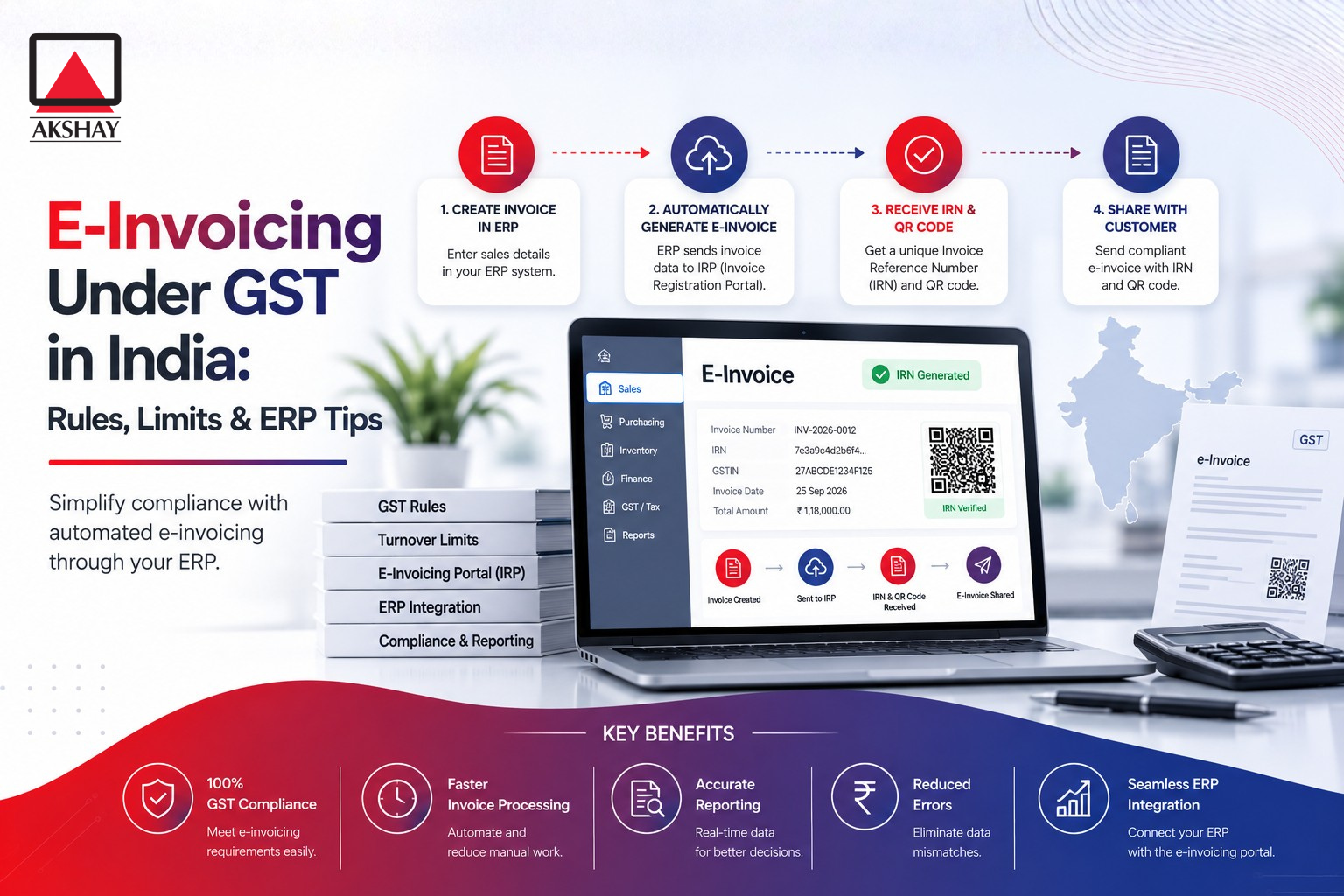
The Indian tax world is changing fast. Businesses are moving from paper to digital. This change brings greater transparency and makes things more efficient for everyone.
The government wants to stop tax evasion with e-invoicing. It makes it easier for honest businesses to report their data. This helps companies follow the rules and avoid mistakes in their money records.
Now, many companies must use these new systems. It’s important to know the rules well. This guide will help you manage your business in the digital age.
Key Takeaways
- The transition to digital documentation improves overall tax transparency.
- Standardized reporting helps the government reduce instances of tax evasion.
- Businesses benefit from increased efficiency and fewer manual filing errors.
- Compliance is critical for maintaining a healthy relationship with tax authorities.
- Modern ERP systems play a vital role in automating these complex requirements.
What is E-Invoicing Under GST?
The move to electronic invoicing under GST has changed how businesses deal with each other in India. Now, taxpayers must send their B2B invoices to a government site called the Invoice Registration Portal (IRP).
Definition and Purpose
E-invoicing under gst is a way to make digital invoices official through the IRP. The main goal is to make sure all accounting software can talk to each other.
This makes data sharing easy. It stops the trouble caused by different invoice looks between sellers and buyers.
Importance in Supply Chain
This digital setup is key for today’s supply chains. It lets businesses report transactions right away. This cuts down on mistakes between what buyers and sellers record.
With quick validation, the whole supply chain works better. Companies can keep track of their stock and taxes more accurately than before.
Key Features and Benefits
Using this system brings many benefits to businesses in India. The benefits of e-invoicing go beyond just following rules. They make daily work more efficient.
- Elimination of manual data entry errors, which stops expensive mistakes during tax time.
- Acceleration of the Input Tax Credit (ITC) check, helping businesses get money faster.
- Better matching of GST portal records with what businesses keep on their own.
By using these benefits of e-invoicing, companies can grow more. This move to electronic invoicing under gst is a big step for India’s digital growth.
Who is Required to Use E-Invoicing?
Understanding electronic invoicing under GST is key. It’s about who must follow the rules set by the government. This system aims to make tax reporting clearer by going digital for certain businesses.
Threshold Limits for Businesses
The government sets rules based on a business’s total sales. If a business made more than 5 crore rupees in the past year, it must use e-invoicing. This rule is for the whole business, not just parts of it.
It’s important to keep up with these rules. This way, your business can avoid fines.
Type of Supplies Covered
The rules mainly focus on certain types of sales. Businesses need to use e-invoices for:
- B2B (Business-to-Business) transactions
- Exports of goods or services
- Supplies made to SEZ (Special Economic Zone) developers
- Deemed exports
But, B2C (Business-to-Consumer) sales are not included. Yet, businesses must follow GST invoice rules for these sales.
Exceptions to the Rule
Some businesses don’t have to follow the GST e-invoicing requirements. This is to help sectors with special needs.
The following are not required to follow the mandate:
| Entity Type | Sector Description |
|---|---|
| Insurance Companies | Banking and Financial Institutions |
| Goods Transport Agencies | Passenger Transportation Services |
| Multiplex Cinemas | Admission to Exhibition of Films |
Following the rules is very important for business owners. Check your sales and what you sell to see if you need to use e-invoicing.
Registered Taxpayer Requirements
Every business in the GST framework must follow digital reporting standards. Staying up-to-date with e-invoicing rules and regulations helps avoid penalties. It also keeps the supply chain running smoothly.
GST Registration Process
Getting a GST number is the first step in digital tax reporting. Make sure your registration is correct and up-to-date. This helps with easy communication with government systems.
Proper enrollment is key for full transparency. After registering, you get the credentials to secure your digital documents.
Compliance Obligations
Being e-invoicing compliant is more than just making digital invoices. You must send these invoices to the Invoice Registration Portal (IRP). This gives you a unique Invoice Reference Number (IRN).
This IRN acts as a digital stamp, showing the government has checked your document. Keeping these records in order helps your business stay audit-ready. It makes tax filing easier.
Technical Requirements for E-Invoicing
To meet gst e-invoicing requirements, you need a strong digital setup. A good system lets you automatically share data with the government portal.
Here are key technical parts for your system:
- Stable internet connectivity for fast data sharing.
- API-enabled ERP software for easy IRP integration.
- Secure digital signature certificates for big transactions.
- Automated error fixes for quick invoice handling.
Using these tools cuts down on manual work and errors. Efficiency in your tech means better compliance and quicker accounting work.
How E-Invoicing Works in India
The digital change in Indian taxes uses a smooth e-invoice generation process. It moved from paper to digital, making things clear and fast. Knowing this is key for any business to improve its money work.
Generation Process of E-Invoices
It starts in your ERP system. When you make an invoice, the software turns it into a JSON file. This file has all the needed info for the GST invoicing system.
Then, the file goes to a government site. The system checks the data to make sure it’s right. This step stops errors that can cause tax problems later.
Role of IRP (Invoice Registration Portal)
The Invoice Registration Portal (IRP) is the main place for tax documents. It checks your JSON file to see if it’s real. If it is, it gives a special Invoice Reference Number (IRN).
Also, the IRP adds a digitally signed QR code to the invoice. This code lets tax officers and buyers check the invoice right away. This is how e-invoicing works well, without needing to check physical signatures.
Flow of Data to GST Portal
After the IRP checks the document, the data goes to the GST portal. This is the heart of the new tax system in India. It cuts down on errors and fraud by not needing manual entry.
The data goes straight into your GSTR-1 return forms. This means businesses spend less time on paperwork and more on growing. This connection keeps your tax filings correct and on time all year.
| Process Step | Manual Invoicing | Automated E-Invoicing |
|---|---|---|
| Data Entry | High manual effort | ERP-driven automation |
| Validation | Subject to human error | Real-time IRP verification |
| Return Filing | Manual data transfer | Auto-populated GSTR-1 |
| Verification | Physical signature | Digital QR code |
E-Invoicing Formats and Structures
The gst invoicing system uses standard data to talk between businesses and the government. This makes sure data is the same everywhere in India.
JSON Format Explained
The government says all tax documents must be in JavaScript Object Notation (JSON). This format is efficient because it’s light and easy for computers to read.
JSON is text-based, so it works well with many accounting programs. This helps keep the e-invoice generation process fast and error-free.
Different Types of E-Invoice
Businesses need to send different kinds of documents to the Invoice Registration Portal (IRP). This includes standard invoices and special financial updates.
- Tax Invoices: For taxable goods or services.
- Credit Notes: When a supply or tax is more than expected.
- Debit Notes: When a supply or tax is less than expected.
Error Handling Process
Even with automated systems, errors can happen. These might be because of wrong tax codes or missing information.
The gst invoicing system gives error codes to help fix these problems. Careful monitoring of these codes is key to keep your e-invoice generation process smooth and legal.
Benefits of E-Invoicing for Businesses
Indian companies can make their financial work better with digital invoicing. It’s not just about following rules. Benefits of e-invoicing help businesses grow fast.
Streamlined Operations
Automation makes businesses run smoother. No more mistakes from typing wrong things. Standardized data formats make sure info moves well between systems.
Your team can do more important things. They won’t get stuck in boring tasks. Operational agility comes when invoicing is all digital.
Reduced Reconciling Efforts
One big benefit of e-invoicing is less time on reconciliations. Data checks itself, so your books match up better. No more looking for mistakes.
- Real-time data validation stops errors early.
- Automated checks mean less work for accountants.
- Consistency across systems makes reports reliable.
Improved Cash Flow Management
Quick invoice processing helps your money flow better. Invoices get to customers fast. This accelerated payment cycle is key for good cash flow.
Clear, digital invoices mean fewer payment problems. This keeps good relations with suppliers and customers. The benefits of e-invoicing help manage money well in a tough market.
Challenges in Implementing E-Invoicing
Switching to new tax tech can show hidden problems in a company. Moving to digital documents is efficient in the long run. But, businesses face many challenges to figure out how to implement e-invoicing well.
Technical Difficulties
Going digital can reveal weak spots in your IT setup. Many companies face unexpected downtime or issues with API connections when trying to link with government portals.
These problems can stop your work if not fixed right away. It’s key to have strong internet backups and keep servers running smoothly.
Staff Training Needs
Technology works best when people know how to use it. Employees need good training to handle new compliance workflows and data entry rules set by GST.
Without the right training, mistakes can happen. This can lead to invoices being rejected and fines. Here are some key areas for training:
- Understanding the must-have data fields for GST compliance.
- Learning how to cancel or change invoices correctly.
- Spotting common errors before sending in invoices.
Integration with Existing Systems
Linking old ERP systems with new government portals is tough for many Indian businesses. Older software might not easily make the JSON files needed.
To solve this, you need seamless integration between your system and the Invoice Registration Portal. Getting e-invoicing compliance right often means using special software or updating your current system to avoid manual work.
ERP Solutions for E-Invoicing
Choosing the right e-invoicing software can really help your finance team. It makes things easier and cuts down on mistakes. Now, systems link your accounting with government portals.
Overview of Leading ERP Software
Many strong platforms lead the Indian market. They support GST compliance well. These tools handle lots of transactions and follow government rules.
- TallyPrime: Known for being easy and following Indian tax laws well.
- SAP S/4HANA: Great for big companies needing to manage lots of data.
- Zoho Books: A cloud option that automates well for small to medium businesses.
Features to Look for in E-Invoicing ERP
When looking at e-invoicing software, focus on features that reduce human work. A good system keeps you safe from fines.
Here are key things to look for to keep things running smoothly:
- Real-time validation: Checks data right before sending it to the portal.
- Multi-user access: Lets different teams work together safely.
- Secure data storage: Keeps financial info safe with strong encryption.
Cost Considerations for Businesses
Buying top software costs money upfront, but saves more in the long run. It cuts down on labor costs and avoids errors.
| Software Type | Initial Setup Cost | Maintenance Effort |
|---|---|---|
| Cloud-based SaaS | Low | Minimal |
| On-Premise ERP | High | Significant |
| Custom API Integration | Moderate | Moderate |
The best e-invoicing software for you depends on your needs. Think about your volume and setup. The right choice will help your business grow.
Future of E-Invoicing Under GST
The world of electronic tax compliance is changing fast. Businesses need to get ready for a big change. They will have to work together more and process data in real time.
Anticipated Regulatory Enhancements
The government wants to include more small businesses in digital tax systems. They aim to make tax work easier and less manual. Soon, reporting for different business types will get simpler.
Global Benchmarks and Digital Progress
India is looking at how countries like Brazil and Italy handle taxes. These countries show that digital tax systems cut down on cheating and increase money coming in. By following these examples, Indian companies can do better globally.
Emerging Technologies in Compliance
Soon, artificial intelligence and blockchain will change how we deal with taxes. These technologies make financial data safe and correct. They will take care of hard tasks, so business owners can grow their companies.