
Modern businesses struggle to handle many client questions. They need to meet digital expectations quickly. An ai virtual assistant is a big help for growing companies.
It automates simple chats, letting teams solve harder problems. This tech helps meet the demand for fast, correct answers.
Putting a focus on quick answers makes customers feel important. Using these tools makes the customer journey smooth. It builds loyalty and success in a tough market.
Key Takeaways
- Automated tools help manage high volumes of customer inquiries efficiently.
- Integrating smart technology significantly improves overall response time optimization.
- Businesses can shift their focus toward complex tasks by automating routine support.
- Enhanced speed in communication leads to higher levels of client satisfaction.
- Modern digital solutions are essential for maintaining a competitive edge in today’s market.
The Evolution of Customer Support in the Indian Market
The Indian customer service world is changing fast. Mobile phones have reached everywhere, making businesses rethink how they talk to people. This change is not just a trend but a big shift in how we do business today.
AI Virtual Assistant: The Voice Agent That Works Like a Human
An AI virtual assistant like Voxie is transforming how businesses handle customer interactions by delivering fast, intelligent, and human-like support at scale. Unlike traditional systems, modern AI voice agents are trained on your business data, allowing them to understand context, respond naturally, and resolve customer queries without delays. From reducing long wait times to managing high call volumes effortlessly, these assistants ensure that no customer query goes unanswered. By automating up to 80% of routine support tasks, businesses can not only improve customer satisfaction but also free up their human teams to focus on more complex and high-value interactions.
Shifting Consumer Expectations in a Digital-First Economy
We live in a digital-first economy now. People want instant answers all the time. This is the new standard for success in India.
Companies that don’t offer quick, real-time help risk losing customers fast. Long waits are no longer okay. So, customer support automation is now a must for businesses to stay alive.
The Limitations of Traditional Support Channels
Old ways of support, like call centers and email, are facing big problems. They can’t handle sudden demand well. This leads to long waits and unhappy customers.
Trying to grow these teams to meet demand is hard and expensive. Customer support automation helps avoid these issues. It lets businesses keep up high standards without huge teams working all the time.
Understanding the Core Functionality of an AI Virtual Assistant
An ai virtual assistant works in a special way. It’s not just simple scripts. It talks to us in a way that feels real and understands what we mean.
It uses lots of data to answer tricky questions. This used to need a person to do it.
Natural Language Processing and Intent Recognition
The heart of these helpers is natural language processing. It breaks down what we say into something it can understand. It gets the real meaning behind our words, even if we use slang.
Then, it figures out what we want. This makes sure it answers us right, not just in words.
- Entity Extraction: Finds important details like order numbers.
- Sentiment Analysis: Knows how we feel.
- Contextual Mapping: Connects our current question to our past chats.
Machine Learning Models for Continuous Improvement
Machine learning is key for these tools to get better over time. It looks at past talks to make future answers better. The more it learns, the better it gets.
Here’s how AI tools differ from old ways of getting help:
| Feature | Traditional Support | AI Virtual Assistant |
| Response Type | Static Scripts | Dynamic & Contextual |
| Learning Ability | None | Continuous Improvement |
| Query Handling | Limited Keywords | Advanced Intent Recognition |
The system gets better with time thanks to iterative feedback loops. It learns from both good and bad answers. This keeps the ai virtual assistant up to par as needs change. Thanks to machine learning and natural language processing, businesses can keep great service without hiring more people.
Key Benefits of Implementing AI for Customer Support
The move to AI for support is changing how we work and serve customers in India. It helps companies go beyond old limits and give better service. This change is not just about new tech; it’s about meeting the needs of today’s digital users.
Achieving Near-Instantaneous Response Times
Response time optimization means solving problems fast. No more long waits or hold times. AI answers quickly, making every interaction feel fast and professional.
Providing 24/7 Availability Across Time Zones
24/7 customer support is key for businesses worldwide. Unlike humans, AI works all the time. This means your brand is always ready to help, no matter the time or place.
Scalability During Peak Traffic and Festive Seasons
Big Indian festivals or sales can bring a lot of support requests. Customer support automation lets businesses grow fast without hiring many people. This keeps service quality high, even when it’s busy.
- Consistency: AI gives the same answers to everyone.
- Efficiency: It handles simple tasks on its own.
- Reliability: It works without getting tired or stopping.
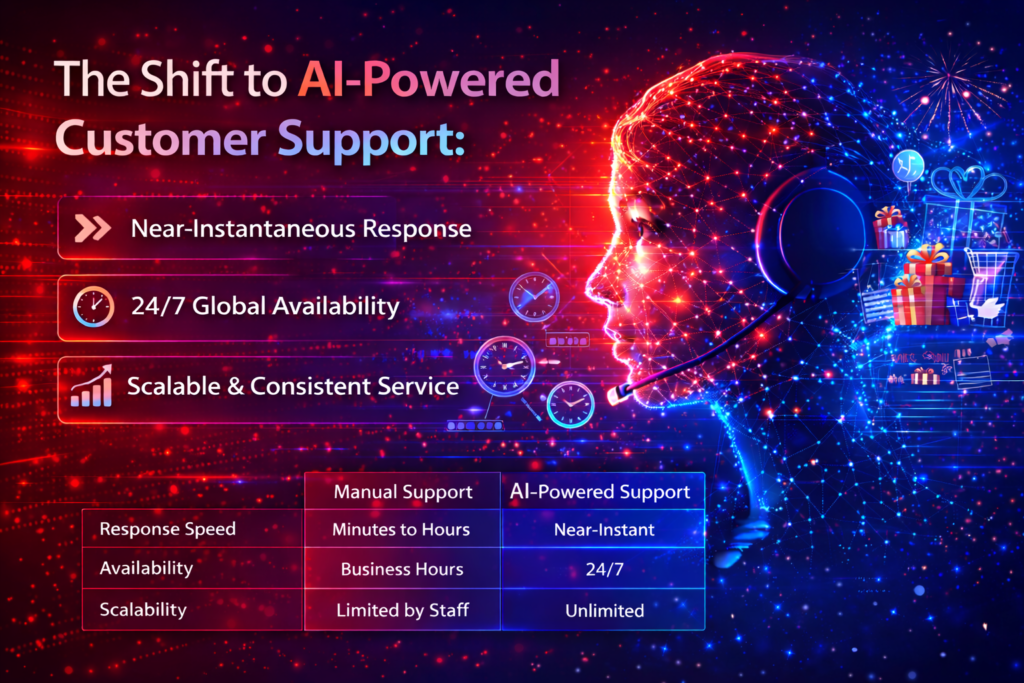
| Feature | Manual Support | AI-Powered Support |
| Response Speed | Minutes to Hours | Near-Instant |
| Availability | Business Hours | 24/7 |
| Scalability | Limited by Staff | Unlimited |
Using these tools helps companies improve response time optimization and offer 24/7 customer support. Adopting customer support automation is a smart move to stay ahead in the digital world.
Enhancing User Experience Through Personalization
Today, giving a personalized customer experience is key in India’s market. Customers want brands to know their history and likes. This builds strong bonds and loyalty.
Leveraging Customer Data for Tailored Interactions
AI virtual assistants connect data to real talks. They use past buys, web visits, and support chats to know users well. This lets them give highly relevant answers, not just generic ones.
For example, if someone often buys electronics, the AI will focus on fixing those devices first. This makes users feel heard and important. Tailored interactions also save time, making users happier.
Predictive Support and Proactive Issue Resolution
AI’s real strength is predicting needs before they become big problems. It keeps an eye on accounts and services always. If it spots a glitch, it fixes it before the user knows.
This move from fixing problems after they happen to fixing them before is huge. It keeps customers happy and stops them from leaving. It shows a brand’s dedication to being the best, which digital shoppers love.
Integrating AI Virtual Assistant Solutions with Existing CRM Systems
Modern businesses in India find that an ai virtual assistant needs good data to be useful. If tools don’t share data, they can’t give the personal service customers want. By focusing on crm integration, companies can make their support better.
Ensuring Seamless Data Flow Between Platforms
Your AI needs to get data from your database to check on accounts or orders. Technical alignment is key to avoid data problems. When systems talk well, the AI can solve tough questions without help from people.
Good crm integration means strong API links for data sharing. This keeps all customer info up to date. Your team gets a single source of truth for every customer interaction.
Maintaining Context Across Multiple Communication Channels
Customers might switch from a website chat to a mobile app or social media. A top ai virtual assistant knows who the user is, no matter how they start. This is key for a smooth experience.
Keeping the chat history across all channels gives a truly cohesive experience. It saves time for users and helps your team know the full story. A unified omnichannel support system is the best way to keep customers happy in a busy digital world.
Overcoming Common Challenges in AI Deployment
Dealing with Indian customer service needs more than just smart software. It takes a deep understanding of the local scene. Knowing the area helps businesses tackle ai deployment challenges that slow down digital changes.
Addressing Language Diversity and Regional Dialects in India
India’s many languages and dialects pose a big problem for AI. Most AI is made for global English, not local tongues. Localizing your AI training data is key to getting it right the first time.
Companies should use NLP engines that work with many languages. Customizing models for local slang and speech patterns boosts accuracy. This makes your systems more welcoming to everyone.
Balancing Automation with Human Empathy
Automation is great for speed, but can’t replace human touch in tough times. Customers often need genuine understanding when they’re upset. A strong omnichannel support plan helps switch from AI to humans when needed.
The aim is to let AI handle simple questions and let people deal with tough ones. This hybrid support model keeps customers happy without losing speed. It makes technology a help, not a hindrance, in connecting with people.
Best Practices for Training Your AI Model
The success of your AI system depends on how well it’s trained. By following strict training steps, businesses can make sure their virtual assistants are reliable assets. They will grow with your customers’ needs. A well-trained model turns a simple chatbot into a smart support partner.
Curating High-Quality Training Datasets
The start of any AI project needs top-notch data. You must gather diverse datasets that show the unique language of the Indian market. This includes local dialects and everyday sayings. Natural language processing helps the system understand these differences better.
Cleaning your data well is key to avoid mistakes or old info. High-quality inputs help the AI get what you mean, so it gives the right answers. By using examples that really show what your customers are like, the model gets your customers’ needs.
Implementing Feedback Loops for Accuracy
Training doesn’t stop when the AI is ready to use. It keeps getting better with feedback. By using strong feedback loops, the machine learning can learn from user talks and fix mistakes. This keeps the AI working well over time.
When the AI can’t answer a question, it should ask a human for help. This human-in-the-loop strategy helps the AI learn from its mistakes. With regular machine learning updates and natural language processing, your AI will get better at answering complex questions quickly and with care.
Measuring Success with Key Performance Indicators
How do you know if your AI investment is worth it for your business? To make sure your digital change brings real value, you need a strong way to track performance. By looking at specific data, you can make your operations better. This ensures your virtual assistant meets today’s high standards in India.
Tracking Average Handling Time and First Response Time
How fast your system answers questions shows how efficient it is. Response time optimization is key to making customers feel valued. By watching how fast you respond first, you can find problems in your automated system.
Average Handling Time (AHT) shows how long it takes to solve a problem. When AI handles simple questions well, your people can work on harder tasks. Keeping these times consistent means your support system is working well.
Analyzing Customer Satisfaction Scores and Net Promoter Scores
The quality of your interaction is just as important as how fast it is. Using customer satisfaction metrics lets you see how your AI affects people. These scores show if your automated answers are helpful, right, and caring.
Net Promoter Scores (NPS) show if people will stick with your brand. When your AI helps solve problems before they start, people are more likely to suggest your service. Watching these scores over time helps your tech keep up with what your customers need.
| Metric | Primary Goal | Business Impact |
| First Response Time | Speed | Reduced customer churn |
| Average Handling Time | Efficiency | Lower operational costs |
| CSAT Score | Quality | Improved brand reputation |
Security and Privacy Considerations for AI Support
Trust is key in digital interactions, like handling customer data. Businesses focus on speed and efficiency. But, they must also tackle ai deployment challenges with security in mind. Keeping user info safe is a big promise to your customers.
Compliance with Data Protection Regulations
In India, you must follow laws like the Digital Personal Data Protection (DPDP) Act. Staying data privacy compliant means respecting users’ rights and avoiding legal trouble. You need clear consent and open data handling policies to meet these standards.
Regular checks and impact assessments are key to keeping up with these rules. By showing how data is used, you prove you’re responsible. This thorough method earns trust from users who care about privacy.
Protecting Sensitive Customer Information During Conversations
Today’s support systems need crm integration for personal service. But, they must also have strong security to stop unauthorized access. Using end-to-end encryption and data masking keeps important info safe from prying eyes.
Also, focus on data minimization in backend processing. Share only what’s needed with the AI model. This way, you use automation safely, keeping customer data completely secure.
Future Trends in AI-Driven Customer Service
The future of customer service is all about using advanced AI. As we move to a digital-first economy, we need smarter tools. These new technologies will make technical support easy for everyone.
The Rise of Multimodal AI Assistants
Next, virtual assistants will do more than just text. They will understand text, images, and voice at the same time. Imagine sending a photo and talking about a problem, and the AI solves it right away.
These multimodal systems will give a more personalized customer experience. They can handle different ways of communication. This makes users feel heard and understood, no matter how they reach out.
Integration with Voice-Activated Smart Devices
Voice-activated tech is now common in Indian homes. Adding AI support to these devices means no need for phones or laptops. It makes 24/7 customer support available right in your living room.
Brands that use voice-first tech will gain more loyal customers. It makes getting help easier and builds deeper connections with people. Voice-activated help is a big step forward in automated service.
Conclusion
AI virtual assistants change how companies talk to users. Using these tools helps brands update their work. It also meets the high needs of the Indian market.
Success needs a strong focus on data privacy. Keeping user info safe builds trust. It also keeps your digital space safe from threats.
Businesses should focus on making customers happy. This shows how well AI works. By tracking these numbers, teams can get better over time.
Using smart tech leads to growth and better work. Start now by matching your support goals with what your audience needs. Your drive for new ideas will set you apart.