
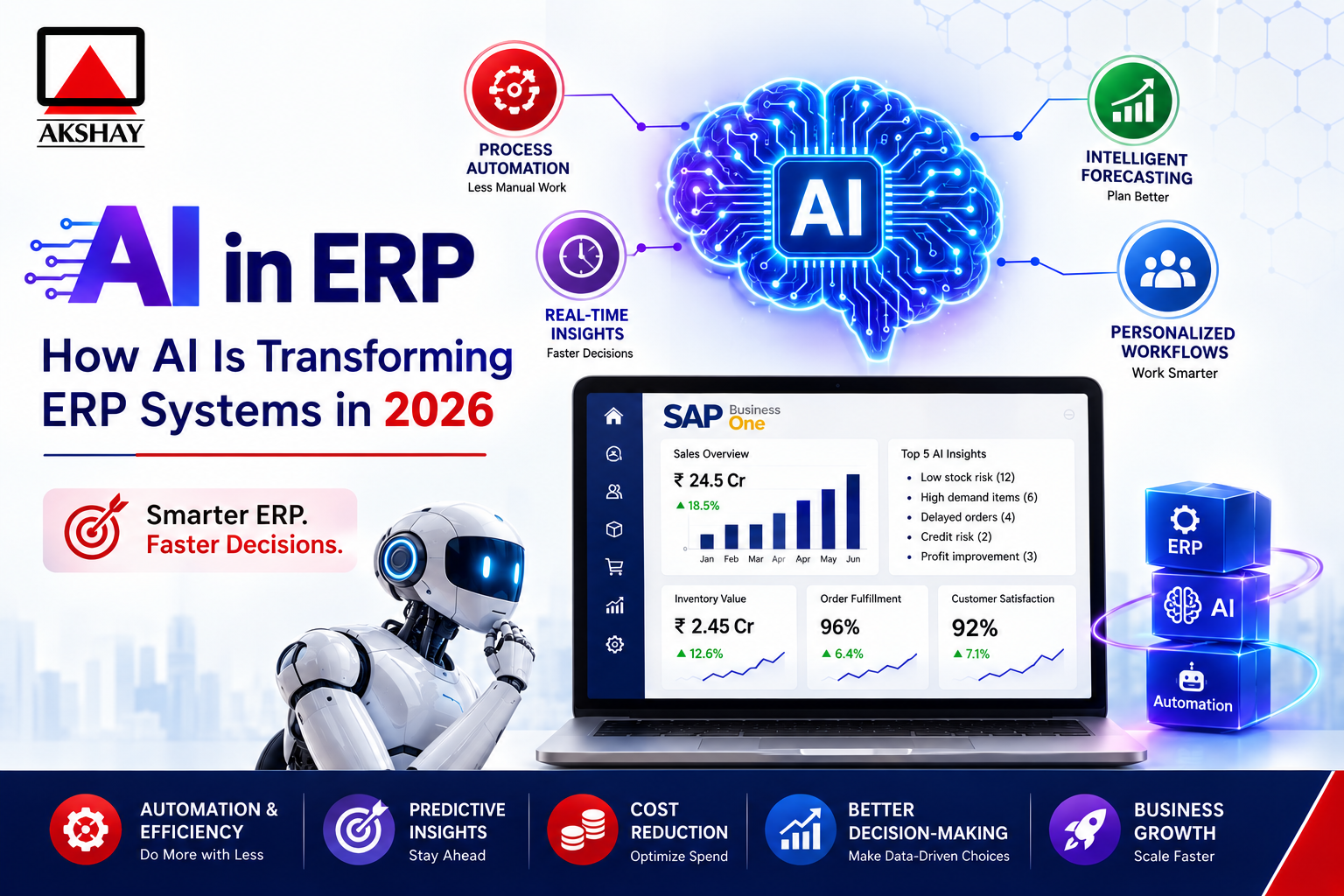
The business world is changing fast with smart technology leading the way. By 2026, AI in ERP has grown a lot. It’s now key for making businesses run smoothly worldwide.
Companies are moving from old data ways to new, smart models. This change lets leaders see what’s coming instead of just reacting. Strategic foresight is now a must for staying ahead.
Today’s ERP systems are changing how businesses stay ahead. They use smart learning to make supply chains better and finances more accurate fast. This helps businesses do well in a digital world that’s getting more complex.
Key Takeaways
- Artificial intelligence has shifted from basic automation to a core strategic driver for business operations.
- Predictive analytics allow companies to anticipate market changes instead of reacting to past data.
- Modern software architectures now prioritize real-time decision-making capabilities for better efficiency.
- Global organizations are leveraging these tools to secure a stronger competitive advantage in 2026.
- The integration of intelligent technology is essential for maintaining agility in a complex digital economy.
The Current State of AI in ERP for Indian Enterprises
Today, Indian enterprises see that old ways of managing don’t cut it anymore. The need for AI in ERP has become real. It helps local companies make their complex tasks smoother.
Many businesses in India struggle with manual data entry and poor communication. But, with AI and predictive analytics, they can now automate tasks with great accuracy. This change lets leaders focus on growing the business, not just keeping it running.
The use of AI in ERP is big in areas like manufacturing, retail, and logistics. These fields need to see things in real-time to manage their supply chains well. As Indian enterprises grow, they’ll need smarter software that can learn and fix itself.
| Feature | Traditional ERP | AI-Powered ERP | Benefit for India |
|---|---|---|---|
| Data Processing | Manual/Batch | Real-time/Automated | Faster decision making |
| Forecasting | Historical trends | Predictive modeling | Reduced inventory waste |
| User Interface | Static dashboards | Conversational AI | Higher employee adoption |
| Scalability | Limited/Rigid | Cloud-native/Elastic | Supports rapid expansion |
The move to smart systems is a big step for India’s economy. Companies that use these tools now will likely do better in the global market. The future of business in India will mix human skills with AI’s power.
Assessing Your Business Readiness for AI Integration
Business readiness is key for AI success in Indian businesses. Leaders must first check their digital setup. This ensures they’re ready to use new tech wisely.
Evaluating Existing ERP Infrastructure
Many systems in India were made for manual entry, not AI. Check if your setup supports API-first connectivity and cloud growth. Old systems might not handle fast data for AI.
Upgrading means moving to a hybrid or cloud-native environment. This lets your ERP talk well with AI tools. Without this, AI can’t give you useful insights.
Identifying Data Readiness and Quality Gaps
AI needs good data to work well. Clean data is key for AI-driven decision-making. But, many struggle with bad or old data.
To get ready, focus on cleaning and standardizing data. Having one source of truth helps avoid bad data problems. Here’s what shows your system is ready for AI.
| Readiness Factor | Low Maturity | High Maturity |
|---|---|---|
| Data Quality | Manual, siloed entries | Automated, unified records |
| Infrastructure | Legacy on-premise | Cloud-native, API-ready |
| System Integration | Disconnected modules | Real-time data flow |
| Analytical Focus | Historical reporting | Predictive modeling |
Selecting the Right AI-Powered ERP Solution
Choosing an AI-powered ERP system is about finding the right balance. Strategic alignment is key to make sure it helps your business grow. By focusing on what matters most, Indian companies can make their digital change smoother.
Key Features to Look for in 2026 Systems
Today’s ERP systems need more than just basic tasks. Look for predictive analytics and automated workflows. These help teams see market changes and use resources better in real-time.
A system that’s easy to use is also important. You want customizable dashboards so everyone can find what they need easily. It should also work well with other apps you use.
Comparing Cloud-Native vs. On-Premise AI ERP
Choosing between cloud-native ERP and on-premise ERP depends on your IT setup and data rules. Cloud systems are flexible and cost less upfront. They let teams access important info from anywhere, which is great for remote work.
An on-premise ERP gives you full control over your data and hardware. It’s good for those who need tight security or follow specific data rules. It costs more at first but lets you control updates and maintenance.
Scalability for Growing Indian SMEs
Scalability is key for Indian SMEs to grow. A cloud-native ERP lets you adjust resources as needed. This way, you only pay for what you use, saving money.
Security and Compliance Standards
Security is a big deal when moving online. Your system must follow local and global security rules. Make sure the vendor uses robust encryption and checks for security regularly to keep your data safe.
| Feature | Cloud-Native ERP | On-Premise ERP |
|---|---|---|
| Deployment Speed | Rapid and agile | Slow and complex |
| Cost Structure | Subscription-based | Capital expenditure |
| Data Control | Vendor-managed | Full internal control |
| Maintenance | Automatic updates | Manual intervention |
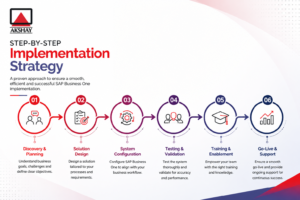
Step-by-Step Implementation Strategy
For digital transformation in India to succeed, a detailed plan is key. A ERP implementation needs a roadmap that matches technical steps with company goals. Breaking the process into phases helps avoid risks and ensures success in the long run.
Defining Clear Business Objectives
Leaders must set clear, measurable goals before starting. These goals could be to cut costs or improve data access. Being clear here stops the project from getting too big and keeps it focused on real benefits.
It’s also vital to align these goals with the Indian market’s needs for growth. When goals are clear, everyone knows why the change is happening. This shared understanding is the base of a successful ERP implementation.
Building a Cross-Functional Implementation Team
A top team is essential for any big software change. You need a mix of people from finance, supply chain, HR, and IT. This mix ensures the ERP implementation meets each department’s needs.
It’s important to let team members make decisions for agility. Including users early makes them feel part of the change. Working together helps spot problems before they cause trouble.
Phased Rollout vs. Big Bang Approach
The choice between a Big Bang or phased rollout depends on your company’s risk level and complexity. A Big Bang changes everything at once, which is quick but risky.
A phased rollout introduces the system bit by bit, like by department or location. This method is safer for big projects because it allows for learning and adjustments. Here’s a comparison to help choose the best approach for your business:
- Big Bang: Good for small companies needing quick results.
- Phased Rollout: Best for big companies wanting little downtime and can test and adjust.
- Hybrid Strategy: Uses main modules first, then adds special functions for a balance of speed and stability.
Integrating AI Modules for Financial Management
Adding AI to your ERP system gives you a big advantage in managing money. It turns financial management into a forward-thinking tool, not just a catch-up job.
Automating Accounts Payable and Receivable
Manual entry can cause mistakes and slow down payments. AI tools grab invoice data fast and check it against orders with high precision.
This tech cuts down time on boring tasks. So, finance teams in India can do more important things like talk to vendors and plan budgets.
Predictive Cash Flow Forecasting
Today’s businesses need more than old data to keep up. Predictive analytics lets them see different money scenarios based on current trends and how they’re doing.
This way, leaders can spot money problems early. With accurate forecasting, companies can make smart choices about spending and investing, staying strong even when the economy is shaky.
| Process Area | Manual Approach | AI-Driven Financial Management |
|---|---|---|
| Invoice Processing | Slow, error-prone | Instant, 99% accuracy |
| Payment Reconciliation | Weekly batch updates | Real-time automated matching |
| Cash Flow Strategy | Based on past data | Enhanced by predictive analytics |
Optimizing Supply Chain Operations with AI
For Indian enterprises, supply chain optimization is now a must. The local market’s diversity and complexity need a quick and flexible logistics system. Artificial intelligence helps make these systems very responsive.
Demand Forecasting in the Indian Market
Demand forecasting is key for a strong supply chain. AI looks at past sales and outside factors like festivals and weather. This predictive capability helps adjust buying plans before demand changes.
Machine learning lets companies predict demand increases with great accuracy. This means products are delivered on time. Businesses stay ahead in a fast-changing economy.
Automated Inventory Replenishment
Inventory management needs smooth goods flow in warehouses. Automated systems order more when stock is low. This cuts down on manual mistakes.
These systems talk directly to suppliers for quick deliveries. This makes the whole buying process smoother. Efficiency gains often show up quickly.
Reducing Stockouts and Overstocking
The goal of smart replenishment is to avoid stockouts and overstocking. Keeping the right amount of stock saves money and keeps customers happy. Optimized stock levels help with cash flow and customer satisfaction.
Staying away from overstocking saves on storage and waste. Avoiding stockouts means not missing sales. This strategic equilibrium is vital for growth in India.
Enhancing Human Resource Management through AI
Managing a diverse workforce is more than just using spreadsheets. It needs the precision of HR automation. As Indian companies grow, managing employees becomes more complex. AI helps HR teams focus on growth, not just paperwork.
Automated Payroll and Compliance Processing
India’s labor laws can slow down payroll work. Automated payroll keeps things accurate and on time. It cuts down on mistakes, which is essential for following new laws.
- Real-time calculation of variable pay and bonuses.
- Instant generation of compliant tax reports.
- Reduction in manual data entry errors by up to 90%.
AI-Driven Talent Acquisition and Retention
Finding the right talent is tough. AI tools sift through many resumes to find the best fit. They also predict when employees might leave, helping managers act fast.
These tools improve the overall employee experience and build loyalty. Here’s how AI changes the game from old ways to new ones.
| Process | Manual Approach | AI-Driven Approach |
|---|---|---|
| Payroll Processing | High manual effort | Fully automated |
| Candidate Screening | Time-consuming | Instant matching |
| Turnover Risk | Reactive | Predictive |
In the end, HR automation helps companies build a strong, engaged team. By using these tools, Indian businesses can stay ahead in the digital world.
Data Security and Ethical AI Considerations
Ethical governance and strong security are key for AI in India’s business world. Keeping data privacy safe is a must. Leaders must watch out for algorithmic bias to keep AI fair.
Navigating Data Privacy Regulations in India
The Digital Personal Data Protection (DPDP) Act of 2023 has changed how India handles data. Companies must make sure their AI systems follow these rules. They need to control who can access data and keep it clear for everyone.
Regular checks are needed to make sure data is safe. By focusing on data privacy, businesses gain trust. Being compliant is a big plus in the digital world.
Mitigating Algorithmic Bias in Decision Making
AI’s quality depends on the data it’s trained on. If this data has biases, AI might show them too. It’s important to test AI often to find and fix these issues.
Teams should be open about how AI makes decisions. This makes it easier to spot and fix unfairness. Staying fair helps avoid AI mistakes.
| Strategy | Primary Goal | Implementation Frequency |
|---|---|---|
| Data Encryption | Security | Continuous |
| Bias Audits | Fairness | Quarterly |
| Access Control | Compliance | Real-time |
| Model Validation | Accuracy | Bi-annually |
Training Your Workforce for an AI-Driven ERP Environment
As Indian businesses move towards automation, it’s key to empower those using the tech. The success of new tech depends on people and how well they adapt. True innovation comes when employees are confident with new tools, not scared.
Upskilling Employees for Digital Transformation
A successful digital transformation needs a focus on learning. Companies should spot skill gaps early to help staff use AI-driven ERP well. Workforce upskilling programs help move from old ways to new, smart workflows.
Investing in workshops and certifications helps employees make better decisions with data. When they see how AI helps them, they work better and feel more involved. This change is a chance for everyone to grow.
Managing Change and Overcoming Resistance
People often fear new tech because they worry about losing their jobs. Leaders must explain AI’s benefits to build trust. By letting employees help with the change, they feel like valued partners.
Offering ongoing support and feedback helps ease the transition. When leaders show how AI frees up time for more important tasks, employees can focus on strategy. This makes the company more resilient and agile.
| Skill Category | Traditional ERP Focus | AI-Driven ERP Focus |
|---|---|---|
| Data Handling | Manual Entry | Data Analysis & Validation |
| Decision Making | Reactive Reporting | Predictive Insights |
| Primary Goal | Operational Efficiency | Strategic workforce upskilling |
Measuring Success and ROI of AI ERP Systems
It’s key to track the ROI of AI to show the value of ERP systems. Companies in India need a plan to see if their digital changes bring financial wins. By setting clear goals, leaders can see how AI helps their profits.
Key Performance Indicators to Track
To see how your system works, focus on certain numbers. Productivity gains show if you’re doing well. Look at fewer mistakes in data entry and faster reports.
The table below shows how AI can boost your bottom line. It compares old ways with new, smart methods.
| Metric Category | Manual Process | AI-Driven Process | Expected Improvement |
|---|---|---|---|
| Invoice Processing | 15 Minutes/Invoice | 2 Minutes/Invoice | 85% Efficiency Gain |
| Inventory Accuracy | 82% Accuracy | 99% Accuracy | 17% Reduction in Waste |
| Financial Closing | 10 Business Days | 3 Business Days | 70% Faster Reporting |
Also, watch for less overhead and quicker decisions. These signs show your system is making your business more profitable.
Continuous Improvement and System Updates
Technology needs regular care to keep its value. To keep a high ROI of AI, your company must always improve. As India’s market changes, your system must too.
- Regular Software Updates: Make sure your vendor keeps the system sharp with updates.
- Feedback Loops: Ask your team to point out any problems so the system can get better.
- Scalability Reviews: Check if your AI can handle your growing needs.
By keeping your system up-to-date, you protect your investment. This keeps your business ahead in the fast-changing digital world.
Conclusion
The world for Indian businesses is changing fast. Using artificial intelligence in your planning is key for growth.
Planning well is the first step to digital success. Leaders who use data wisely and set clear goals will lead the way. They will beat their rivals in the global market.
Your team is the heart of this change. Training them to use new tools is important. This way, they can work well with smart systems.
Changing to an AI-based company takes time and effort. Focus on these main points to succeed. Begin your change now to stay ahead in the digital world.