
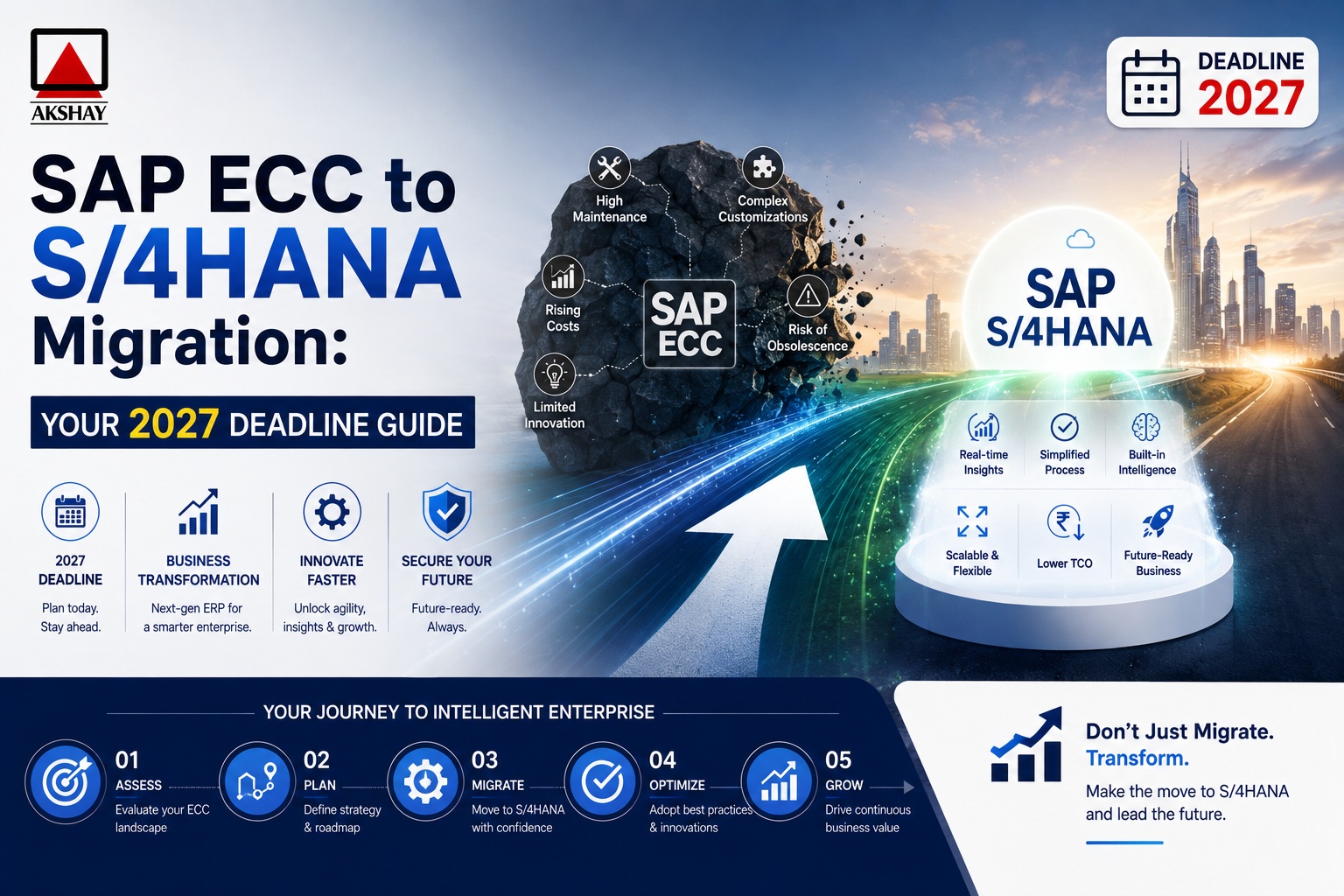
For businesses in India, a big change SAP ECC to S/4HANA Migration is coming. The 2027 SAP deadline is a key moment for those using old software.
Switching from old systems is now a must. It’s not just a tech choice. It’s a mandatory strategic shift. To keep running smoothly, you need to update your main business processes now.
This guide will show why moving from SAP ECC to S/4HANA is key for staying ahead. We’ll help you understand the challenges of this change. This way, your business will stay strong and efficient in a changing world.
Key Takeaways
- The 2027 cutoff means you must act fast if you’re using old systems.
- Upgrading keeps you supported by the vendor and gets you the latest security fixes.
- Updating your core systems gives you better data and makes your business more agile.
- Indian companies must focus on this change to stay competitive.
- Planning ahead now avoids expensive problems later during the final move.
Understanding the SAP S/4HANA Migration Urgency
The 2027 deadline is a big deal for many companies. It marks a shift towards using data in real-time. Legacy systems are no longer enough.
The 2027 SAP deadline is a chance for companies to update their core operations.
The 2027 Maintenance Deadline Explained
SAP will stop supporting its ECC platform by the end of 2027. After that, no more standard support, security patches, or legal updates will be given. Using outdated software can put your business at risk of security breaches and legal issues.
Staying with old software also means missing out on new features. Modern systems have advanced analytics and automation. Not moving forward can leave your company behind.
Why Indian Enterprises Must Act Now
The need for a smooth SAP S/4HANA implementation India is urgent. As the deadline nears, the demand for experts will rise. This could lead to a talent shortage, higher costs, and delays.
Indian companies need to plan their migration now. This way, they can get the right people and make the transition easier. Early planning is key to staying ahead in the digital world.
The 2027 SAP deadline is more than a technical issue. It’s a business must. Companies starting their SAP S/4HANA implementation India now will gain from new features. Waiting will make future updates harder and more expensive.
Assessing Your Current SAP ECC Landscape
Your journey to S/4HANA starts with understanding your current setup. Before you start, you need to know how your system is doing. This step helps avoid delays and keeps your business ahead in the Indian market.
Conducting a Technical Readiness Audit
A detailed SAP ECC technical readiness audit is key. Check your hardware, database size, and operating system to see if they’re ready for S/4HANA. This audit finds any problems that could slow down your move.
Looking at how your system performs helps decide if it needs an upgrade or a move to the cloud. Planning ahead lets your IT team fix hardware issues before they get worse. This audit gives you the facts you need for a solid plan.
Identifying Custom Code and Legacy Data Debt
Many companies have a lot of custom code over the years. You need to figure out what’s useful and what can be replaced by S/4HANA. Simplifying your system now saves money later.
Also, dealing with SAP legacy data debt is key for a smooth move. Get rid of old, unnecessary data. Cleaning up your data makes your new system run better without old records weighing it down.
| Readiness Factor | Current State | Migration Impact |
|---|---|---|
| Custom Code | High Modification | Requires Refactoring |
| Data Volume | Large/Redundant | Needs Archiving |
| Infrastructure | On-Premise Legacy | Cloud Transition |
| System Health | Performance Lags | Optimization Needed |
Choosing the Right Migration Strategy
Choosing the right path for your SAP ECC to S/4HANA migration is key for any Indian business. This choice affects the project’s complexity, timeline, and impact on your business. Leaders must pick a technical path that matches their long-term goals for a smooth transition.
Greenfield Implementation: Starting Fresh
The Greenfield method means starting from scratch. It’s best for companies wanting to re-engineer their processes and get rid of old tech. Starting new lets companies use the latest practices and make their systems simpler.
Brownfield Conversion: Preserving Historical Data
Brownfield conversion updates your current system to the new one while keeping old data. This is good for businesses that want to keep their setup and custom work. It’s a faster path to innovation without a full system redo.
Selective Data Transition: The Hybrid Approach
Selective Data Transition is a flexible, hybrid option for complex needs. It lets you move certain data while keeping old info. This is great for big Indian companies that need to keep data continuity while starting fresh.
| Strategy | Primary Benefit | Complexity Level | Best For |
|---|---|---|---|
| Greenfield | Process Innovation | High | Business Transformation |
| Brownfield | Data Preservation | Medium | Minimal Disruption |
| Selective | Hybrid Flexibility | Very High | Complex Landscapes |
Choosing the right SAP S/4HANA migration strategy needs careful thought. Whether you choose SAP Greenfield vs Brownfield or a mix, it will shape your future success.
SAP ECC to S/4HANA Migration: Planning and Governance
A good plan is key for a successful SAP S/4HANA implementation in India. SAP project governance helps guide your company. It makes sure technical goals match your business goals. Without it, even the best plans can get lost in the details.
Building a Cross-Functional Migration Team
Modern ERP changes need a team that connects IT and business units. You need people who know both the tech and your business needs. Collaboration is the key to making sure the new system works for your business.
Here are some important roles for your team:
- Executive Sponsors: They give strategic direction and approve budgets.
- Functional Leads: They make sure the system meets business needs.
- Technical Architects: They handle data and system integration.
- Change Management Leads: They help users get used to the new system.
Defining Project Scope and Business Objectives
It’s important to set your project scope early to avoid extra costs and delays. You should know which processes to keep, change, or drop. Maintaining a sharp focus on key goals helps the project add value.
Focus on areas that boost revenue or efficiency. Clear goals help manage resources and keep the project on schedule. Precision in planning stops the problem of trying to change too much at once.
Managing Stakeholder Expectations in the Indian Market
Understanding the Indian market is key to managing stakeholder expectations. The local business culture and rules need proactive communication. Keep everyone updated on the SAP S/4HANA migration strategy.
Being open builds trust during big digital changes. Regular meetings with the steering committee keep everyone on the same page. Consistent engagement keeps everyone working towards the SAP S/4HANA implementation in India success.
Navigating Data Cleansing and Migration
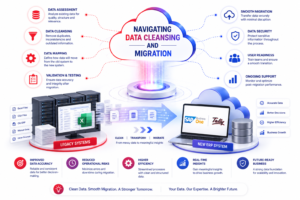
Data is key for moving to S/4HANA. It’s very important for Indian businesses. Bad data is like building on shaky ground. Prioritizing accuracy means your new system will work well.
Strategies for Data Archiving and Cleanup
Many companies have old data that slows them down. Before moving to the cloud, pick what data is really needed. Effective SAP data cleansing means getting rid of old data.
Archiving old data makes moving easier. It saves money and makes things simpler. Focusing on high-quality data means starting fresh.
Ensuring Data Integrity During Transfer
Keeping data safe during migration is very important. You need to check data at every step. Consistent validation checks help keep data safe.
Standardizing data helps avoid mistakes. It’s key for companies with many locations. Reliable data integrity keeps everything running smoothly.
Tools for Automated Data Migration
Manual data entry is slow and can be wrong. Using SAP data migration tools makes things faster. These tools have special features to help.
- SAP S/4HANA Migration Cockpit: A great tool for moving data.
- SAP Data Services: Best for SAP data cleansing and changing data.
- Third-party ETL tools: Good for bringing in data from other systems.
These tools let IT teams work on important tasks. Automation keeps the project on track and avoids big mistakes.
Addressing Indian Statutory and Compliance Requirements
Getting compliance right in India is key for a smooth S/4HANA move. Businesses face many tax laws and reporting rules. Making sure you follow SAP S/4HANA compliance India helps avoid fines and makes finance work better.
Adapting to GST and Local Tax Regulations
The Goods and Services Tax (GST) needs exact data and quick reports. Moving to a new ERP is a chance to make SAP GST compliance easier. This way, you avoid mistakes in tax calculations.
Automation is the key to handling tax changes. Modern systems update tax rules quickly. This lets finance teams work on growth, not just data entry.
Localization Features in S/4HANA
The platform has strong SAP S/4HANA localization tools for India. These tools make local laws easier by using pre-set templates. Companies can use these to match their processes with local rules.
- Automated Tax Calculation: GST, TDS, and TCS are processed in real-time.
- Statutory Reporting: Formats for GSTR filings and balance sheets are ready to use.
- Legal Change Management: Updates for new rules are quickly applied.
Reporting Standards for Indian Regulatory Bodies
Keeping up with regulatory bodies is vital for business stability. S/4HANA has advanced audit trails for all transactions. This is important for audits or government checks.
Using standard reporting modules helps make accurate financial statements. Reliable data is the foundation of trust with the regulatory world. Starting these steps early keeps your business ready for audits.
Managing Change and Training Your Workforce
Technical migration is key, but the human side is more important for lasting success in India. A digital project can fail because the team wasn’t ready. Prioritizing your people makes sure S/4HANA brings the expected benefits.
Developing a Comprehensive Change Management Plan
A strong SAP change management plan is essential. You need clear ways to tell employees about the project and its benefits. Leaders should support the change to unite the company.
Good planning means spotting and solving problems early. Talking openly about concerns builds trust. This helps everyone work towards the digital upgrade’s goals.
Upskilling IT Teams for S/4HANA Environments
Switching to S/4HANA needs new skills, unlike old ECC systems. SAP workforce upskilling is key to keep your new setup running well. Your IT team should move from just fixing things to helping innovate.
Here’s how to get your tech team ready:
- Sign up key people for SAP certification.
- Give them practice time in sandbox environments.
- Help them learn from other departments.
Overcoming Resistance to New SAP Interfaces
Users like what they know, making SAP Fiori a big change. User adoption comes from showing how new tools make work easier. When people see the benefits, they start to like the new interface.
Creating a culture of learning is key for lasting success. Offer support through workshops and easy-to-use guides. This way, your team can use S/4HANA to its fullest.
Testing and Quality Assurance Protocols
Rigorous testing is the last step before your SAP S/4HANA system is live. Precision in this phase keeps your business running smoothly during the switch. It checks every setting to avoid expensive downtime.
Unit Testing and Integration Testing Phases
Unit testing starts with checking each part of the system. When these parts work right, integration testing makes sure data moves well between areas. Following SAP S/4HANA testing best practices helps find problems early.
User Acceptance Testing (UAT) Best Practices
UAT is when real users check if the system meets their needs. It’s key to get people from different departments involved. Clear communication during UAT makes sure the system meets user needs.
Performance Tuning for High-Volume Transactions
As your business grows, the system needs to handle lots of data fast. SAP system performance tuning is key to keep things running smoothly. It makes sure the system is fast and stable, even when it’s busy.
| Testing Phase | Primary Focus | Key Stakeholders | Success Metric |
|---|---|---|---|
| Unit Testing | Code Logic | IT Developers | Zero Defects |
| Integration Testing | Data Flow | System Architects | Seamless Connectivity |
| UAT | Business Process | End Users | User Approval |
| Performance Tuning | System Speed | Database Admins | Low Latency |
Post-Migration Support and Optimization
The real value of your SAP investment starts when your new system goes live. The technical cutover is a big step, but it’s not the end. You must focus on SAP post-migration support to keep things stable and running smoothly.
Hypercare Support Strategies
Right after launch, a strong support model is key to tackle user problems. A good SAP S/4HANA hypercare plan helps your IT team fix big issues fast. This keeps your team safe as they get used to the new system.
Good hypercare plans include:
- Creating a “War Room” for quick issue solving.
- Having a 24/7 helpdesk for user questions.
- Doing daily meetings to check on system health.
Monitoring System Performance and Stability
Keeping things running smoothly means watching your system closely. You need to track important signs to make sure everything works fast. Proactive monitoring finds problems before they slow you down.
Regular health checks are key for success. Your IT team can keep the system strong with built-in tools. Consistent performance tuning keeps your system fast and reliable.
Leveraging S/4HANA Innovations for Business Growth
Once things are stable, focus on using your system’s best features. Using advanced tools like analytics and machine learning can help you grow. These tools give you deep insights into the market, which is great for staying ahead in India.
Continuous improvement is what makes digital transformation successful. By always looking for new updates, you can stay ahead. Investing in training keeps your team ready for new tech.
Conclusion
The move from SAP ECC to SAP S/4HANA is key for modern Indian businesses. It needs careful planning, smart execution, and a strong will to change.
Following these steps helps your company face the 2027 deadline with confidence. You can update your core operations and use SAP’s full power.
Leading well is the secret to success in this digital change. Start checking your setup now to support growth and new ideas. Talk to your SAP partners to plan your way to a better, more efficient business.