
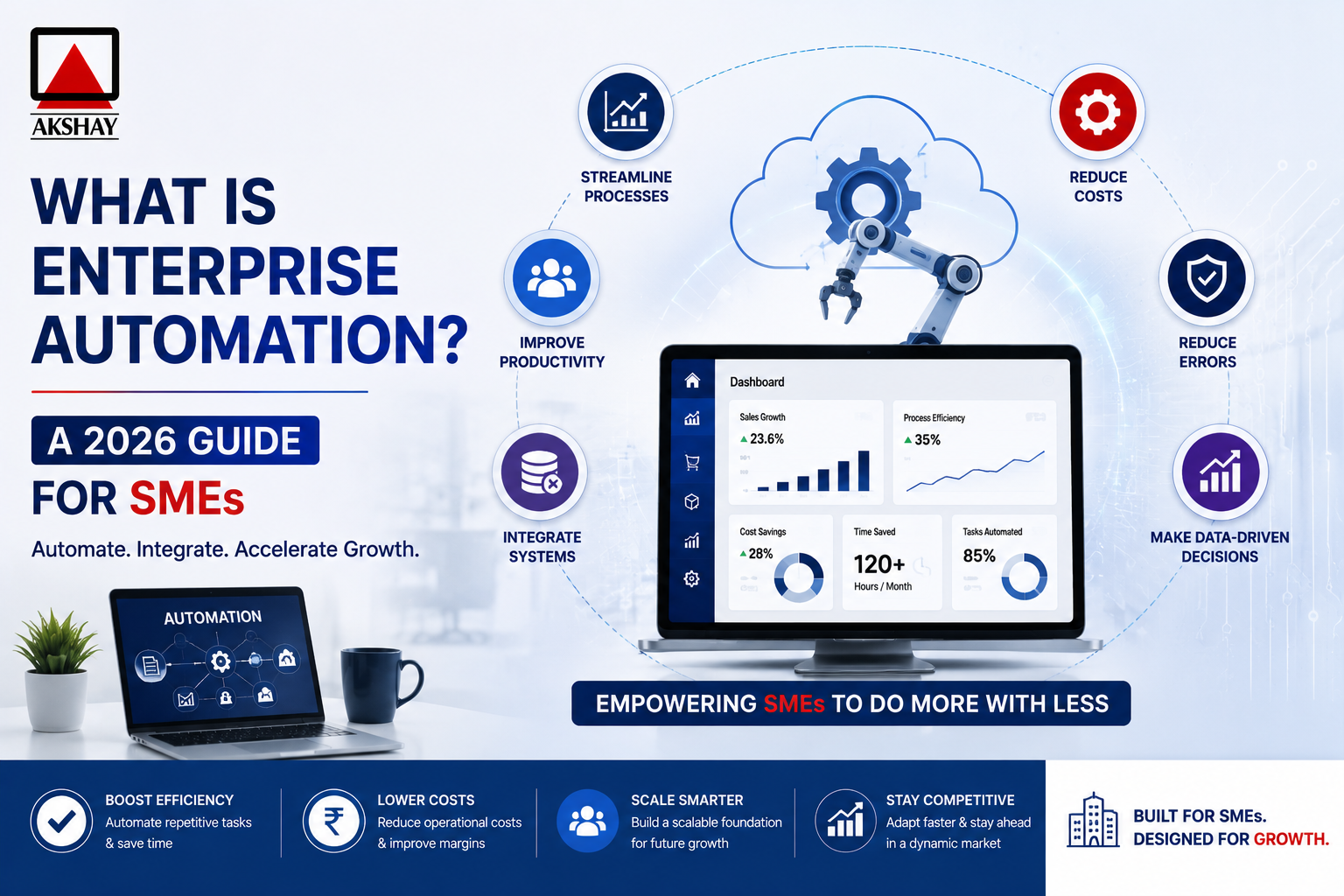
In the fast-changing Indian market, just hard work is not enough. Enterprise Automation is key for small and medium-sized businesses to grow. By 2026, using these smart systems is a must for survival.
Many local businesses waste time on manual tasks. Using modern software lets teams work on important strategies. This gives them a big edge in today’s digital world.
Knowing how to use Enterprise Automation helps owners make workflows better and cut down on mistakes. Businesses that use these tools will lead in efficiency and growth. It’s time to update your operations for lasting success.
Key Takeaways
- Automation is a critical necessity for Indian SMEs to remain competitive by 2026.
- It shifts focus from repetitive manual tasks to high-value strategic initiatives.
- Implementing these technologies significantly reduces operational errors and costs.
- Digital transformation is essential for scaling businesses in a global market.
- Early adoption of smart workflows provides a distinct advantage over traditional competitors.
Defining Enterprise Automation in the Indian SME Context
Looking ahead to 2026, automated systems are changing how small and medium enterprises work in India. This change moves away from old, paper-based ways of working. SME digital transformation is key for companies wanting to grow globally.
The Evolution of Business Efficiency in India
In the past, Indian business efficiency was based on manual checks and separate records. Owners used physical books or simple spreadsheets for inventory and payroll. These methods created barriers to growth and slow decision-making.
Now, with Indian market automation, things are different. Companies use digital systems to share data instantly. This lets leaders focus on growth, not just day-to-day tasks.
Why SMEs Must Adopt Automation by 2026
Today’s consumers want quick service and clear tracking. They want seamless digital interactions. SMEs that don’t update risk losing customers to tech-savvy rivals.
Not adopting new tech also gets more expensive as digital tools improve. Automation cuts down on mistakes and makes better use of resources. Here’s how old systems differ from new ones.
| Feature | Manual Legacy Systems | Automated Enterprise Workflows |
|---|---|---|
| Data Entry | High error rate; manual input | Automated capture; high accuracy |
| Processing Speed | Slow; dependent on staff availability | Instant; 24/7 operational capacity |
| Scalability | Limited by headcount | Highly scalable with cloud tools |
| Decision Making | Reactive; based on historical data | Proactive; real-time analytics |
SME digital transformation is key for lasting success. By using Indian market automation, local businesses can meet today’s standards. Boosting Indian business efficiency is the best way to thrive in a digital world.
Assessing Your Business Readiness for Automation
Checking if your business is ready for digital changes is key. Many small businesses in India try to use complex software too soon. True readiness means knowing how your business works every day.
Evaluating Current Operational Maturity
Before buying new tools, write down how you work now. If a process is bad or slow, automating it won’t help. Standardization is the foundation for a smooth digital change.
Map out your main business tasks. Find out which ones are the same every day and which need human thought. This check shows if your team is ready for new systems.
Identifying Skill Gaps in Your Workforce
Technology works only if your team knows how to use it. You must see if your staff can handle new automated tools. Bridging the knowledge gap is key for success.
Look at these important areas for your team:
- Basic skills in cloud-based software tools.
- Ability to understand data from automated systems.
- Willingness to change to digital-first workflows.
Start training early to avoid problems later. Empowering your employees makes them part of the change, not just watching.
Budgeting for Long-Term Automation ROI
Planning for digital tools is more than the first cost. You must think about setup time, training, and upkeep. A good budget ensures a good automation ROI in three to five years.
Think about the long-term benefits, not just the first cost. When you look at your automation ROI, include saved time, fewer mistakes, and more work done. This way, you can explain the cost to others and stay ahead in India.
Identifying High-Impact Processes for Automation
Start by focusing on tasks that are repetitive and slow you down. Use business process automation to fix these problems. This way, you can use your resources for growth, not just keeping things running.
Mapping Repetitive Administrative Tasks
Administrative tasks often have big chances for improvement. Things like data entry, invoice processing, and payroll are great for automation. This frees up your team to do more important work.
Look at these areas for quick gains:
- Automated Invoicing: Speed up payments by linking accounting with client data.
- Digital Onboarding: Use forms to get employee or vendor info safely.
- Expense Tracking: Skip manual receipt logging with cloud tools.
Automating Customer Support and Engagement
Today’s customers want quick answers, any time. Boosting your support team’s productivity is key. Smart tools can handle lots of questions without adding staff.
Personalized engagement doesn’t need a human for every chat. AI chatbots can answer simple questions fast. This lets your team focus on harder, more personal issues.
Streamlining Supply Chain and Inventory Management
Supply chain issues are a big problem for many small businesses. Using business process automation in inventory management helps keep stock right. It also cuts down on waste.
Good inventory management needs these automated features:
- Low-Stock Alerts: Get alerts when stock is low.
- Vendor Integration: Connect your systems with suppliers for quicker orders.
- Demand Forecasting: Use past data to predict and adjust for demand.
By focusing on these areas, you’ll see big improvements in operational productivity. This lets your business grow while keeping customer service high.
Selecting the Right Enterprise Automation Tools
Modern Indian SMEs face a unique challenge. They need to find technology that fits both global trends and local needs. It’s essential to pick tools that are flexible and reliable for long-term success.
Comparing Low-Code and No-Code Platforms
Many growing businesses struggle with the technical barrier to automation. Low-code platforms offer a solution. They let IT teams build apps with less coding.
No-code tools let non-technical staff automate tasks easily. They use simple, drag-and-drop interfaces.
- Speed: No-code solutions are quick to deploy for simple tasks.
- Customization: Low-code platforms are better for complex business needs.
- Accessibility: Both options reduce the need for expensive external developers.
Evaluating Cloud-Based ERP Solutions
A strong cloud ERP India system is key for automation success. It centralizes data for inventory, finance, and HR. This way, your team can access important info from anywhere in India.
Look for cloud ERP providers that offer seamless scalability. Your software should grow with your business. Cloud ERP India also gets better security updates than old systems.
Choosing Tools Compatible with Local Indian Regulations
Technical skills are important, but so is legal compliance. Make sure your software meets local laws, like GST and data residency rules. This avoids legal issues later.
Check if your vendor offers localized support and guides. Trusting a platform that knows Indian business rules helps your automation journey. Focus on these points to protect your business as it grows.
Step-by-Step Implementation Strategy
Indian SMEs need a clear plan to modernize with automation. Breaking the journey into parts helps you add business process automation smoothly. This way, you avoid downtime and keep operations running smoothly.
Phase One: Pilot Testing and Proof of Concept
Start by automating a simple task. This Proof of Concept lets your team test the tech first. It’s a low-risk way to begin.
Choose a task that’s repetitive but not key to your business. Automating it first builds your team’s confidence. This confidence will help you automate more tasks later.
Phase Two: Phased Rollout Across Departments
After the pilot is a success, start automating more areas. Don’t try to automate everything at once. This can cause technical problems.
Focus on areas that will benefit most, like finance or inventory. A phased rollout keeps your IT stable. It lets you grow your business process automation safely.
Phase Three: Employee Training and Change Management
Technology works best when people know how to use it. Good training is key to making your team comfortable with new tools.
Change management helps your team adjust to new ways of working. Here are some tips for a smooth transition:
- Identify internal champions to help their peers.
- Offer hands-on workshops to solve user problems.
- Keep communication open to get feedback on your business process automation.
- Celebrate small victories to keep everyone’s spirits up.
Integrating AI and Machine Learning into Workflows
Artificial intelligence is changing how small and medium businesses in India work. By using AI in business, companies can do more than just automate tasks. They can create smart work environments.
This change lets teams focus on creative work. Machines handle the hard work of data processing.
Leveraging Generative AI for Content and Communication
Generative AI tools are changing how Indian brands talk to customers. Teams no longer spend hours writing emails or social media posts. Now, they can make high-quality content in seconds.
Personalization at a big scale is now possible. This makes sure every customer feels special.
These tools also help keep a brand’s voice the same everywhere online. This makes businesses respond faster and engage more with customers.
Predictive Analytics for Sales Forecasting
Modern machine learning workflows help businesses see the future more clearly. They look at past sales data to find patterns humans might miss. This is key for managing stock, avoiding shortages during India’s busy seasons.
These models give insights that help plan budgets. Knowing what customers want helps manage supply chains better, saving resources.
Automated Decision-Making Systems
Automated systems make daily tasks easier by doing them without humans. They’re great for tasks like approvals, credit scoring, and setting prices. They use data to keep things running smoothly, even when businesses grow fast.
| Technology Type | Primary Benefit | Business Impact | Implementation Ease |
|---|---|---|---|
| Generative AI | Content Speed | Higher Engagement | High |
| Predictive Analytics | Demand Accuracy | Reduced Waste | Medium |
| Decision Automation | Process Efficiency | Lower Costs | Medium |
| Machine Learning | Pattern Recognition | Strategic Growth | Low |
Overcoming Common Challenges for Indian SMEs
Technology is a big help, but Indian SMEs face special challenges. SME digital transformation is more than just new software. It needs a change in how you think and work. Knowing these challenges helps businesses grow better.
Managing Resistance to Digital Transformation
People worry that new tools will take their jobs. Leaders should say that automation helps, not hurts. Good training and clear talks can make everyone feel more confident.
Addressing Infrastructure and Connectivity Issues
The Indian market automation world has bad internet and old tech. Using hybrid cloud solutions helps. This way, data can be worked on offline. Reliable local servers keep things running when the internet is out.
Balancing Automation with Human-Centric Service
Technology should not replace personal touch in Indian businesses. While machines do simple tasks, people should focus on important talks. This hybrid approach keeps customers happy and loyal.
| Challenge | Primary Impact | Mitigation Strategy |
|---|---|---|
| Employee Hesitation | Low adoption rates | Comprehensive training programs |
| Network Instability | System downtime | Hybrid cloud architecture |
| Cultural Disconnect | Loss of personal touch | Human-in-the-loop workflows |
| Budget Constraints | Limited tool access | Phased modular implementation |
Ensuring Data Security and Compliance
Indian SMEs are moving to automation, making data safety a big deal. Trust is key in digital times. You must keep your systems safe from new threats when automating.
Adhering to the Digital Personal Data Protection Act
The digital personal data protection law in India has strict rules for user info. Following these rules is not just legal; it shows you care about your customers. Make sure your systems ask for clear consent before using personal data.
- Keep detailed records of data use.
- Have a person in charge of data rules.
- Make it easy for users to see or delete their data.
Implementing Robust Cybersecurity Protocols
Good cybersecurity for SMEs needs a strong defense plan. Don’t just use one firewall. Instead, find and fix problems before hackers do.
Regular checks and training are key to a safe place. Teach your team to spot scams and keep data safe. Use strong encryption for all data.
Managing Data Privacy in Cloud Environments
Clouds offer growth but change data handling. Pick cloud providers that focus on digital personal data protection. Always check where your data is kept.
Here’s a table with tips for cybersecurity for SMEs in the cloud:
| Security Measure | Primary Benefit | Implementation Level |
|---|---|---|
| Multi-Factor Authentication | Prevents unauthorized access | High |
| End-to-End Encryption | Protects data integrity | Critical |
| Automated Patching | Reduces system vulnerabilities | Medium |
Consistency is vital for lasting security. By using these steps every day, you keep your business safe and grow in a connected world.
Measuring Success with Key Performance Indicators
It’s key to measure how your workflows are doing. For many companies, moving to digital systems feels vague until the numbers show it’s working. By looking at specific data, you can see if your automation ROI is good and if it’s worth more investment.
Tracking Operational Cost Reductions
One big win of new software is saving money. Watch how much money you save by not doing things by hand and cutting down on mistakes. Lowering these costs helps your business stay strong in a tough market.
To see if you’re saving money, compare your old costs to your new ones. If your costs go down every month, your plan is working.
Monitoring Productivity Gains and Time Savings
It’s not just about saving money. You also need to see how much time your team saves. Operational productivity goes up when people focus on important work, not just routine tasks. Track how long it takes to do important tasks before and after using new tools.
Time is very valuable for growing businesses. When people spend less time on simple tasks, they can do more creative work and connect better with clients. This is a big part of why automation is worth it.
Analyzing Customer Satisfaction Metrics
Automation should not make things worse for customers. Keep an eye on how your new ways of working affect people through feedback and how fast you respond. Good operational productivity means happy customers and better service.
By checking these numbers, you make sure your Indian business efficiency meets your customers’ needs. Here’s a table with the main metrics to watch for a full picture of your success.
| Metric Category | Primary KPI | Target Outcome |
|---|---|---|
| Financial | Cost per Transaction | 15-20% Reduction |
| Operational | Task Completion Time | 30% Faster Output |
| Customer | Net Promoter Score | Consistent Improvement |
| Workforce | Employee Engagement | Higher Value Tasks |
Scaling Your Automation Efforts for Future Growth
Success in the Indian market means growing your digital setup. True business scalability goes beyond simple tasks. It builds a strong, connected system. By focusing on Enterprise Automation, your company stays quick to adapt to market changes.
Building an Automation-First Culture
Changing your team is key. Make technology a friend, not a foe. Encourage staff to find and fix bottlenecks with tech.
Empowering innovation leads to better efficiency. Continuous improvement becomes a core value. This keeps your growth on track.
Expanding Automation to Cross-Functional Teams
Silos slow growth in SMEs. To grow, unite automated workflows across teams. This unites data for better decisions and quicker actions.
Start by tracing how teams share data. Use Enterprise Automation to link these flows. This cuts down on errors and boosts clarity.
Staying Ahead of Emerging Technological Trends
Technology evolves fast, with AI and machine learning leading the way. Keep up with new tools to boost your systems. Regular tech audits help you know when to update or change.
Investing in future-ready solutions keeps you competitive. Stay ahead with proactive Enterprise Automation planning. The table below shows how your automation should grow with your business.
| Growth Stage | Automation Focus | Primary Goal |
|---|---|---|
| Early Startup | Basic Task Automation | Reduce Manual Effort |
| Rapid Expansion | Cross-Department Integration | Improve Data Flow |
| Market Leader | AI-Driven Predictive Analytics | Strategic Scalability |
Conclusion
Enterprise automation is changing the game for Indian small and medium enterprises. It needs a clear vision that mixes advanced tech with your team’s needs. By taking it one step at a time, you lay a strong base for growth.
Doing well in today’s digital world means using smart tools and valuing your team. Leaders who focus on both efficiency and employee growth will do well. Your dedication to these areas will help your business grow strong.
Begin your change by looking at your current work processes. Find small ways to make things better right away. Talk to us about your digital journey or connect with others in your field. Your early actions will shape your business’s future success.