
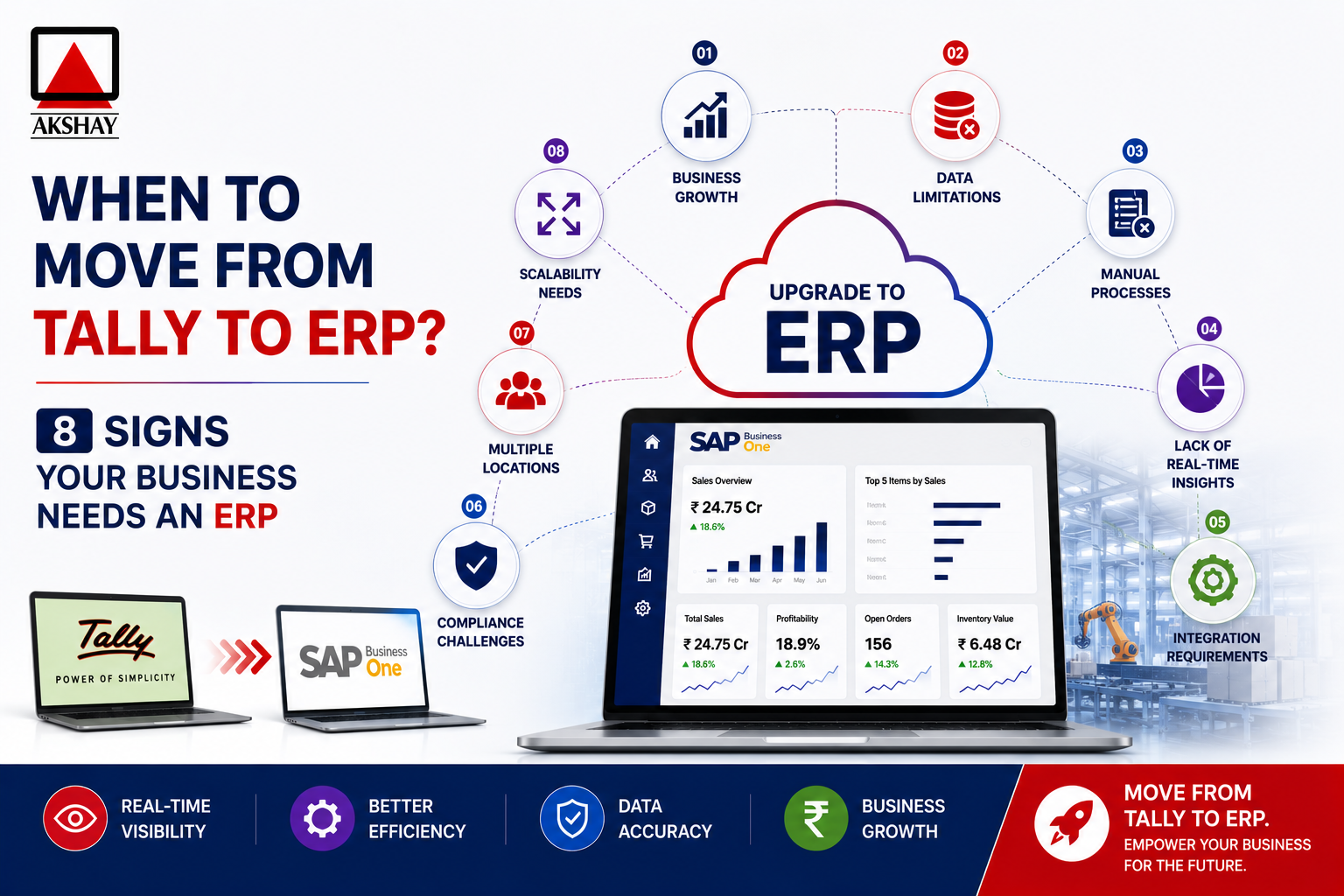
Many growing Indian businesses start with simple accounting software. These tools meet basic needs but hold back as businesses grow. Knowing when to move from Tally to ERP is key for long-term success.
In today’s fast world, manual entry or spreadsheets limit your view. Your team might spend too much time fixing errors. This is when an integrated system becomes vital for staying ahead.
Choosing to upgrade to ERP boosts your business’s efficiency. It gives you the financial control and data you need for better choices. With streamlined workflows, your company can handle more complexity smoothly.
Key Takeaways
- Basic accounting tools often hinder scalability for growing Indian firms.
- Manual data management creates significant operational bottlenecks.
- Upgrading provides the real-time visibility needed for better decision-making.
- Integrated systems improve financial oversight and reduce human error.
- Transitioning is a strategic move to maintain a competitive market advantage.
The Evolution of Business Management in India
The journey of Indian enterprise management has changed fast. It moved from manual records to high-tech automation. For years, local merchants used physical ledgers for inventory and sales. This traditional approach worked for small shops but couldn’t handle a growing economy’s complexity.
Now, the digital transformation for indian businesses is key to success. Companies face a fast-paced world where speed and accuracy are vital. Old systems, once enough, now block growth.
Modern business management software offers the speed and accuracy needed. It connects departments on one platform, helping owners make quick decisions with real-time data. This change is vital for firms aiming to compete globally.
The table below shows the main differences between old accounting and new systems:
| Feature | Manual Ledgers | Modern ERP Systems |
|---|---|---|
| Data Access | Physical location only | Cloud-based, anytime access |
| Accuracy | High risk of human error | Automated, high precision |
| Scalability | Limited by manual labor | Easily scales with growth |
| Reporting | Slow, retrospective | Instant, predictive analytics |
Choosing advanced business management software is a smart move. It keeps the digital transformation for indian businesses on track. By leaving old ways behind, companies can reach their full market power.
Understanding When to Move from Tally to ERP
Deciding when to upgrade your software is a big step for any growing business. As your business grows, old tools might slow you down. Knowing when to switch to better business management software is key.
Assessing Your Current Operational Maturity
Operational maturity shows how well your business handles complexity and growth. At some point, manual checks won’t keep up with daily tasks. Look for signs of strain in your departments to see if it’s time for a change.
Here are signs your business needs a more advanced system:
- Your team spends more time fixing data errors than analyzing performance.
- Departments operate in silos, making it difficult to share critical information.
- Decision-making is delayed because reports are not available in real-time.
- You struggle to manage inventory or production across multiple warehouse locations.
The Limitations of Accounting-Centric Software
Many start with basic bookkeeping tools but soon find they’re not enough. The main accounting software limitations are in not integrating with other departments. When comparing tally vs erp, the main difference is in data visibility and automation.
The table below shows the main differences to help you decide what you need:
| Feature | Accounting Software | ERP System |
|---|---|---|
| Primary Focus | Financial Records | Total Business Integration |
| Data Scope | Limited to Finance | Enterprise-wide Data |
| Automation | Basic Bookkeeping | End-to-End Workflows |
| Scalability | Low | High |
Staying with accounting software limitations can hold you back. Moving to a full business management software lets you manage all your data in one place. Knowing the tally vs erp options helps you choose the right tech for your future.
Sign 1: Data Silos and Lack of Real-Time Visibility
Running a business without a unified view of your data is risky. Departments using different software create data silos. This stops information from moving freely across the company.
This makes it hard for leaders to see how the company is doing. Without a clear view, managers often use old reports or guesswork. This makes big decisions harder.
The Danger of Fragmented Information
Information that’s not together causes big problems. When the sales team can’t see what’s in stock, they might promise things they can’t deliver. This hurts customer trust and your brand’s image in India.
Also, checking numbers between departments takes a lot of time. Employees spend hours checking numbers instead of growing the business. This shows your current software isn’t working well.
How ERP Centralizes Your Business Intelligence
An integrated ERP platform is a single source of truth for your whole company. It connects all departments, so everyone uses the same accurate data. This gives you the real-time business visibility you need to be quick.
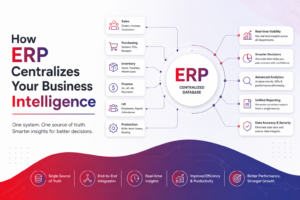
With all your data in one place, you can make fast, smart decisions. You can see how all branches are doing right away. This keeps your business competitive and ready for changes in the market.
| Feature | Siloed Systems | Integrated ERP |
|---|---|---|
| Data Access | Departmental only | Organization-wide |
| Reporting Speed | Delayed/Manual | Instant/Automated |
| Decision Quality | Reactive/Guesswork | Proactive/Data-driven |
| Operational Flow | Fragmented | Seamless |
Sign 2: Inefficient Manual Processes and Data Entry Errors
Manual data entry errors quietly cut into your profits. As your business grows, so does the number of transactions. This makes it hard to keep records accurate with just spreadsheets or basic tools.
These small mistakes can cause big problems in your financial reports and inventory. They can lead to big errors.
Identifying Bottlenecks in Daily Workflows
If your team is spending too much time fixing data, you have a problem. Using manual input leads to a cycle of rework. This wastes resources and slows down making decisions.
Signs that your workflow is failing include:
- Frequent reconciliation delays at the end of each month.
- High rates of duplicate entries across different departments.
- Significant time lost on manual data validation and verification.
- Delayed access to critical business insights due to slow processing times.
Automating Repetitive Tasks for Higher Accuracy
Switching to business process automation is key for growing companies. Basic accounting software works for small businesses. But, the debate of tally vs erp focuses on handling complex, automated tasks.
An ERP system integrates data across all business functions automatically. This means no need for manual input.
By avoiding manual entry, your data stays consistent and reliable. This lets your team focus on growing the business, not just keeping records.
| Feature | Manual Accounting | ERP Automation |
|---|---|---|
| Data Entry | High human error risk | Automated and validated |
| Workflow Speed | Slow and fragmented | Real-time and seamless |
| Data Accuracy | Prone to inconsistencies | High integrity |
Choosing the right system is about removing what holds you back. Business process automation is the best way to get rid of manual data entry errors. When looking at tally vs erp, ERPs are better at making chaotic manual processes efficient.
Sign 3: Difficulty in Managing Multi-Location Operations
Managing many branches is like trying to solve a puzzle without all the pieces. As your business grows in different cities in India, it gets harder to track stock and sales. Basic accounting software can’t handle the complexity, leading to scattered data.
Challenges of Synchronizing Branch Data
Keeping stock levels right across different warehouses is a big challenge. Manual updates can’t keep up with sales, causing inventory problems. This makes it hard to keep customers happy and can lead to lost sales.
Communication issues between branches make things even harder. When each place works alone, it’s hard for the head office to see how things are going. This makes it tough to make smart decisions based on current data.
Centralized Control for Distributed Teams
Switching to an ERP system helps you control your business from one place. It connects all branches to one database. This way, everyone works from the same information, no matter where they are.
Using an ERP for multi-location inventory management helps you see what’s going on in each area. You can move stock where it’s needed most. This reduces waste and saves money. It’s key for any business that wants to work well together.
Sign 4: Compliance and Regulatory Reporting Challenges
Changes in Indian laws can be tough for growing businesses. As you grow, keeping up with laws manually takes a lot of effort. Staying ahead of these requirements is essential to avoid penalties and maintain your reputation.
Navigating GST and Tax Compliance Complexity
The Goods and Services Tax changed how Indian companies handle taxes. Basic accounting tools can leave gaps in your filings. This might lead to errors.
Using gst compliance software in your system helps. It makes sure every transaction is right from the start. This reduces the chance of mistakes during filing.
Automating the check of input tax credits lets your team grow instead of doing paperwork. Real-time validation of invoices keeps your records clean for audits.
Automated Audit Trails and Financial Reporting
Today, every financial deal must be transparent. Manual entries make it hard to track changes. Automated financial reporting gives a clear, unchangeable record of all business actions.
These digital trails make it easy for everyone to see where each entry comes from. Transparency is no longer just a legal requirement; it is a competitive advantage. With the right reports, your leaders can make smart choices based on solid data.
Sign 5: Scalability Issues and Performance Bottlenecks
Growth is key for every Indian business. But, your software might slow you down. As you do more, simple tools can’t keep up. This hurts business scalability and holds your team back.
When Your Software Outgrows Your Business
Performance issues show your system is failing. Slow or crashing software hurts your team’s work. Look out for these signs:
- Long waits for financial reports at month-end.
- System crashes when handling lots of inventory data.
- Can’t add new modules as your products grow.
Ignoring these problems can cost you money and upset your team. Upgrading to erp keeps your tech as quick as your plans. Reliability is key for lasting growth.
Preparing for Future Growth and Market Expansion
Planning ahead is vital for bigger market share. A new platform brings big erp implementation benefits for smoother work. These systems handle lots of users well, keeping your data safe.
Switching to a top-tier system lets you standardize everywhere. This business scalability helps you grow without system problems. Upgrading to erp means more than just new software. It’s a strong base for success.
The big wins of erp implementation include better data and easy scaling. Getting ready for the future means having tools that grow with you. Fixing these issues now sets you up for success in India’s tough market.
Sign 6-8: Advanced Analytics, Customer Experience, and Security
Scaling a business in India needs more than just tracking expenses. It demands deep insights and strong security. As your operations grow, you need advanced data management and customer-focused tools for success.
Leveraging Data for Strategic Decision Making
Going beyond simple bookkeeping lets leaders see the big picture. Advanced business analytics turns numbers into smart decisions.
Integrated systems give a clear view of market trends and performance. This helps spot profitable chances before others do.
Enhancing Customer Relationship Management
Today’s fast digital world means clients want personal service and quick answers. Using customer relationship management software makes every interaction count.
Keeping client data in one place helps your team offer consistent support. Benefits include:
- Improved retention rates through better follow-ups.
- Unified history of all client communications.
- Targeted marketing based on actual purchase behavior.
Strengthening Data Security and Access Controls
As your digital presence grows, so does cyber threat risk. Protecting your data is now a fundamental requirement for business.
Strong enterprise data security features give you peace of mind for growth. These systems have detailed access controls, keeping sensitive data safe.
By setting strict security rules, you protect your brand and keep trust with partners. Proactive protection is key to defending against digital threats.
Conclusion
Switching from simple accounting tools to a strong management system is key for your business. Knowing these eight signs helps you change before problems slow you down. Going digital gives Indian businesses the edge they need to succeed.
Today’s businesses need to be quick and handle complex tasks and data. Old software holds you back from growing. Cloud ERP solutions give your team the tools they need to work better together.
Choosing to update now means success for you in the future. Check how your current setup matches these standards to know when to switch. Investing in technology that grows with you keeps your business strong.
Start checking your systems today. Talk to experts to see how cloud ERP can help you. Making digital changes is the best choice for your business’s future.