
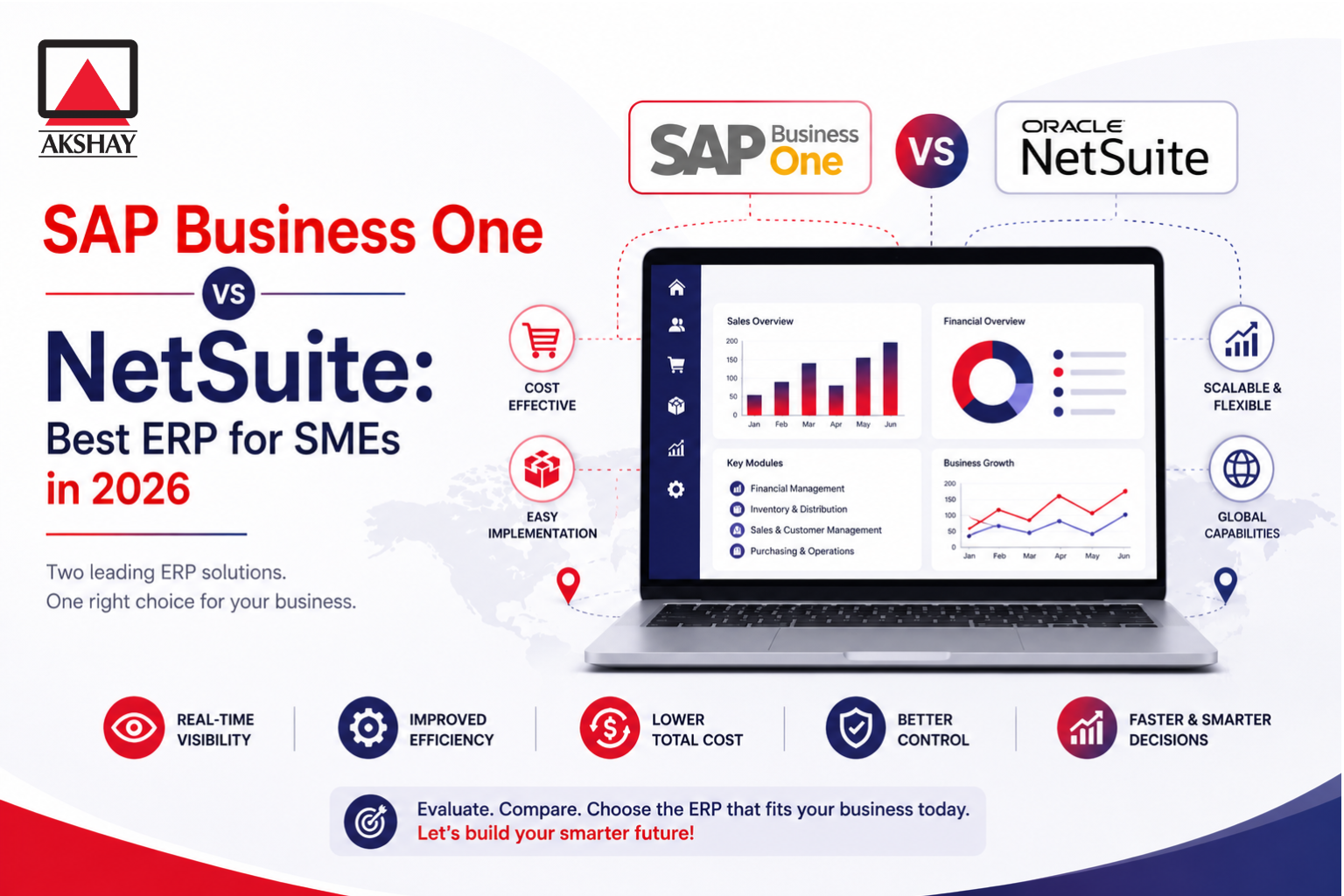
Choosing the right digital tools is a foundational step for any growing company in India. As the market changes in 2026, business owners face tough choices. They need to pick wisely to ensure growth and efficiency.
The debate between SAP Business One vs NetSuite shows how important it is for leaders to make the right choice. Both offer strong tools but meet different needs and growth paths.
Finding the best ERP for SMEs means understanding how these systems fit your goals. By looking at key features and how they are set up, you can invest in technology that keeps you ahead in a fast economy.
Key Takeaways
- Choosing the right software is essential for sustainable business growth in 2026.
- Indian enterprises must prioritize scalability when evaluating digital platforms.
- Both systems offer unique advantages tailored to different operational requirements.
- Strategic alignment between technology and business goals drives long-term success.
- Careful analysis of deployment models helps optimize your total cost of ownership.
The Landscape of ERP Solutions for Indian SMEs in 2026
Indian SMEs face a tough SME digital transformation to keep up in a competitive market. They need strong ERP for SMEs to manage complex supply chains and financial reports. This is because they want real-time data access.
The Indian business software market is changing fast to tackle these challenges. Companies are moving from old systems to cloud-based ones. This gives leaders a clear view of their operations anytime.
Choosing an integrated platform is now a must for survival in 2026. It helps streamline workflows and boosts efficiency. This SME digital transformation is key for growing in a quick economy.
The table below shows what drives ERP for SMEs adoption in India:
| Driver | Impact Level | Primary Benefit |
|---|---|---|
| Real-time Analytics | High | Faster Decision Making |
| GST Compliance | Critical | Reduced Legal Risk |
| Cloud Scalability | Medium | Lower Infrastructure Cost |
| Supply Chain Visibility | High | Improved Inventory Control |
Choosing the right partner is key to successful integration. Businesses that focus on strategic implementation will see big benefits. To stay ahead, they must keep improving and adapting to new tech.
SAP Business One vs NetSuite: A High-Level Comparison
The debate between sap business one vs netsuite often centers on architectural philosophy. Both platforms aim to streamline business processes. But they approach the needs of Indian SMEs differently. Choosing the right path depends on your current infrastructure and future growth plans.
SAP Business One offers deep control and flexibility for businesses. It’s great for companies that prefer a localized or hybrid deployment. It excels in environments where companies need to manage their data closely within their own network. This makes it a preferred choice for manufacturing and distribution firms in India that value data sovereignty.
On the other hand, NetSuite is a pure cloud-native solution. When comparing sap business one vs netsuite, NetSuite is for organizations seeking rapid scalability. It doesn’t require managing physical servers. Its unified suite approach lets businesses manage global operations from one place.
The following table highlights the primary differences between these two powerful ERP systems. It helps you choose based on your organizational complexity.
| Feature | SAP Business One | NetSuite |
|---|---|---|
| Primary Architecture | On-Premise / Hybrid | Cloud-Native (SaaS) |
| Target Market | Small to Mid-sized SMEs | Mid-market to Large Enterprises |
| Deployment Speed | Moderate | Rapid |
| Customization Level | High (Extensive SDK) | High (SuiteCloud Platform) |
The decision depends on your specific operational needs. If your business needs deep integration with local hardware and legacy systems, SAP Business One is a good choice. If you want a frictionless, cloud-first experience that grows with your user base, NetSuite is a great option for modern Indian enterprises.
Deep Dive into SAP Business One Features and Capabilities
Many Indian businesses use SAP B1 features to keep their financial and operational data in check. It acts as a central hub for small to medium enterprises. This ensures all departments work together smoothly.
By combining different tasks into one place, companies can make better decisions. This is key in a competitive market.
Core Financial and Operational Modules
The software has tools for managing accounting, sales, and inventory with great accuracy. Financial managers get automated journal entries and real-time bank reconciliation. This cuts down on manual mistakes.
Operational efficiency is boosted through production planning and supply chain modules. These track stock levels across various warehouses.
Sales teams use the CRM module to track customer interactions and manage the sales pipeline. This ensures inventory levels update automatically when a sale is confirmed. Such seamless data flow prevents stockouts and keeps cash flow healthy.
Deployment Flexibility: On-Premise vs Cloud
Choosing between ERP deployment models is a big decision for growing organizations. SAP Business One lets you host it on your servers or use cloud-based infrastructure. On-premise setups give you control over data security and hardware.
Cloud hosting, on the other hand, offers scalability and lower upfront costs. You can access your data from anywhere, which is great for teams across India. This flexibility lets your technology grow with your business without needing big hardware changes.
Customization and Extensibility for Indian Businesses
Every business has unique workflows that standard software might not cover. SAP Business One stands out with its powerful SDK for customization. Developers can create custom add-ons for local needs, like unique tax reporting or industry-specific logistics tracking.
This flexibility keeps the system relevant as your business evolves. You can integrate with e-commerce platforms or payment gateways easily. The table below shows the main differences between deployment and customization:
| Feature Category | On-Premise Model | Cloud-Hosted Model |
|---|---|---|
| Infrastructure Control | Full internal management | Managed by provider |
| Initial Investment | High capital expenditure | Low subscription cost |
| Customization Depth | High (Full SDK access) | Moderate (API-focused) |
| Accessibility | Local network focus | Global remote access |
Analyzing NetSuite Cloud ERP Strengths and Limitations
For many Indian businesses, moving to a cloud is a big step up. Using a cloud ERP India solution means no more expensive server rooms. This lets teams focus on growing the business, not just keeping the tech running.
Native Cloud Architecture and Scalability
The platform is made to live in the cloud. This means NetSuite scalability is a big plus for growing companies. As your business grows, the system gets the resources it needs to keep up.
There’s no need to manually update or worry about being stuck with old versions. The software updates itself, so everyone gets the newest features and security. This keeps your business ahead in a fast market.
Unified Suite for Global and Local Operations
Managing different branches or international sites can create data silos. NetSuite’s unified suite brings all financial and operational data together. This gives leaders the real-time insights they need across different locations.
The system makes handling complex multi-currency and multi-entity needs easy. By centralizing these processes, companies can make their reporting cycles much faster. This integration is key for NetSuite scalability in complex businesses.
The Role of SuiteSuccess in Rapid Implementation
Big deployments often take a long time and are very complex. SuiteSuccess changes this by using pre-configured industry templates. These templates are based on best practices from thousands of successful deployments worldwide.
Using these templates, companies can start using the system faster. This reduces the need for heavy customization, which can cause delays. It’s a smart way to make sure your cloud ERP India investment pays off quickly.
| Feature Category | Traditional ERP | NetSuite Cloud ERP |
|---|---|---|
| Infrastructure | On-Premise Hardware | Native Cloud |
| Updates | Manual/Periodic | Automatic/Continuous |
| Scalability | Limited/Expensive | High/On-Demand |
| Deployment | Slow/Complex | Rapid/SuiteSuccess |
Cost Structures and Total Cost of Ownership
Knowing the total cost of ownership is key to making smart software choices. When looking at an ERP cost comparison, it’s not just about the initial cost. You need to think about licensing, setup, and ongoing costs that last throughout the software’s life.
Licensing Models for SAP Business One
SAP Business One has flexible ways to buy software. You can pick a perpetual license for a one-time payment or a subscription. This lets companies match their spending with their financial plans.
The perpetual license means you own the software long-term but need an annual fee for updates. The subscription model is cheaper upfront, great for growing SMEs in India. Both options give you access to powerful features, making your investment grow with your business.
Subscription Pricing and Hidden Costs in NetSuite
NetSuite only offers a subscription, making budgeting easier by combining software and hosting. But, watch out for hidden costs. These can include implementation fees, data migration costs, and extra module costs as your business grows.
Hidden expenses can also pop up from extra users or customizations. It’s important to check the service agreement to see how costs might change. Planning ahead can prevent sudden budget increases as your business expands.
Long-term Maintenance and Support Expenses
Managing ERP maintenance costs is key to the total cost of ownership. These costs cover support, security updates, and system upgrades. Cloud solutions often include these in the subscription, but on-premise setups might need IT staff or consultants.
Good support keeps your system up to date and compliant with Indian laws. Ignoring these costs can make your system outdated or vulnerable. A well-kept ERP system is a solid base for your business for years.
| Cost Factor | SAP Business One | NetSuite |
|---|---|---|
| Licensing Type | Perpetual or Subscription | Subscription Only |
| Upfront Investment | High (Perpetual) / Low (Sub) | Moderate |
| Maintenance | Annual Fee (On-Premise) | Included in Subscription |
| Scalability Costs | Module-based Add-ons | Tiered Subscription Tiers |
Implementation Challenges and Partner Ecosystems in India
Getting a new system is more than just buying software. It needs a smart plan for ERP implementation India. Success depends on a good team and a solid plan. Companies that focus on these areas usually do better.
Finding the Right Implementation Partner
The ERP partner ecosystem in India is key to your success. You need a partner who knows the local rules and business ways. Choosing a partner with experience makes sure your needs are met.
Look for a partner who does more than just set up the software. A good partner helps you fit your business into the software. This teamwork reduces risks and makes the successful go-live process easier.
Data Migration and Integration Hurdles
One big challenge is ERP data migration. Moving old data to new systems can show problems or old info. Cleaning your data before moving it is very important for accurate reports.
Connecting with other tools is also hard. You need to make sure your new system works well with your current tools. A good plan for integration keeps your operations smooth.
Training and Change Management Requirements
Technology works best when people know how to use it. Change management is often ignored. Without training, even the best software won’t work well.
- Comprehensive training programs for all user levels.
- Clear communication about the new system’s benefits.
- Ongoing support for user feedback and questions.
Investing in your team’s skills helps them accept change. When employees are confident with new tools, they help your company grow. This focus on people is key for lasting change.
Compliance and Localization for the Indian Market
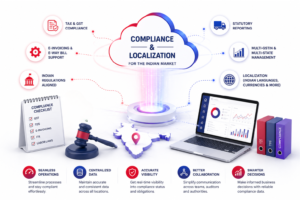
Choosing the right Indian business software is key. It must follow local tax laws and financial rules. As rules change, companies need systems that quickly adapt without slowing down work.
Using old manual methods can lead to mistakes. These mistakes can cost a lot of money.
GST Readiness and Statutory Reporting
A GST compliant ERP is now a must for businesses in India. SAP Business One and NetSuite have special modules for GST. These modules help with tax calculations, keeping invoices and filings correct.
Keeping up with government changes is important. These platforms help with statutory reporting in many ways:
- Automated tax updates that show the latest government news.
- Easy making of GSTR-1, GSTR-3B, and other needed filings.
- Quick matching of input tax credits to improve cash flow.
- Detailed logs for easy audit checks.
Handling Multi-Currency and Multi-Entity Operations
Today’s businesses often have complex structures across different areas and currencies. A good Indian business software must meet both local and global needs. This lets leaders see how their whole business is doing.
The table below shows how these systems handle important tasks:
| Feature | SAP Business One | NetSuite |
|---|---|---|
| GST Filing | Integrated via local partners | Native SuiteTax engine |
| Multi-Currency | Real-time exchange rate updates | Automated revaluation |
| Statutory Reports | Customizable local templates | Global and local dashboards |
Choosing a GST compliant ERP keeps your business flexible and legal. Consistent reporting across all parts of your business is key for growth. By focusing on these, you avoid risks and grow in a healthy way.
Performance and User Experience Comparison
The success of any cloud ERP India depends on how your staff feels every day. If they struggle with the system, work slows down and mistakes rise. A great ERP user experience means your team can focus on growing the business, not fighting the software.
Interface Usability and Mobile Accessibility
NetSuite has a modern interface that feels like a web app. Its native cloud architecture makes it look and work the same on all devices. This is great for sales teams or managers who need to work on the go.
SAP Business One has a desktop-focused interface that many find efficient for entering data. It has a mobile app for tasks like inventory checks. But, it’s more about getting things done than exploring features. Customization is a strong point, helping businesses fit the system to their needs.
Reporting, Analytics, and Business Intelligence Tools
Good decision-making needs strong tools that turn data into clear insights. NetSuite shines with built-in dashboards that update fast. It lets users make custom reports easily, helping everyone track important metrics.
SAP Business One works well with SAP Crystal Reports and SAP HANA for fast analytics. This combo is exceptionally powerful for detailed reports on inventory and finances. While it’s harder to learn, it offers deep insights for specific industries.
| Feature | NetSuite | SAP Business One |
|---|---|---|
| Primary Interface | Web-Native | Desktop/Client-Server |
| Mobile Access | High (Browser-based) | Moderate (App-based) |
| Analytics Depth | User-Friendly BI | Advanced HANA Analytics |
Conclusion
Choosing between SAP Business One and NetSuite needs careful thought. You must consider your company’s needs, budget, and future plans. Both offer great tools for digital transformation, but they differ in cloud versus on-premise options.
Your business needs a solution that fits your vision for 2026 and more. A detailed needs analysis is key to making the right choice. It helps you meet your main business goals and avoid mistakes.
Choosing the right ERP is about matching software with your team’s skills. Look at how each platform fits your workflows and reporting needs. Make sure to talk to all stakeholders to ensure the system boosts efficiency in every area.
Finding the right ERP partner is vital for growth in India’s competitive market. Talk to certified consultants about your needs today. Understanding your goals is the first step to success.