
Understanding the cost of enterprise technology is key. As your business grows, knowing the business management software cost is essential. It helps keep your profits up.
This guide gives you a detailed look at the actual investment needed for ERP solutions. We’ll show you the financial parts that affect your budget. This way, you can plan your digital change well.
By looking at the sap business one price in india for 2026, you can make better choices. Our aim is to help you match your tech spending with your future goals. Let’s see how to get the most value while keeping costs clear and steady.
Key Takeaways
- Understand the core financial drivers behind ERP implementation.
- Learn how to forecast total ownership expenses for 2026.
- Identify hidden fees often overlooked during the procurement phase.
- Align your digital strategy with realistic budgetary constraints.
- Make informed decisions that support sustainable company growth.
Understanding the SAP Business One Price in India Landscape
The cost of sap business one price in india is influenced by many factors. Businesses need to consider more than just the price. Things like currency changes and local demand affect the total cost. Strategic planning is key for any company looking to manage its digital transformation budget well.
Factors Influencing Regional Pricing
Regional economic conditions are a big factor in pricing. In India, prices can vary due to differences in technical talent and infrastructure costs. Market demand for ERP solutions is growing, which can change the software market.
Currency exchange rates also play a big role for international software. Because licensing costs are often tied to global currencies, local businesses may see price changes. Staying informed about these trends helps companies plan for future software costs.
The Role of SAP Partners in India
Authorized vendors connect the software developer with the end-user. They offer more than just the license. They provide implementation, customization, and support services. SAP India partner fees are a big part of the project budget, showing the value of their expertise and work.
Choosing the right partner is important. It’s about their experience and the services they offer. Some focus on quick, low-cost deployments, while others help with business process changes. The table below shows what affects the final cost for local businesses.
| Cost Component | Primary Driver | Impact on Budget |
|---|---|---|
| Software Licensing | User Count/Type | High |
| SAP India partner fees | Service Complexity | Medium-High |
| Infrastructure Setup | Deployment Model | Medium |
| Training & Support | User Adoption Needs | Low-Medium |
Licensing Models and Their Impact on Initial Investment
Indian businesses can find the right SAP B1 licensing tier. This helps balance needs with budget. Picking the right license model is key to a cost-effective ERP setup. It lets you manage your business management software cost well.
Professional User Licenses Explained
The Professional User license gives full access to all system modules. It’s great for those who need to control financial and sales tasks.
These users manage important business processes. Key advantages include:
- Full access to all system functions and modules.
- Ability to create and manage custom reports.
- Complete authority over system configuration and user settings.
Limited User Licenses and Cost Optimization
Limited User licenses help cut costs. They give access only to needed functions. There are CRM, Financial, and Logistics types.
Assigning these licenses to staff who don’t need full access lowers costs. Optimization is achieved by giving staff only the tools they need.
Starter Package Options for Small Businesses
The Starter Package is for small businesses in India. It’s a cost-effective way to start with essential ERP features.
This package has a set number of users and features. It helps small businesses grow while keeping costs low.
| License Type | Access Level | Primary Use Case |
|---|---|---|
| Professional | Full Access | Management & IT Admins |
| Limited | Role-Based | Sales, Finance, Logistics |
| Starter | Essential | Small Business Growth |
Choosing the right SAP B1 licensing is important. It helps your business stay agile and keep costs down.
Infrastructure Costs for On-Premise Deployments
Setting up SAP Business One on-premise needs careful planning. You handle the tech stack when you host it locally. Good planning keeps your system stable, secure, and fast for a long time.
Hardware Requirements and Server Procurement
First, meet the SAP B1 hardware needs. You need top-notch servers for SAP HANA or SQL databases. Fast storage, like SSDs, cuts down on delays during busy times.
In India, buying hardware from Dell, HP, or Lenovo is common. Look for servers with extra power and fast networks. Scalability is key, as your setup must grow with your business.
Database Management System Licensing
Next, think about the Database Management System (DBMS) costs. Most use Microsoft SQL Server, which needs licenses for each processor core. Remember to budget for these licenses to avoid surprises.
Choose between Standard or Enterprise database editions. Small to mid-sized businesses might do well with Standard. But, bigger companies might need Enterprise for more features. Make sure your core count matches the software rules.
Security and Backup Infrastructure Investments
Keep your data safe with a strong security and backup plan. Set aside money for firewalls, UPS, and backup storage. These investments help protect against data loss and downtime.
Don’t forget to keep your backup system up to date. An off-site backup adds extra safety against office disasters. Here’s a table showing typical infrastructure for different business sizes:
| Business Scale | Server Tier | Storage Type | Backup Strategy |
|---|---|---|---|
| Small Business | Entry-Level Tower | RAID 1 SSD | External HDD/Cloud |
| Mid-Market | Rack-Mount Server | RAID 5 SSD | NAS + Off-site |
| Large Enterprise | High-Availability Cluster | All-Flash Array | Automated DR Site |
Cloud Hosting and Subscription Fee Structures
The move to cloud-based SAP solutions is changing how companies handle IT costs in 2026. Many are now focusing on being agile, moving from big upfront costs to more steady expenses. This shift lets businesses use their money for growth, not just keeping servers running.
Benefits of SAP HANA Cloud Hosting
Cloud-based environments offer quick access to top-notch computing without needing physical machines. SAP HANA cloud pricing often includes managed services, easing the load on your IT team. Speed and data accessibility are key, letting your team get to important business insights from anywhere in India.
Monthly Subscription vs. Perpetual Licensing
Choosing between a cloud ERP subscription and traditional SAP B1 licensing depends on your financial outlook. Perpetual licenses cost a lot upfront but let you own the software forever. On the other hand, subscriptions spread costs over time, helping with monthly budgets.
| Feature | Perpetual Licensing | Cloud Subscription |
|---|---|---|
| Initial Cost | High (CapEx) | Low (OpEx) |
| Maintenance | Internal Responsibility | Included in Fee |
| Flexibility | Fixed | Highly Scalable |
Scalability and Resource Allocation Costs
Modern SAP B1 licensing lets you scale resources as needed. You don’t have to buy too much hardware that’s not used. Instead, adjust your cloud ERP subscription to fit your current needs.
This flexibility keeps your SAP HANA cloud pricing in line with your business use. You only pay for what you use, avoiding waste from static systems. Strategic resource allocation helps keep your finances strong in a competitive market.
Implementation and Partner Service Fees
The cost of your digital change is more than just software. The people involved are a big part of the ERP implementation cost. Your chosen service provider’s skill is key to making the system fit your business.
Standard Implementation Methodology
Certified partners use a set SAP implementation methodology. This method includes steps like discovery and deployment. It helps keep the project on track.
This method lowers the risk of mistakes. Structured methodologies help your team see progress. It makes sure each step adds value to your work.
Consultant Hourly Rates in the Indian Market
Looking at SAP India partner fees shows rates change with the consultant’s skill and project complexity. In India, rates depend on the consultant’s level and project needs.
Here’s a look at typical rates in India:
| Consultant Level | Experience (Years) | Estimated Hourly Rate (INR) |
|---|---|---|
| Junior Consultant | 1-3 | 1,500 – 2,500 |
| Senior Consultant | 4-8 | 3,000 – 5,500 |
| Solution Architect | 9+ | 6,000 – 10,000+ |
These rates affect your budget. Investing in senior expertise can speed up your project. It also helps avoid future problems, saving money.
Project Management and Governance Fees
Project management and governance fees are important but often overlooked. They cover the work needed to keep your project on schedule. This includes managing timelines and team work.
Good governance keeps your project on track. Strong project management protects your investment. It makes sure everyone is working together smoothly.
Data Migration and Customization Expenses
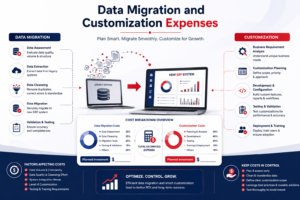
Getting your business to use SAP B1 well is key in India. The cost of the software is just the start. Moving your business to a new system needs a special budget. Good planning helps avoid delays and keeps costs down.
Legacy System Data Cleansing
First, check your old data carefully. Data cleansing means fixing any bad data. This is important because bad data can mess up your new system.
Spending time on this step saves money later. You should clean up your data by:
- Standardizing customer and vendor data.
- Archiving old records.
- Checking inventory levels.
Developing Custom Add-ons and Reports
Every business in India is different. SAP B1 customization lets you make the software fit your needs. This could be for GST or manufacturing workflows.
Customizing your system means making it better for your team. It helps you stay ahead by automating tasks.
Integration with Third-Party Applications
Today’s businesses use many tools. Making all these tools work together is key. This makes your data flow smoothly, saving time and reducing mistakes.
| Cost Driver | Complexity Level | Impact on Budget |
|---|---|---|
| Data Cleansing | High | Moderate |
| Custom Add-ons | Medium | High |
| API Integration | High | High |
By focusing on SAP B1 customization and clean data, you set up your business for success. These investments are not just costs. They are key to a strong digital setup.
Annual Maintenance and Support Contracts
Many companies forget about annual maintenance fees when figuring out ERP software costs. It’s essential to plan for these costs for good financial planning and stable operations. By knowing about SAP B1 maintenance charges ahead of time, you can avoid surprises in your budget.
Understanding Annual Maintenance Charges
In India, these fees are usually a percentage of the software’s initial cost. Vendors often charge between 18% and 22% each year. This fee lets you keep using the software and get important updates.
Staying up to date with SAP B1 maintenance charges is like insuring your business data. Without it, you can’t get official support or the latest software versions.
Service Level Agreements and Support Tiers
Service Level Agreements (SLAs) show how good and fast the help you get will be. They sort support by how urgent your problems are. Picking the right tier is about finding the best balance between operational efficiency and cost.
| Support Tier | Response Time | Availability |
|---|---|---|
| Standard | 24-48 Hours | Business Hours |
| Premium | 4-8 Hours | Extended/24×7 |
| Dedicated | Under 2 Hours | 24×7 Priority |
Upgrades and Patch Management Costs
Keeping your software up to date is key for security and following local laws. In India, this is very important for GST reporting and tax changes. Updates keep your system safe and running well.
Basic patches are usually covered by your maintenance contract. But, big updates might cost extra. Working with a skilled consultant helps make these changes smooth. This way, you avoid problems and keep your system current.
Training and Change Management Budgeting
Investing in your workforce is as important as choosing the right ERP platform. The SAP B1 training costs show how well your team uses the tools. A good education budget makes your staff confident and ready to go.
End-User Training Programs
Training should fit each department’s needs for better adoption. Instead of one plan for all, segment your team by their tasks. Customized workshops help them see how the software makes their work easier, reducing resistance to change.
Technical Training for Internal IT Staff
Your IT team needs special knowledge to keep the system running smoothly. Spending on advanced technical certification is wise to cut down on future support costs. When your team knows the system well, they can fix small problems themselves, saving on SAP B1 training costs.
Change Management and Adoption Strategies
Digital transformation is about culture and technology. A strong change management plan helps employees see new processes as opportunities, not barriers. This way, your organization stays flexible and ready for growth.
| Training Category | Primary Focus | Estimated Impact |
|---|---|---|
| End-User Workshops | Daily operational tasks | High user adoption |
| Technical Certification | System maintenance | Reduced support fees |
| Change Management | Cultural alignment | Long-term ROI |
| Refresher Courses | Skill retention | Consistent performance |
It’s key to balance your budget between buying software and training your team. By focusing on these SAP B1 training costs, you safeguard your investment. This empowers your team to achieve real business results in India.
Hidden Costs to Anticipate During Deployment
The upfront cost of software is clear, but the total ERP implementation cost includes hidden costs. Many focus on the initial cost, then face extra expenses during deployment. Careful financial planning is key to keep your project on track.
Regulatory Compliance and GST Reporting
Working in India means following strict tax laws. Getting SAP GST compliance might need extra setup. You might need special tools or add-ons for tax filings.
This can lead to extra work for your implementation partner. Make sure your solution meets government rules. Proactive preparation avoids fines and delays.
Post-Go-Live Optimization Requirements
Business processes change after the system goes live. Users might find new needs not seen before. These changes are part of the software’s life cycle.
Having a “stabilization period” budget lets your team refine the system. Continuous improvement makes your investment worthwhile. Set aside money for these adjustments.
Unexpected Scope Creep and Change Requests
Scope creep is a common budget issue. Stakeholders might ask for extra features or reports. Managing these requests needs a clear process.
- Have a formal change request process to check new feature impact.
- Rank requests by how they help business goals.
- Keep track of all changes to show the ERP implementation cost.
Keeping project scope tight saves money. Good communication with your team and partner stops overspending. Stay alert for a successful deployment without hurting your budget.
Conclusion
Figuring out the total cost of owning SAP needs a full view of costs. This includes licensing, setup, and ongoing support. Businesses in India should think about more than just the upfront cost for their financial health.
Planning each budget area well lets your company use SAP Business One confidently. This way, you keep control over your finances and set up for growth.
This guide helps you understand 2026 pricing and budgeting. Knowing the total cost of SAP ownership helps you avoid surprises in your digital change. Connect with us for more details about SAP Business One pricing.
Your company can use this tool to improve operations and stay competitive. Contact certified SAP partners in India to begin your assessment. Move forward to a more efficient and growing business model.