
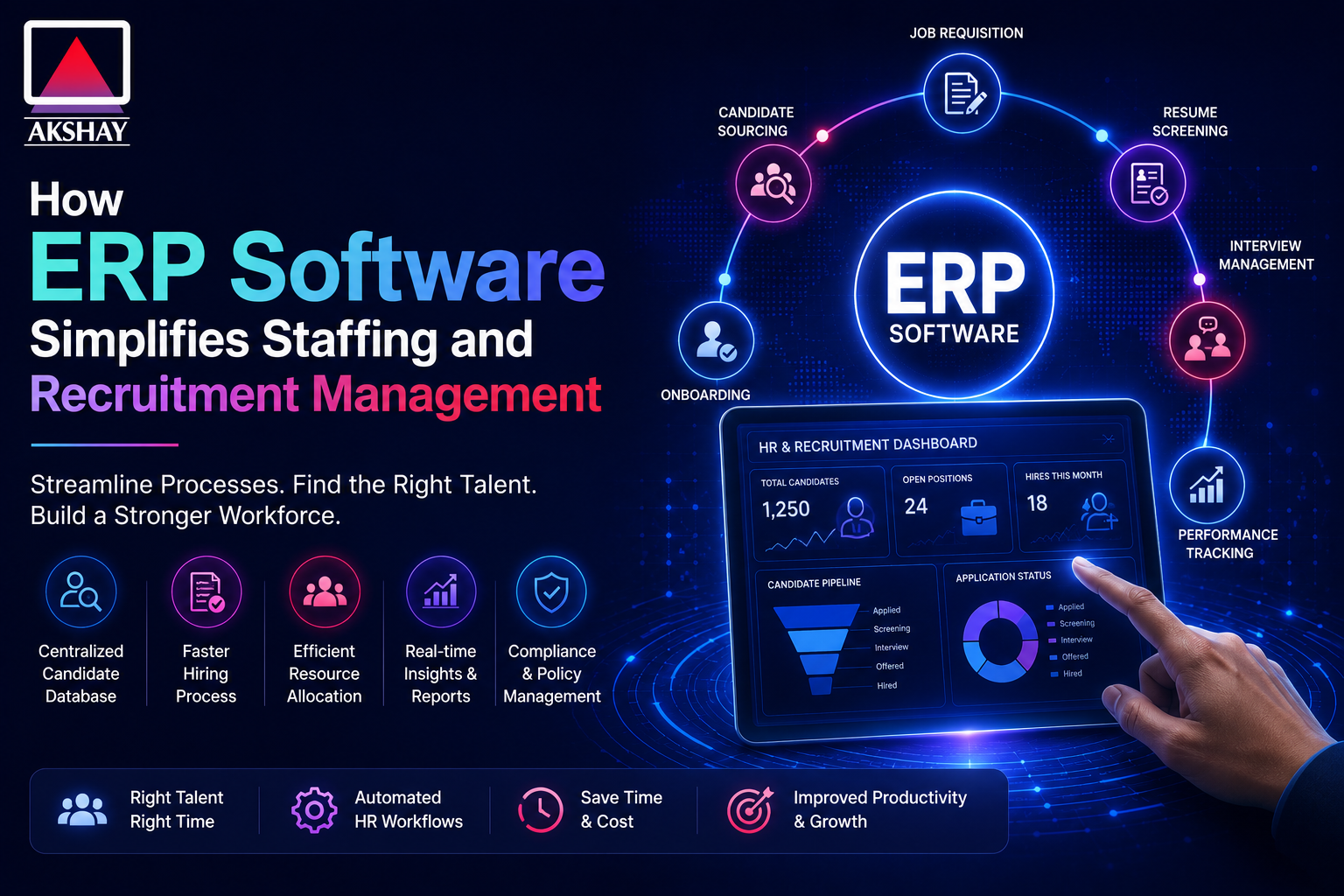
Modern HR teams in India are under a lot of pressure to find the best talent fast. As companies get bigger, old ways of tracking people don’t work anymore. Now, many turn to ERP software to make things easier and more efficient.
By using digital systems, companies change how they hire people. This makes hiring a data-driven operation. It lets teams do less repetitive work and focus more on talking to candidates. With strong ERP software, all employee data is in one place.
This change is key for companies wanting to improve their hiring and staffing. When systems talk to each other well, HR leaders can make better choices. Using these tools helps your company stay ahead in a quick-changing market.
Looking to streamline your staffing and recruitment process? Connect with our experts to discover how the right ERP solution can simplify hiring, improve workforce management, and help your business recruit smarter. Contact us today for more details on Staffing and Recruitment Management.
Key Takeaways
- Digital transformation is vital for modern HR departments in India.
- Centralized systems reduce manual errors in the hiring cycle.
- Data-driven insights lead to better candidate selection outcomes.
- Automation frees up time for strategic talent acquisition tasks.
- Unified platforms improve overall organizational efficiency and growth.
Understanding the Role of ERP in Modern Hiring
The way we find and hire talent has changed a lot in the last ten years. Companies are now using ERP software to manage their people better. This move to HR automation helps them deal with lots of applicants quickly and accurately.
The Evolution of Recruitment Technology in India
Before, Indian companies used paper files and simple spreadsheets to find new employees. This old way often caused problems like lost data and missed chances for great talent. As the competition grew, the need for better recruitment technology became clear.
Now, companies in India use cloud-based systems to make hiring easier. These systems offer a centralized source of truth for recruiters. This lets them make better choices based on data. It also helps them spend less time on paperwork and more time with candidates.
Core Components of ERP Systems for HR
A good system is key for finding and hiring the best people. It brings together different parts of hiring into one place. This keeps everyone involved up to date. Here are the main parts any growing business needs:
- Applicant Tracking Systems (ATS): These tools manage candidate profiles from start to finish.
- Centralized Database Management: This keeps all candidate info safe and easy to find for future jobs.
- Automated Workflow Triggers: These automate tasks like scheduling interviews and sending emails.
- Reporting and Analytics Dashboards: These give real-time insights into how well you’re hiring and what it costs.
By using these key parts, your team can make sure its technology supports growth. Investing in the right tools now helps your company stay flexible in a fast-changing job market.
Assessing Your Organization’s Recruitment Needs
Starting HR digital transformation means finding the problems in your hiring tasks. Before getting new software, do a comprehensive audit of your hiring process. This makes sure the new tools fit your business goals well.
Identifying Bottlenecks in Current Hiring Workflows
In India, many companies face delays in finding talent. These problems often come from manual tasks, broken communication, or not knowing where candidates are. Spotting these issues is key to making your hiring better.
Some common problems that slow growth include:
- Manual resume screening that takes up a lot of recruiter time.
- Not having everyone on the same page during interviews.
- Slow feedback that makes good candidates leave.
Defining Key Performance Indicators for Recruitment
After finding your problems, set clear goals to track your progress. Creating Key Performance Indicators (KPIs) helps you see if your HR changes are working. Using data to make decisions is key for growing your business.
Focus on these main metrics to check your recruitment health:
| Metric | Purpose | Target Outcome |
| Time-to-Hire | Measure process speed | Shorter hiring time |
| Cost-per-Hire | Track financial efficiency | Better budget use |
| Quality of Hire | Assess long-term fit | Higher retention |
By setting these goals, you make a clear path to success. This keeps your hiring process flexible and strong as your company grows.
Selecting the Right ERP Solution for Your Business
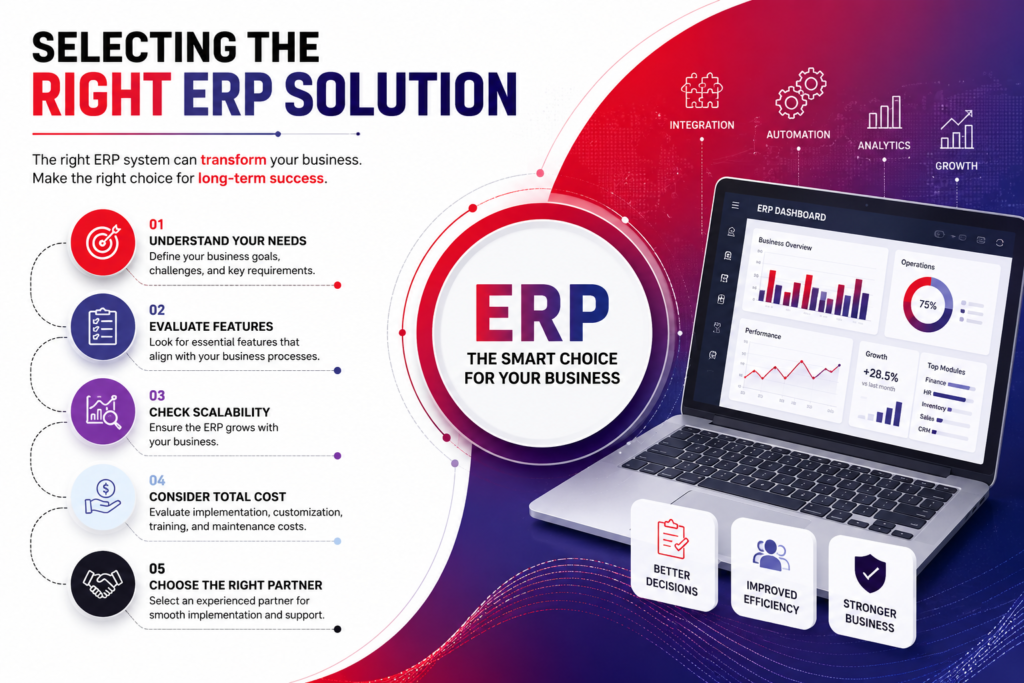
Your choice of technology platform is key to managing talent acquisition. Choosing the right ERP software means knowing your current needs and future goals. This ensures your team stays productive and grows well in the Indian market.
Evaluating Scalability and Cloud Capabilities
A good system grows with your company. Cloud-based solutions let you add users or modules easily. This flexibility helps your HR team adapt to market changes.
Look for platforms with seamless updates. A scalable system keeps your recruitment tools up-to-date as you hire more. Cloud-native providers save on maintenance and keep your staff online.
Integration Requirements with Existing Payroll and Accounting
Data silos slow down big companies. Your new platform must work well with payroll and accounting systems. This ensures accurate financial reporting and cuts down on errors.
Good talent acquisition needs data to flow smoothly across departments. Linking recruitment with accounting gives you a clear view of hiring costs. This is key for staying compliant and transparent financially.
Step One: Centralizing Candidate Data Management
Starting effective recruitment means putting all applicant details in one place. This makes your candidate data management better. It helps your HR team find and talk to talent easily.
Migrating Legacy Data to a Unified Database
Switching from old systems to a new ERP needs a plan. Make sure old data stays correct during the move. Data cleansing is key to remove bad data.
A unified database is key for hiring. It lets your team find files fast and talk to great talent. This makes your recruitment team’s job easier.
Ensuring Data Security and Compliance with Indian Labor Laws
Keeping applicant info safe is a must. Your ERP must follow Indian labor laws to protect data. Use strong encryption and access controls to keep data safe.
Keeping clear records of every candidate interaction is also important. This helps avoid mistakes and keeps your company legal. Proactive data governance also builds trust with candidates.
| Feature | Manual Spreadsheets | Centralized ERP |
| Data Accessibility | Limited to owners | Real-time team access |
| Security Level | High risk of leaks | Encrypted and secure |
| Compliance Tracking | Manual and prone to error | Automated audit logs |
| Searchability | Slow and inefficient | Instant filtering |
Step Two: Automating Job Posting and Sourcing
Starting the hiring process with HR automation is key. It makes job posting and sourcing easier. Your team can stop typing job descriptions on many sites. This lets them focus on connecting with candidates instead of doing paperwork.
Multi-Channel Distribution Strategies
Reaching more people is important in India’s job market. A good job posting plan gets your ads on LinkedIn, Naukri, and other big sites at once. This way, more people see your job ads and you get a wider range of applicants.
Being consistent is important when sharing your brand online. Automated systems keep your company’s image and job needs the same everywhere. This makes your company look professional to job seekers.
Leveraging AI for Candidate Matching
Modern AI recruitment tools make finding the right candidates easier. They compare candidates to job needs and pick the best ones. This saves time by cutting down on bad applicants early on.
AI tools also cut down on bias by focusing on skills and experience. This makes hiring fair and based on facts. Using these tools helps your company grow without losing quality in your hiring.
| Feature | Manual Sourcing | Automated Sourcing |
| Time per Posting | High (30+ minutes) | Low (Under 2 minutes) |
| Platform Reach | Limited to 1-2 sites | Unlimited multi-channel |
| Candidate Matching | Subjective/Manual | AI-driven precision |
| Data Accuracy | Prone to human error | High consistency |
Step Three: Streamlining the Interview and Selection Process
Recruitment teams in India are now using digital tools to improve their selection process. This change lets your HR team focus on the quality of talks with candidates, not just on organizing things. Smart tools help get rid of delays that slow down finding the best candidates.
Automated Scheduling and Calendar Syncing
The old way of interview scheduling was full of emails and phone calls. This made it hard for both recruiters and candidates. Now, ERP systems can check your team’s calendars in real-time.
Candidates pick a time that works for them online. Then, the system sends out invites and updates the interviewer’s calendar. This seamless integration stops double-booking and saves a lot of time every week.
Standardizing Evaluation Scorecards
Being fair in hiring means using the same criteria for everyone. Standardized scorecards help make sure this happens. They help hiring managers make data-driven decisions when choosing the best candidate.
These digital scorecards let interviewers rate skills right after talking. All feedback is in one place, making it easy to compare candidates. This structured methodology makes your hiring choices better.
| Feature | Manual Process | Automated ERP Process |
| Coordination Time | High (Hours per hire) | Low (Minutes per hire) |
| Scheduling Accuracy | Prone to human error | High (Real-time sync) |
| Evaluation Consistency | Subjective and varied | Standardized and objective |
| Interview Scheduling | Manual email threads | Automated self-service |
Step Four: Managing Onboarding and Documentation
Managing the onboarding process well is key to a good employer brand. New hires feel welcome and work better when they get support right away. Streamlining these final steps helps your company stay ahead in India’s talent market.
Digital Offer Letter Generation and E-Signatures
Creating contracts by hand can slow things down. This might make top talent lose interest. Digital offer letters let HR teams make documents fast, based on approved templates. This cuts down on mistakes and makes sure everything fits company rules.
Adding e-signatures makes signing contracts even quicker. Candidates can sign from any device, making things smooth. This digital way saves time and keeps everything safe and compliant.
Automating Background Verification Workflows
Checking new employees manually takes a lot of time and effort from HR. Automating background verification lets your ERP system start checks right after a candidate says yes. This keeps data safe and accurate.
Automated systems check info against national databases and third-party providers instantly. This frees up HR to do more important work. In today’s fast business world, being efficient is essential.
| Feature | Manual Process | Automated ERP System |
| Offer Turnaround | 2-5 Business Days | Under 1 Hour |
| Data Accuracy | Prone to Human Error | High Precision |
| Compliance Tracking | Spreadsheet Based | Real-time Audit Logs |
| HR Workload | High Administrative Burden | Minimal Intervention |
Step Five: Optimizing Staffing and Recruitment Management Through Analytics
Today’s businesses use recruitment analytics to improve hiring. They move from guessing to using data. This makes hiring better and faster.
This step keeps your hiring process quick and ready for changes in the job market.
Tracking Time-to-Hire and Cost-per-Hire Metrics
HR teams watch key numbers to stay ahead. The time-to-hire shows how fast you hire. Shortening this time makes candidates happier and keeps them from leaving.
The cost-per-hire shows how much hiring costs. This includes ads, agency fees, and other costs. Knowing this helps plan your budget better.
| Metric | Purpose | Business Impact |
| Time-to-Hire | Measure speed | Higher candidate quality |
| Cost-per-Hire | Track spending | Improved budget efficiency |
| Offer Acceptance | Gauge appeal | Better employer branding |
Generating Real-Time Reports for Stakeholders
Good data is easy to see and understand. Modern systems let HR make real-time reports. These reports show what’s happening in hiring.
With recruitment analytics, you can spot problems and celebrate wins. Clear reports build trust. They make sure hiring fits with the company’s big goals. Using data well helps your company grow.
Overcoming Common Implementation Challenges
Successful ERP implementation is more than just setting up tech. It’s about changing how your team works. Many in India face pushback when moving from old systems to new ones. Clear communication about the new system’s benefits can help your team adjust.
Managing Change and Employee Training
People often resist new tools because they don’t know them. To fight this, focus on employee training that fits everyone’s level. Hands-on workshops make sure your team can use the system right away.
Here are ways to boost adoption:
- Choose internal “super users” for support.
- Make short, local video tutorials for common tasks.
- Hold regular feedback sessions to tackle concerns fast.
Troubleshooting Integration Issues
Even with good planning, technical problems can pop up. These often happen when trying to link new software with old systems. Proactive monitoring helps find these problems before they slow down hiring.
If you run into sync errors, check your data mapping. Sometimes, a small tweak fixes the issue. Teaching your team basic troubleshooting helps them solve small problems. This makes the ERP implementation smoother for everyone.
Conclusion
Modern businesses in India face tough competition. Talent acquisition is key to their growth. ERP software changes how companies manage their workforce.
This digital change makes HR teams work together better. It cuts down on mistakes and makes decisions faster. Companies that use these tools can attract the best talent.
Success comes from a step-by-step plan. Leaders should set clear goals and train staff well. This helps them adjust to new ways of working.
Technology is the heart of good recruitment management. It keeps data in one place and automates tasks. This lets your team focus on connecting with candidates. Start your digital journey today to keep up with the market.
What challenges do you face with new HR tech? Share your stories or talk to our experts. We can help improve your hiring process for better results.