
In today’s competitive Indian market, having a strong online presence is key. It’s not just a luxury, but a fundamental requirement for growth. Companies that ignore their online presence struggle to find high-value corporate clients.
Effective website search optimisation is at the heart of modern marketing. It changes how your brand shows up online, boosting your B2B lead generation. This turns passive visitors into active business leads, keeping your company in the minds of decision-makers.
To achieve steady B2B search visibility, you need to understand complex algorithms. Mastering these digital rules opens the door to lasting growth and authority. This guide will help you tackle these challenges and achieve measurable business results in a crowded market.
Key Takeaways
- Digital presence is a critical asset for modern B2B growth.
- Strategic alignment improves your ability to attract high-value corporate partners.
- Visibility directly impacts the quality and volume of your sales pipeline.
- Mastering algorithms is essential for maintaining a competitive edge.
- Sustainable success relies on data-driven adjustments to your digital strategy.
Understanding the B2B Search Landscape in India
Online shopping has changed how Indian companies find products and services. They don’t just rely on trade shows or cold calls anymore. Now, they use search engines to research before talking to sales reps.
This change is key for B2B digital marketing India. Companies need a strong online presence to be seen by their best customers. Being online is now a must to stay ahead in a digital world.
The Shift Toward Digital-First B2B Buying
The B2B buyer journey has grown more complex. Buyers spend a lot of time researching online. They look at search engines, forums, and social media to find what they need.
This shift to digital buying is driven by several things:
- Mobile-first research: Most Indian professionals use phones to start their searches during their daily commute.
- Content-driven evaluation: Buyers look at white papers, technical specs, and case studies to check if vendors know their stuff.
- Peer validation: Online reviews and forums help build trust before buyers reach out to vendors.
Unique Challenges for Indian B2B Enterprises
The digital shift brings big opportunities but also big challenges for Indian businesses. Cultural nuances and language differences mean a single strategy won’t work for everyone. Good B2B digital marketing India must understand these differences to connect with local customers.
Also, the B2B buyer journey is shaped by a preference for local communication. While English is used for formal documents, content that respects local business practices can really help. Companies need to meet global standards while also meeting local needs to build strong partnerships.
To succeed, businesses must focus on transparency and accessibility. By making digital content relevant to the Indian market, companies can use search engines to find new customers.
Conducting B2B keyword research for B2B
Your path to higher visibility starts with the right B2B search intent. In India, knowing the specific terms used by professionals is key. This knowledge helps match your content with what your prospects need.
Identifying High-Intent Transactional Keywords
Not all searches are the same. High-intent transactional keywords show a prospect is ready to buy. Look for terms like “pricing,” “demo,” “vendor,” or “implementation services.”
Using these specific phrases helps attract leads closer to making a decision. Prioritizing these keywords means your site gets the right visitors. This targeted approach boosts your return on investment.
Analyzing Competitor Search Strategies
Good B2B keyword research looks at what leaders do. Analyzing competitors helps find new opportunities. Look for areas where they don’t answer common questions well.
Tools like SEMrush or Ahrefs show which terms bring traffic to competitors. Identifying these blind spots lets you create better content. This keeps you ahead in the fast-changing Indian B2B market.
Mapping Keywords to the B2B Sales Funnel
To grow, map your keywords to the B2B sales funnel. Each stage needs different content to guide prospects. A good plan ensures no lead is lost.
- Awareness: Use broad, educational terms to attract users seeking solutions to industry problems.
- Consideration: Target comparison-based keywords that highlight your unique value proposition.
- Decision: Focus on high-intent transactional keywords that encourage immediate action or consultation.
Aligning your content with the B2B sales funnel makes the visitor journey smooth. This builds trust and authority, leading to more conversions for your business.
Mastering Website Search Optimisation Techniques
To boost your B2B search visibility, focus on the basics of your website. Search engines look for certain signs to understand your content’s value. By improving these technical aspects, you stay ahead in the online world.
Optimizing On-Page Elements for Search Visibility
Start with website search optimisation by placing keywords in your header tags. H1, H2, and H3 tags help search engines see your content’s structure. Make sure your main keywords fit naturally in these tags to show what each page is about.
Internal linking is also key. It helps users and search engines navigate your site better. This boosts your site’s authority and keeps visitors interested for longer.
Structuring Meta Data for Higher Click-Through Rates
Your meta title and description are your first chance to grab attention. A good title is short and includes your main keywords. Compelling meta descriptions should make users want to click on your site.
Write unique descriptions for each page to avoid duplicate content problems. Use active language to show the value your B2B services bring to Indian businesses. This can help you stand out in search results.
Implementing Schema Markup for Rich Snippets
Schema markup gives search engines detailed information about your business. It lets them show rich snippets, like star ratings or prices. These details can attract buyers before they visit your site.
Adding structured data helps search engines understand your content better. This is a must for businesses aiming to top search results. Below is a table showing how different on-page factors affect your performance.
| Optimization Factor | Primary Benefit | Implementation Priority |
| Header Tags | Content Hierarchy | High |
| Meta Descriptions | Click-Through Rate | High |
| Schema Markup | Rich Snippet Visibility | Medium |
| Internal Linking | Crawl Efficiency | Medium |
Optimizing Technical Infrastructure for Search Engines
Technical SEO for B2B is key to making your website visible in search results. A strong digital setup helps search engines find and understand your content. Without it, even great reports might not reach your clients.
Improving Site Speed and Core Web Vitals
Page speed is very important for search engine ranking factors. People want quick access to info, and slow sites get punished. By improving your Core Web Vitals, your site stays fast and reliable.
Reducing image sizes and using browser caching are key to better performance. These tweaks keep users engaged. A quick site means lower bounce rates and more sales.
Ensuring Mobile-first Indexing Compatibility
Most professional research happens on phones, making B2B mobile SEO essential. Search engines now index mobile content first. Your site must work well on small screens to stay competitive in India.
Responsive design is a must for B2B sites. Your site should work well on all devices without losing quality. Prioritizing mobile usability keeps your brand visible to busy decision-makers.
Managing Crawl Budget and Site Architecture
A good site structure helps search engines find your best content easily. A clear layout lets crawlers focus on key pages like product details. This way, your most valuable content gets noticed.
- Implement a clear XML sitemap to guide search engines through your site structure.
- Use internal linking strategies to distribute authority across your domain.
- Regularly audit your site for broken links or redundant pages that waste crawl resources.
- Ensure your robots.txt file is configured to allow access to essential business pages.
Creating High-Value Content for B2B Decision Makers
A strong B2B content strategy connects complex tech solutions with big clients. In India, buyers face tough choices that need lots of research. Good content makes your brand a trusted expert in your field.
Developing Thought Leadership Through White Papers
White papers show you know your industry inside out. They tackle big problems or tech challenges. This gives buyers the intellectual capital they need to choose you.
When you share well-made white papers, you stand out. You’re seen as a leader, not just another service.
Optimizing Case Studies for Search Intent
Buyers look for proof before making big decisions. By matching your case studies with B2B search intent, you meet their needs. Show off real results like cost cuts or better efficiency.
Utilizing Long-Form Content to Capture Industry Queries
Long articles cover more questions from your industry. This B2B content marketing strategy helps you rank for specific keywords. It makes you the go-to source, building trust with your audience.
The table below shows how different content types help B2B buyers:
| Content Format | Primary Goal | Target Audience Stage |
| White Papers | Thought Leadership | Awareness & Consideration |
| Case Studies | Social Proof | Decision & Validation |
| Long-Form Guides | Educational Authority | Research & Discovery |
| Technical Blogs | SEO Visibility | Problem Identification |
Building Authority Through Strategic Link Building
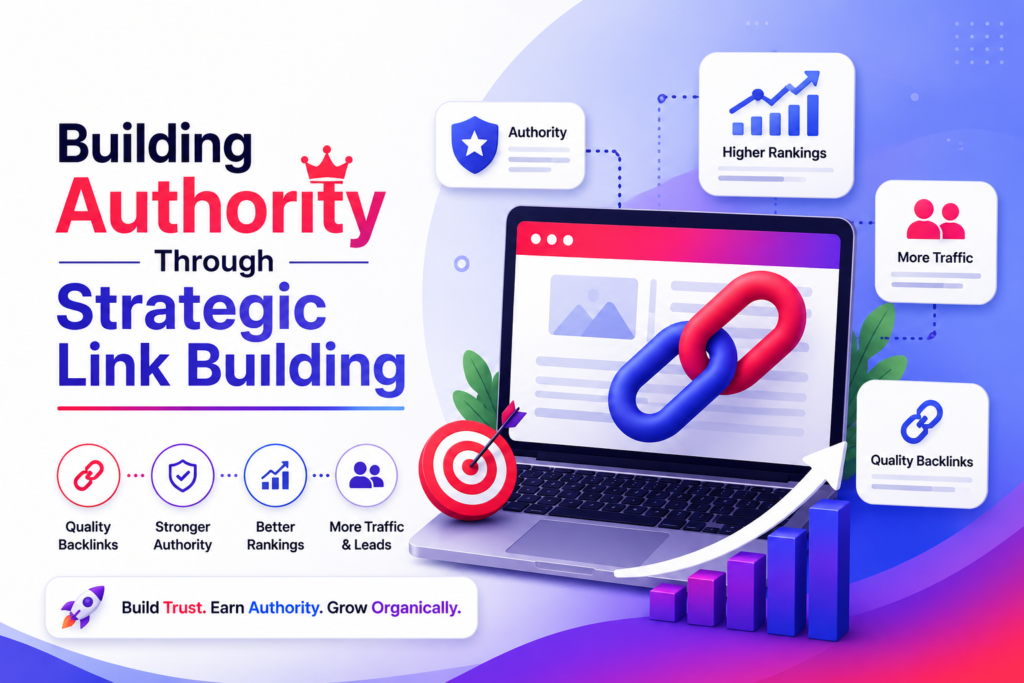
In the competitive Indian B2B market, your website’s authority is key. It’s based on the quality of your external links. Search engines see these links as votes of confidence, showing your content is valuable.
By focusing on B2B link building, you build trust. This trust helps your pages rank higher in search results.
Earning Backlinks from Industry-Specific Publications
Getting links from respected, industry-specific journals is vital. These platforms are seen as authoritative by search algorithms. A link from a respected publication boosts your credibility with users and search engines.
Target your outreach to platforms that match your industry, like manufacturing or SaaS. Quality is more important than quantity. A single link from a high-authority site is more valuable than many from low-quality sites.
Leveraging Partnerships for Domain Authority
Strategic partnerships can boost your B2B domain authority. By working with non-competing firms, you can create shared digital assets. This can include co-branded white papers or webinars.
These collaborations often lead to organic mentions and quality backlinks from partner sites.
Here are ways to build authority through partnerships:
- Co-authored industry reports with unique data insights.
- Guest expert contributions for partner newsletters or blogs.
- Joint webinars for cross-promotion and shared link placement.
Avoiding Black-Hat Link Building Practices
While growth is tempting, avoid shortcuts that break search engine rules. Black-hat methods, like buying links, can harm your site. They can lead to penalties and damage your online reputation.
Stick to ethical, white-hat strategies for real growth. Focus on building real relationships through valuable content and engagement. Protecting your site from penalties is as important as seeking higher rankings.
Leveraging Local SEO for Indian B2B Markets
Having a strong local presence is key for B2B digital marketing India success. Focusing on nearby areas can bring more customers. This way, your services show up when local buyers are looking.
Optimizing Google Business Profile for B2B Services
Your Google Business Profile is like a digital store. Even without a physical store, list your service areas clearly. Consistency is vital for your address, phone number, and website URL.
Make sure your profile shows your B2B services clearly. Use good photos of your team to connect with clients. Using local SEO for B2B here helps search engines find you.
Targeting Regional Search Queries Across India
India has many industrial areas, like Bengaluru’s tech scene and Gujarat’s factories. Tailor your content for these areas. Use location-based keywords to attract local clients.
Here’s how targeting regions differs from national efforts:
| Strategy Element | National SEO Focus | Local SEO Focus |
| Keyword Scope | Broad Industry Terms | City/Region-Specific Terms |
| Primary Goal | Brand Awareness | Lead Generation |
| Target Audience | General Decision Makers | Local Procurement Managers |
| Competitive Edge | Domain Authority | Proximity and Trust |
Managing Local Citations and Reviews
Building trust in the local business world is key. Local citations show search engines you’re trustworthy. Keep your info up to date on all platforms.
Getting good reviews is also important for local SEO for B2B success. Positive feedback from local clients helps your business grow. Always respond to reviews to show you care about your service.
Enhancing User Experience to Boost Conversion Rates
Understanding the B2B buyer journey is key. When visitors come to your site, they look for details or prices. A clear path helps them find what they need easily.
Streamlining Navigation for Complex B2B Journeys
Good navigation is like a map for your visitors. In India, B2B buyers want quick access. Simplify your menu to guide them from start to product inquiry.
Don’t confuse your visitors with too many choices. Use simple labels that match what they search for. This focus helps them reach their goal.
Designing High-Converting Landing Pages
A great landing page shows your value fast. For B2B, highlight how you solve a problem. Use short headlines and bullet points for busy execs.
Visuals should support your message, not get in the way. Add trust signals like logos and testimonials. These build trust and are key for B2B lead generation.
Reducing Friction in Lead Capture Forms
The lead capture form is a critical step. A long or confusing form can lose users. Reducing friction here is essential for quality leads.
Here are tips to improve your form:
- Only ask for the bare minimum for first contact.
- Use inline validation for instant error fixes.
- Put forms where they’re easy to see.
- Tell users what they get by filling out the form.
By improving these areas, you make the B2B buyer journey smoother. Testing and tweaking these elements will boost B2B lead generation and B2B conversion rate optimization over time.
Utilizing Analytics to Measure Search Performance
Good B2B marketing in India needs data-driven decisions. B2B SEO analytics helps move away from guessing. It focuses on results you can measure. Keeping an eye on important numbers makes sure your online presence meets market needs.
Tracking Organic Traffic and Keyword Rankings
First, watch your B2B organic traffic to see how visible your brand is. Track keyword performance to find out what topics interest your audience. Consistent growth in these areas means your content is working well.
Grouping keywords by intent shows which ones attract the right visitors. Seeing how rankings change helps you stay ahead in India. Being proactive lets you catch up with new trends before others do.
Monitoring Lead Attribution and Conversion Paths
Knowing which content brings in revenue is key for a good marketing budget. Map out the path from search to sale. This shows which content builds trust with buyers.
When you find content that works, use it more. Precision in attribution proves your marketing is worth it. It shows how search visibility leads to sales.
Using Google Search Console for Technical Audits
Google Search Console is vital for your website’s health. Regular checks find and fix problems that hurt search engine ranking factors. Fixing these issues lets search engines easily find and list your pages.
Here’s a table with key metrics for B2B teams to watch for success:
| Metric Category | Primary KPI | Business Impact |
| Visibility | Organic Impressions | Brand Awareness |
| Engagement | Average Session Duration | Content Relevance |
| Conversion | Form Submission Rate | Lead Generation |
| Technical | Core Web Vitals | User Experience |
Avoiding Common B2B SEO Pitfalls
Technical errors can quietly harm your B2B website’s performance. They can lower your organic rankings without you even noticing. A regular B2B website audit helps find and fix these problems. This keeps your site competitive in the Indian market.
Preventing Keyword Cannibalization
Keyword cannibalization happens when your site’s pages compete for the same search term. This can lead to lower rankings for all involved pages. It’s key to map your keywords well to avoid this.
To fix it, merge thin content into detailed guides or use canonical tags. This tells search engines which page to rank for certain terms. Good technical SEO for B2B practices help your site rank better.
Addressing Duplicate Content Issues
Duplicate content often comes from printer-friendly pages or similar product descriptions. Search engines get confused when they see the same content on different URLs. This can hurt your search visibility a lot.
Use 301 redirects or canonical tags to point search engines to the original content. Keeping your site structure clean is important for any B2B website audit. It stops search engines from indexing the same content twice.
Correcting Improper Redirects and Broken Links
Broken links and wrong redirects make your site hard to use and waste resources. When a search bot hits a 404 error, it stops exploring that path. This means it might miss important content on your site. Proactive monitoring keeps your site efficient and easy to access.
Checking your site for these issues regularly helps fix problems before they affect your rankings. Focusing on these technical SEO for B2B tasks keeps your site running smoothly. It makes sure both users and search engines can find what they need easily.
| Technical Issue | Primary Impact | Recommended Action |
| Keyword Cannibalization | Ranking dilution | Consolidate content |
| Duplicate Content | Indexing confusion | Use canonical tags |
| Broken Links | Wasted crawl budget | Update or redirect |
| Improper Redirects | User frustration | Fix redirect chains |
Conclusion
To be a top player in the Indian B2B market, you need to focus on lasting growth. Your hard work in being technically sound and creating valuable content will pay off. Search engines will notice and reward you for it.
Understanding what your decision-makers need helps build trust and authority. Companies like Tata Consultancy Services and Infosys show how important being seen online is. By focusing on user experience and doing things the right way, you can achieve the same success.
Keep an eye on how well you’re doing to make your strategy even better. Even small changes can make a big difference in how visible you are online. Being quick to adapt will help you stay ahead in a busy digital world.
Begin using these key strategies today to become a leader in your field. Your commitment to quality will bring in more leads and make your brand more known. Start your digital journey now to grab the attention of your audience.