
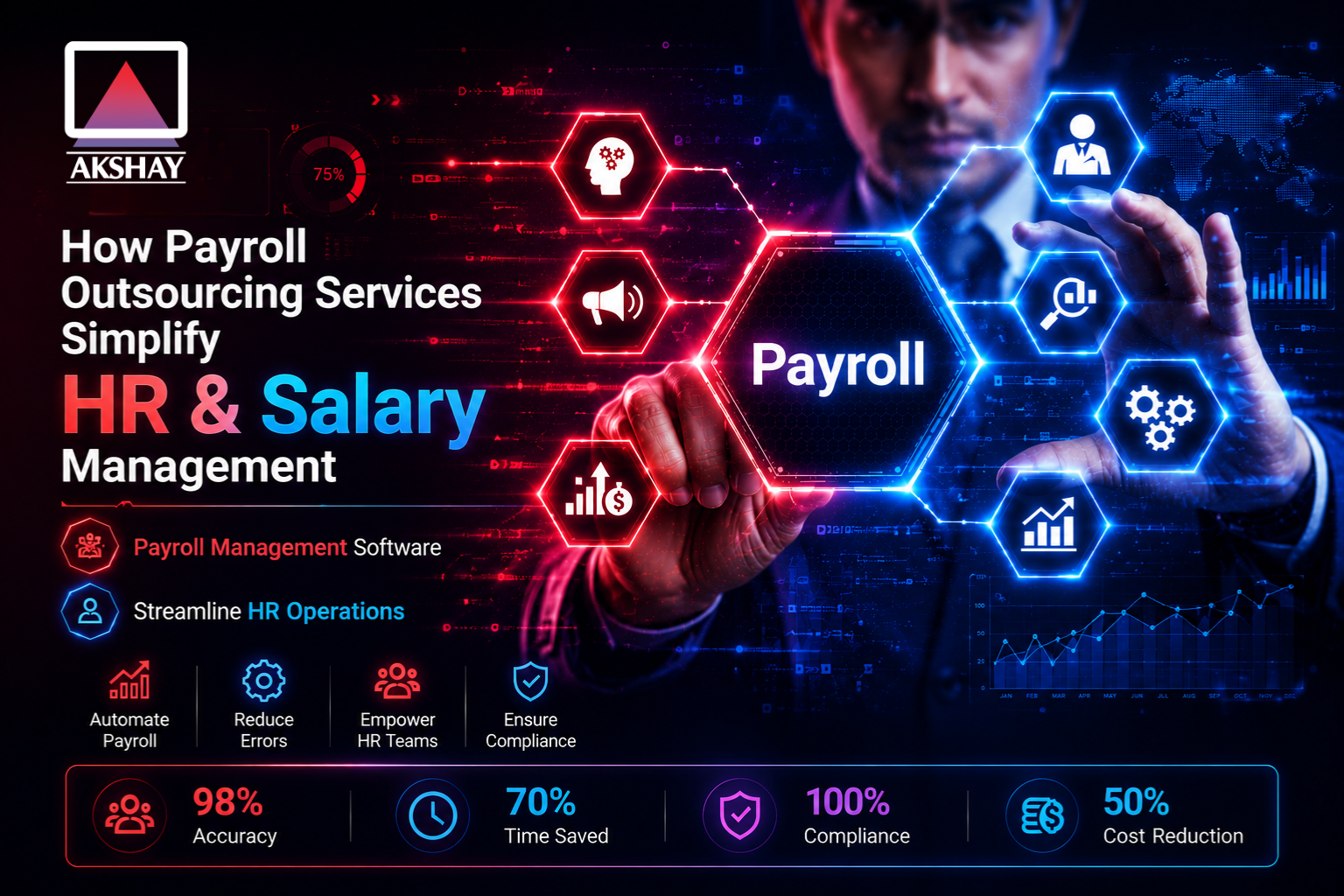
Modern businesses in India are under a lot of pressure. They need to grow fast but keep things running smoothly. Many struggle with old ways of doing things that waste time and resources.
By using Payroll Outsourcing Services, companies can leave these old ways behind. This lets leaders focus on growing the business instead of dealing with paperwork.
Good HR management becomes a key part of the business plan, not a daily problem. Automating work lets you control your company’s future better.
Getting help with salary processing means your pay is right and follows the law. Using Payroll Outsourcing Services means fewer mistakes and more trust with your team. It’s time to update how you work and focus on what’s important.
Key Takeaways
- Modern Indian firms are shifting toward automated solutions to boost efficiency.
- Outsourcing administrative tasks allows leaders to prioritize long-term business growth.
- Professional systems significantly reduce errors in monthly compensation cycles.
- Compliance with local labor regulations becomes easier through expert management.
- Automating internal workflows fosters greater trust and transparency with employees.
Understanding the Payroll Landscape in India
The Indian regulatory environment is full of challenges for growing companies. It’s important to know the local labor laws and tax rules well. Indian statutory compliance is key for a company’s stability.
The Complexity of Indian Statutory Requirements
Businesses face many statutory requirements that change often. These include the Employees’ Provident Fund (EPF) and the Employees’ State Insurance (ESI). Keeping up with these can be hard.
Not following these rules can lead to big fines and legal trouble. Many companies struggle to handle these tasks while keeping payroll records right. Proactive management is vital to avoid business problems.
Common Pain Points for Growing Businesses
As companies grow, old ways of doing things slow them down. The HR team gets overwhelmed by Indian statutory compliance. This can cause mistakes in pay and taxes.
Not knowing the latest statutory requirements can be risky. Leaders must choose to either build an expensive team or get outside help. Streamlining these processes helps companies grow and keeps employees happy.
The Core Benefits of Payroll Outsourcing Services
Switching to external payroll management boosts your company’s finances and HR. Payroll Outsourcing Services let you focus on growing your business. This is key for staying ahead in India’s competitive market.
Cost Efficiency and Resource Allocation
Keeping payroll in-house can be costly. It includes software, training, and upkeep. Outsourcing turns these costs into savings, helping your profits.
Here are some money-saving points of using an external service:
- No more software upgrade fees.
- Less need for staff in non-essential HR roles.
- Less chance of financial mistakes.
Reducing Administrative Burden on HR Teams
HR teams often spend too much time on payroll and tax. Payroll Outsourcing Services lets them focus on more important tasks. This makes HR a strategic partner, not just a processor.
With less paperwork, your team can create a better work environment. This leads to happier, less stressed employees. They can do their jobs better.
Access to Specialized Expertise and Technology
Keeping up with India’s tax laws is hard. Outsiders have the knowledge and advanced HR technology to handle it. This means your business can stay compliant without a huge HR team.
These providers also have a lot of experience. Their HR technology helps your company stay ahead. This reduces the risks of doing payroll yourself.
Step One: Assessing Your Current HR and Payroll Needs
Starting to use external payroll services means looking closely at your HR workflows. You need to know where your HR management does well and where it doesn’t. This check is key to a smooth partnership with a service provider.
Identifying Internal Bottlenecks
In India, many companies face delays from manual data entry and scattered records. These issues often lead to costly errors in paying salaries and filing laws. By tracing your current steps, you can find where your team spends too much time.
Look for common problems like slow attendance tracking or uneven leave reports. When these tasks are done by hand, they slow down your team. Spotting these problems early helps you focus on what needs help right away.
Defining Scope of Work for Outsourcing
After finding your weak spots, decide what tasks to outsource. A clear plan ensures your HR software integration goes smoothly. You might choose to outsource all payroll or just help with law compliance.
Writing down what you need helps providers fit their tech to your business size. This avoids extra work and makes sure your systems talk well with theirs. Strategic planning now saves a lot of time later.
| Process Area | Manual Handling | Outsourced Solution |
| Salary Calculation | High Error Risk | Automated Accuracy |
| Statutory Filing | Time-Consuming | Compliance Guaranteed |
| Data Integration | Disconnected Silos | Seamless Sync |
| Employee Queries | HR Burden | Dedicated Support |
Step Two: Evaluating payroll service providers
Your choice of a payroll service provider affects your work flow and legal standing. Payroll deals with important financial info and strict deadlines. So, picking the right partner is key.
A wrong choice can cause big problems. But the right one helps your HR team a lot.
Criteria for Selecting a Reliable Partner
Look for scalable solutions that grow with your company. A good partner uses cloud-based tech for easy access to payroll data. Make sure their system works well with your HR tools.
Here’s a table to help you compare providers:
| Feature | Basic Provider | Premium Partner |
| Technology | Manual spreadsheets | Automated cloud platform |
| Compliance | Reactive updates | Proactive legal monitoring |
| Support | Email only | Dedicated account manager |
Checking Credentials and Market Reputation
Do a deep background check on the provider’s industry standing. Look for ISO 27001 to show they care about data security. Client testimonials and case studies from similar companies in India are helpful.
Ask for references from current clients. Talking to other business owners can show how the provider handles tough situations. A good firm is open about their past and service quality.
Reviewing Service Level Agreements
The Service Level Agreement (SLA) is the legal backbone of your partnership. It should outline what the provider must do and how fast. Make sure it includes penalties for not meeting these standards to protect you.
Also, check the agreement’s exit clauses and data policies. You should keep your employee data, even if you switch providers. A well-structured SLA lets you outsource payroll with confidence.
Step Three: Ensuring Statutory Compliance with Indian Labor Laws
Understanding Indian statutory compliance is key for success. Businesses must handle many mandatory deductions to stay legal. Not doing so can cause big financial and legal problems.
Navigating PF, ESI, and Professional Tax
In India, employers must follow strict statutory requirements for Provident Fund (PF), Employee State Insurance (ESI), and Professional Tax. These rules change by state and territory. Accuracy is non-negotiable when figuring out these figures for your team.
Professional payroll services know these rules well. They make sure every deduction meets the state’s rules. This avoids mistakes common in manual payroll.
Staying Updated with Changing Government Regulations
Government policies on labor laws and taxes change often. Keeping your team up-to-date is a big task. Outsourcing helps your business stay ahead without needing constant training.
Experts watch government sites and updates daily. They update their software to match new tax rates or contribution limits. This keeps your company compliant without manual work.
Mitigating Risks of Non-Compliance Penalties
Good payroll risk mitigation protects against expensive audits and legal issues. Not following rules can lead to big fines, interest, and harm to your reputation. By handing these tasks to experts, you focus on growing your business.
These partners keep detailed records of all transactions. They have the proof needed to show you’re following the rules during audits. Securing your business lets you concentrate on growth.
Step Four: Integrating Payroll Systems with Existing HR Software
Making payroll and HR software work together changes how you handle employee data. By focusing on HR software integration, companies avoid the problems of manual data entry. This makes your payroll system part of your team.
Ensuring Seamless Data Synchronization
Keeping data consistent is key for managing a team in India. When payroll and HR systems sync up, errors go down. Real-time updates keep salary and tax info correct everywhere.
This keeps records in line during audits. Using HR technology means one place for all employee data. This saves time and lets HR focus on growth.
Automating Attendance and Leave Management
Payroll automation does more than just paychecks. It links attendance and leave tracking into one system. This means no extra work for you to fix payroll errors.
Automating these tasks makes work easier for everyone. It cuts down on mistakes and speeds up payroll. Here’s how moving to a digital system helps.
| Feature | Manual Process | Integrated System |
| Data Entry | High Error Risk | Automated Accuracy |
| Processing Speed | Slow and Tedious | Instant Synchronization |
| Compliance | Difficult to Track | Real-time Updates |
| HR Efficiency | Low Productivity | High Strategic Focus |
Step Five: Managing Data Security and Employee Privacy
Keeping employee privacy safe is key to a good payroll partnership. When you share financial info with someone else, they must keep it safe. Maintaining trust means being careful with information.
Implementing Robust Encryption Standards
Today’s payroll systems need strong security to keep data safe. Good providers use data security like AES-256 encryption. This makes data unreadable if it’s caught by bad guys.
It’s not just about encryption. The place where data is stored matters too. Reliable vendors use ISO 27001-certified data centers. This adds extra digital protection against threats.
Adhering to Data Protection Best Practices
Following strict rules is also important. Keeping up with Indian data protection laws helps avoid legal trouble. Here are some best practices:
- Role-Based Access Control (RBAC): Only let people with the right job access the system.
- Regular Security Audits: Check your payroll partner’s security often to find and fix issues.
- Data Minimization: Share only the info needed for payroll to lower risks.
- Employee Awareness: Teach your team how their info is handled and kept private.
By focusing on data security, you make a safe space for your team. This not only keeps your company safe but also builds trust and respect.
Step Six: Establishing Clear Communication Channels
Clear communication is key to a good partnership with your payroll service provider. When everyone knows their job, things run smoother. Keeping data safe means having a clear plan for sharing information.
Defining Roles and Responsibilities
It’s important to know who does what to avoid confusion. Your team should handle employee data, while the provider does the legal stuff. Clear boundaries mean no important tasks get missed.
Setting roles early builds trust. Knowing who does what lowers the chance of mistakes. This lets your team work on important HR tasks, not just data entry.
Setting Up Escalation Matrices for Payroll Queries
Even with great systems, questions will come up. A clear plan for answering these helps keep things moving. This way, employee info stays safe, meeting top data security standards.
The plan should show who to contact for different problems. Quick responses make your team feel supported. This keeps payroll smooth and stress-free.
| Communication Channel | Primary Purpose | Response Time | Security Level |
| Dedicated Portal | Query Submission | 24-48 Hours | High |
| Account Manager | Strategic Issues | Same Day | High |
| Automated Alerts | Status Updates | Instant | Medium |
| Monthly Review Call | Performance Audit | Scheduled | High |
Step Seven: Monitoring Performance and Accuracy Metrics
Keeping payroll management high requires constant watch and data checks. After setting up your system, watch its performance closely. This ensures operational excellence and accurate finances. By tracking certain metrics, you can spot problems early.
Tracking Turnaround Times for Salary Processing
Quick salary processing keeps employees happy in any Indian company. Set clear times for payroll and bank transfers. Payroll automation makes these times much shorter.
Watch how long it takes from input to payout. If it’s slow, check if it’s because of data or processing. If it’s always slow, your process might need a tweak.
Conducting Regular Audits and Quality Checks
A regular payroll audit is key to avoiding mistakes and following laws. It checks if tax deductions are correct. Regular checks keep your team’s trust high.
Quality checks should look at bonuses and claims. Payroll automation tools can spot issues quickly. Use the table below to track your progress.
| Metric Category | Target Goal | Frequency |
| Salary Processing Time | Under 48 Hours | Monthly |
| Payroll Audit Accuracy | 99.9% Error-Free | Quarterly |
| Compliance Reporting | Zero Penalties | Monthly |
| Employee Query Resolution | Within 24 Hours | Ongoing |
Common Challenges and How to Overcome Them
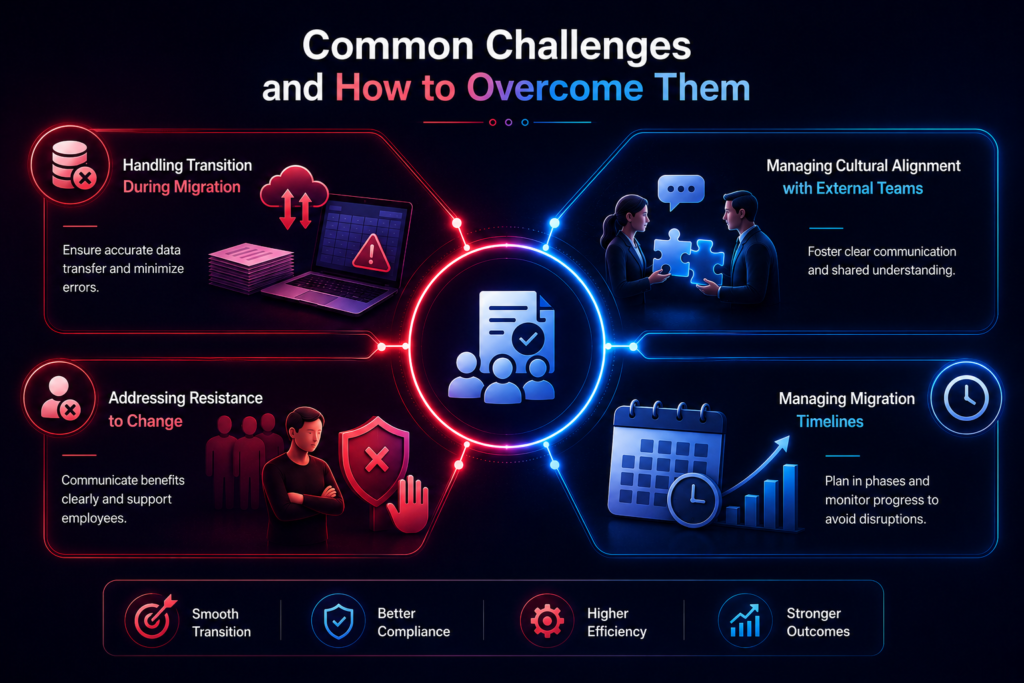
Switching to a new payroll system can be tough for growing Indian businesses. The goal is to make things more efficient, but it starts with careful planning. This helps teams avoid problems and keep work flowing smoothly.
Handling Transition Periods During Migration
A smooth payroll migration is key to a good outsourcing partnership. Keeping data accurate is very important during this time. A detailed payroll audit before moving data helps find and fix any mistakes.
Having a clear plan for moving data helps avoid mistakes. Your team and the service provider can work together to check the data. This teamwork makes sure no important employee information is lost.
Managing Cultural Alignment with External Teams
It’s important for your HR team and the external payroll team to work well together. They need to understand each other’s expectations and how to communicate. Regular meetings help build trust and make sure the external team knows your company’s culture.
Being open in communication stops misunderstandings about payroll or compliance. When both teams work together, they can solve problems quickly. This teamwork is key to keeping service quality high all year.
Addressing Resistance to Change Within the Organization
Changes in payroll can make employees nervous. Leaders should explain the benefits of the new system clearly. Showing how it reduces mistakes and makes things clearer can help staff accept the change.
Offering training and support during the change helps too. When employees feel heard and supported, they are more likely to accept the new system. A well-managed change leads to a better and more efficient work place.
| Challenge | Primary Impact | Mitigation Strategy |
| Data Inconsistency | Salary Errors | Conduct a thorough payroll audit |
| Communication Gaps | Delayed Resolutions | Define clear escalation matrices |
| Employee Resistance | Low Adoption | Transparent internal communication |
| Migration Delays | Operational Downtime | Phased implementation approach |
Conclusion
Streamlining your payroll processes is key to growth. Companies that use professional services get many benefits. They can focus on their main goals while experts handle the rules.
Planning well is needed for a smooth payroll change. Choosing the right partner helps avoid big fines. This keeps your business in line with Indian laws.
Keeping employee data safe is very important. Good systems use strong encryption and control who sees what. Now, you can look at your current ways and make them better. Start making your HR better today for a stronger future.
Contact Us today to explore customized payroll outsourcing services tailored to your company’s needs.