
Modern businesses in India are always looking to stay ahead. They turn to Agentic AI to update their daily tasks. This tech makes work smarter and more responsive.
Using this tech, companies can get true end-to-end automation. This lets teams work on important strategy, not just simple tasks. It’s key for any digital transformation journey.
Adding Mywave Agentic AI to your setup makes workflows simpler. It boosts productivity to new heights. Today, it’s not just a choice; it’s a must for growth.
Key Takeaways
- Agentic AI helps businesses go beyond simple tasks.
- End-to-end automation cuts down on mistakes and boosts efficiency.
- Digital transformation is vital for staying competitive in India.
- Advanced systems let employees make strategic decisions.
- Updating workflows leads to quicker, more reliable results.
Understanding the Shift from Traditional Automation to Agentic AI
Today, companies are moving from old automation to new, smart solutions. Old systems did simple tasks over and over. But now, technology wants to think and change with the business world.
Defining Agentic AI vs. Robotic Process Automation
Robotic Process Automation (RPA) has been key in making things digital. It does lots of tasks that follow rules. But, it gets stuck when things don’t follow the rules.
Agentic AI is smarter. It can understand what’s happening and decide what to do. It doesn’t just follow orders; it thinks about what’s best.
- RPA uses simple rules.
- Agentic AI uses learning to handle changes.
- RPA needs people to change it often.
- Agentic AI changes little on its own.
| Feature | Robotic Process Automation (RPA) | Agentic AI |
| Core Logic | Fixed Rules | Reasoning & Planning |
| Data Handling | Structured Only | Structured & Unstructured |
| Adaptability | Low | High |
The Core Capabilities of Autonomous Agents
Autonomous agents can work on their own within certain limits. They see their world, understand it, and do things without always needing people.
What makes them special includes:
- Planning: They break down big goals into smaller steps.
- Decision-making: They pick the best way to do things based on what they know.
- Self-correction: They fix mistakes and change plans to succeed.
With these skills, companies can handle tasks that were too hard before. This lets teams focus on important planning while the tech handles the day-to-day.
Identifying High-Impact Business Processes for Automation
To boost operational efficiency, find out which tasks waste your team’s time and energy. Not every task is right for AI. Focus on key areas for end-to-end automation to see real results.
Mapping Repetitive Tasks with High Cognitive Load
Many struggle because they automate simple tasks but ignore complex ones. Cognitive automation is for tasks that need repetition and human insight. These tasks cost a lot to do by hand because they need constant human effort.
Begin by checking your operations for bottlenecks. Look for tasks that take hours to do. When you find these, you can save a lot of time. Targeting these tasks lets your team work on creative ideas instead of routine tasks.
Prioritizing Processes Based on ROI and Complexity
After mapping tasks, you need a plan for business process optimization. Not all tasks are worth the same investment. Look at each task’s cost savings and how hard it is to automate.
Use this matrix to sort your tasks and pick where to start with AI:
| Process Type | Complexity Level | Expected ROI |
| Data Entry & Filing | Low | High |
| Customer Support Triage | Medium | High |
| Strategic Market Analysis | High | Medium |
| Supply Chain Forecasting | High | High |
Focus on tasks with high ROI and manageable complexity first. This strategic approach leads to quick wins. It keeps your technology roadmap effective for your future goals.
Assessing Your Current Data Infrastructure and Readiness
To get ready for the future, you need to check your digital stuff. The success of smart systems depends on your tech infrastructure. A weak base can make even the best systems fail.
Evaluating Data Quality and Accessibility
Before adding autonomous agents, make sure your data is good and easy to get. Clean data helps make smart choices. If your data is spread out, your systems will have a hard time.
Begin by checking your databases for bad data or old records. Accessibility is key, as these tools need data fast. Getting rid of internal walls lets your digital team get insights from everywhere.
Establishing Secure Data Pipelines for AI Agents
After organizing your data, create safe paths to feed it to your models. Keeping data safe is very important in today’s India. Use strong encryption to protect data as it moves.
These paths must handle lots of data without slowing down. A smooth flow lets your agents act fast on market changes. This way, your tech stays strong and follows local rules.
Selecting the Right Agentic AI Frameworks and Tools
Choosing the right technology is key to using Agentic AI. The market has many frameworks for different automation needs. A good choice keeps your systems growing, safe, and efficient as your business changes.
Comparing Leading Platforms like LangChain and AutoGPT
Developers often pick well-known platforms for their workflows. LangChain is a top choice for its modular design. It connects large language models to data sources well.
AutoGPT is great for tasks that need quick changes. It uses prompts to solve problems on its own. Knowing these differences helps teams choose the right tech for their goals.
Evaluating Open-Source vs. Proprietary Solutions
Choosing between open-source and proprietary software is tough. Open-source offers unmatched customization. But, it needs a lot of internal knowledge for upkeep.
Proprietary solutions are more stable and supported. They have built-in security and support, key for big projects. Think about these points when deciding:
- Total Cost of Ownership: Consider all costs, including developer time.
- Security Protocols: Make sure it meets your data privacy needs.
- Community Support: Look at the platform’s documentation and forums.
- Scalability: Check if it can handle your tasks.
| Feature | Open-Source Frameworks | Proprietary Platforms |
| Customization | High | Limited |
| Support | Community-driven | Dedicated/Enterprise |
| Implementation Speed | Moderate | Fast |
The success of your Agentic AI project depends on your tools fitting with your setup. Weighing the pros and cons helps build a strong base for growth and innovation.
Designing Autonomous Workflows with Multi-Agent Systems
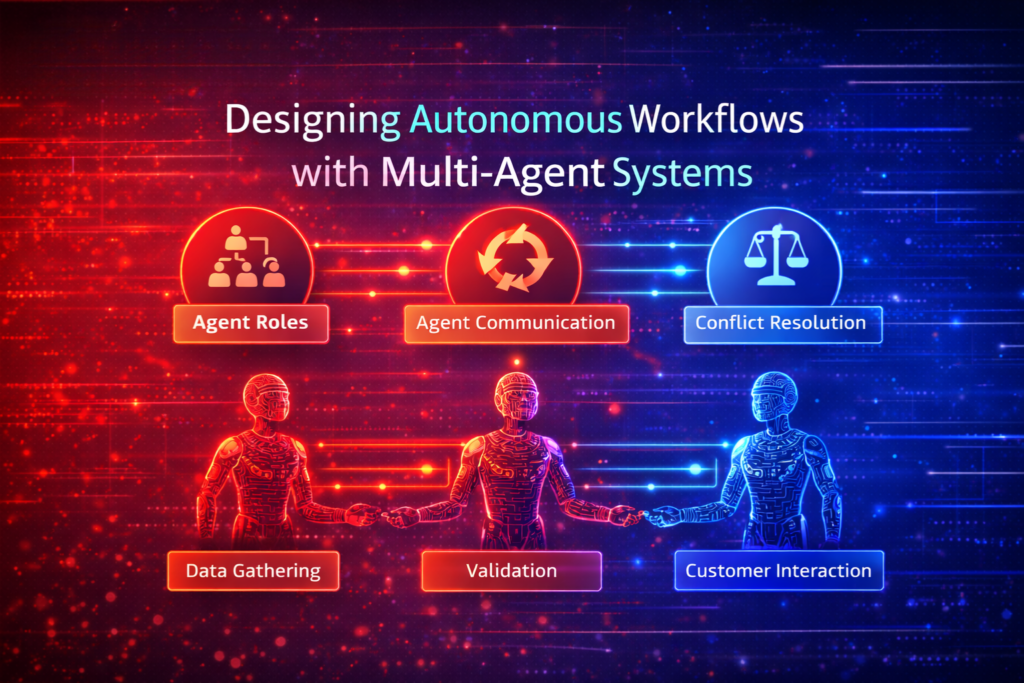
Autonomous agents are changing how Indian businesses handle complex tasks. They work together in teams, not alone. This means companies use multi-agent systems to spread out tasks among different units.
This way, they can handle more tasks and grow easily. It’s great for busy times.
Defining Roles and Responsibilities for Specialized Agents
Good AI workflow design starts with clear roles for each agent. This makes things less likely to go wrong and more accurate. For example, one agent might just get the data, while another checks it or talks to customers.
Having clear roles helps each agent do its job well. This keeps the system simple and easy to fix when problems happen. It’s the base of a strong digital team.
Orchestrating Agent Communication and Task Handoffs
After roles are set, focus on how agents talk during task handoffs. It’s important for info to flow smoothly. Efficient handoffs make things faster and better.
Establishing Communication Protocols Between Agents
To keep things running smoothly, you need set communication rules. These rules help agents talk clearly and share info without mistakes. Standardization stops problems during busy times.
- Define message formats for structured data exchange.
- Establish priority levels for urgent task requests.
- Implement logging mechanisms to track inter-agent interactions.
Managing Conflict Resolution in Multi-Agent Environments
Agents might sometimes get different data or instructions. A good system has a conflict resolution layer to fix these problems. It makes sure the workflow keeps going.
If agents can’t agree, the system picks the best data or asks a human. This keeps the workflow strong and running smoothly. It’s key for success in big businesses.
Integrating Agentic AI with Existing Enterprise Software
To get end-to-end automation, your AI needs to talk to your current software well. Without good data sharing, even top AI agents can’t do complex tasks.
Leveraging APIs for Seamless System Connectivity
Modern API connectivity is key for success. Using RESTful or GraphQL, your agents can get data and do actions in your apps safely.
This setup lets agents be smart on top of your solid systems. Standardized protocols help your AI work with cloud CRM or ERP without changing your setup too much.
Handling Legacy System Constraints and Middleware
Many Indian companies use old systems without modern interfaces. To fix this, they use middleware to translate between old databases and new AI.
Middleware makes data formats the same, so agents can understand old systems well. This strategic integration avoids expensive system changes while adding advanced automation.
Building Custom Connectors for Proprietary Software
When standard solutions don’t work, you need custom connectors. These special bridges let your agents talk to software without public APIs.
Creating these connectors needs to know your data well. By investing in custom development, your agents can see your unique business processes.
Ensuring Real-Time Data Synchronization
Good enterprise software integration means data is the same everywhere. Real-time syncing stops agents from using old or wrong info.
Using event-driven systems helps keep data flowing. This ensures agents’ actions are seen right away in your main systems. This is key for keeping things running smoothly during busy times.
Implementing Human-in-the-Loop Protocols for Quality Control
Even the most advanced machines need a human touch. A human-in-the-loop approach helps keep automated tasks on track. It mixes the speed of AI with the wisdom of experts.
Setting Thresholds for Human Intervention
Not every task needs a human check. That’s why setting clear rules for when to stop AI is key. If an AI finds something unclear or risky, it should ask a human for help.
- High-value transactions: Any big money moves need a human okay.
- Sensitive data handling: Humans must check any personal info.
- Low-confidence outputs: If the AI is unsure, it should stop.
Designing Intuitive Dashboards for Oversight
Managing AI systems needs clear views of their work. A good dashboard is like a control room. It shows how agents are doing and when they need help.
Your dashboard should show important data clearly. It helps managers see where mistakes happen and fix them. This makes sure your team is always in charge.
Scaling Agentic AI Across Departmental Silos
To achieve AI scalability, you need more than just tech. You must change how departments work together. Starting with small pilots is good, but scaling up is hard. You need to make growth a company-wide effort.
Standardizing Agent Deployment Across Teams
For consistency, create a single way to deploy agents. Without it, teams might use different tools. This leads to technical problems and mixed data. Standardization helps IT keep things secure while letting teams innovate.
Use a shared library of agent templates. Teams can then customize them for their needs. This way, all agents meet the same standards. It makes starting new projects faster.
- Establish a unified governance board to oversee agent behavior.
- Create a central repository for reusable agent modules and code.
- Implement consistent monitoring tools to track performance across all departments.
Fostering Cross-Functional Collaboration
Breaking down silos is key to making your automation work better. When teams work alone, they might repeat work or miss chances to share data. Cross-functional collaboration helps agents in finance talk to those in supply chain.
Hold regular meetings for teams to share their experiences with business process optimization. Aligning department goals with the company’s helps everyone adapt. This teamwork is vital for keeping AI scalability and ensuring agents keep adding value as your business grows.
Monitoring Performance and Managing Agentic AI Drift
Even the most advanced autonomous agents can lose their edge if not watched. As business worlds change, the data these systems use often changes too. This leads to AI model drift. Without good oversight, your automated systems might start giving wrong results or not work well.
Acting early keeps your Agentic AI on track with your business goals. By setting up clear watch systems, you can spot drops in performance early. This helps avoid bad effects on your profits or customer happiness.
Tracking Key Performance Indicators for AI Agents
To keep your digital team top-notch, you need to measure their success. By watching certain numbers, you can see when AI model drift starts to hurt your results. Here’s a list of key numbers to check.
| Metric | Description | Target Goal |
| Task Success Rate | Percentage of completed goals | Above 95% |
| Latency | Time taken for agent response | Under 2 seconds |
| Error Frequency | Number of manual interventions | Minimize over time |
Also, keep an eye on the cost-per-task to make sure your autonomous agents are worth it. Regular checks help you tell apart quick fixes from deeper problems.
Implementing Continuous Learning and Model Retraining
Static systems don’t last in a fast-changing market. To fight AI model drift, set up a learning loop that uses real-world data. This keeps your Agentic AI up-to-date with new info and user habits.
- Automated Feedback Loops: Use user corrections to improve future choices.
- Scheduled Retraining: Update models regularly with new data.
- Performance Thresholds: Set alerts when accuracy falls too low.
By focusing on these upkeep steps, you safeguard your investment in autonomous agents. Constant improvement is key to keeping your tech valuable for your business over time.
Addressing Security, Privacy, and Compliance Challenges
As businesses in India use smart automation, they need strong oversight. They must have AI governance to keep company data safe from threats. Without a plan, they face problems and legal risks.
Ensuring Data Sovereignty and Regulatory Compliance
Keeping data sovereignty is key for Indian companies under the Digital Personal Data Protection (DPDP) Act. They must make sure AI handles data right, following local and global rules. Data security compliance builds trust with customers and others.
Companies should use local data paths to keep sensitive info safe. By checking data flows, they make sure AI acts legally. This way, they avoid data leaks during fast tasks.
Mitigating Risks of Unauthorized Agent Actions
Even top systems need strict rules to stop bad actions. Setting up detailed permissions lets agents only do what they’re meant to. Rigorous audit trails show what AI systems do.
Good AI governance means always watching for odd AI behavior. If AI tries something wrong, it should stop right away. This mix of tech and human checks keeps control over digital stuff.
| Security Control | Primary Function | Risk Mitigation Level |
| Role-Based Access | Limits agent permissions | High |
| Audit Logging | Tracks all system actions | Medium |
| Data Encryption | Protects sensitive assets | High |
| Human-in-the-Loop | Validates critical decisions | Critical |
Putting data security compliance first is smart, not just necessary. Companies that focus on safety and openness can grow their automation safely. By keeping up with rules, they stay strong for the future.
The Future of Agentic AI in the Indian Business Landscape
India is growing fast in the digital world. Agentic AI is changing how businesses work. It helps solve old problems and brings new ideas and work.
Adapting Global AI Trends to Local Market Needs
Global tech needs to fit India’s unique market. It must work with many languages and different digital setups. Customizing AI models for local languages makes it work for everyone.
Businesses face special challenges like bad internet and not enough data. Using lightweight, robust agent frameworks helps them work well even when resources are limited. This is key for growing in a tough market.
| Feature | Traditional Automation | Agentic AI |
| Decision Making | Rule-based/Static | Autonomous/Adaptive |
| Data Handling | Structured only | Structured & Unstructured |
| Market Focus | Global standard | Localized/Context-aware |
Preparing the Workforce for an Agent-Driven Economy
Getting ready for AI means training workers. They need to know how to work with smart agents. This lets them do creative work while agents handle routine tasks.
Companies should offer training that teaches human-AI synergy. This keeps teams ready for change. Getting the workforce ready now is vital for success in the Agentic AI world.
Conclusion
The move to autonomous systems is a big deal for companies in India. Leaders who plan well and focus on people will grow a lot. They need to build strong data bases for lasting innovation.
Real digital change comes from using these smart tools every day. Set clear goals to make your work better and keep things under control. This way, tech helps your business, not hinders it.
Winning in this new world means using machines fast but with human eyes on them. Companies that get this right will stay ahead. Start by automating one key process to see how it boosts your work.
Starting your journey to an agent-driven economy is easy. Just take small steps towards smarter systems. This prepares your team for the future. Keep your eyes on the prize to lead your field through big changes.