
Managing employee pay in India is key to business growth. Small firms face big risks with old tools. These mistakes can cause legal problems and unhappy staff.
It’s now vital to find a better way to handle funds. Good SME payroll management keeps data safe and speeds up tasks. This lets owners focus on their main goals without worry.
Modern firms focus on digital safety for all money transfers. Reliable processing ensures everyone gets paid right on time. It builds trust across the team.
This approach makes growing a business simple. Professional oversight of these tasks is best for Indian leaders today. It keeps you in line with local labour and tax laws.
Reliable results are the backbone of any thriving enterprise in the region. Moving away from slow habits protects your future. Every rupee counts when aiming for the top.
Key Takeaways
- Accurate wage handling reduces legal risks and financial penalties.
- Digital tools save significant time for administrative departments.
- Secure data storage protects the privacy of every single worker.
- Professional systems help build long-term trust within the workforce.
- Scaling is much easier with automated employee compensation tasks.
Understanding Payroll Processing in Modern Business
In today’s fast world, knowing about payroll processing is key for success. It deals with paying employees, their benefits, and following the law.
What Is Payroll Processing?
Payroll processing includes many tasks like working out salaries, taking out taxes, and managing benefits. It needs careful work to get things right and follow the rules.
The Evolution from Manual to Automated Systems
Before, payroll was done by hand, which took a lot of time and could have mistakes. Payroll automation has changed this, making payroll work faster and with fewer mistakes.
Going to automated systems has many good points. It makes things more accurate, follows the rules better, and works faster. Automated systems can do hard tasks and follow rules well, cutting down on mistakes.
Why SMEs and Enterprises Need Professional Solutions
For small and big businesses, using payroll solutions is key to manage staff well. These solutions make payroll easier and keep up with law changes.
| Feature | Manual Payroll Processing | Automated Payroll Processing |
| Accuracy | Prone to human errors | Highly accurate with minimal errors |
| Time Efficiency | Time-consuming and labour-intensive | Significantly reduces processing time |
| Compliance | Difficult to keep up with regulatory changes | Automatically updates with regulatory changes |
By using automated payroll solutions, businesses can do their main work better. They can be sure their payroll is done right and follows the rules.
The Critical Importance of Security in Payroll Management
Keeping payroll management safe is key today. Data breaches are common. Payroll systems have sensitive employee info, making them a target for cyber threats.
Protecting Sensitive Employee Data
Employee data, like personal details and salary, must be kept safe. Robust security measures, like encryption and secure login, are vital.
Cybersecurity Threats to Payroll Systems
Payroll systems face many cyber threats. These include phishing, malware, and insider threats. Using multi-layered security helps fight these risks.
Compliance with Data Protection Regulations
Organisations must follow data protection laws. This avoids legal trouble and keeps employee trust. They must follow both global and local data security rules.
Global Data Security Standards
Global standards, like GDPR in Europe, are a data protection benchmark. Companies worldwide must meet these standards.
Indian Data Protection Requirements
India has its own data protection laws, like the Information Technology Act, 2000. Businesses in India must follow these rules.
| Regulation | Description | Geographical Applicability |
| GDPR | General Data Protection Regulation | Europe |
| IT Act, 2000 | Information Technology Act | India |
Following these laws protects employee data and boosts the company’s image.
Achieving Accuracy in Payroll Processing
In today’s fast world, getting payroll right is key for SMEs and big companies. It’s not just about paying employees right and on time. It’s also about following the law.
Common Payroll Errors and Their Financial Impact
Payroll mistakes can cost a lot for businesses. They might get salaries wrong, not know who’s an employee, or ignore tax rules.
These errors can cause big financial problems. They can lead to fines, legal trouble, and harm a company’s image. For example, wrong tax deductions can bring penalties.
How Automation Reduces Human Error
Automation is a big help in making payroll error-free. With payroll automation, companies can avoid mistakes from manual work.
Automated systems make sure payroll is done right every time. This saves time and makes payroll work better.
Real-Time Calculation and Verification Systems
Real-time systems make payroll accuracy even better. They spot and fix errors right away.
These systems help companies pay employees right and on time. By using them, businesses can avoid many payroll mistakes and their financial effects.
Key Benefits of Professional Payroll Processing Solutions
Companies get big benefits from using professional payroll solutions. They get better accuracy and save money. These solutions make payroll work smoother and cut down on mistakes.
Time and Cost Savings for Organisations
Professional payroll solutions automate tasks, saving a lot of time. This means cost savings for companies. They can use their resources better.
Automated systems help pay employees fast. This keeps them happy and trusting the company.
Enhanced Employee Satisfaction and Trust
When employees get paid right and on time, they feel trusted and happy. Professional solutions make sure payroll is done right. This lowers the chance of mistakes that upset employees.
Clear payroll processing makes employees happier too. They can see their pay and feel sure the company handles payroll well.
Improved Compliance and Risk Management
Professional solutions keep payroll in line with laws. They keep up with new rules, avoiding fines. This makes sure the company follows the rules.
Automating payroll reduces the chance of mistakes. These solutions give a strong way to handle payroll, meeting all legal needs.
Scalability for Growing Businesses
As companies grow, their payroll needs change. Professional solutions grow with them. They handle more employees or new areas without hassle.
This flexibility means companies can manage payroll well, even as they grow. It’s a strong base for payroll, supporting the company’s growth.
Payroll Compliance Requirements in India
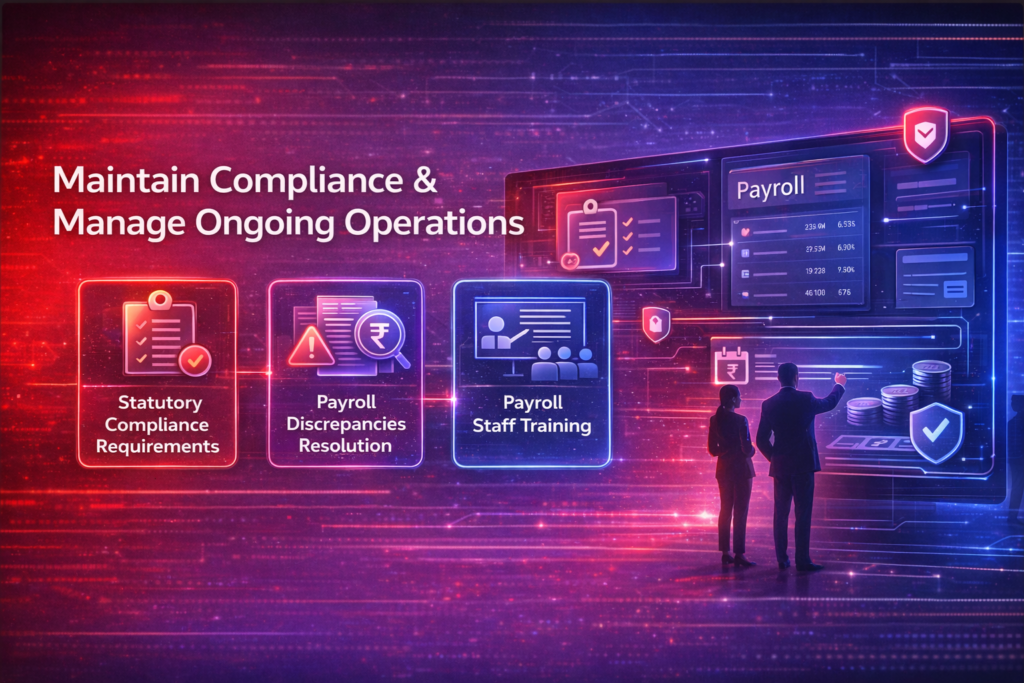
It’s key for companies to follow payroll rules in India. This keeps them legal and financially sound. The rules are complex and need a detailed approach to manage payrolls well.
Understanding Indian Labour Laws
Indian labour laws protect workers and ensure fair practices by employers. Two main laws are:
The Payment of Wages Act, 1936
This law makes sure workers get paid on time. It also checks if deductions are legal and authorised.
Employees’ Provident Fund and Miscellaneous Provisions Act, 1952
This law requires employers to offer retirement funds. It helps workers financially after they stop working.
Tax Deduction at Source (TDS) Compliance
TDS is important in payroll. Employers must take income tax from salaries and send it to the government. Doing this right and on time prevents fines.
Professional Tax and State-Specific Regulations
Professional tax is a tax on income that changes by state. Employers must follow each state’s rules for this tax.
Employee State Insurance and Other Statutory Requirements
The ESI Act gives medical and cash help to workers. Following ESI rules and other laws is vital for a lawful payroll process.
| Compliance Area | Description | Key Requirements |
| Payment of Wages Act, 1936 | Regulates wage payments | Timely payment, authorised deductions |
| EPF and Miscellaneous Provisions Act, 1952 | Provides retirement benefits | EPF contributions, employee and employer |
| TDS Compliance | Income tax deduction | Accurate calculation, timely deposit |
| Professional Tax | State-level tax on income | Varies by state, deduction, and payment |
| ESI Act | Medical and cash benefits | ESI contributions, compliance with regulations |
Essential Features of Modern Payroll Processing Systems
Modern payroll systems have changed how businesses handle pay and follow rules. They make payroll work smoother, cut down on mistakes, and boost efficiency.
Automated Salary Calculations and Disbursements
Modern payroll systems automate salary work. They handle accurate salary, bonuses, and deductions well. This means employees get paid right and on time.
Automated payments also cut down on mistakes and delays. This makes employees happier and more trusting of the payroll process.
Tax Management and Statutory Compliance Automation
These systems also manage taxes and follow rules well. They handle automated tax deductions and other important rules.
- Automated tax challans
- Following labour laws and rules
- Easier filing of reports
Leave and Attendance Integration
They also link leave and attendance to payroll. This makes sure employee leave records are right and used in pay.
Employee Self-Service Portals
Employee portals let workers see their pay info. They can view salary slips and check leave balances.
Comprehensive Reporting and Analytics Dashboards
Lastly, these systems offer detailed reports and analytics. They help businesses understand their payroll data better. This leads to better payroll management.
With these key features, modern payroll systems help businesses manage pay well. They make payroll work efficient, accurate, and follow rules.
Payroll Processing Challenges Faced by Indian Businesses
Indian businesses face big challenges in payroll processing. It affects how well they work and how happy their employees are. Payroll is more than just paying salaries. It also means following rules, dealing with different types of employees, and linking with HR and accounting systems.
Managing Multi-State Operations and Varying Regulations
Indian companies working in many states have to follow different rules. This includes different Professional Tax rates and Labour Law rules. Making sure payroll is the same everywhere while following these rules is hard.
Keeping Up with Frequent Regulatory Changes
The rules in India change often. Companies must keep up to avoid fines. They need to update their payroll systems and processes all the time.
Handling Diverse Employee Categories and Structures
Indian companies have many types of workers. This includes permanent, contract, and part-time staff. Handling payroll for these groups, each with its own rules, is tricky.
Integration with Existing HR and Accounting Systems
It’s important for payroll systems to work well with HR and accounting systems. But, making this happen can be hard, even with different systems.
To tackle these issues, Indian businesses might want to look into advanced payroll processing solutions. These solutions can automate, manage compliance, and integrate with other systems. Important things to think about include:
- Scalability to handle diverse employee structures
- Compliance with state-specific regulations
- Integration with HR and accounting systems
- Regular updates to reflect regulatory changes
Cloud-Based vs On-Premise Payroll Solutions
Indian organisations must choose between cloud-based and on-premise payroll solutions. This choice affects their efficiency, data safety, and growth.
Advantages of Cloud-Based Payroll Systems
Cloud-based payroll systems have many benefits. They offer enhanced accessibility, automatic updates, and reduced maintenance costs. Businesses can access payroll data anytime, anywhere.
Cloud-based solutions grow with your business. They handle more payroll needs without big investments in infrastructure.
When On-Premise Solutions Make Sense for Enterprises
On-premise payroll solutions are good for big businesses. They need greater control over data and customisation for complex needs.
But, on-premise solutions cost a lot upfront. They also need ongoing maintenance and updates.
Hybrid Approaches for Large Organisations
Big organisations might choose a hybrid approach. They mix cloud-based and on-premise solutions. This way, they get scalability and control over data.
| Feature | Cloud-Based | On-Premise |
| Scalability | High | Limited |
| Maintenance Cost | Low | High |
| Data Control | Limited | High |
Selecting the Right Payroll Processing Partner
Choosing the right payroll processing partner is key for businesses. It affects their work flow and follows the law. A good partner makes payroll smooth, cuts down mistakes, and makes employees happy.
Evaluating Security Certifications and Standards
When picking a payroll processing partner, check their security. Look for ISO 27001 compliance. This shows they protect your employee data well.
Assessing Scalability and Customisation Options
Businesses need to see if the payroll solutions can grow with them. A flexible system can change as your business does. It should also fit your specific needs.
Understanding Service Level Agreements and Guarantees
Know the Service Level Agreements (SLAs) and guarantees from your payroll processing partner. SLAs tell you what service quality to expect. They also say how fast they’ll respond and fix problems.
Checking Customer Support and Training Programmes
Good customer support and training are important. See how they offer help, like phone, email, or live chat. Also, check the quality of their training to make sure you can use the system easily.
Comparing Pricing Models and Total Cost of Ownership
It’s important to compare the costs of different payroll solutions. Look at the upfront cost and the total cost over time. This includes any extra fees for support, updates, or custom features.
| Key Factors | Description | Importance Level |
| Security Certifications | Compliance with international security standards | High |
| Scalability | Ability to adapt to growing business needs | High |
| SLAs and Guarantees | Clear expectations for service quality and response times | Medium |
| Customer Support | Availability and quality of support channels | High |
| Pricing Models | Transparency and competitiveness of pricing | Medium |
Secure and Accurate Payroll Processing: The Future for SMEs and Enterprises
Payroll processing is key for any business to succeed. It makes sure employees get paid right and on time. For SMEs and big companies in India, it’s vital for keeping staff happy and following the law.
Professional payroll solutions bring many benefits. They save time and money, make employees happier, and help follow rules better. By using automated systems, errors go down, payments are on time, and employee data stays safe.
India’s labour and tax laws keep changing. Businesses need to keep up. Modern payroll systems help SMEs and big companies stay legal and focus on their main work.
The future of payroll is all about using new tech. It makes processes smoother, safer, and more accurate. As tech advances, businesses must focus on payroll to stay ahead and succeed in the long run.