
In today’s competitive business landscape, companies are adopting flexible work models to stay ahead and access global talent. Remote team staffing has become a strategic solution for building high-performing, cost-effective, and scalable teams.
A strong staffing approach ensures the right talent is hired, onboarded efficiently, and aligned with business goals. With a clear strategy and structured processes, remote team staffing helps organizations manage distributed teams effectively while maintaining productivity, collaboration, and long-term growth.
Key Takeaways
- Creating a solid staffing plan is vital for great teams.
- Knowing how to find remote talent is key for success.
- Good staffing can really boost how well a business does.
- Using tech can make managing remote teams easier.
- A good onboarding process is essential for new team members.
Understanding the Remote Team Staffing Landscape in India
The shift to remote work is changing India’s staffing scene. It’s key to grasp the details of remote team staffing now.
The Rise of Remote Work Culture
Remote work is growing fast in India, thanks to tech and changes in the workforce. Flexible work options are now common. Many companies are seeing the good in having teams spread out.
Benefits of Remote Team Staffing for Indian Organisations
Remote team staffing offers numerous advantages, including access to a wider global talent pool, reduced operational costs, and increased workforce flexibility. It also supports better work–life balance for employees, leading to higher productivity and improved retention rates. These benefits enable companies to enhance efficiency and strengthen their competitive position in the global marketplace.
Akshay Software Technologies Pvt.Ltd also provides professional remote team staffing services to help businesses scale with the right talent and structured workforce solutions. If you are interested in building a reliable remote team, reach out today to explore customized staffing support tailored to your business needs.
Common Challenges and How to Address Them
Remote teams face issues like talking problems, cultural gaps, and keeping data safe. To tackle these, use good communication tools and build a strong team spirit.
| Challenge | Solution |
| Communication Barriers | Implement robust communication tools |
| Cultural Differences | Foster a strong, inclusive team culture |
| Data Security Concerns | Use secure data transfer protocols and educate employees on data security best practices |
Defining Your Remote Team Requirements and Structure
To create a top-notch remote team, start by figuring out what your organisation needs. This step is key to making sure your team fits your goals perfectly.
Assessing Your Organisation’s Needs
Looking at what your organisation needs means checking what you can do now and what you’ll need later. This is important for finding the right people and setting up your team right.
Conducting a Skills Gap Analysis
A skills gap analysis finds out what skills your organisation is missing. Knowing these gaps helps you know what skills your remote team needs to succeed.
Evaluating Current Workflows and Processes
Checking how tasks are done now helps you see where you can improve. This is key to making your remote team work smoothly.
Identifying Key Roles and Skill Sets
After knowing what your organisation needs, find out what roles and skills are needed for your team. This means figuring out which jobs need to be filled and what skills each role needs.
Determining Team Size and Composition
Figuring out the right size and mix of your remote team is very important. Think about the work’s scope, task complexity, and the need for different skills.
Establishing Clear Job Descriptions
Having clear job descriptions is vital for getting the right people and making sure team members know what to do. Good job descriptions should list main duties, needed skills, and what’s expected for each role.
Creating an Effective Remote Team Staffing Strategy
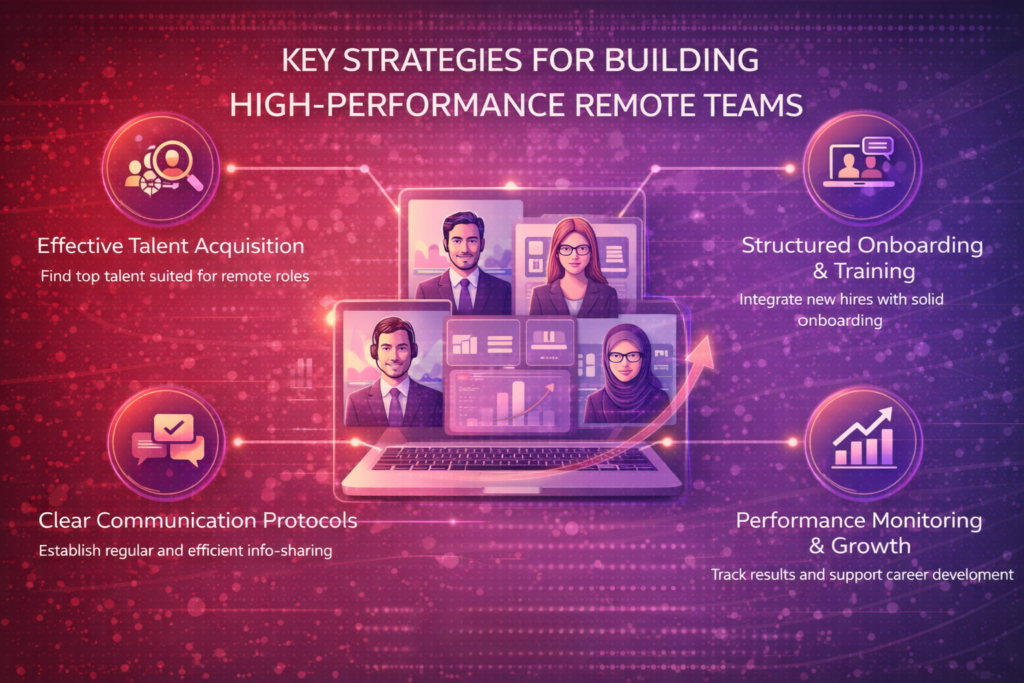
To staff remote teams well, organisations need a detailed recruitment plan. This plan should meet their specific needs. It must attract and keep the best talent.
Developing Your Recruitment Framework
A good recruitment framework is key. It outlines the key steps from posting jobs to picking candidates. It also has rules for checking candidates and a plan for handling applications.
Choosing the Right Hiring Channels
Choosing the right places to find candidates is important. This includes:
- Using big Indian job sites like Naukri.com
- Using LinkedIn for professional networking
- Posting on sites for remote jobs to find people looking for them
Naukri.com and Indian Job Portals
Naukri.com is a top job site in India. It has lots of candidates. Posting jobs here can reach many people.
LinkedIn and Professional Networks
LinkedIn is great for finding jobs and networking. It’s a good place to post jobs and meet candidates.
Remote-Specific Platforms
Special sites for remote jobs help find candidates who want to work from home.
Setting Realistic Timelines and Budgets
Setting clear timelines and budgets is important. It helps manage expectations and resources well.
Building Your Employer Brand for Remote Positions
Having a strong employer brand is key. It shows your culture, values, and benefits. This attracts remote workers.
Sourcing and Attracting Top Remote Talent
To build a great remote team, companies need smart ways to find talent. They should use many channels and methods to draw in the best candidates.
Leveraging Online Job Platforms and Networks
Online job sites are key for finding remote talent. Sites like LinkedIn help companies find lots of candidates.
Crafting Compelling Job Postings
Good job ads are vital for getting top talent. They should show the perks of working from home and list what skills are needed.
Highlighting Remote Work Benefits
Ads should talk up the flexibility and balance of remote jobs. This is a big plus for job seekers.
Specifying Technical Requirements
It’s important to clearly state what skills and tools are needed. This makes sure applicants are ready for remote work.
| Technical Requirements | Description |
| Programming Languages | Proficiency in languages such as Python, Java, or JavaScript |
| Collaboration Tools | Experience with tools like Slack, Trello, or Asana |
| Communication Skills | Ability to communicate effectively in a remote setting |
Utilising Social Media and Professional Networks
Social media and professional networks are great for finding remote talent. Companies can share job ads and talk to possible candidates.
Implementing Employee Referral Programmes
Referral programmes are a smart way to find good candidates. Current employees can suggest friends or contacts for jobs.
Conducting Remote Hiring and Selection Processes
To build a top remote team, companies must have a strict hiring process. This means several key steps to find and pick the best people.
Screening Applications Effectively
The first step is to check applications for the best candidates. This means:
- Identifying Essential Qualifications: Look for candidates with the right skills and qualifications for the job.
- Assessing Remote Work Experience: Choose candidates who have worked remotely before.
Designing Remote-Specific Interview Questions
Creating the right interview questions is key to see if a candidate fits remote work. This includes:
- Evaluating Self-Management Skills: Ask questions to see if a candidate can work alone well.
- Testing Communication Abilities: Check how well a candidate can talk in a virtual setting.
Conducting Virtual Interviews and Assessments
Virtual interviews are vital for remote hiring. Use:
- Video Conferencing Tools: Tools like Zoom or Google Meet for interviews.
- Administering Skills Tests: Online tests to check a candidate’s technical skills.
Evaluating Technical Skills and Cultural Fit
It’s important to check a candidate’s technical skills and if they fit the company culture.
Performing Background Checks and Reference Verification
Lastly, do deep background checks and check references to make sure the chosen candidates are trustworthy.
Onboarding and Integrating Remote Team Members
The onboarding process is key to a top remote team. It makes sure new team members have the tools and support to do well.
Creating a Structured Virtual Onboarding Programme
A good virtual onboarding programme is vital. It includes welcome kits and a plan for the first week.
Preparing Welcome Kits and Documentation
Welcome kits should have important info about the company and the role. They also include necessary paperwork. This helps new team members know their job and feel part of the team.
Scheduling First Week Activities
The first week should have orientation sessions, team introductions, and training. This helps new remote employees get to know the team and their tasks.
Setting Up Technology and Tools
It’s important to give remote team members the right tech and tools. This lets them do their job well.
Providing Hardware and Software Access
Make sure new hires have the right hardware and software. This could be laptops, smartphones, or special software.
Configuring Communication Platforms
Set up platforms like Slack or Microsoft Teams. This makes talking to the team easy.
Establishing Communication Protocols
Clear communication rules are important for remote teams. This includes how fast to reply, which channels to use, and regular meetings.
Assigning Mentors and Building Connections
Having mentors helps new team members get to know the company. It also helps them feel part of the team.
Important things to focus on in onboarding include:
- Comprehensive welcome kits
- Structured training programmes
- Regular check-ins
- Mentor assignment
By following these steps, organisations can make sure remote team members are set up for success.
Managing and Retaining High-Performance Remote Teams
Managing remote teams is a big challenge. It needs new ways to keep everyone working well together. It’s key to use global talent and keep work flowing smoothly.
Implementing Effective Communication Strategies
Good communication is key for remote teams. It’s not just about updates. It’s about making sure everyone is clear, included, and excited.
Daily Stand-Ups and Weekly Check-Ins
Daily stand-ups keep everyone on the same page. Weekly check-ins dive deeper into challenges and wins. Video conferencing tools make these talks more personal.
Asynchronous Communication Guidelines
Guidelines for talking without being together are important. They set clear expectations and avoid confusion. This means knowing when to reply and using the right tools.
Setting Clear Expectations and Performance Metrics
Clear goals and performance measures are key for remote teams. They help track progress and make smart choices.
Defining Key Performance Indicators
Key Performance Indicators (KPIs) must be clear and measurable. Changing KPIs regularly keeps them in line with goals.
Establishing Accountability Systems
Accountability systems, like regular reports and tools, track performance. They help solve problems quickly.
| Performance Metric | Description | Frequency of Review |
| Project Completion Rate | Percentage of projects completed on time | Monthly |
| Team Satisfaction Score | Measure of team satisfaction through surveys | Quarterly |
| Client Satisfaction Score | Measure of client satisfaction through feedback | Quarterly |
Fostering Team Collaboration and Culture
Building a team culture is important for remote teams. It’s about making sure everyone feels connected and valued.
Virtual Team Building Activities
Virtual team-building activities are great for bonding. Things like virtual happy hours or challenges work well.
Creating Shared Values and Norms
Shared values and norms are key for a strong team culture. They set the tone for how to communicate and work together.
Providing Growth Opportunities and Recognition
Offering chances to grow and celebrating wins keeps remote teams motivated. It’s important for their happiness and commitment.
Addressing Work-Life Balance and Burnout
Work-life balance and avoiding burnout are vital for remote team members. It’s about setting realistic goals and taking breaks when needed.
Conclusion
Building high-performance teams is key in today’s global work world. Understanding remote team staffing in India is vital. You need to know what your team needs and have a plan to find the right people.
Good remote team staffing helps solve problems like talking barriers and cultural gaps. Use online job sites, write great job ads, and make onboarding smooth. This builds a strong remote team base.
To keep your remote team top-notch, encourage teamwork, offer growth chances, and support work-life balance. These steps boost productivity, cut costs, and make employees happy. As remote work grows, being flexible and adaptable in staffing is essential for success. For tailored remote staffing solutions that fit your business goals, Contact Us today.