
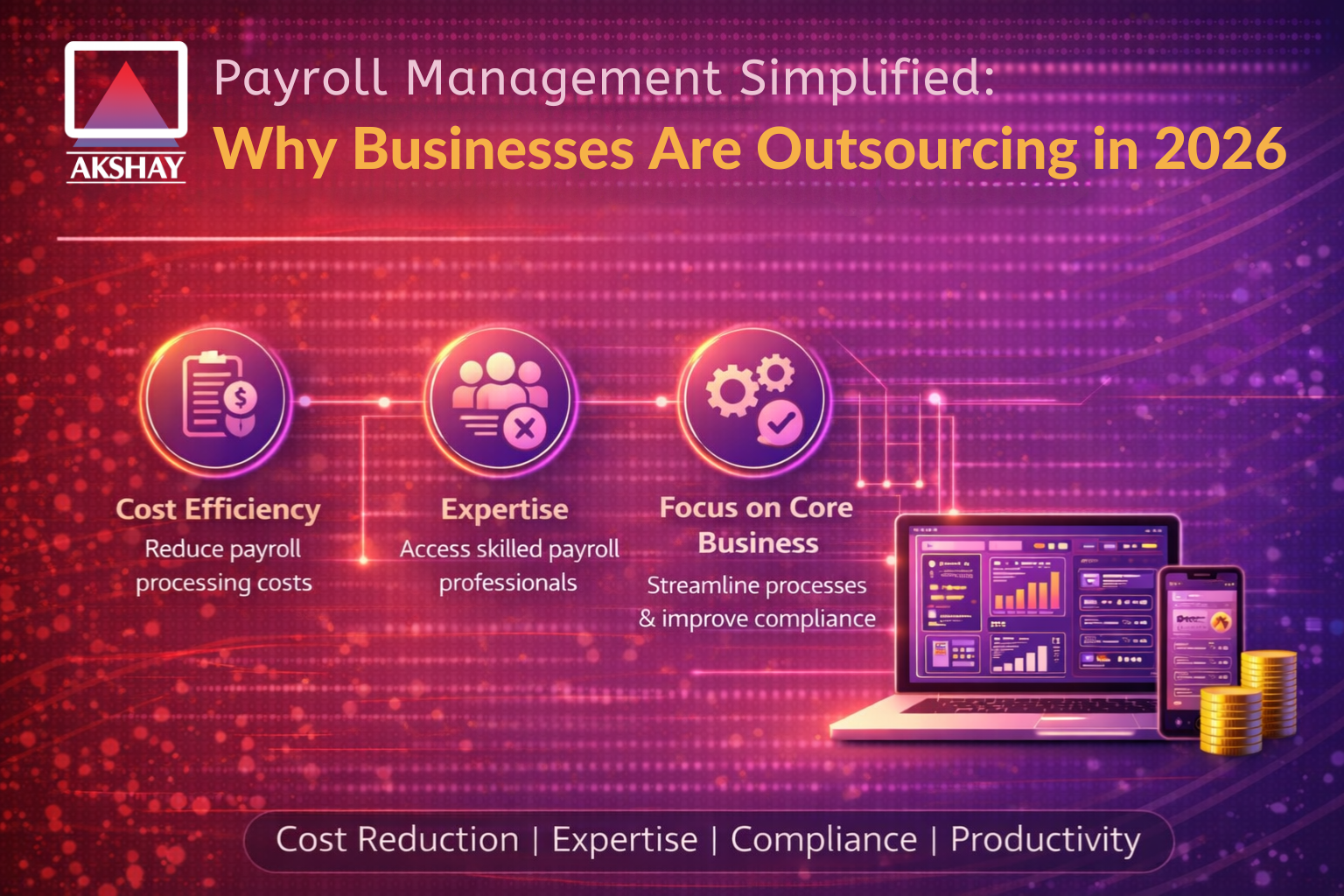
In 2026, Indian companies face a big challenge. They struggle with many rules and regulations. This makes it hard to grow and focus on what really matters.
Many businesses now see the risks of handling payrolls themselves. Keeping up with tax laws and digital security is tough. It needs a lot of special knowledge.
So, more companies are choosing to outsource their payroll. This way, they get help from experts. It makes sure they follow all the rules and lets them focus on new ideas.
By cutting down on paperwork, teams can work on growing the business. Running smoothly helps companies stay ahead in a fast-changing world.
Key Takeaways
- Organisations prioritise accuracy to avoid legal penalties in the evolving Indian market.
- External specialised providers offer advanced data security to protect sensitive employee information.
- Reducing administrative burdens allows leadership to focus on scaling and revenue growth.
- Significant cost savings arise from eliminating the need for expensive in-house software updates.
- Real-time reporting helps executives make faster decisions based on precise financial data.
The Evolving Landscape of Payroll in Indian Businesses
The world of payroll in Indian businesses is changing fast. This is because of the need for better HR solutions. As India’s economy grows, managing payroll gets more complex. This is due to new rules and keeping up with them.
Indian companies must make their payroll processing better. They need to be accurate, on time, and follow the law. This helps them focus on what they do best.
Changes in rules are a big reason for these changes. Companies must follow laws about things like employee savings and taxes. They need smart HR solutions to deal with these rules.
Technology is also changing payroll management services. New software and online tools help companies manage payroll better. This makes things more accurate and efficient.
In short, the world of payroll in Indian businesses is changing. There’s a big need for better payroll and following the rules. By using new HR solutions, companies can make their payroll better. This saves money and makes things more efficient.
Understanding the Payroll Management Burden: A Reality Check
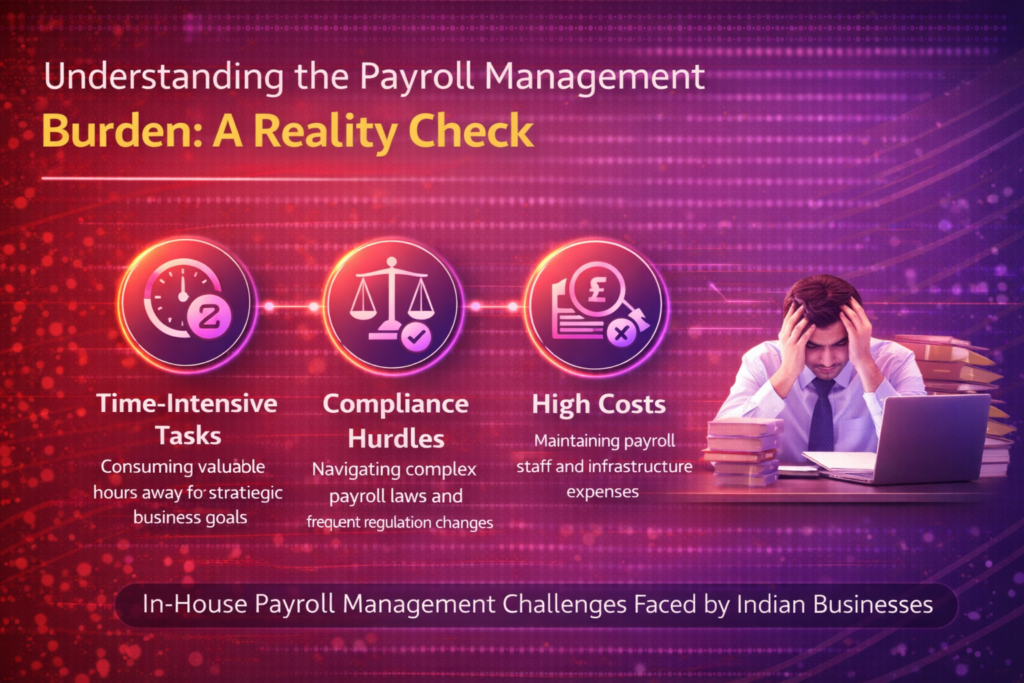
In-house payroll management is tough for businesses in India. It’s not just about paying salaries. It includes many tasks that can use up a lot of resources.
Time-Intensive Administrative Tasks
Managing payroll in-house takes a lot of time. Tasks like calculating salaries and managing leave are time-intensive. They take away hours that could be used for the business.
Manual payroll processing can also lead to mistakes. These mistakes can upset employees and even cause legal problems. Automating these tasks helps, but it needs a lot of management.
Compliance Complexity in the Indian Market
India’s rules for payroll are complex. This makes it hard for businesses to follow them.
GST and TDS Calculations
GST and TDS calculations are key in payroll management. Getting TDS right and following GST rules needs a good understanding of the laws. You also need to keep up with any changes.
EPF, ESI, and Professional Tax Requirements
Businesses also have to follow rules for EPF, ESI, and Professional Tax. These rules mean regular filings and payments. This can be hard for small and medium-sized businesses to handle on their own.
Cost Implications of In-House Payroll Teams
Keeping a payroll team in-house costs money. You have to pay their salaries, train them, and buy software and infrastructure.
Also, mistakes or not following rules can cost a lot. Fines and penalties are possible. Knowing these costs helps businesses decide if they should manage payroll themselves or outsource it.
Case Study: TechVista Solutions Private Limited Transforms Operations
TechVista Solutions Private Limited, a top SaaS provider in Mumbai, made a big change in January 2026. They decided to outsource their payroll management. This move was because the company grew fast and handling payroll in-house got too hard.
Company Background: A Mumbai-Based SaaS Provider
TechVista Solutions Private Limited is a leading SaaS company. They offer innovative software solutions to businesses in many industries. They are well-known in Mumbai for being a reliable tech partner.
Growth Challenges with 250 Employees
As TechVista Solutions grew to 250 employees, their HR and finance teams faced big challenges. Managing payroll became very complex. It was hard to keep up with calculations, follow rules, and pay salaries on time.
Payroll Errors and Compliance Penalties
The in-house payroll team had trouble being accurate. This led to many errors and fines. The company lost a lot of money because of these mistakes. It also made employees unhappy and less trusting.
The Decision to Outsource in January 2026
In January 2026, TechVista Solutions chose to outsource their payroll. They wanted to work more efficiently, save money, and follow rules better.
Implementation and Measurable Results
The new payroll partner set up a solution just for TechVista. It worked well, making payroll faster and cheaper.
67 Percent Reduction in Processing Time
Outsourcing cut payroll time by 67 percent. This let TechVista focus more on growing their business.
Annual Savings of 18 Lakh Rupees
By outsourcing, TechVista saved 18 lakh rupees a year. This helped their profits and made them more competitive.
Why Indian Businesses Are Choosing Outsourced Payroll Solutions
Indian businesses are turning to outsourced payroll solutions. They want to use expert skills and cut down on paperwork. This move is driven by several key reasons that make outsourcing a good choice for all sizes of businesses.
Regulatory Compliance Assurance
One big reason for outsourcing payroll is to keep up with regulatory compliance. India’s rules are complex and keep changing. It’s hard for companies to keep up.
Staying Current with Legislative Changes
Payroll providers focus on keeping up with new laws. They update their systems to help businesses stay legal. This avoids fines and penalties.
Automated Statutory Filings
Outsourced payroll also means automated filings. These providers use tech to file on time and correctly. This saves businesses a lot of work.
| Regulatory Requirement | In-House Management Challenges | Outsourced Payroll Benefits |
| PF and ESI Compliance | Constant updates required for changing regulations | Expertise in handling compliance changes |
| Statutory Filings | Risk of late or incorrect filings | Automated and timely filings |
| Labour Law Compliance | Complexity in managing various labour laws | Specialised knowledge and compliance assurance |
Access to Specialised Expertise
Outsourcing payroll means getting specialised expertise that might be hard to find or too expensive in-house. Payroll providers have experts who know payroll inside out. They make sure payroll is done well.
Scalability for Growing Organisations
Scalability is a big plus of outsourced payroll. As businesses grow, their payroll needs change. Outsourced providers can grow with them. They handle more employees, different locations, and new rules easily.
In conclusion, Indian businesses pick outsourced payroll for its help with rules, expert skills, and growing needs. Outsourcing payroll lets businesses focus on what they do best. They leave payroll to the experts.
Case Study: Sharma Manufacturing Industries Reduces Costs by 42 Percent
In 2026, Sharma Manufacturing Industries was finding it hard to manage its payroll. It had six facilities in four states. This made payroll processing complex and costly.
The Challenge: Multi-Location Payroll Complexity
Sharma Manufacturing Industries faced big challenges with its multi-location setup. It had to deal with many state labour laws. This made payroll management very hard.
Six Facilities Across Four States
Managing payroll for six facilities in four states was tough. It had to handle different tax rules and labour laws. This was time-consuming and often led to mistakes.
Variable State Labour Laws
State labour laws varied a lot. Each state had its own rules on wages and other things. This made it hard for Sharma to keep its payroll accurate and up to date.
Outsourcing Implementation Strategy with ADP India
Sharma decided to outsource its payroll to ADP India. They looked at Sharma’s payroll processes and created a custom solution. This was tailored to Sharma’s needs.
ADP India’s knowledge in handling complex payroll and their technology helped Sharma. They got specialised expertise and scalability. This let Sharma focus on its main business.
Measurable Cost and Time Savings
Outsourcing to ADP India saved Sharma a lot of money and time. They cut down payroll processing time and avoided fines for not following rules.
From 12 Days to 3 Days Processing
Sharma’s payroll time went from 12 days to 3 days. This was thanks to ADP India’s efficient methods and technology. They made payroll faster and more accurate.
Elimination of Penalty Costs
Sharma made sure to follow all state labour laws on time. This meant they no longer had to pay fines. This saved them a lot of money and helped their reputation.
Technology Integration: The 2026 Advantage in Payroll Management
In 2026, payroll management is changing a lot with new tech. Businesses are using new ways to make payroll easier, more accurate, and cheaper.
Cloud-Based Payroll Systems
Cloud-based payroll systems are changing the game. They offer scalability, flexibility, and accessibility. This means businesses can manage payroll from anywhere, anytime. They can also cut IT costs and focus on their main work.
The good things about cloud-based payroll systems are:
- Automated payroll processing
- Real-time data access
- Enhanced security and compliance
- Regular software updates
Artificial Intelligence and Automation
Artificial intelligence (AI) and automation are making payroll better. They cut down on errors and speed up processing. AI can handle tough payroll tasks, tax stuff, and data analysis easily.
Predictive Analytics for Budgeting
Predictive analytics, part of AI, helps with budgeting. It lets businesses guess future payroll costs and make smart choices. It uses past data and trends to help with budgeting.
Chatbot Support for Employee Queries
Chatbots help with quick answers to payroll questions. This makes employees happy and helps HR teams not get too busy.
Real-Time Analytics and Reporting Dashboards
Real-time analytics and dashboards are key for good payroll management. They give quick insights into payroll data. This helps businesses track important stuff, spot trends, and make smart choices.
| Feature | Cloud-Based Payroll | Traditional Payroll |
| Scalability | Highly scalable | Limited scalability |
| Accessibility | Accessible from anywhere | Limited to office premises |
| Cost | Reduced IT infrastructure costs | Higher maintenance costs |
Case Study: Lifestyle Retail Group Achieves 100 Percent Compliance
Lifestyle Retail Group teamed up with Ramco Systems in 2026. This move helped them simplify their payroll and meet rules. It was a big step for the retail chain, solving payroll issues across its wide workforce.
Previous Compliance Struggles with 42 Store Locations
Lifestyle Retail Group had 42 stores in India. They found it hard to follow compliance management rules. Old ways and different systems caused mistakes in payroll, risking legal trouble.
Their team tried hard to keep up with changing rules. But, they faced inefficiencies and high costs. Also, not having one system made salary issues, upsetting staff.
The Outsourcing Solution with Ramco Systems
Outsourcing to Ramco Systems gave Lifestyle Retail Group a reliable payroll system. Ramco’s payroll outsourcing skills brought in new tech and knowledge. This ensured payroll was right and on time.
The system was made just for Lifestyle Retail Group. It handled the challenges of having many locations.
Zero-Error Payroll Processing for 3,800 Employees
With Ramco Systems, Lifestyle Retail Group’s payroll was perfect for 3,800 employees. The system’s automation and constant checks made sure payroll was correct and on schedule. This greatly improved employee satisfaction.
Audit Results After Six Months
After six months, an audit showed Lifestyle Retail Group’s new system was a hit. They got 100 percent compliance with rules.
The audit found big improvements in how payroll was done. There were fewer mistakes and issues.
Employee Satisfaction Improvements
On-time and correct salaries made employees happier. They liked the new system’s clear and reliable way of paying. This made them trust the company more.
Lifestyle Retail Group’s success with Ramco Systems shows the power of using special skills and tech. It leads to better work and following rules.
Selecting the Right Payroll Outsourcing Partner in India
Choosing the right payroll partner in India needs careful thought. Businesses must pick wisely to ensure they meet all rules, work efficiently, and keep data safe.
Essential Criteria for Vendor Evaluation
Indian businesses should look at a few key things when picking a payroll vendor. They need to check the vendor’s experience, tech setup, and service agreements.
Industry Experience and Client Portfolio
A vendor with lots of experience in India’s payroll market knows the local rules well. Looking at their past clients can show if they’re reliable and can meet your needs.
Choosing a vendor with clients like yours is a good idea. They’ll understand your specific challenges better.
Technology Infrastructure Assessment
The tech used by a payroll vendor is key for smooth, accurate, and safe payroll. Businesses should check if the vendor uses cloud systems, AI, and encryption.
Good tech means payroll is done right and fast. It also gives you useful reports and data.
| Technology Feature | Importance | Typical Vendor Offerings |
| Cloud-Based Systems | High | Scalable, accessible, and automatic updates |
| Artificial Intelligence (AI) | High | Automated payroll processing, error detection |
| Data Encryption | Critical | Enhanced data security and compliance |
Red Flags to Watch For During Selection
When looking at vendors, watch out for red flags. These include unclear pricing, bad customer support, and not following rules.
Do your homework well. Check references and look at case studies to spot any problems early.
Service Level Agreements and Performance Guarantees
A good Service Level Agreement (SLA) is key. It sets out what the vendor will do, what you expect, and how they’ll be judged.
Guarantees add extra security. They make sure the vendor keeps their promises. Look for vendors with strong SLAs and clear penalties for not meeting them.
Data Security and Confidentiality Considerations
In India, more businesses are outsourcing their payroll. This means keeping employee data safe is very important. With more cyber threats, companies must check their payroll partners’ security.
Encryption and Protection Standards in 2026
In 2026, data encryption rules are stricter. Payroll providers must use the latest encryption to keep data safe.
ISO 27001 Certification Requirements
Payroll providers need ISO 27001 certification. This shows they manage sensitive data well and keep it secure.
Multi-Factor Authentication Protocols
MFA is key for data security. It makes users prove their identity twice to access data. This greatly lowers the chance of data theft.
Digital Personal Data Protection Act Compliance
The Digital Personal Data Protection Act is important in India. It says how to handle personal data. Payroll providers must follow it by getting consent, checking data, and keeping it safe.
| Compliance Requirement | Description | Benefit |
| ISO 27001 Certification | International standard for information security management systems | Demonstrates a robust framework for managing sensitive information |
| Multi-Factor Authentication | Requires multiple verification factors for access | Reduces the risk of unauthorized data access |
| Digital Personal Data Protection Act | Legislation governing personal data processing in India | Ensures handling of personal data with consent and security |
The Financial ROI of Payroll Outsourcing: 2026 Data from Indian Markets
In 2026, Indian businesses are looking closely at the financial benefits of payroll outsourcing. They want to cut costs and work more efficiently. Knowing the financial gains of outsourcing payroll is key for making smart choices.
Outsourcing payroll is more than just saving money. It helps the HR team become a key player in the business. With outside help, companies can save money, follow rules better, and make their data more accurate. This frees up time for more important tasks.
Direct Cost Savings Analysis
One big plus of outsourcing payroll is saving money. Companies don’t have to pay for in-house payroll teams anymore. This cuts down on salaries and other costs.
Salary and Infrastructure Reductions
Outsourcing payroll means companies can cut down on expenses. They don’t have to pay for payroll staff salaries, benefits, or training. They also save on office space and equipment for payroll.
Software Licensing Elimination
Payroll outsourcing providers use top-notch, cloud-based systems. This lets companies skip big software costs. It also means less money for upkeep and new versions.
Indirect Benefits and Value Creation
Payroll outsourcing brings more than just cost savings. It also brings indirect benefits that add value. These benefits can really help a company’s bottom line and how well it works.
HR Team Focus on Strategic Initiatives
When payroll is outsourced, HR teams can focus on growth and better employee relations. This can make the company more successful and competitive.
Risk Mitigation Savings
Outsourcing payroll to experts can also save a lot on risks. It helps avoid problems like not following rules, data leaks, and other payroll issues. This can save money and protect the company’s reputation.
Break-Even Timeline for Indian Businesses
The time it takes for Indian businesses to break even on payroll outsourcing varies. It depends on the company size, payroll complexity, and the outsourcing model. But, many see a break-even point in the first year.
Common Challenges and How Businesses Overcome Them
When businesses outsource payroll, they face many challenges. They must adapt to new systems and standards. This change affects how they manage their finances.
Transition Period Management Strategies
Managing the transition well is key. It helps avoid problems with payroll. Planning and teamwork between old and new teams are essential.
Data Migration Best Practices
Moving payroll data is a big task. Best practices include cleaning, validating, and checking the data. This ensures it’s right and complete. Working with your new partner is important for a good plan.
- Identify the data to be migrated
- Cleanse and validate the data
- Test the migrated data for accuracy
Parallel Processing Phases
Many use parallel processing to reduce risks. This means running payroll on both old and new systems. It checks if the new system works before switching fully.
Parallel processing acts as a safety net. It lets businesses check and fix any problems before switching fully.
Employee Communication and Change Management
Telling employees about the change is key. They need to know why, the benefits, and how it affects them. This helps them understand and adjust.
A good plan for change includes updates and training. It also has a way for employees to ask questions or share concerns.
| Communication Strategy | Description | Benefits |
| Regular Updates | Keep employees informed about the transition progress | Reduces anxiety and speculation |
| Training Sessions | Educate employees on new processes or systems | Enhances understanding and compliance |
| Clear Query Channel | Provide a dedicated channel for employee queries | Ensures prompt resolution of issues |
The Future of Payroll Management in India Beyond 2026
Beyond 2026, Indian businesses will see big changes in payroll management. These changes include better automation and making sure everything follows the rules. The payroll management world is changing fast because of new tech and rules.
The way Indian businesses handle payroll is changing a lot. New tech like Artificial Intelligence (AI) and Machine Learning (ML) is making payroll better. It’s now more accurate and follows the rules better.
Cloud-based payroll systems are becoming more popular. They make it easier to manage payroll in different places. This means businesses can handle their payroll better, no matter where they are.
Key Trends Shaping the Future
The future of payroll in India will be shaped by a few big trends:
- More automation to cut down on mistakes and make things more efficient.
- More demand for quick payroll data to help make better decisions.
- More focus on keeping data safe and following new rules.
- Using AI and ML to guess payroll trends and find risks.
As Indian businesses grow, they’ll need better payroll solutions. By following these trends, companies can stay ahead and follow the rules in a fast-changing world.
Conclusion
Indian businesses face many challenges in payroll management. Payroll outsourcing helps a lot. It makes things easier, keeps rules followed, and brings in expert help.
Companies like TechVista Solutions Private Limited, Sharma Manufacturing Industries, and Lifestyle Retail Group show how good it is. They save money, follow rules better, and work more smoothly.
Choosing the right partner for payroll outsourcing is key. Look for someone who knows the rules well, uses good technology, and keeps data safe. This way, you get better payroll management, more accuracy, and lower costs.
Payroll outsourcing can really help your business grow. It lets you focus on what you do best. Leave the payroll to the experts.