
Indian commerce is complex and fast-paced. Many businesses face challenges with manual entries and tight deadlines. GST management is key for success.
Modern tax software makes record-keeping easier and cuts down errors. It gives a clear view of your finances and what you owe.
Good financial management means using resources well across all areas. Digital systems help keep accounts in order.
This change lets teams focus on growing the business, not just paperwork. Efficiency and accuracy are now within reach for every Indian entrepreneur.
Key Takeaways
- Automated systems reduce human error in monthly filings.
- Real-time insights significantly improve overall cash flow.
- Digital tools simplify complex regulatory compliance tasks.
- Secure cloud storage protects vital business records effectively.
- Regular updates ensure alignment with new national laws.
- Streamlined processes enhance long-term fiscal oversight and planning.
The GST Compliance Challenge for Indian Businesses
GST compliance is a big challenge for Indian businesses. It has complex rules and changes often. The Goods and Services Tax (GST) has changed India’s tax system. But, it also brings new challenges for businesses.
Understanding the Complexity of GST Regulations in India
The GST rules in India are complex. They involve many return filings like GSTR-1, GSTR-3B, and GSTR-9. Also, e-way bills and e-invoicing are needed for some deals. The rules keep changing, making it hard for businesses to keep up.
Businesses must keep detailed records of their deals. This is hard, mainly for small and medium-sized enterprises (SMEs). They often have less money and resources.
Common Pain Points in Manual Tax Management
Managing taxes manually is tough. It can lead to human error, slow data processing, and keeping records up to date is hard. Businesses using manual methods often face problems like:
- Inaccurate calculations and wrong filings
- Delays in filing returns and paying taxes
- It’s hard to track and manage input tax credits
- More work and costs for admin
The Cost of Non-Compliance and Filing Errors
Not following GST rules and making filing mistakes can cost a lot. It can lead to big fines and interest on taxes. Also, not following the rules can harm a business’s reputation and lead to legal trouble. The costs include:
- Fines and penalties from tax authorities
- Interest on taxes owed
- Missing out on input tax credits because of wrong filings
- Damage to reputation and loss of customer trust
In summary, GST’s complex rules and the problems of manual tax management show the need for good tax solutions for Indian businesses.
What Modern Tax Software Can Do for Your Business
Modern tax software is changing how businesses handle taxes and money. It uses new tech to help with tax rules, money reports, and making businesses run better.
Core Capabilities of Contemporary Tax Solutions
Today’s tax software has key features that make tax work easier. It includes automated tax filing, real-time data processing, and comprehensive reporting features. These help businesses keep up with taxes and avoid mistakes.
Automating tax tasks helps finance teams do more important work. Real-time data means businesses always know their tax status.
Cloud-Based vs Desktop Tax Management Systems
Choosing between cloud-based and desktop tax systems depends on what your business needs. Cloud-based tax software is flexible and easy to use from anywhere.
Desktop systems are good for those who need extra security or control. But cloud systems are easier to grow and need less upkeep.
Automation and Real-Time Data Processing
Automation is a big deal in modern tax software. It makes tasks like GST returns and digital invoices easier. This cuts down on mistakes and keeps businesses on track with tax laws.
Real-time data processing gives businesses quick insights into their tax situation. This is super useful in today’s fast world, where quick info is key for planning and managing risks.
Key Features That Simplify GST Management
For businesses, making GST management easier is key. Modern tax software does this with special features. These features make following GST rules simpler and cut down on work for businesses.
Automated GST Return Filing
Automating GST return filing is a big help. It makes filing GSTR-1, GSTR-3B, and GSTR-9 returns easier. This cuts down on mistakes, makes sure things are filed on time, and lowers the chance of fines for late or wrong filings.
Digital Invoice Generation and Management
Digital invoicing is a big plus for GST management. It means making and handling invoices online, following GST rules. This makes sure invoices are right, cuts down on mistakes, and makes tracking invoices easier.
Input Tax Credit Reconciliation and Matching
Getting the right amount of Input Tax Credit (ITC) is key. Modern tax software makes this easier. It helps spot and fix any mistakes, keeping businesses in line with GST rules.
E-Way Bill and E-Invoice Generation
For moving goods, E-Way Bill and E-Invoice generation are vital. They help follow GST rules for goods transport and invoices. Automating these steps saves time and lowers the chance of breaking the rules.
| Process | Manual GST Management | Automated GST Management through Tax Software |
| GST Return Filing | Prone to errors, time-consuming | Automated, accurate, and timely |
| Invoice Generation | Manual preparation, prone to errors | Digital generation, accurate, and compliant |
| ITC Reconciliation | Time-consuming, possible for mistakes | Automated, accurate, and efficient |
| E-Way Bill and E-Invoice | Manual preparation, risk of non-compliance | Automated generation, compliant, and efficient |
Modern Tax Software Streamlines Financial Operations
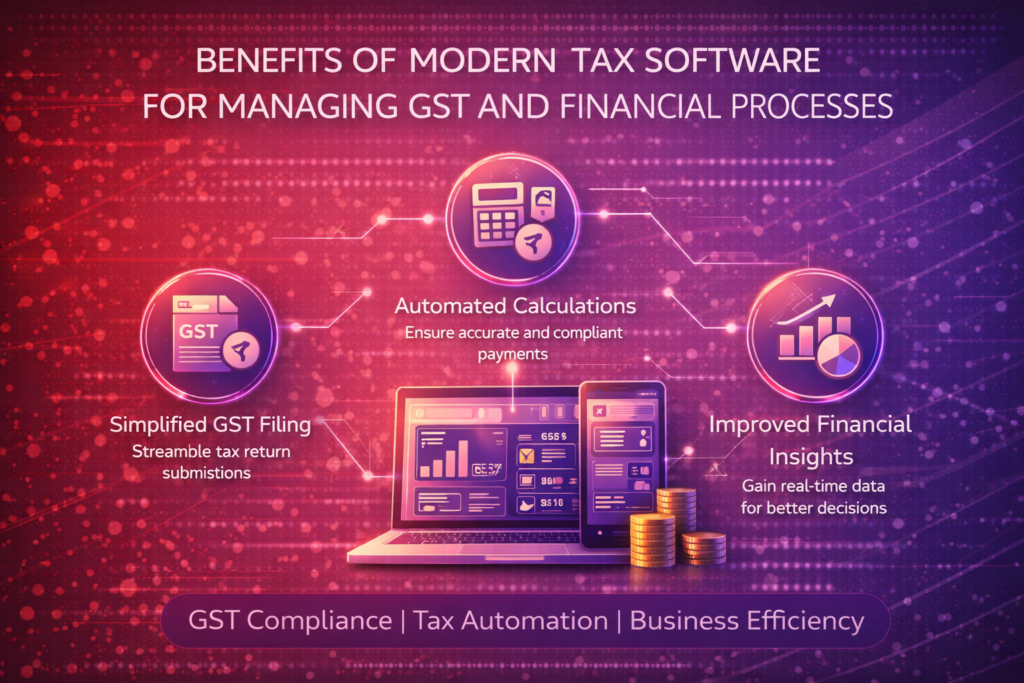
Streamlining financial operations is key for businesses. Modern tax software is vital in this effort. It links tax compliance with financial management, boosting efficiency and cutting down on complexity.
Centralised Financial Data Management Across Departments
Modern tax software provides centralised financial data management. It lets businesses handle their financial and tax needs in one place. This makes sure all departments see the same data, cutting down on mistakes and boosting teamwork.
- Consolidated financial reporting
- Enhanced data accuracy
- Improved inter-departmental collaboration
Real-Time Reporting and Business Intelligence
Real-time reporting is a big plus of modern tax software. It gives businesses the latest financial info, helping them make quick, smart choices. This is key for staying ahead in a fast-changing market.
The software makes detailed reports on tax, credits, and cash flow. These reports help spot trends, manage risks, and find new chances.
Multi-Location and Multi-GSTIN Support
For companies with many locations or GSTINs, modern tax software has multi-location and multi-GSTIN support. It lets businesses handle different GSTs and places from one spot, making compliance easier and cutting down on work.
- Simplified GST compliance for multi-location businesses
- Efficient management of multiple GSTINs
- Consolidated reporting across locations
Automated Bank Reconciliation Features
Automated bank reconciliation cuts down on the work needed to match bank records with financial data. This saves time and lowers the chance of mistakes, keeping financial records precise and current.
| Feature | Manual Process | Automated Process |
| Bank Reconciliation | Time-consuming, prone to errors | Quick, accurate, and efficient |
| Error Reduction | High risk of discrepancies | Minimal risk, ensures accuracy |
Step-by-Step Guide to Implementing Tax Software in Your Business
Getting tax software right is key for better financial insights and less risk. It also boosts your business’s productivity. To do it well, you need a clear plan that fits your business’s needs and rules.
Assessing Business Requirements and Compliance Needs
The first step is to check what your business needs and must follow. You need to know about GST filing, how complex your transactions are, and how well it fits with your current systems.
Think about these things:
- The size and structure of your organisation
- The nature of your business operations and transactions
- Existing financial and accounting systems
- Current pain points in tax management and compliance
Selecting and Purchasing the Appropriate Software Solution
After understanding your needs, pick a tax software that matches. Look at different options based on their features, how they grow, how easy they are to use, and their support.
Key things to consider when choosing tax software include:
| Feature | Description | Importance Level |
| GST Compliance | Ability to handle GST filing, including GSTR-1, GSTR-3B, and GSTR-9 | High |
| Integration Capabilities | Seamless integration with existing accounting and financial systems | High |
| User Interface | Ease of use and intuitive navigation for end-users | Medium |
| Customer Support | Availability of support services, including training and troubleshooting | High |
Migrating Your Existing Financial and Tax Data
Moving your data to the new system is a big step. It needs careful planning to make sure everything is right. This means moving your financial and tax data to the new software.
Best practices for data migration include:
- Data cleansing and validation to ensure accuracy
- Mapping data fields to the new system’s requirements
- Testing the migration process to identify and resolve any issues
Configuring GST Settings and Compliance Parameters
After moving your data, set up GST settings and rules in the software. This includes GST rates, how often you file, and compliance rules.
Training Your Finance Team and End Users
It’s important to train your team and users well. This means giving them hands-on training and help for any questions or worries.
Running Parallel Operations During the Transition Period
Running both old and new systems at the same time is a good idea. It lets you check the new system’s accuracy and find any problems.
Going Live and Monitoring System Performance
When you’re ready, switch to the new software. Keep an eye on how it’s doing to fix any problems quickly and make sure it meets your needs.
Choosing the Right Tax Software for Your Business Needs
Choosing the right tax software is key for businesses. It helps with GST compliance and financial management. The best software meets your business’s needs, making operations smooth and ensuring compliance.
Evaluating Solutions Based on Business Size and Transaction Volume
When picking tax software, think about your business size and transaction volume. Big businesses or those with lots of transactions need strong solutions. Scalability is important, so the software can grow with your business.
Smaller businesses might need simpler software. It should be easy to use and have basic features like automated GST returns and digital invoices.
Industry-Specific Features and Compliance Requirements
Different industries have unique needs. For example, e-commerce needs integration with marketplaces and payment gateways. Manufacturing needs supply chain and inventory management features.
Industry-specific features make tax software more effective. It’s important to find software that meets your industry’s needs, ensuring you follow the right rules.
Pricing Models and Total Cost of Ownership Analysis
Understanding tax software pricing is important. There are subscription, perpetual license, and transaction-based fees. Do a Total Cost of Ownership (TCO) analysis to see the full cost, including setup, training, and support.
| Pricing Model | Description | Typical Costs (India) |
|---|---|---|
| Subscription-Based | Businesses pay a monthly or annual subscription to access cloud-based tax software with regular updates and support. This model is common for GST filing and compliance tools. | ₹5,000 – ₹60,000 per year depending on features and users |
| Perpetual License | A one-time purchase for the software license. Companies may need to pay additional annual charges for updates, maintenance, and compliance changes. | ₹20,000 – ₹1,50,000 one-time, plus ₹5,000 – ₹25,000 annual maintenance |
| Transaction-Based | Fees depend on the number of tax filings, invoices, or transactions processed through the software platform. Often used by large enterprises or high-volume accounting firms. | ₹1 – ₹50 per transaction depending on scale |
Vendor Support, Training, and Regular Updates
The support from the software vendor is important. Look for vendors with good training and onboarding programs. This ensures your team can use the software well.
Regular updates and maintenance are also key. They keep the software up to date with regulations and working smoothly. Check the vendor’s reputation for support.
Integrating Tax Software with Existing Business Systems
Using tax software with other business systems makes it more effective. It helps businesses work better, cut down on mistakes, and follow tax rules.
ERP and Accounting Software Integration Options
Linking tax software with ERP and accounting systems is key. It keeps financial data the same across the company. This link makes sure financial actions, invoices, and data sync up automatically. It cuts down on manual work and mistakes.
Systems like SAP, Oracle, and QuickBooks can connect with tax software. This lets businesses use both systems well. It helps with accurate money reports and following rules.
| ERP/Accounting Software | Integration Method | Benefits |
| SAP | API Integration | Automated data syncing, reduced manual errors |
| Oracle | Pre-built Connectors | Enhanced financial reporting, improved compliance |
| QuickBooks | API Integration | Streamlined financial operations, reduced costs |
E-Commerce Platform and Marketplace Connectivity
E-commerce sites can really benefit from linking tax software. It makes invoices, tax calculations, and returns easier. This simplifies following tax rules.
Platforms like Shopify, Magento, and Amazon can connect with tax software. This helps businesses handle taxes better.
Banking and Payment Gateway Integration
Linking tax software with banks and payment gateways is vital. It helps track money, match accounts, and make reports better.
This link also lowers the chance of mistakes and not following rules. It helps avoid fines.
API Capabilities for Custom Integrations and Workflows
APIs are important for special connections between tax software and other systems. They let businesses make solutions that fit their needs. This boosts their work efficiency.
APIs enable connections with systems like CRM and inventory management. This makes everything work together smoothly.
Maximising Efficiency: Best Practices for Using Tax Software
To get the most out of tax software, businesses must adopt best practices. These practices enhance efficiency and compliance. Using tax software well can make GST and financial management & E-Invoicing easier.
Maintaining Data Accuracy and Consistency Across Systems
Data accuracy is key for reliable tax calculations and compliance. Businesses should use strong data validation and regular audits. This helps find and fix any mistakes.
Training staff on data entry best practices can also reduce errors. Using the software’s data validation and verification features can make things more accurate.
Scheduling Regular Software Updates and Compliance Checks
Tax software providers often update their software. These updates keep up with tax law changes and improve the software. Regular updates help businesses stay in line with GST rules.
It’s also important to do regular compliance checks. This makes sure the software is set up right and all returns are filed on time.
Leveraging Advanced Reporting and Analytics Features
Modern tax software has advanced reporting and analytics. Businesses can use these to understand their finances better. They can spot trends and make smart decisions.
Customisable dashboards and reports help track important KPIs. This includes tax compliance and financial health.
Setting Up Automated Workflows, Alerts, and Reminders
Automating workflows in tax software cuts down manual work and error risk. Setting up alerts and reminders for important tasks, like return filing deadlines, helps stay on track.
Customisable workflows can be made to fit a business’s needs. This boosts operational efficiency.
Conducting Periodic User Training and System Audits
Regular training for users is essential. It ensures they can use the tax software well. System audits help find ways to improve and make sure the software is used fully.
User feedback is also important. It helps shape training and system improvement plans.
Conclusion
In India, businesses face many challenges with GST rules. Using modern tax software is key to staying compliant. It helps with filing GST returns, generating digital invoices, and processing financial data quickly. This makes financial tasks easier and reduces the chances of errors.
Modern tax software also improves financial management. It keeps all financial data in one place, provides real-time reports, and enables automatic bank reconciliation. This helps businesses make informed decisions and maintain better financial control.
Adding modern tax software to a business’s existing systems simplifies GST compliance and improves operational efficiency. As India’s business environment continues to grow, adopting such solutions can support long-term success. Contact Us for more details.