
India’s digital world is expanding quickly. For local brands, smart social strategies are key. Using facebook advertising management helps target specific Indian audiences well.
This method ensures your message hits the right screens at the right time. A clear plan for maximising ROI means every rupee spent adds real value to your business. By prioritising high-quality visuals, you connect with your audience better than ever.
Consistent testing helps find what works best for your market. This guide will help you scale your business with confidence. Learn to turn your online presence into a strong engine for driving conversions and building brand loyalty.
Key Takeaways
- Focus on precise audience segmenting for better engagement.
- Master proven techniques for improving campaign returns.
- Use high-quality creative assets to stand out.
- Monitor performance metrics regularly to stay on track.
- Optimise spending to ensure sustainable business growth.
- Build lasting customer loyalty through personalised messaging.
Understanding the Facebook Advertising Ecosystem in 2026
In 2026, knowing the Facebook ad world is key for businesses. They want to grow online and get good returns. The Facebook ad scene is now complex, with many tools and features for advertisers.
The Evolution of Facebook Ads Platform
The Facebook Ads platform has changed a lot over time. It started simple but now it’s a powerful marketing tool. It has better targeting and ways to measure results.
These changes help businesses make better ads. They can now reach the right people and see how well their ads work.
Why Facebook Advertising Matters for Indian Businesses
Facebook ads are great for Indian businesses. They can reach many people. They can target specific groups to get more engagement and sales.
The platform also helps track ad performance. This lets businesses make smart choices with their ad budget.
Key Components of the Meta Ads Manager
The Meta Ads Manager is a big help for businesses. It lets them plan, manage, and improve their ads. It has campaign goals, ad sets, and ads.
- Campaign Objectives: Set what the ad aims to do, like getting more sales.
- Ad Sets: Let businesses choose who to show ads to and how much to spend.
- Ads: The ads themselves, like pictures, videos, or carousels, shown to the audience.
Setting Clear Advertising Goals and Objectives
To get the most from your Facebook ads, you need clear goals and objectives. This step makes sure your ads work well with your business plan.
Aligning Business Goals with Campaign Objectives
It’s key to match your business goals with Facebook’s campaign objectives. Facebook has many objectives, like awareness and conversion. Pick the one that fits your goal for better results.
If you want to sell more, choose the “Conversions” objective. It helps your ads focus on actions like buying or signing up.
Defining Key Performance Indicators (KPIs)
Choosing the right KPIs is important for checking your Facebook ad success. KPIs show how well your ads are doing and help you improve your strategy.
Primary Metrics: ROAS, CPA, and CTR
Metrics like ROAS, CPA, and CTR are key for judging your campaign’s success. ROAS shows how much money your ads make compared to what you spend. CPA tells you how much it costs to get one customer. CTR shows how many people click on your ads.
- ROAS: Shows the return on your ad spend.
- CPA: Helps see if your campaigns are cost-effective.
- CTR: Shows how appealing your ads are.
Secondary Metrics: Engagement and Brand Awareness
Metrics like engagement and brand awareness give more insight into your campaign. They help build your brand and keep customers loyal, even if they don’t directly increase sales.
For example, high engagement means your ads connect well with people. This can lead to more loyalty and support for your brand.
Setting Realistic ROI Expectations
It’s important to have realistic ROI goals for your Facebook ads. Know your industry, past results, and what others are doing.
With realistic targets, you can see how well your ads are doing. This helps you make better choices to improve or grow your ads.
Building a Strong Facebook Advertising Account Structure
To succeed with Facebook ads, you need a solid account structure. It should match your advertising goals. A good structure helps manage campaigns better and boosts performance and ROI.
Campaign Hierarchy: Campaigns, Ad Sets, and Ads
Knowing the campaign hierarchy is key to organising your Facebook ads well. It has three main levels: Campaigns, Ad Sets, and Ads.
- Campaigns set your ad goals, like getting conversions or leads.
- Ad Sets group ads with the same target audience, budget, and schedule.
- Ads are the creative pieces your audience sees.
This structure lets you control your campaigns well. You can improve performance at each level.
Naming Conventions and Organisation Best Practices
Good naming and organisation are vital for a Facebook ad account. They help keep your account manageable and growing.
- Use clear, descriptive names for campaigns, ad sets, and ads.
- Add keywords that match the content or audience of each.
- Keep a consistent naming style to make navigation easier.
These practices help keep your Facebook ad account organised. This is important as it grows.
Setting Up Facebook Business Manager Properly
Facebook Business Manager is a great tool for managing ads. Setting it up right is key for good management.
Creating Your Business Manager Account
To start a Business Manager account, follow these steps:
- Go to the Facebook Business Manager website and start the setup.
- Enter your business details, like name and email.
- Add your Facebook pages and ad accounts to your Business Manager.
Adding Team Members and Assigning Permissions
After setting up your Business Manager, you can add team members. Assign permissions so everyone has the right access.
- Go to the “People” section in your Business Manager.
- Invite team members by their email.
- Give permissions based on each team member’s role.
Setting up your Facebook Business Manager correctly makes managing ads easier. It also helps your team work better together.
Mastering Audience Targeting Strategies
Facebook ads work best when you target the right people. This means your ads will reach those who might be interested in what you offer. This way, you get more value for your money.
Facebook has many ways to target your audience. Knowing how to use these options well is key to your ad campaign’s success.
Core Audiences: Demographics and Interests
Core Audiences let you pick your audience by demographics and interests. It’s a basic but powerful way to target your ads.
Geographic Targeting for Indian Markets
For businesses in India, targeting by location is very important. Facebook lets you target by state, city, or even postal code. This helps if you’re local or want to reach new areas in India.
This detail is great for local businesses or those growing in India.
Behavioural and Interest-Based Targeting
Behavioural and interest-based targeting lets you reach people based on what they like and do. Facebook’s data is vast, so you can target very precisely. This means your ads will likely grab the attention of the right people.
For example, travel companies can target people who like travel or seem likely to travel soon.
Custom Audiences: Leveraging Your Existing Data
Custom Audiences let you target people who’ve already interacted with you. This could be through your website, Facebook, or your customer list.
Website Custom Audiences
With the Facebook Pixel on your site, you can make Custom Audiences. This includes people who’ve visited certain pages or made a purchase. Retargeting them can boost your ad success.
Showing ads to these users can increase your sales and ad effectiveness.
Customer List and Engagement Custom Audiences
You can also target your customers with new offers by uploading your list to Facebook. This encourages them to buy from you again.
Also, you can target people who’ve interacted with your Facebook content, like liking your page or watching videos.
Lookalike Audiences: Scaling Your Reach
Lookalike Audiences help you reach new users who might be interested in your business. They’re similar to your current customers or followers.
Using Lookalike Audiences can grow your ad reach while keeping it relevant and engaging.
Advanced Targeting Techniques for Maximum Precision
Facebook’s advanced targeting lets you use many options together. For example, you can target by demographics, interests, and behaviours at the same time.
This precision means your ads will reach the most relevant people. This boosts your ad’s performance and your return on investment.
Creating High-Converting Ad Creatives
Making ads that work is an art. You need to know your audience well and the Facebook world. Good ads grab attention, get people involved, and lead to sales.
Visual Design Principles for Facebook Ads
Your ad’s look is key to stopping people from scrolling. Visual appeal is more than looks. It’s about connecting with your audience right away.
Image Specifications and Best Practices
Images must look good on all devices. Follow Facebook’s image rules:
- Recommended image resolution: 1080 x 1080 pixels
- Aspect ratio: 1:1 for feed images
- File format: JPEG or PNG
- File size: Up to 30MB, but aim for much less for faster loading
Use high-quality, fitting images that show your brand and message.
Colour Psychology and Visual Hierarchy
Colours can make people feel certain ways. Knowing colour psychology helps make ads that people like. Blue is trusted, red is action.
Visual hierarchy is also key. It shows where to look in your ad. Use size, colour, and placement to point to your CTA or main message.
Writing Compelling Ad Copy That Converts
While visuals get attention, ad copy gets people to act. Your text should be clear, short, and interesting. It should talk directly to what your audience wants.
Headline Formulas That Grab Attention
Good headlines grab attention by speaking to your audience. Use action words, ask questions, or spark curiosity to make people want to read more.
Some great headline formulas are:
- How-to guides: “How to Boost Your Sales with Facebook Ads”
- Questions: “Are You Making These Common Facebook Advertising Mistakes?”
- Statements: “Unlock the Secret to Maximising Your ROI on Facebook”
Call-to-Action Strategies
Your CTA tells people what to do next. It should be clear, direct, and match your ad’s goal. Use words like “Sign Up Now,” “Learn More,” or “Shop Today.”
Make sure your CTA is easy to see and click on all devices.
Video vs. Image Ads: Choosing the Right Format
Choosing between video and image ads depends on your goals and audience. Video ads are dynamic and engaging. Image ads are simple and cost-effective.
Use video for:
- Storytelling and brand awareness
- Demonstrating products or services
- Creating an emotional connection with your audience
Image ads are best for:
- Simple, clear messages
- Promoting specific offers or products
- Driving traffic to a website or landing page
Mobile-First Creative Optimisation
Most Facebook users are on mobile. Mobile-first design is essential. Make sure your ads look good on small screens with clear images and short text.
Think about mobile users when making ads. Make sure CTAs are easy to click and messages are clear.
Budget Allocation and Bidding Strategies
Facebook advertisers face challenges in budgeting and bidding. They need to make the most of their campaigns. It’s key to know how to spread your budget and pick the right bidding strategies.
Determining Your Advertising Budget
Setting your ad budget is a big step. You need to look at your marketing budget and what it costs to reach your goals. Think about your audience size, how competitive your niche is, and what ROI you want.
Having a clear budget helps plan and improve your campaigns. Start with a budget you’re okay with and change it as your campaigns do.
Campaign Budget Optimisation vs. Ad Set Budgets
Facebook has two budget methods: Campaign Budget Optimisation (CBO) and ad set budgets. Campaign Budget Optimisation lets you set a campaign budget. Facebook then splits it among ad sets based on performance. This can improve your ROI.
Ad set budgets let you control spending on specific audiences or ad places. Your choice depends on your goals and how much control you want.
Understanding Bidding Strategies and Auction Dynamics
Facebook’s ad auction system decides which ads to show and at what cost. Knowing about bidding strategies is key for good ROI. Facebook has different strategies for different goals.
Lowest Cost Bidding
Lowest Cost Bidding aims to get the most results for the least cost. It’s good for those who want to save money without setting a cost cap.
Cost Cap and Bid Cap Strategies
Cost Cap and Bid Cap let you set a max cost or bid. These strategies help control costs and avoid surprises.
Cost Control Methods for Maximum Efficiency
To get the most from your Facebook ads, use good cost control. Watch your campaign’s performance, adjust budgets and bids, and use Facebook’s tools to optimise.
By using these strategies, you can get better ROI and improve your ad campaign’s performance.
Choosing the Right Campaign Objectives
To make your Facebook ads work better, pick the right campaign objective. This choice is key to your ad strategy. It tells Facebook how to make your ads work best for you.
Facebook has many campaign objectives for different stages of the customer journey. Knowing these and matching them with your business goals is key to success.
Awareness Objectives: Brand Discovery
Awareness objectives help you reach new people and make your brand known. They’re great for businesses wanting to grow and meet new customers.
The main awareness objectives are:
- Brand Awareness: Helps your ads stick in people’s minds.
- Reach: Shows your ads to as many people as possible in your target group.
Using awareness objectives well can help your brand grow. It’s the first step in getting more people to know about you.
Consideration Objectives: Engagement and Traffic
Consideration objectives aim to get people to interact with your brand or visit your site. They’re good for businesses wanting more engagement and a stronger connection with their audience.
Key consideration objectives are:
- Traffic: Gets more people to your website or landing page.
- Engagement: Encourages likes, comments, and shares.
- App Installs: Gets more people to download your app.
- Video Views: Shows your video to the right people.
By focusing on consideration objectives, you can build a more engaged audience. This leads to more meaningful interactions with your brand.
Conversion Objectives: Sales and Leads
Conversion objectives aim to get specific actions that help your business, like sales or lead generation. They’re perfect for businesses wanting to boost their sales through Facebook ads.
Important conversion objectives are:
- Conversions: Gets users to take specific actions on your website.
- Catalogue Sales: Increases sales through your product catalogue.
- Store Traffic: Gets more people to visit your physical stores.
Optimising for Purchase Events
For purchase events, make sure your Facebook pixel tracks conversions well. This lets Facebook show your ads to people most likely to buy.
Key strategies for optimising purchase events include:
- Use high-quality product images and catchy ad copy.
- Target users interested in similar products.
- Use dynamic ads to show the right products to the right people.
Lead Generation Campaign Setup
Lead generation campaigns aim to get valuable user info directly in Facebook. To succeed, create a great offer and a simple lead form.
Best practices for lead generation campaigns include:
- Know your target audience well.
- Make your offer relevant and appealing.
- Keep your lead form easy and short.
By picking the right campaign objective and optimising your ads, you can make your Facebook ads more effective. This will help your business get better results.
Facebook Advertising Management: Tools and Workflows
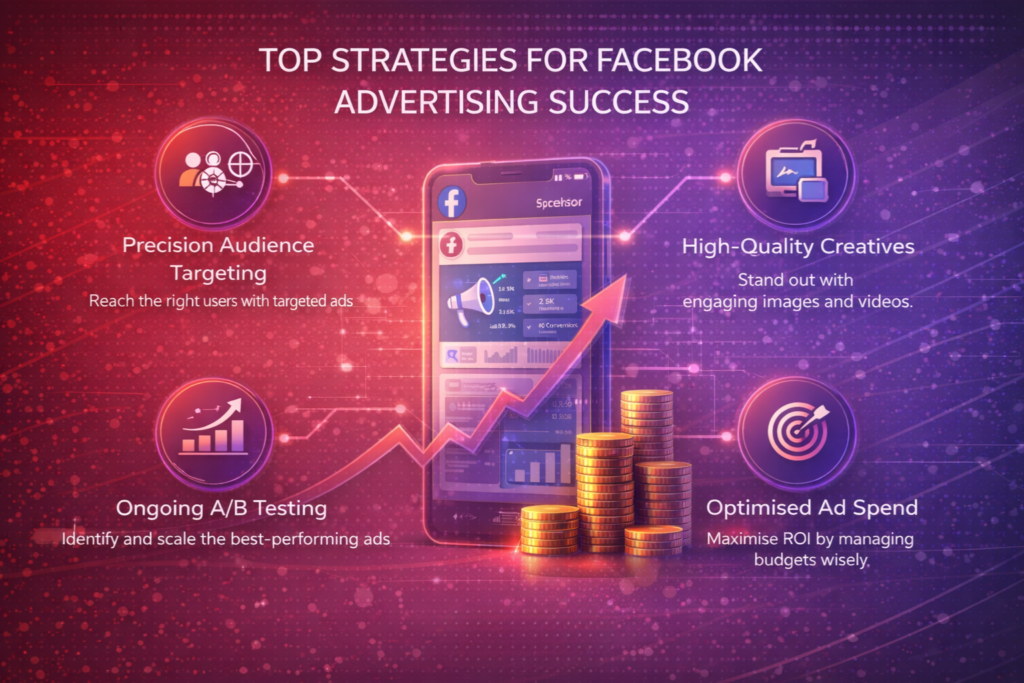
Facebook ads need a good understanding of its tools and workflows. This is key for reaching campaign goals like brand awareness or sales. We’ll look at Ads Manager tools, how to manage campaigns well, and the use of automation and third-party tools.
Essential Management Tools and Features
Facebook’s Ads Manager is a powerful tool for managing ads. It has many features to help advertisers create and manage their campaigns.
Ads Manager Navigation and Functionality
Ads Manager is easy to use. Its menu lets advertisers quickly find what they need, like campaign management or ad creation. The dashboard shows how campaigns are doing, with important metrics like reach and conversions.
Bulk Editing and Campaign Management Tools
Ads Manager’s bulk editing is a big help. It lets advertisers change many campaigns at once. This saves a lot of time, which is great for big campaigns.
| Feature | Description | Benefit |
| Bulk Editing | Make changes to multiple campaigns or ad sets at once | Saves time and effort |
| Campaign Management | Organise campaigns into structured hierarchies | Improves campaign organisation and optimisation |
| Reporting | Access detailed performance metrics and insights | Enables data-driven decision making |
Creating Efficient Campaign Management Workflows
For the best Facebook ads, you need good workflows. This means setting clear goals, choosing the right audience, and making ads that speak to them.
Automation and Rules for Streamlined Operations
Automation is key for smooth Facebook ad operations. Automated rules help campaigns run better without constant manual work.
Setting Up Automated Rules
Automated rules let advertisers set conditions for actions, like pausing ads that don’t do well. This saves money and boosts ROI.
Budget Pacing and Performance Alerts
Budget pacing and alerts are also important. They help keep an eye on spending and performance, making quick changes as needed.
Third-Party Tools for Enhanced Management
Facebook also has third-party tools to help manage ads. These tools add extra features, like better analytics and optimisation.
Using Facebook’s tools and third-party solutions can make ads very effective. This leads to real results for advertisers.
Tracking Performance with Facebook Pixel and Analytics
Tracking how well your ads do is key to success. To make the most of your money, you need to know how to use Facebook Pixel and analytics tools well.
Installing and Configuring Facebook Pixel
Facebook Pixel helps you track sales, improve ads, and target better. First, you must install and set it up right.
Manual Installation Methods
Manual setup means adding code to your website’s header. This way, you control the Pixel’s setup.
- Copy the Pixel code from your Facebook Ads Manager account.
- Paste the code into the header section of your website.
- Use the Facebook Pixel Helper tool to check if it’s working.
Partner Integration Options
There are easier ways if you use Shopify or WordPress. These options make setup simpler and cut down on mistakes.
- Pick a partner from Facebook’s list of integrated platforms.
- Follow the partner’s guide to add Facebook Pixel.
- Make sure it’s working right in your Ads Manager.
Setting Up Conversion Events
Conversion events are important actions on your site, like buying or signing up. Setting these up lets you see how well your ads work.
- Find the actions you want to track.
- Set these actions as conversion events in your Facebook Ads Manager.
- Use this data to make your ads better.
Understanding Facebook Analytics and Reporting
Facebook has great tools for understanding your ad performance.
Ads Manager Reporting Features
Ads Manager has many reporting tools. They let you see how your campaigns are doing at different levels.
- Customise the data you see with special columns.
- Use filters to focus on what you need.
- Export data for deeper analysis or reports.
Custom Reports and Dashboards
Custom reports and dashboards let you watch the metrics that matter to your business.
| Metric | Description | Importance |
| Click-Through Rate (CTR) | Percentage of users who click on your ad after seeing it. | High CTR means your ad is relevant. |
| Conversion Rate | Percentage of users who complete a desired action. | Key for measuring campaign success. |
| Return on Ad Spend (ROAS) | Revenue per pound spent on ads. | Crucial for checking if ads are profitable. |
Attribution Models and Cross-Device Tracking
It’s important to know how users interact with your ads on different devices. This helps with accurate tracking.
Facebook has different attribution models. They help you understand the customer journey and improve your campaigns.
- Pick an attribution model that fits your business goals.
- Use cross-device tracking for a full view of user actions.
Optimisation Techniques for Maximum ROI
To get the most from Facebook ads, you need to know how to optimise. Always keep improving your ads to get the best results.
A/B Testing Strategies for Continuous Improvement
A/B testing is key for Facebook ad success. It lets you compare different ads to find the best one.
What to Test: Creative, Audience, and Placement
Focus on creative, audience, and placement when testing. Change creative elements like images and headlines to see what works best.
- Try different ad creatives to see which ones get more attention.
- See which audience groups respond best to your ads.
- Check how ads perform in different places on Facebook.
Interpreting Test Results and Statistical Significance
When looking at test results, remember to check for statistical significance. This makes sure your findings are reliable. Look for trends in the data to guide future ads.
| Test Variable | Description | Potential Impact |
| Ad Creative | Testing different images, videos, or headlines | Improved engagement and conversion rates |
| Audience Targeting | Comparing different demographic or interest-based targeting | Enhanced relevance and response rates |
| Ad Placement | Evaluating performance across different Facebook ad placements | Optimised ad spend and increased reach |
When and How to Scale Successful Campaigns
To grow your successful Facebook ads, plan carefully. Look for ads that work well and can grow more.
Here’s how to scale your ads:
- Slowly increase your budget to reach more people.
- Add new audience groups to your ads.
- Make sure your ads are delivered well to get the best ROI.
Addressing Ad Fatigue and Creative Refresh
Ad fatigue happens when people get tired of seeing the same ads. Refresh your ads often and use a creative rotation strategy.
Retargeting Strategies That Drive Conversions
Retargeting helps bring back users who’ve shown interest in your brand. It’s a great way to get more sales.
Dynamic Product Ads for E-commerce
Dynamic product ads show users products they’ve looked at before. It’s great for selling more.
Sequential Retargeting Campaigns
Sequential retargeting shows ads in a certain order to guide users. It builds brand awareness and gets more sales.
Common Facebook Advertising Mistakes to Avoid
Advertisers can improve their Facebook ad performance by avoiding common mistakes. Good Facebook ads need strategic planning, precise targeting, and ongoing optimisation. Knowing and avoiding these mistakes helps businesses get the most from their ads and meet their marketing goals.
Targeting Errors That Waste Budget
Targeting the wrong audience can waste your ad budget. Incorrect demographics, interests, or behaviours can lead to low engagement and conversion rates. To avoid this, it’s important to:
- Use Facebook’s detailed targeting options to precisely define your audience.
- Regularly review and update your audience insights to ensure they remain relevant.
- Leverage Custom Audiences and Lookalike Audiences to target users who are more likely to be interested in your offerings.
Creative Mistakes That Reduce Performance
The creative elements of your ads are key to grabbing user attention and driving engagement. Poorly designed visuals or uncompelling ad copy can harm ad performance. To improve your ad creatives:
- Invest in high-quality visuals that resonate with your target audience.
- Craft ad copy that is clear, concise, and compelling, highlighting the unique value proposition of your product or service.
- Test different creative formats, such as videos and carousel ads, to determine what works best for your audience.
Account Management Pitfalls
Effective account management is vital for the success of your Facebook advertising campaigns. Two common pitfalls to avoid are:
Poor Budget Distribution
Allocating budget poorly can lead to suboptimal performance. Make sure your budget is distributed based on performance data, focusing on campaigns with the best ROI.
Ignoring Campaign Maintenance
Not maintaining campaigns can lead to decreased performance. Regularly review campaign metrics, pause underperforming ads, and refresh ad creatives to keep user engagement high.
| Account Management Task | Frequency | Benefit |
| Review Campaign Metrics | Weekly | Identify underperforming campaigns |
| Pause Underperforming Ads | Bi-weekly | Optimise budget allocation |
| Refresh Ad Creatives | Monthly | Maintain user engagement |
Compliance Issues and Policy Violations
Facebook has strict advertising policies that advertisers must follow. Breaking these policies can lead to ad disapproval or account suspension. To avoid compliance issues:
- Familiarise yourself with Facebook’s advertising policies and guidelines.
- Ensure your ads comply with these policies, focusing on prohibited content and landing page experiences.
- Regularly review and update your ad content to stay compliant.
Conclusion
Understanding Facebook’s advertising world is key to success. It’s about making strategies that boost sales.
Good management means making ads that work well, spending money wisely, and improving campaigns. This way, you get the best return on investment.
To get the most out of your ads, use Facebook Pixel and analytics. Always test and improve your ads to reach more people. Contact Us for more details.
By using these tips, Indian businesses can make the most of Facebook ads. This will help them grow in a big way.