
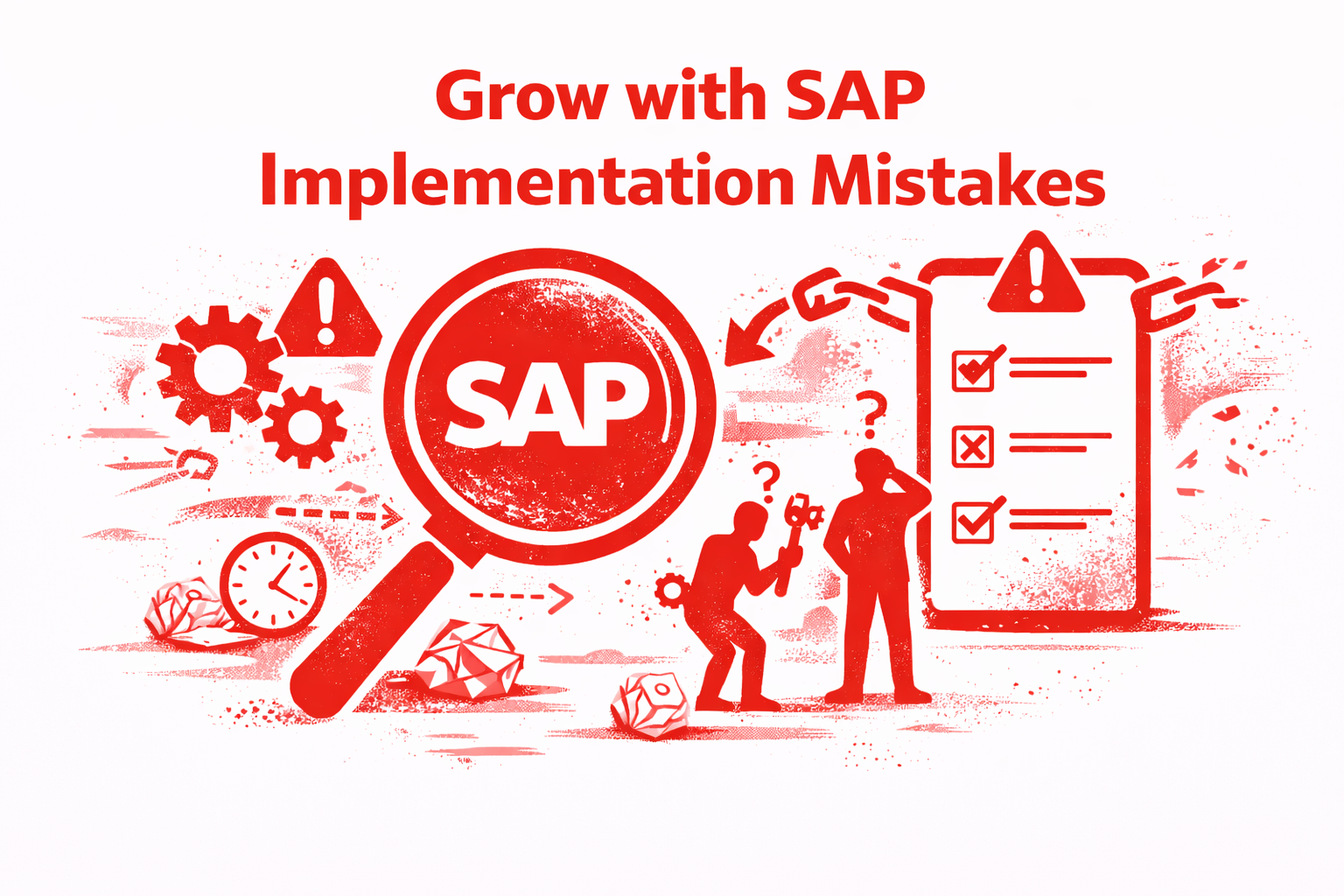
Did you know that a staggering 55% to 75% of all ERP projects fail to meet their objectives? This alarming statistic highlights the immense challenge businesses face when upgrading their core systems.
For many organization’s, choosing a powerful enterprise resource planning (ERP) system like SAP is a strategic move. It promises to transform operations and drive growth. However, the path to a successful digital transformation is fraught with potential pitfalls.
Approximately 70% of these initiatives fail to achieve their original business-case goals. This underscores the critical need for precision and deep planning. Adopting this technology is not merely a software installation.
It is a commitment to a full-scale business transformation. Understanding common errors is the first step towards avoiding them. This article explores a framework for recognising and sidestepping these critical missteps.
We will guide you through eight key areas, from initial planning to leveraging industry best practices. Our goal is to provide a clear roadmap for your journey, helping you navigate towards a successful outcome.
Key Takeaways
- A significant majority of ERP projects, between 55% and 75%, do not achieve their intended goals.
- Implementing an SAP system represents a major business transformation, not just a technical upgrade.
- Thorough planning and precise execution are vital to avoid common and costly errors.
- Recognising potential pitfalls early can significantly increase the chances of a successful outcome.
- This guide provides a structured framework to help organisations navigate their implementation journey effectively.
Understanding the Challenges of SAP Implementation

The journey towards a successful digital core is often hampered by foundational hurdles specific to enterprise platforms. These challenges stem from the sheer scale of the transformation, which goes far beyond a simple software upgrade.
A thorough grasp of these potential obstacles is essential for any organisation planning its path forward. This understanding forms the bedrock of a strategic and well-managed rollout.
Complex Customisation and Misalignment
One of the most significant tests involves tailoring the system. This enterprise resource planning (ERP) solution is not an off-the-shelf product. It demands extensive configuration to align with unique organisational processes.
Businesses frequently struggle to find the right balance. They must leverage the platform’s powerful standard functionalities while accommodating their specific operational needs. Even fundamental workflows, like order processing, require meticulous planning.
A critical misstep occurs when companies try to force the new system to mimic old, inefficient legacy workflows. This approach leads to overly complex customisation. The result is a configuration that hinders efficiency instead of enhancing it.
Data Migration and Quality Concerns
Another major area of concern is the transfer of information. Moving data from disparate legacy systems—such as spreadsheets and old databases—introduces substantial risk.
Errors and inconsistencies can easily creep in during this migration. These issues can cause significant operational disruptions after the new system goes live. Ensuring data quality and integrity from the outset is paramount.
Integration with existing systems adds another layer of complexity. Compatibility issues and technical debt can extend timelines and inflate budgets considerably. Careful planning is needed to ensure a seamless connection.
GROW with SAP Implementation Mistakes
Organisations embarking on digital transformations frequently encounter predictable stumbling blocks. The complexity of enterprise system integration demands meticulous preparation.
Statistics reveal that approximately 70% of enterprise resource planning initiatives fail to meet expectations. This sobering reality underscores the importance of recognising common errors early.
Identifying the Most Common Pitfalls
A fundamental challenge many businesses face is the shortage of specialised expertise. Without experienced personnel, configuration becomes inefficient.
This lack of knowledge leads to workflows that don’t function properly. Teams struggle to diagnose technical errors requiring swift resolution.
Underutilisation of available features represents another significant issue. Companies miss automation opportunities that could enhance operations.
Impact on Business Operations
These implementation errors create tangible consequences for daily business activities. Disrupted workflows affect productivity across departments.
Extended project timelines delay system go-live dates. This impacts business continuity and strains financial resources through budget overruns.
User frustration undermines adoption rates, reducing return on investment. Understanding these pitfalls is the essential first step toward successful digital transformation.
Expertly Managing Change and Resource Allocation
Beyond the technical complexities, the success of an enterprise system hinges on effective organisational change. A strategic approach to managing people and resources is what separates a smooth transition from a troubled one.
Effective Change Management Strategies
Many projects falter not due to software issues, but because organisations underestimate the human dimension. Resistance, confusion, and inadequate training can derail user adoption, regardless of how well the system is configured.
Proven change management must be integrated from day one. This includes developing role-based training modules tailored to specific user responsibilities.
Hands-on workshops and clear communication keep stakeholders engaged. This builds confidence and ensures a higher rate of system adoption.
One retail client, for example, saw user adoption soar from 58% to 92% in three months. This was achieved through a phased training approach for over 400 employees.
Optimizing Resource and Budget Allocation
A successful implementation demands extensive resources that are frequently underestimated. This includes significant time commitments and substantial technical infrastructure.
Meticulous planning is crucial. It helps determine accurate timelines, costs, and the necessary team composition.
Strategic resource management, often with expert guidance, prevents budget overruns. It ensures the business has the right experience and tools for a successful project outcome.
Mitigating Technical and Customization Challenges

One of the most critical decisions during enterprise system deployment involves finding the right balance between tailored solutions and platform standards. This balancing act determines long-term efficiency and maintenance requirements.
The platform’s extensive feature set offers remarkable versatility across industries. However, this flexibility creates significant configuration demands for specific operational processes.
Balancing Customisation with Standard Practices
Excessive tailoring often leads to unnecessary complexity. Each modification requires careful testing and future updates may demand code revisions.
This increases maintenance costs and can degrade system performance. Operational delays become more frequent with overly complex configurations.
A strategic approach begins with assessing true business needs. Companies should evaluate whether standard functionalities address requirements before considering custom solutions.
Engaging experienced consultants helps determine the most efficient customisation approach. They can identify where platform standards align with operational processes.
Prioritising standardisation reduces long-term technical debt. Aligning business workflows with proven practices creates more sustainable solutions.
Sometimes, perceived system complexity stems from inefficient underlying processes. Optimising operations before configuration ensures smoother implementation.
Streamlining Data Migration and Integration

A flawed data transfer process can cripple even the most meticulously planned digital transformation from day one. This phase demands strategic focus, not just technical execution.
Successful integration hinges on two core pillars: impeccable data quality and seamless connection with existing infrastructure.
Ensuring Data Quality and Integrity
Poor data mapping and contaminated legacy information lead directly to a broken new system post-launch. Treating this workstream as mission-critical from the start is non-negotiable.
A proven four-step methodology prevents these quality failures effectively.
| Step | Action | Key Outcome |
| 1. Comprehensive Audit | Identify gaps, duplicates, and misalignments in the legacy setup. | Clear baseline of data flaws. |
| 2. Cleansing & Mapping | Clean datasets to meet platform standards and map fields precisely. | Data aligned with the new architecture. |
| 3. Trial Loads | Perform multiple dry runs in a sandbox environment. | Stakeholder confidence and error detection. |
| 4. Final Validation | Run exhaustive scripts and create secure backups. | 99.87% accuracy, as achieved for a global mining firm. |
Common failure points include inconsistent codes, missing fields, and duplicate records. In a tightly integrated ERP, one wrong value cascades through procurement, inventory, and finance.
Seamless Integration with Legacy Systems
Connecting with existing infrastructure introduces technical complexity. Compatibility issues and middleware requirements can significantly impact timelines.
The solution is a robust data governance framework. This includes standardised formats, validation rules, and a single source of truth.
Automated checks in a staging area flag errors before they reach the production environment. A dedicated team then tracks quality KPIs to maintain integrity long-term.
Leveraging Industry-Specific SAP Best Practices
While generic templates offer the allure of speed, they often fail to capture the critical operational nuances that define success. A truly effective approach moves beyond standard software configuration to embrace deep industry knowledge.
This ensures the platform becomes a genuine business enabler, tailored to unique processes and compliance needs from the very start.
Tailored SAP Strategies for Various Sectors
Vertical-specific strategies bring proven domain experience to the table. For sectors like manufacturing, retail, or pharmaceuticals, this means addressing unique supply chain intricacies, regulatory demands, and scaling requirements.
Focused workshops with internal stakeholders are essential. They map system functionalities directly to current challenges and future growth trajectories.
One manufacturing client, for instance, saw a 15% improvement in production planning accuracy within 90 days through a tailored configuration. This demonstrates the tangible performance gains possible.
In India’s diverse market, this tailored approach is crucial. Legacy systems and specific compliance rules in sectors from agriculture to jewellery make industry-focused solutions indispensable.
Key best practices for this customised journey include:
- Starting with a small, visible module like finance for an early win.
- Building cross-functional teams from operations, finance, and HR.
- Keeping executive leadership actively involved for swift decisions.
- Establishing a centre of excellence to maintain standards.
This strategic focus transforms the software from a generic tool into a powerful competitive advantage.
Conclusion
The most successful digital transformations treat system implementation as the beginning of an ongoing optimisation journey rather than a finite project. This approach recognises that true value emerges through continuous refinement.
Avoiding common pitfalls requires a disciplined framework. Thorough planning, clear scope definition, and phased rollouts create solid foundations. Investing in comprehensive user training ensures smooth adoption of the new system.
Choosing an experienced partner provides crucial support throughout this journey. Evidence shows organisations with expert guidance achieve significantly better outcomes. Their business processes transform more effectively.
Remember that enterprise success extends beyond technical go-live. Continuous improvement through upgrades and feedback loops unlocks full potential. This commitment separates truly transformative implementations from merely operational ones.