
Traditional business need cloud service benefits systems for keep up with India’s fast digital growth. Many Indian companies use old software to manage their work.
These old systems slow down growth and make it hard to share data in real-time. It’s tough for companies to meet changing market needs or customer wants.
Switching to a ERP transformation with Akshay Software Technologies Private Limited helps businesses update their core processes. Moving to the cloud makes companies more agile and keeps data safe.
Looking into cloud computing benefits shows how hosting data online makes upkeep easier. It also cuts down on the cost of starting up. This keeps your business competitive in a digital world.
This change is a vital step towards a more flexible and growing company. It lets managers make better choices with clear insights into the company’s areas.
Key Takeaways
- Real-time data visibility across all internal departments.
- Scalable resources to support rapid business expansion.
- Enhanced security protocols for sensitive corporate information.
- Reduced capital expenditure on expensive IT infrastructure.
- Improved mobile accessibility for remote Indian workforces.
- Automated updates for consistent and reliable software performance.
Recognising the Constraints of Traditional ERP Infrastructure
Traditional ERP systems often hold back business growth and efficiency. They have several key areas that affect performance and adaptability.
High Capital Expenditure on Hardware and Servers
The high cost of hardware and servers for ERP systems is a big issue. This capital expenditure can be very expensive for companies.
Ongoing Maintenance and IT Support Burdens
ERP systems need constant upkeep and IT support. This is costly and takes a lot of resources. It can take away from other important projects.
Inflexibility in Scaling Operations
Traditional ERP systems are hard to scale as businesses grow. They struggle to adapt quickly to changes.
Limited Mobile Access for Remote Teams
Also, traditional ERP systems don’t offer good mobile access. This makes it hard for remote teams to work well. It affects productivity and teamwork.
Knowing these issues is key for companies wanting to update their ERP systems. This helps improve business agility.
Essential Cloud Service Benefits That Drive ERP Transformation
Cloud services help organisations get the most out of their ERP systems. This leads to growth and new ideas. Cloud ERP brings many benefits that change how businesses work.
Reduced Total Cost of Ownership Through Pay-As-You-Go Models
Cloud ERP has a big advantage: it lowers costs. With pay-as-you-go models, you don’t need to spend a lot on hardware and software upfront. This lets businesses use their money better.
On-Demand Scalability for Business Growth
Cloud ERP lets businesses grow fast. It’s easy to change and grow with the system. This is key for companies that grow quickly or have changing needs.
Enhanced Data Security and Disaster Recovery
Cloud services make data safe and easy to recover. They back up data often and protect it from cyber threats. This keeps your data safe.
Real-Time Accessibility from Any Location
Cloud ERP lets you work from anywhere, anytime. You can use different devices. This makes working with teams far away easier and more productive.
Automatic Software Updates and Patch Management
Cloud ERP keeps your system updated and safe. The provider takes care of updates and patches. This saves IT teams a lot of work.
Evaluating Your Organisation’s Cloud Migration Readiness
Checking if your organisation is ready for cloud migration is key. You need to look at your infrastructure and how things work. This helps spot any problems or chances that might affect the move.
Conducting a Comprehensive Infrastructure Audit
Doing a full check of your IT setup is vital. You must look at your hardware, software, and networks. This helps see if they can work with cloud services.
Assessing Data Sensitivity and Compliance Requirements
You must figure out how sensitive your data is. Also, make sure you follow all rules. This means finding out which data needs extra care and checking if cloud services follow the rules.
| Aspect | Description | Importance |
| Infrastructure Audit | Assessing current IT infrastructure | High |
| Data Sensitivity | Identifying sensitive data and compliance needs | High |
| Total Cost of Ownership | Comparing costs of current infrastructure vs. cloud services | Medium |
| Stakeholder Support | Gaining support from internal stakeholders | High |
Calculating Total Cost of Ownership Comparisons
It’s important to work out the total cost of owning things. This means looking at the costs of keeping your current setup and the costs of moving to the cloud.
Gauging Internal Stakeholder Support
Getting support from inside your organisation is key. You need to explain the good things about moving to the cloud and answer any worries people might have.
Choosing the Optimal Cloud Deployment Model for Your ERP
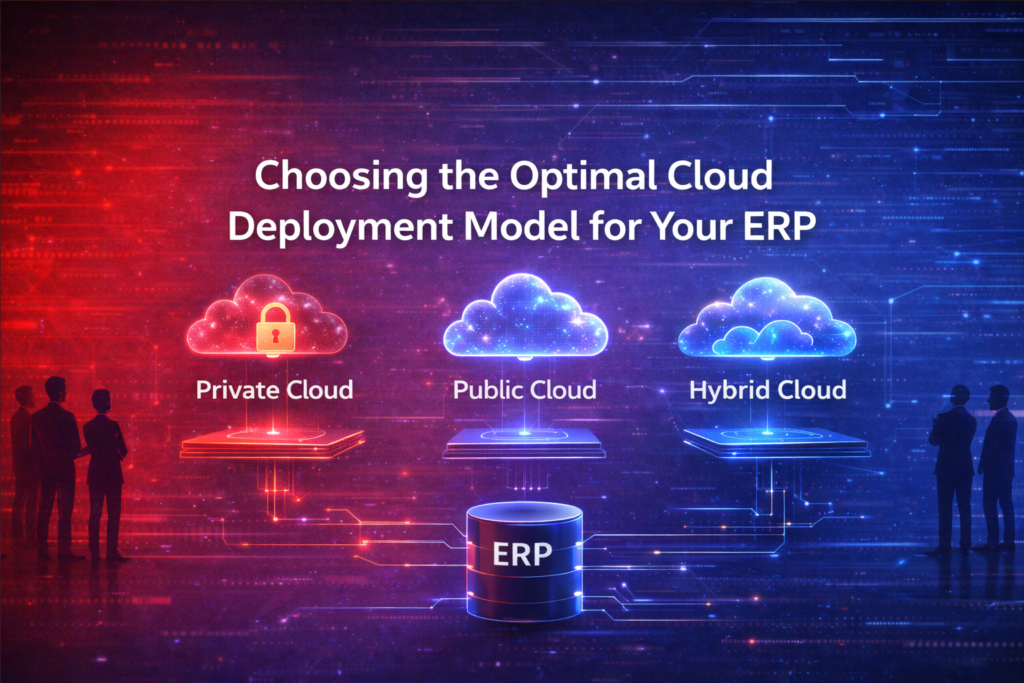
Choosing the right cloud model is key for a good ERP change. You have many options, each with its own good and bad points.
Public Cloud Solutions: Maximising Cost Efficiency
Public cloud solutions are cheap and grow with your needs. They share resources, cutting costs.
Private Cloud Options: Prioritising Security and Control
Private cloud options give a safe space for sensitive data. They offer more control and security.
Hybrid Cloud Strategies: Balancing Flexibility and Protection
Hybrid cloud strategies mix public and private clouds. They let you have flexibility and safety at the same time.
Multi-Cloud Approaches for Risk Mitigation
Using a multi-cloud approach spreads ERP across different clouds. This makes your system more resilient.
When picking a cloud model, think about cost, security, growth, and rules. This helps find the best ERP solution for you.
- Check how much control you need over data and setup.
- Think about how much you need to grow and be flexible.
- Look at how sensitive your data is and what rules you must follow.
Developing a Cloud ERP Migration Plan
Creating a detailed cloud ERP migration plan is key for companies wanting to update their ERP systems. This plan acts as a guide, helping move the process forward smoothly. It makes sure all important steps are covered.
Defining Clear Objectives and Success Metrics
The first thing to do is set clear goals and how to measure success. You need to know why you’re moving to the cloud, like saving money or growing. Then, you set targets to check if the move was a success.
Mapping Data Dependencies and Integration Points
It’s important to know how different data sets link together and where they connect with other systems. This helps plan the move step by step. It ensures all data is moved right and in the right order.
Establishing Migration Phases and Timelines
A good migration plan breaks the process into smaller steps. This makes the move less disruptive and smoother. Setting realistic times for each step is also key.
Identifying Possible Risks and How to Deal with Them
Every migration has risks, like losing data or system downtime. Spotting these risks early and planning how to handle them can lessen their effect.
Allocating Resources and Assigning Roles
It’s important to know who will do what and have the right resources. This means picking the right team, setting a budget, and making sure everyone knows their part.
| Migration Phase | Key Activities | Timeline |
| Phase 1: Planning | Define objectives, map data dependencies, identify risks | Weeks 1-4 |
| Phase 2: Preparation | Backup data, set up cloud infrastructure, configure security | Weeks 5-8 |
| Phase 3: Execution | Migrate data, test systems, train users | Weeks 9-16 |
Executing Your Cloud ERP Implementation in Stages
A successful cloud ERP implementation needs a clear plan. This plan helps avoid disruptions and makes the transition smooth. It breaks the process into stages, each with its goals and results.
Securing Complete Data Backups
The first step is to back up all data fully. This is key to keep business running and data safe during the move.
Setting Up Cloud Infrastructure and Security Protocols
Then, set up your cloud’s infrastructure and security. This means setting up firewalls, access controls, and encryption to protect important data.
Conducting Pilot Migration with Non-Critical Systems
Next, test the migration with non-essential systems. This helps find and fix issues before they affect important work.
Migrating Core ERP Modules Systematically
After the test, move your main ERP modules step by step. This requires checking data links and how systems work together.
Performing Thorough Testing and Quality Assurance
After moving main modules, test everything well. This makes sure the system works right and meets your needs.
Training Users and Managing Change
Last, train your team and handle changes well. This ensures everyone knows how to use the new system and gets the most from it.
Maximising Value Through Cloud ERP Optimisation
To get the most from your cloud ERP, you need to optimise it well. This means taking strategic steps to make sure it works its best.
Implementing Performance Monitoring Dashboards
Performance monitoring dashboards are key for cloud ERP optimisation. They give you live updates on how your system is doing. This lets you spot where it can get better.
Utilising Advanced Analytics and AI Capabilities
Advanced analytics and AI make your cloud ERP system much better. They help predict trends, find problems, and guide your decisions.
Integrating Third-Party Cloud Applications
Adding third-party cloud apps to your ERP can boost its power. It also makes it work better with other systems.
Establishing Continuous Improvement Processes
Setting up continuous improvement processes keeps your ERP system top-notch. It means always checking and updating it to keep up with your business’s needs.
Transforming ERP Systems with Cloud Service Benefits
Organisations face many challenges with traditional ERP systems. Cloud service benefits offer a way out. Cloud ERP solutions help cut costs, boost data security, and grow easily.
Switching to cloud ERP needs careful planning. This includes checking if you’re ready to move, picking the right cloud model, and making a detailed plan. Moving in stages and focusing on optimisation helps a smooth change.
Cloud ERP helps businesses stay ahead, work better, and grow. As tech changes, cloud ERP is key for those who want to lead.