

Organisations are increasingly adopting cloud-based ERP systems to streamline their operations and improve decision-making. A key feature of these systems is the ability to create dynamic dashboards that provide real-time insights into key performance indicators (KPIs).
These cloud erp dashboards enable CFOs and managers to monitor their organisation’s performance in real-time, making it easier to identify areas that require improvement. By leveraging cloud ERP analytics, businesses can gain a deeper understanding of their operations and make data-driven decisions.
Key Takeaways
- Cloud-based ERP systems offer real-time KPI monitoring capabilities.
- Dynamic dashboards facilitate data-driven decision-making.
- CFOs and managers can track organisational performance in real-time.
- Cloud ERP analytics provide valuable insights into business operations.
- Organisations can identify areas for improvement using cloud ERP dashboards.
Understanding Cloud ERP Dashboards and Their Strategic Value
Cloud ERP dashboards have emerged as a crucial tool for modern businesses, providing a centralised platform for monitoring and analysing critical data. These advanced erp reporting tools enable organisations to make data-driven decisions, enhancing their operational efficiency and strategic planning capabilities.
What Makes Cloud-Based ERP Dashboards Different from Traditional Solutions
Unlike traditional ERP systems, cloud-based ERP dashboards offer greater flexibility, scalability, and accessibility. They allow users to access real-time data from anywhere, at any time, using various devices. This mobility is particularly beneficial for CFOs and managers who require dynamic dashboards for monitoring key financial and operational metrics.

The Role of Real-Time Analytics in Modern Business Intelligence
Real-time analytics play a vital role in modern business intelligence, enabling organisations to respond promptly to changing market conditions and internal performance metrics. By leveraging data visualization software, businesses can transform complex data into actionable insights, facilitating more informed decision-making processes.
How Indian Businesses Are Leveraging Cloud ERP Analytics
Indian businesses are increasingly adopting cloud ERP analytics to gain a competitive edge in the market. By utilising these advanced analytics tools, organisations across various sectors can enhance their operational efficiency, improve customer satisfaction, and drive business growth. Dynamic dashboards for CFOs and managers are particularly valuable, providing them with real-time insights into key performance indicators and enabling data-driven strategic decisions.
Key Components of Effective Cloud ERP Dashboards
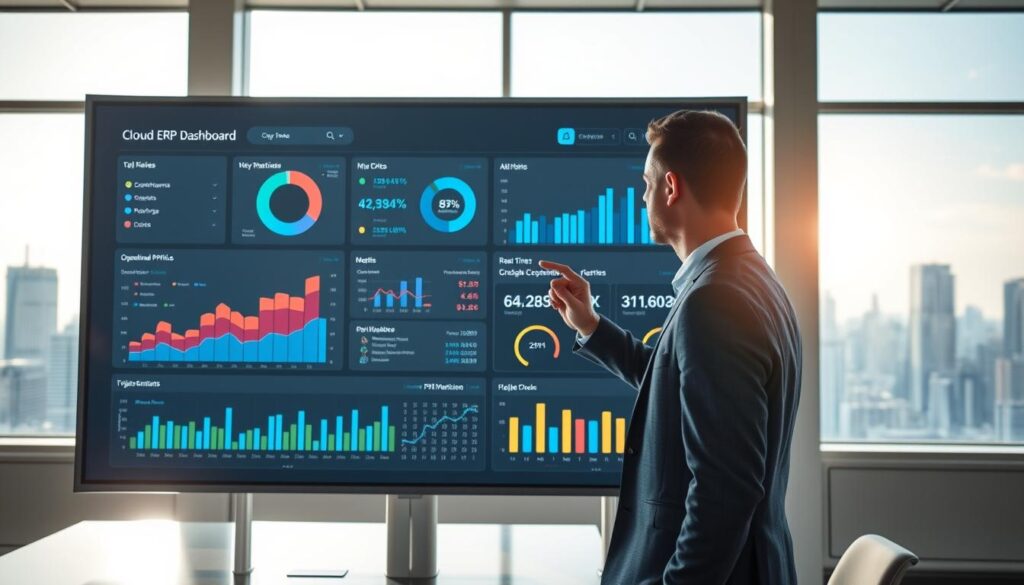
Designing effective cloud ERP dashboards is essential for unlocking the full potential of enterprise resource planning systems. These dashboards serve as the central nervous system for organisations, providing real-time insights that drive decision-making and strategic planning.
Essential Financial KPIs for CFOs and Finance Teams
For Chief Financial Officers (CFOs) and finance teams, cloud ERP dashboards must display essential financial KPIs that enable them to monitor the financial health of the organisation effectively. Key financial metrics include cash flow, profitability ratios, and accounts receivable turnover. These indicators help finance leaders make informed decisions about investments, funding, and cost management.
By leveraging cloud ERP analytics, finance teams can create dynamic dashboards that provide a comprehensive view of the organisation’s financial performance. This enables them to identify trends, forecast future financial positions, and adjust strategies accordingly.
Operational Metrics for Department Managers
Department managers require operational metrics that are tailored to their specific responsibilities. Metrics such as production throughput, inventory turnover, and supply chain efficiency are crucial for managing day-to-day operations and optimising resource allocation.
Cloud ERP dashboards can be customised to provide department managers with real-time visibility into these operational metrics, enabling them to respond quickly to changes in demand, supply chain disruptions, or other operational challenges.
Advanced Data Visualisation Techniques for Complex Datasets
Handling complex datasets is a significant challenge for many organisations. Advanced data visualisation techniques are essential for making sense of large volumes of data and uncovering insights that might otherwise remain hidden.
Techniques such as heat mapping, scatter plots, and treemaps can be used to visualise complex data in a clear and actionable manner. By incorporating these visualisation tools into their cloud ERP dashboards, organisations can enhance their ability to analyse and act upon their data.
Implementing Cloud ERP Dashboards for Indian Businesses
As Indian businesses continue to expand, the implementation of cloud ERP dashboards is crucial for informed decision-making. These dashboards provide real-time insights into key performance indicators, enabling businesses to respond swiftly to changing market conditions.
Addressing India-Specific Business and Regulatory Requirements
Indian businesses must comply with various regulatory requirements, such as Goods and Services Tax (GST) and other local tax laws. Cloud ERP dashboards can be customized to meet these needs, providing real-time GST compliance reporting and other regulatory insights.
Moreover, these dashboards can be tailored to address specific business needs, such as managing diverse supply chains and tracking regional sales performance.
Integration with Existing Business Systems and Legacy Software
One of the key challenges in implementing cloud ERP dashboards is integrating them with existing business systems and legacy software. A well-planned integration strategy ensures seamless data flow and minimizes disruptions.
Indian businesses can leverage APIs and data integration tools to connect their cloud ERP dashboards with legacy systems, enhancing overall operational efficiency.
Mobile Accessibility for Executives On-the-Go
With the increasing demand for mobility, executives require access to critical business information on-the-go. Cloud ERP dashboards offer mobile accessibility, enabling executives to monitor KPIs and make informed decisions from anywhere.
Security Considerations for Mobile Dashboard Access
While mobile accessibility is crucial, it is equally important to ensure the security of sensitive business data. Implementing robust security measures, such as multi-factor authentication and data encryption, protects against unauthorized access.
Indian businesses must prioritize data security when enabling mobile access to their cloud ERP dashboards, ensuring compliance with regulatory requirements and maintaining stakeholder trust.
Dashboard Customisation Best Practices for Maximum Impact
Customising cloud ERP dashboards is not just about aesthetics; it’s about creating a tool that provides real-time insights and drives business decisions. To achieve this, businesses must adopt a strategic approach to dashboard customisation.
Role-Based Dashboard Configuration Strategies
One of the key aspects of effective dashboard customisation is configuring them according to the roles within an organisation. For instance, CFOs and finance teams require dashboards that focus on financial KPIs such as cash flow, profitability, and revenue growth. On the other hand, department managers need operational metrics that help them manage their teams more efficiently.
By tailoring dashboards to specific roles, businesses can ensure that each user has access to the information they need to make informed decisions, thereby enhancing productivity and reducing the time spent searching for relevant data.
Creating Drill-Down Capabilities for Detailed Analysis
Another crucial aspect of dashboard customisation is the ability to drill down into detailed data. This feature allows users to start with high-level metrics and then navigate to more granular information as needed. For example, a CFO might start by looking at overall revenue and then drill down to see revenue by region, product line, or even specific customer segments.
This capability is particularly valuable in a real-time analytics platform, where timely data is critical for making swift business decisions.
Automated Alerts and Notification Systems
Automated alerts and notifications are vital components of a well-customised dashboard. They enable businesses to respond quickly to changes in key metrics, whether it’s a sudden spike in sales or an unexpected drop in inventory levels.
Setting Meaningful Thresholds for KPI Monitoring
To maximise the effectiveness of automated alerts, it’s essential to set meaningful thresholds for KPI monitoring. This involves defining the upper and lower limits for key metrics and configuring the system to alert relevant personnel when these thresholds are breached.
For instance, setting a threshold for inventory levels can help prevent stockouts or overstocking, while monitoring sales performance against targets can prompt timely interventions to stay on track.
Conclusion: Maximising ROI from Your Cloud ERP Dashboard Investment
Effective utilisation of cloud ERP dashboards can significantly enhance business performance by providing real-time insights into key performance indicators. By implementing the strategies outlined in this article, Indian businesses can maximise their return on investment from cloud ERP analytics.
Dynamic dashboards for CFOs and managers using cloud ERP analytics enable swift decision-making and improved operational efficiency. To get the most out of cloud ERP dashboards, businesses should focus on role-based dashboard configuration, advanced data visualisation, and automated alerts.
By following best practices for dashboard customisation and implementation, organisations can ensure that their cloud ERP dashboards are tailored to their specific needs, driving business growth and competitiveness in the Indian market.