

Did you know that using content marketing can really help businesses grow and for b2b businesses content syndication plays a very important role to extend reach and generate leads.
Working with other companies or platforms can open up new markets. This helps your brand reach more people. It also helps you get better leads and build strong connections with clients.
Key Takeaways
- Content marketing strategies can significantly boost lead generation.
- Strategic partnerships can amplify a company’s reach and brand visibility.
- Effective content dissemination can enhance credibility.
- Businesses can tap into new markets through syndication partnerships.
- Meaningful connections with clients can be built.
Understanding B2B Content Syndication in Modern Marketing
B2B content syndication is changing how businesses get leads and show off their brand. It’s key to know about it as companies try to grow and do better marketing.
Defining B2B Content Syndication
B2B content syndication means sharing content on other websites to reach more people. It helps businesses get their content seen by more people. This way, they can get more visitors, better leads, and be seen as more important.
How Content Syndication Differs from Traditional Content Marketing
Content syndication is different from just making and sharing content on your own site. It’s about sharing on many other sites. This lets businesses reach people they might not find on their own. It’s great when used with other marketing plans.
The Growing Importance for Indian B2B Enterprises
In India, B2B companies are seeing the value in content syndication. The market is getting bigger and more competitive. Syndication helps them get noticed and attract new customers.
| Feature | Traditional Content Marketing | Content Syndication |
| Content Publication | Published on owned channels (website, blog) | Republished on third-party websites/platforms |
| Audience Reach | Limited to existing audience and SEO | Expanded to include audiences of third-party sites |
| Lead Generation | Dependent on attracting visitors to owned channels | Can drive traffic and leads from multiple sources |
Indian B2B companies can boost their marketing by using content syndication. It helps them grow and stay ahead in the market.
Strategic Benefits of B2B Content Syndication for Lead Generation

B2B content syndication can change how a company gets leads. It lets them reach more people who are interested in what they offer. This makes their content more effective at getting leads.
Extending Your Content Reach Beyond Owned Channels
B2B content syndication helps businesses go beyond their own websites and social media. They can reach more people and those who are really interested in what they have to say.
Accessing Established Audiences Through Partner Networks
By working with big networks and platforms, businesses can connect with people who already care about their topics. This makes their content more visible and makes their brand more credible.
Multiplying Content Visibility Without Additional Creation Costs
Content syndication is great because it lets businesses show their content to more people without spending more money. They just share what they already have on other sites, making their money go further.
Accelerating Quality B2B Lead Generation
The main goal of B2B content syndication is to get good leads fast. By choosing the right places to share their content, businesses can get leads quicker.
Targeting Decision-Makers on Trusted Platforms
Content syndication helps businesses reach the right people on sites they trust. This means they’re more likely to find people who are looking for what they offer.
Shortening Sales Cycles Through Strategic Placement
By sharing content with the right people at the right time, businesses can make sales faster. This helps them move leads through the sales process quicker, leading to more sales.
Building Thought Leadership and Brand Authority
Sharing content in a smart way can also make a business seem like a leader in their field. Being seen on trusted sites and sharing valuable insights helps build their reputation.
| Benefits | Description | Impact on Lead Generation |
| Extended Content Reach | Access to broader and targeted audiences through partner networks. | High |
| Quality Lead Generation | Targeting decision-makers on trusted platforms. | Very High |
| Thought Leadership | Establishing brand authority through consistent and strategic content placement. | Medium to High |
In conclusion, B2B content syndication is a smart way to get more leads. It helps businesses reach more people, get better leads, and be seen as leaders in their field. This all helps improve their marketing results.
Content Syndication Platforms and Services: A Complete Guide
Businesses are now using content syndication platforms and services more. These tools help them share their content wider, get more leads, and grow their brand. They work across different channels.
Third-Party Content Syndication Networks
Third-party networks help content creators share their work on many platforms. They are split into two types: big syndication platforms and niche networks.
Enterprise-Level Syndication Platforms
Big syndication platforms are for sharing content on a large scale. They have big networks and tools like analytics and content improvement.
Niche Industry Networks
Niche networks focus on specific areas, sharing content with the right people. They’re great for businesses aiming at a certain group or sector.
Media and Publication Partnerships
Working with media and publications lets businesses share their content. This includes trade papers, industry journals, business news sites, and online mags.
Trade Publications and Industry Journals
Trade papers and journals are key in certain fields. Partnering with them can help businesses reach the right audience.
Business News Outlets and Online Magazines
Business news sites and online mags have a wide reach. They cover many topics and industries, helping businesses grow their audience.
Social Media and Professional Network Syndication
Sharing content on social media and professional networks boosts a business’s online presence. It also increases engagement.
LinkedIn Content Distribution
LinkedIn is great for B2B content sharing. It has features like LinkedIn Pulse for long-form content.
Industry-Specific Community Platforms
Industry-specific forums and networks are online spaces for certain fields. They’re perfect for sharing content.
Evaluating Content Syndication Services for Your Business
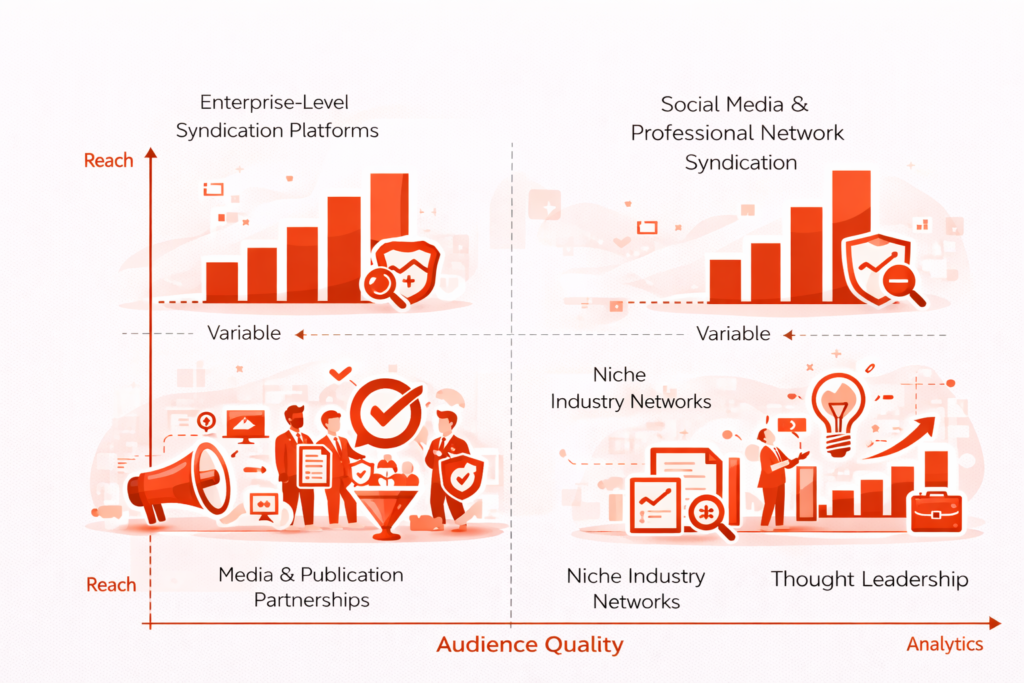
When picking content syndication services, look at a few things. Consider the platform’s reach, the audience quality, and the analytics and support offered.
| Platform/Service | Reach | Audience Quality | Analytics |
| Enterprise-Level Syndication Platforms | High | Variable | Advanced |
| Niche Industry Networks | Targeted | High | Moderate |
| Media and Publication Partnerships | Variable | High | Basic |
| Social Media and Professional Network Syndication | High | Variable | Advanced |
Building and Managing Strategic Content Distribution Partnerships
Creating strong content distribution partnerships is key to a good B2B marketing plan. By teaming up with the right partners, businesses can reach more people and get more leads.
Identifying Ideal Syndication Partners
Finding the right syndication partners is the first step. You need to look at several important factors.
Audience Alignment and Demographics
It’s important to choose platforms that match your target audience. This makes your content more effective.
Platform Authority and Reputation
The reputation of the syndication platform matters a lot. Working with respected platforms can boost your brand’s image.
Geographic Relevance for Indian Markets
For the Indian market, it’s key to partner with platforms that know the local scene well.
| Criteria | Description | Importance Level |
| Audience Alignment | Matching target audience demographics | High |
| Platform Authority | Reputation and credibility of the platform | High |
| Geographic Relevance | Presence and understanding of local markets | Medium |
Structuring Win-Win Partnership Agreements
After finding the right partners, you need to make agreements that work for everyone.
Defining Content Rights and Attribution
It’s important to clearly state who owns the content and who gets credit. This makes sure everyone knows their role.
Establishing Performance Expectations
Setting clear goals helps measure how well the partnership is doing. This way, you can make changes if needed.
Creating Efficient Syndication Workflows
Good workflows are essential for successful content syndication. This means making content approval and publishing smooth.
Content Approval Processes
A clear approval process means content gets checked and approved quickly. This avoids delays.
Publishing Schedules and Coordination
Coordinating when to publish with your partners is important. This way, your content has the biggest impact.
By focusing on these areas, businesses can create and manage partnerships that help them grow and get more leads.
Implementing Effective B2B Marketing Tactics Through Content Syndication
Content syndication is a key tool in B2B marketing. But, it only works well if you use the right tactics. Businesses need to think carefully about several important factors when sharing their content.
Selecting and Preparing Content for Syndication
Choosing the right content is the first step. Not all content is good for syndication. Some types work better than others.
Identifying High-Value Content Assets
High-value content solves big problems for the audience. This includes detailed guides, whitepapers, and case studies. They address specific needs or interests of customers.
Adapting Content for Different Platforms
Content needs to fit each platform. For example, LinkedIn might need formal, industry-focused content. Other platforms might prefer a more casual tone.
Timing and Frequency Considerations
When and how often you share content matters a lot. Find the best time for your audience. Share often enough to keep them interested, but not too much.
Key Considerations for Content Syndication:
- Relevance to the target audience
- Quality and depth of the content
- Adaptability to different platforms
- Timing and frequency of syndication
Optimising Content for Maximum Impact
After picking the right content, make it work its best. Tailor the message, keep SEO in mind, and add strong calls-to-action.
Tailoring Messaging for Target Audiences
Know your audience well. Your message should speak to their needs, interests, and problems. This boosts engagement.
Maintaining SEO Best Practises in Syndication
Even syndicated content needs SEO care. Use the right keywords, optimise meta descriptions, and make it easy to find.
Adding Compelling Calls-to-Action
CTAs are key to turning interest into leads. They should be clear, direct, and match the content.
| Optimisation Technique | Description | Benefit |
| Keyword Optimisation | Using relevant keywords in the content | Improved search engine ranking |
| Meta Description Optimisation | Crafting compelling and informative meta descriptions | Increased click-through rates |
| Clear Calls-to-Action | Directing readers to the next step | Higher conversion rates |
Ensuring Brand Consistency Across Channels
Keeping your brand consistent is key. This means using the same voice, tone, and look everywhere.
Voice and Tone Guidelines
Set clear rules for your brand’s voice and tone. This ensures your message is consistent and engaging everywhere.
Visual Identity Standards
Use the same logos, colours, and fonts in all your content. This strengthens your brand’s identity.
Lead Capture and Nurturing Mechanisms
Good lead capture and nurturing are vital. They turn interest from syndicated content into real leads and customers.
By using these strategies, businesses can make their B2B content syndication more effective. This drives engagement and lead generation.
Measuring Success and Optimising Your Syndication Strategy
To get the most from your B2B content syndication, you must measure success well. This means tracking important metrics, checking lead quality, and making smart choices based on data. This way, you can improve your strategy.
Essential Metrics for Content Syndication Performance
Understanding your content syndication’s performance is key. You need to look at various metrics. These show how well your content is doing in terms of reach, engagement, lead generation, and conversion rates.
Reach and Engagement Indicators
Reach and engagement metrics show how your content is doing first off. Important ones include:
- Page views: How many times your content is seen across different places.
- Click-through rates (CTR): The percentage of people who click on your content after seeing it.
- Social shares: How many times your content is shared on social media.
Lead Volume and Quality Metrics
Getting leads is a big goal of content syndication. You should track:
- Lead volume: The number of leads you get from syndicated content.
- Lead source: Which syndication partners or platforms give you the most leads.
Conversion Rates and Revenue Attribution
The real test of your content syndication is its effect on your profits. You need to watch conversion rates and see how much money each syndication effort brings in. This shows if your strategy is worth it.
Assessing Lead Quality from Syndicated Content
Not all leads are the same. It’s important to check the quality of leads from syndicated content. This helps you make your strategy better.
Lead Scoring Frameworks
Using a lead scoring framework helps you judge leads. You look at their actions, demographics, and other important things. This way, you find the best leads that are likely to become customers.
Comparing Syndication Sources
Leads from different syndication sources can vary in quality. By comparing these sources, you can focus on the best ones.
Continuous Optimisation and Testing
The world of B2B content syndication is always changing. You must keep improving and testing to stay ahead. This makes your syndication strategy more effective.
A/B Testing Content Variations
A/B testing lets you compare different content versions to see which one works better. You can test different headlines, formats, or calls-to-action.
Refining Partner Selection
As you learn more about your syndication partners, you can pick the best ones. This makes your strategy more focused and effective.
Adjusting Distribution Strategies
With new insights from your metrics and tests, you might need to change how you distribute your content. You could focus on different platforms, adjust when you post, or change what kind of content you make.
By following these tips and always improving your B2B content syndication strategy, you can reach more people, get better leads, and increase conversions.
Conclusion
Effective B2B content syndication is a strong strategy for businesses. It helps them reach more people and get more leads. By using content syndication platforms and making strategic partnerships, companies can boost their content marketing.
This approach helps businesses grow their thought leadership and increase revenue. Content syndication lets businesses share their content in more places. This way, they can get more B2B leads quickly.
By working with the right content syndication networks, companies can reach new audiences. This helps strengthen their brand authority. It’s key to pick and prepare content well for the best results.
Optimising content for visibility and keeping brand consistency is also important. This way, businesses can make a strong content marketing plan. Such a plan can really help them achieve their goals.
Indian enterprises can stay ahead by using B2B content syndication and marketing. This approach helps them grow and meet their marketing goals.